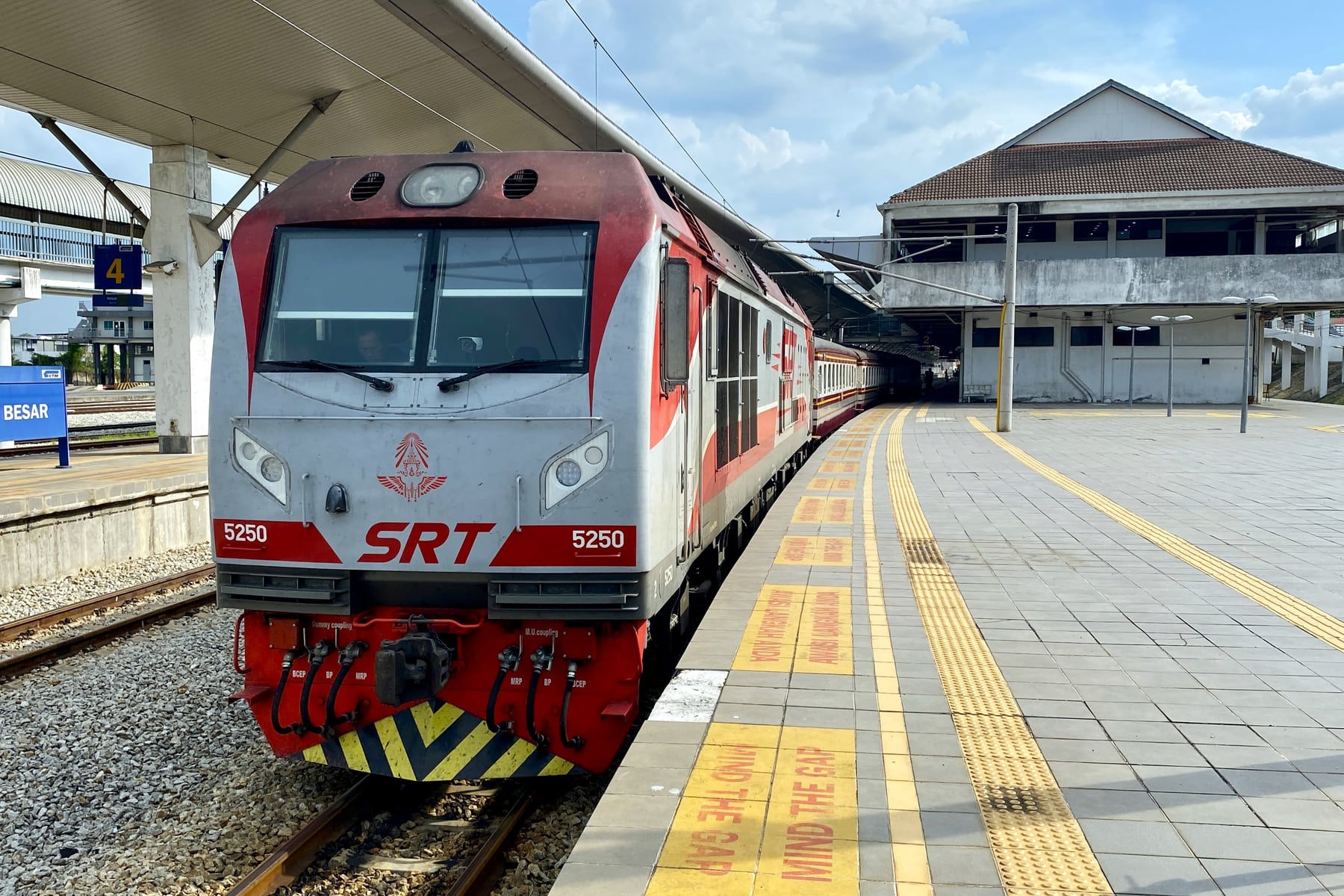
Bangkok–Padang Besar Sleeper
Slleong / Wikimedia Commons · CC0 · cropped
- DistanceAbout 974 km · metre gauge
- DurationAbout 16 hours, overnight
- Best seasonAll year
Introduction
Most international trains cross a border. Special Express No. 45 stops just after one. It leaves Bangkok in the late afternoon, runs the length of the Southern Line, Thailand's longest railway, through the night, and ends the next morning at Padang Besar, a station that stands 200 metres inside Malaysia. Thai and Malaysian immigration share its platform, so you leave one country and enter the other on foot, between two counters, before you walk out to the street or on to a Malaysian train.
The line was built on metre gauge so that it could meet the railways of Malaya, and it reached the border here on 1 July 1918. The first trains ran twice a week and took sixty hours. Today the run is about 974 kilometres and sixteen hours: Hua Hin in the evening, the narrow neck of the peninsula in the dark, and Hat Yai at breakfast time.
The Journey
Train 45 leaves Krung Thep Aphiwat, Bangkok's main station, at 16:10, running to the same times as train 37 for Su-ngai Kolok as far as Hat Yai. It heads west across the Chao Phraya and through Nakhon Pathom to Nong Pladuk Junction, where the branch to Kanchanaburi and the Death Railway leaves the main line, then turns south through Ratchaburi and Phetchaburi on double track opened in 2024.
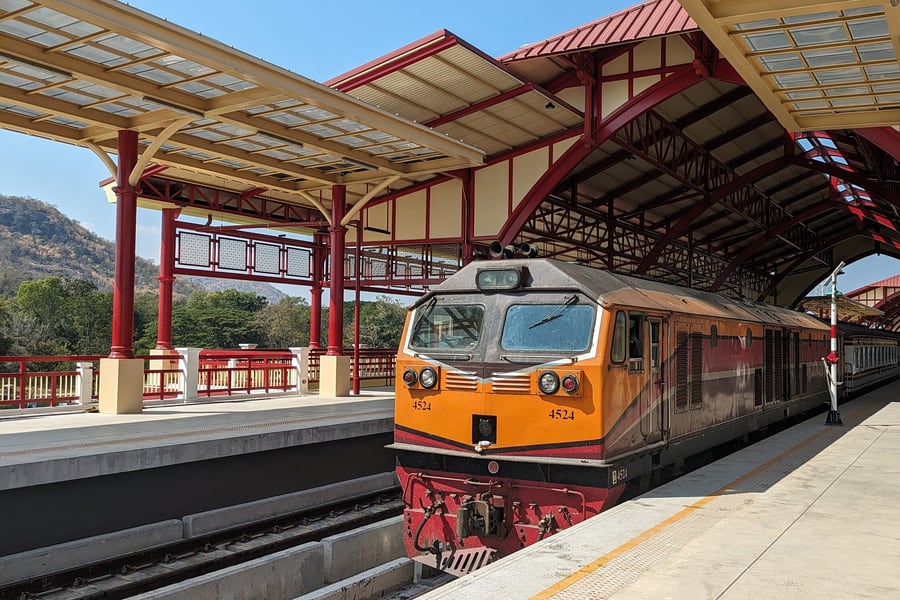
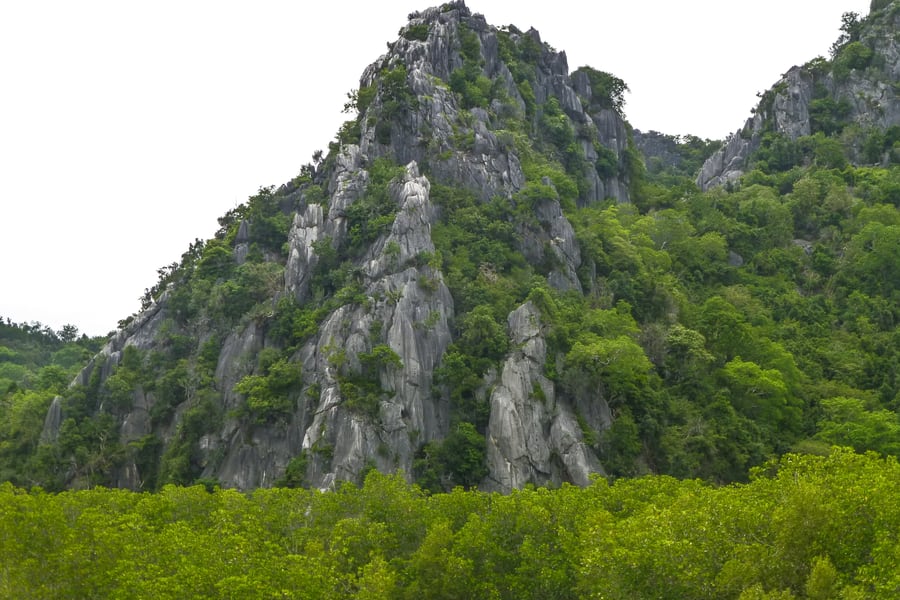
It reaches Hua Hin at 19:45, at the elevated station that replaced the old one in December 2023; the station of 1926 and its royal pavilion still stand beside it. South of Hua Hin the line follows the Gulf of Thailand down the narrowest part of the country, past the limestone hills of Khao Sam Roi Yot and Prachuap Khiri Khan, to Chumphon at 23:16 and Surat Thani at 01:49.
Morning in the south
The train reaches Phatthalung at 05:21, under the peak of Khao Ok Thalu, and Hat Yai at 06:35. Hat Yai is the junction for the south: the main line goes on to Su-ngai Kolok, and train 45 waits until 07:20 before it takes the 45-kilometre branch to the border. It arrives at Padang Besar at 08:05 Thai time, which is 09:05 in Malaysia, an hour ahead.
At the border
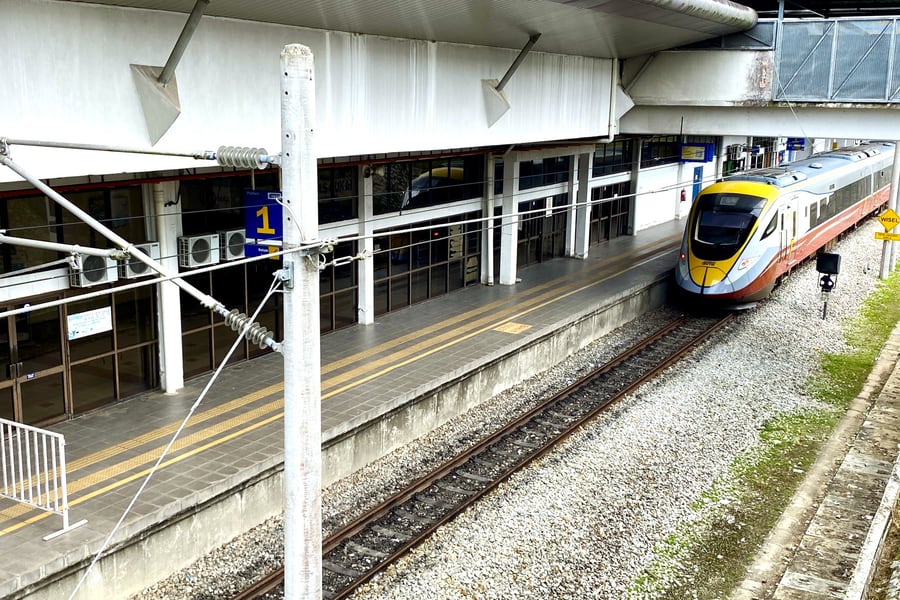
Padang Besar station is in Malaysia, about 200 metres south of the frontier and some 400 metres from the separate Thai station of the same name. It is owned by Malaysia and run by KTM, but Thai trains use it and SRT keeps a ticket office there that takes both baht and ringgit. Thai and Malaysian immigration, customs and quarantine are side by side on the platform, open only around the Thai trains, so you clear both countries in one walk. From the same station KTM's electric trains run south to Alor Setar and Kuala Lumpur: see the West Coast ETS. No regular train has run through from Thailand to Butterworth since 2016, so the border is where you change.
The train
Train 45 is a Special Express, and SRT's booking system sells one kind of accommodation on it: second class in an air-conditioned "sitting and sleeping" car of 40 places, seats by day and upper and lower berths by night. The lower berth costs a little more than the upper. Northbound, train 46 leaves Padang Besar at 17:00 Thai time and reaches Bangkok at 09:05.
Along the route
 Reversemos.sapanaht / Wikimedia Commons · CC BY-SA 4.0 · cropped
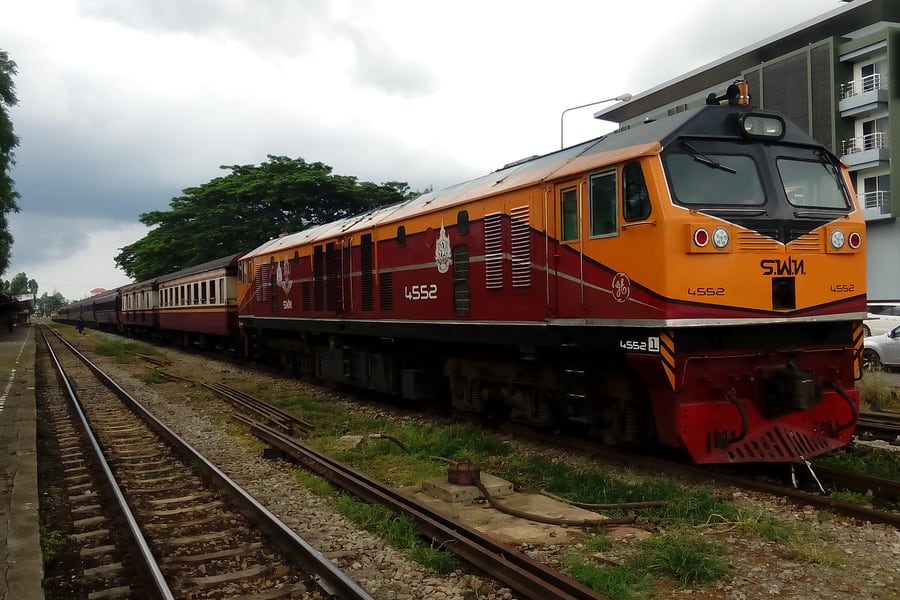
Nong Pladuk Junction
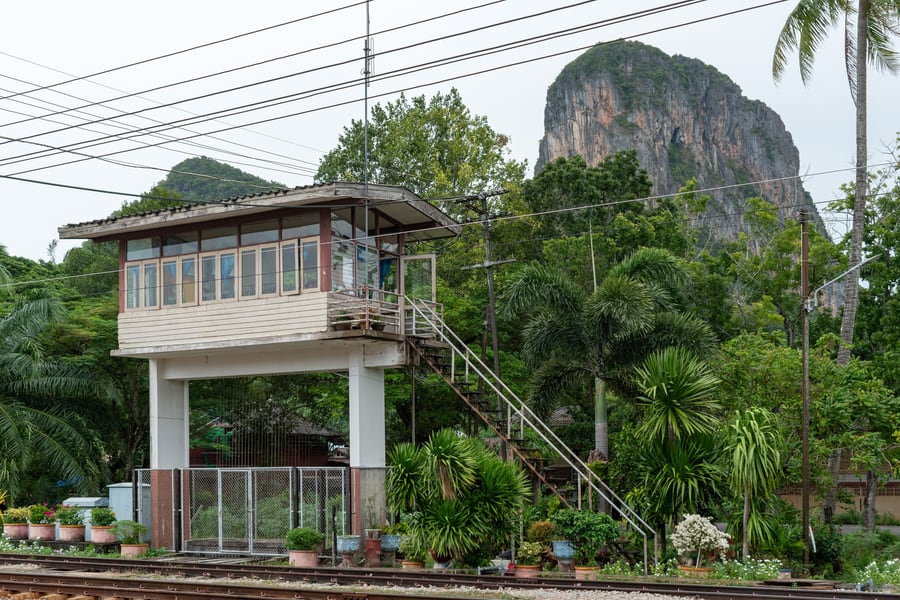
West of Bangkok the train passes Nong Pladuk, opened with the line in 1903. In 1942 it became the start of the Death Railway to Burma, whose surviving branch still leaves the main line here.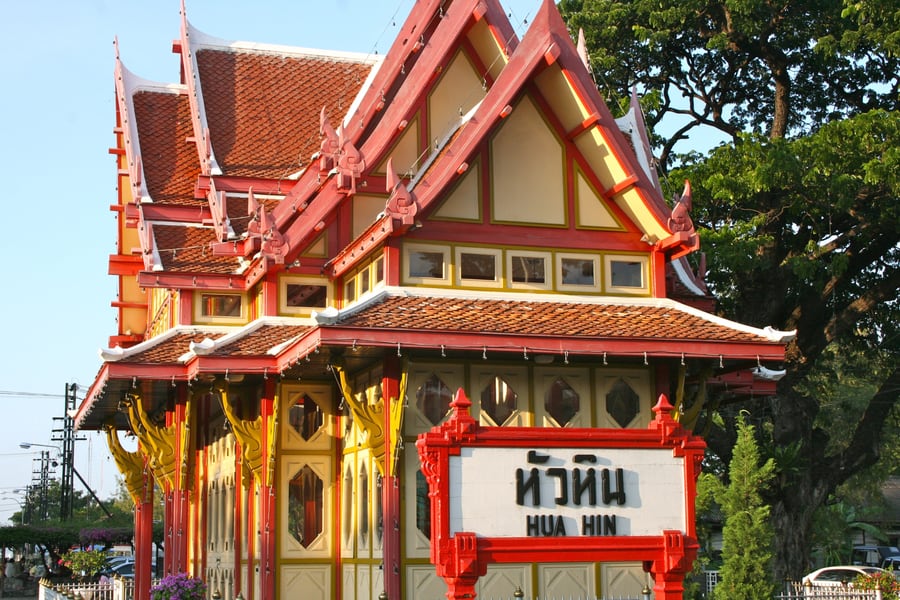 Ian Gratton / Wikimedia Commons · CC BY 2.0 · cropped
The royal pavilion at Hua Hin
Hua Hin's station building of 1926 and its royal waiting room, moved here in 1967 from Sanam Chandra Palace, stand beside the new elevated platforms, kept as a historic building.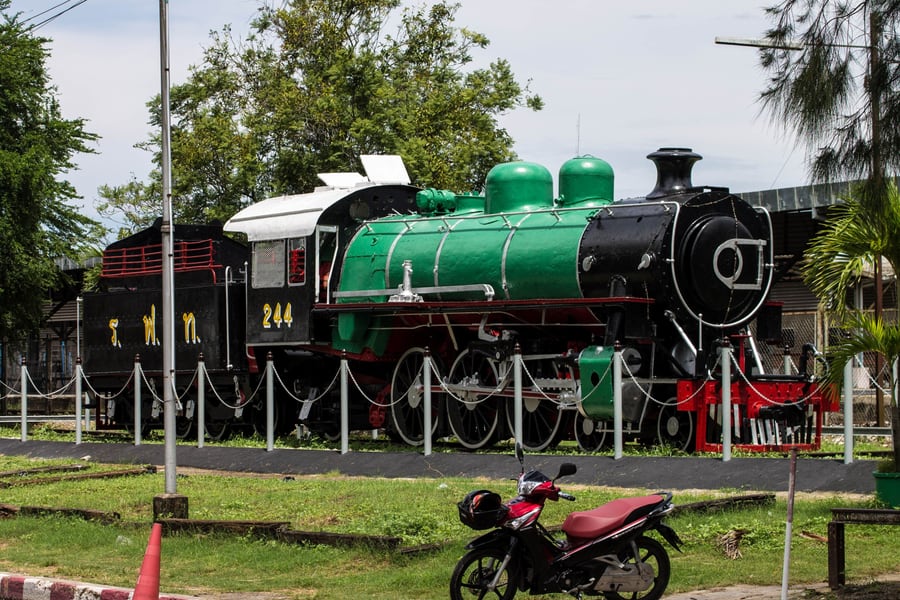 Adlersson / Wikimedia Commons · CC BY-SA 4.0 · cropped
Hat Yai Junction
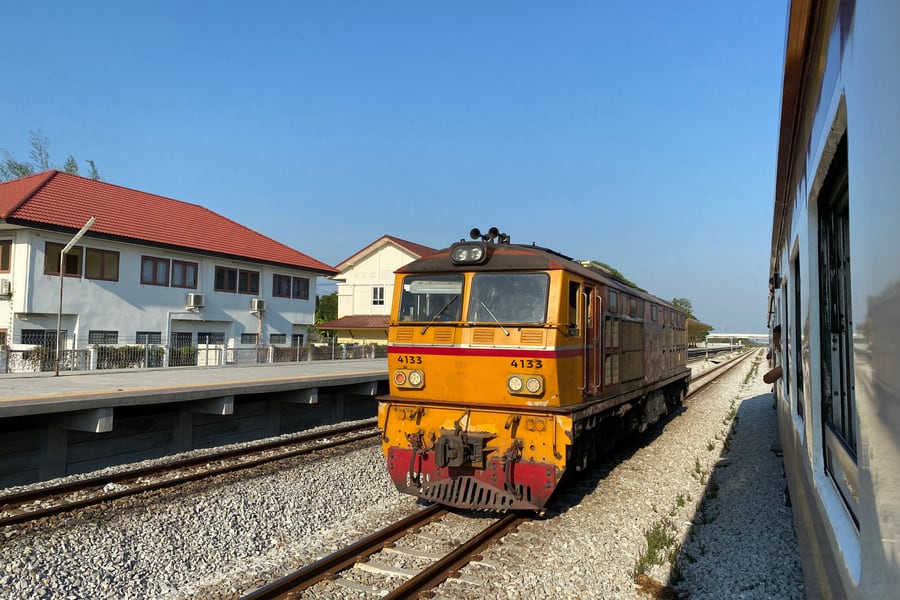
The junction moved here in 1922, when the place had four residents. Hat Yai is now the largest city in the south, and steam locomotive No. 244 is preserved by the station. Train 45 waits 45 minutes here before the branch to the border.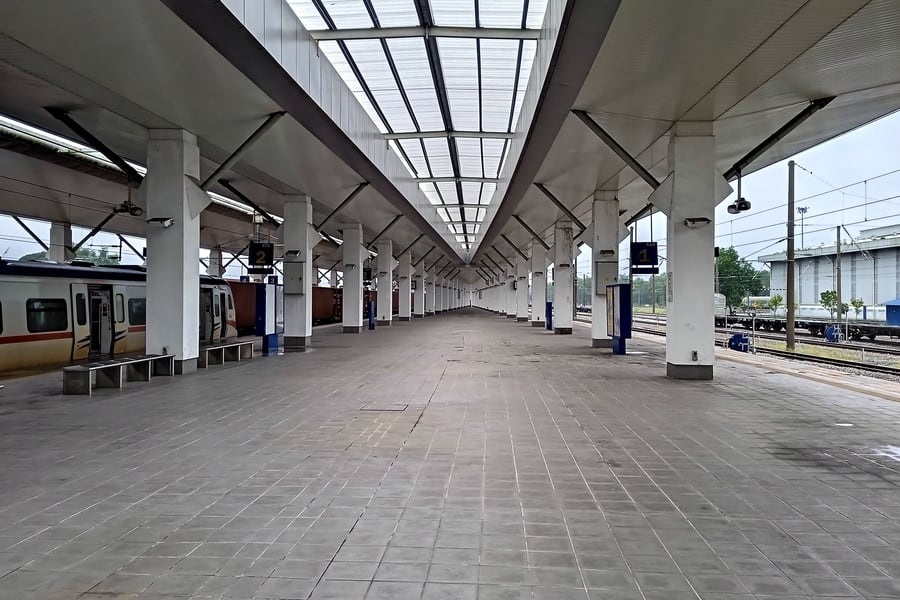 Wiki Farazi / Wikimedia Commons · CC0 · cropped
A Thai train in Malaysia
Padang Besar station stands 200 metres inside Malaysia. Both countries' immigration counters are on the platform, and SRT's ticket office there takes ringgit or baht.A bit of history
Culture & experiences along the way
 Pratyeka / Wikimedia Commons · CC BY-SA 4.0 · cropped
Nang talung
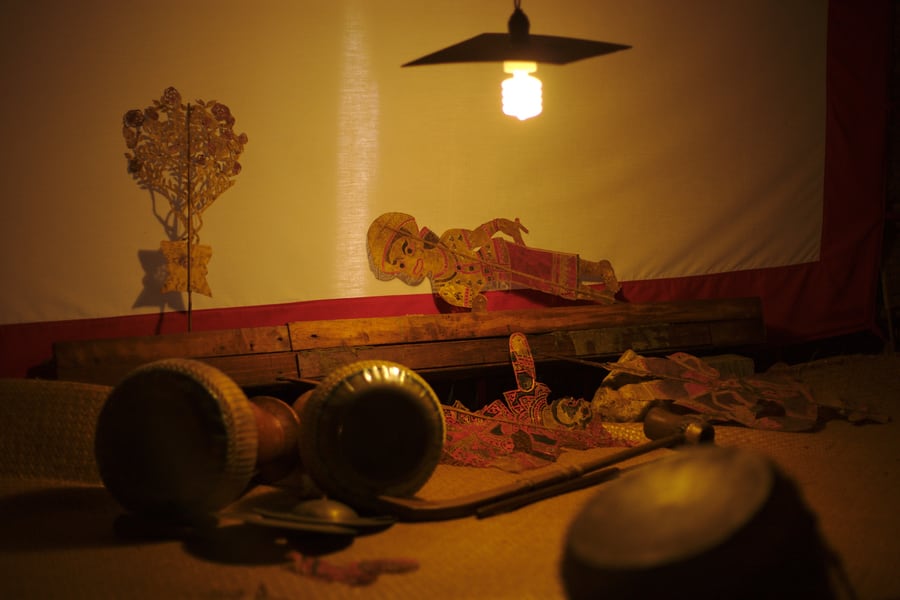
Southern Thailand's shadow theatre takes its name from Phatthalung: talung is short for the town. Puppets of painted buffalo hide or cowhide, 15 to 50 cm tall, are worked behind a lit screen by a narrator and musicians, at ceremonies and temple fairs.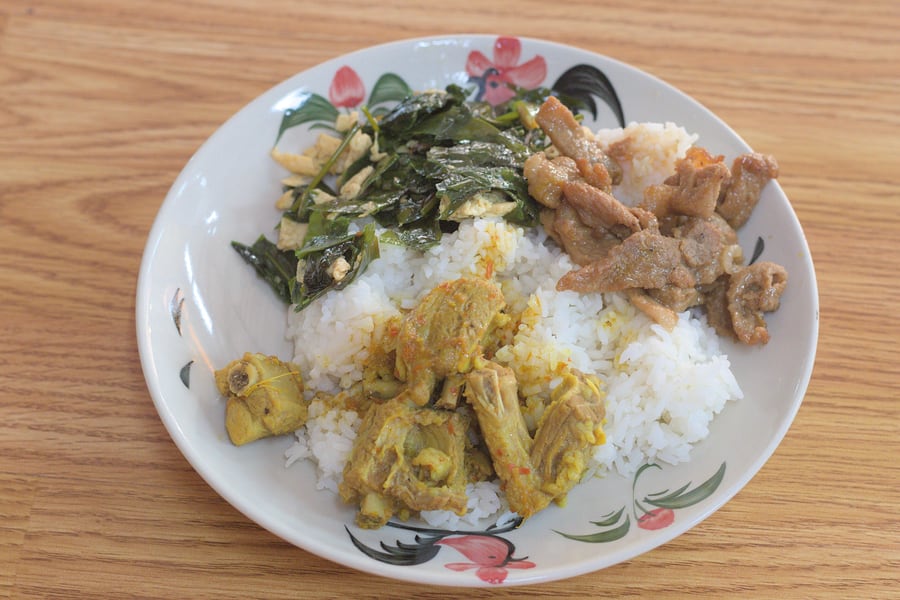 Vee Satayamas / Wikimedia Commons · CC BY 4.0 · cropped
Southern curries
The cooking changes as the train goes south. Southern Thai dishes use coconut milk and fresh turmeric freely, which they share with Malaysian, Indonesian and Indian cooking. Look for khao kaeng, rice with a choice of curries, at stalls and markets. LidaHomas / Wikimedia Commons · CC BY-SA 4.0 · cropped
The buffalo of Thale Noi
North of Phatthalung, the Thale Noi wetland is grazed by more than 4,000 water buffalo, kept by about 280 families. More than 180 kinds of bird, native and migrant, breed or feed in the same wetland.Timetables
One train a day runs each way between Bangkok and Padang Besar, and every berth is reserved. All times are Thai time; Malaysia is an hour ahead.
Southbound: Special Express 45
| Station | Time |
|---|---|
| Krung Thep Aphiwat | dep 16:10 |
| Hua Hin | 19:45 |
| Chumphon | 23:16 |
| Surat Thani | 01:49 |
| Phatthalung | 05:21 |
| Hat Yai | arr 06:35 · dep 07:20 |
| Padang Besar | arr 08:05 |
Northbound: Special Express 46
Train 46 leaves Padang Besar at 17:00, calls at Hua Hin at 05:12 and reaches Krung Thep Aphiwat at 09:05, about sixteen hours.
Hat Yai to Padang Besar
If you stop in Hat Yai, two more trains run to the border each day: express 741 at 08:55, arriving 09:40, and express 743 at 14:00, arriving 14:45. Between Bangkok and Hat Yai there are four more overnight trains, among them Special Express 31, formed of SRT's Chinese-built CNR coaches, leaving Bangkok at 16:50 and reaching Hat Yai at 07:05.
Times as of November 2026, from SRT's D-Ticket booking system for December 2026. Check them on D-Ticket (opens in a new tab) before you travel.
Tickets
Tickets come from the State Railway of Thailand, on its D-Ticket website or at the station, and each one is for a named berth on one train. Train 45 sells only second-class air-conditioned berths: from Bangkok to Padang Besar the upper berth costs THB 848 and the lower THB 918.
At Padang Besar you pass Thai and Malaysian immigration on the platform, so carry your passport in your hand luggage. Onward Malaysian trains are a separate ticket, bought from KTMB.
Fares as of November 2026, from SRT's D-Ticket booking system.
Book your tickets
Special Express No. 45 and No. 46
Bangkok–Padang Besar, second-class sleeper from THB 848
The only through train each way, sold as upper or lower berths in an air-conditioned sleeping car.
Book Tickets (opens in a new tab, on State Railway of Thailand)via State Railway of ThailandHat Yai to Padang Besar
Expresses 741 and 743
Two more trains cover the last 45 km to the border, for anyone who breaks the journey at Hat Yai.
Book Tickets (opens in a new tab, on State Railway of Thailand)via State Railway of ThailandRail Passes
No rail pass covers this train. SRT sells it as an ordinary ticket for a named berth on train 45 or 46, and at under THB 1,000 for the whole night the fare leaves nothing for a pass to save.
Checked November 2026 against SRT's D-Ticket booking site.
Places to Visit
Train 45 passes most of the line in the dark, so the places below are for a journey broken by day: take a day train or a later sleeper to any of them, and pick up the Padang Besar train again.
 Leelaryonkul / Wikimedia Commons · CC BY-SA 4.0 · cropped
Phetchaburi
One of the first towns the line reached, in 1903. Above the town, King Mongkut's summer palace of Phra Nakhon Khiri, finished in 1860, spreads across the three peaks of a 95-metre hill: a palace on one, a great white chedi on the second, a royal temple on the third. Locals call it Khao Wang, the hill with the palace.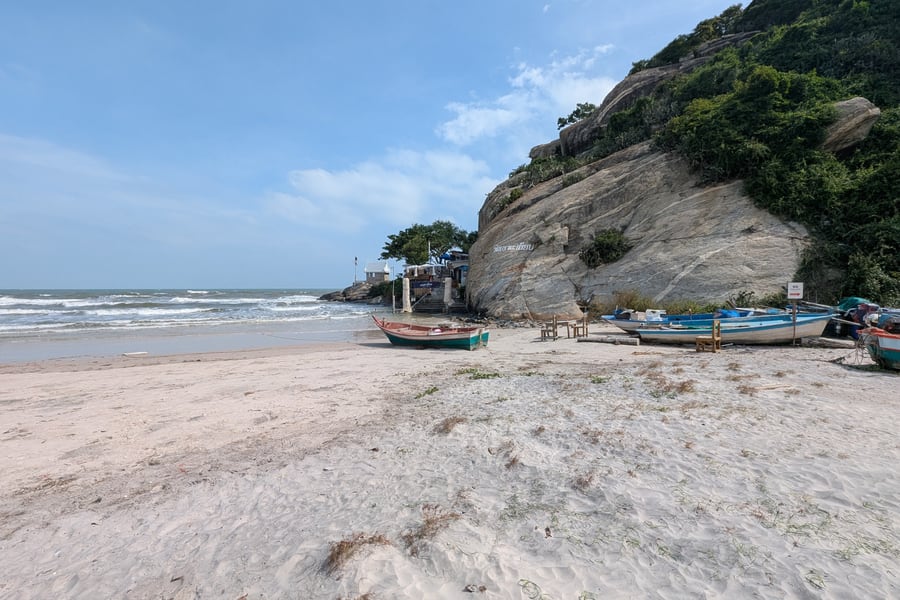 Elmschrat / Wikimedia Commons · CC0 · cropped
Hua Hin
The surveyors of the southern railway noticed this beach in 1909, and when the line opened in 1911 Bangkok's wealthy began to build holiday houses here. The railway opened its own hotel in 1922 and King Prajadhipok built the palace of Klai Kang Won, "far from worries". Thailand's first beach resort grew from a village its settlers of 1834 named for the row of rocks along the shore.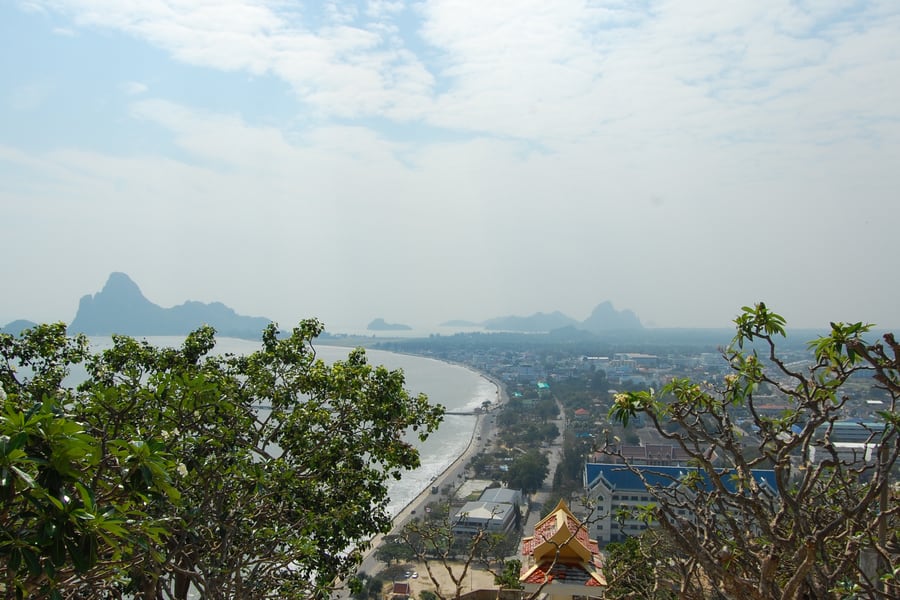 Immoreel / Wikimedia Commons · CC BY-SA 3.0 · cropped
Prachuap Khiri Khan
The town curves along Prachuap Bay, only 10 km from the Myanmar border, close to the narrowest point of the country. Five kilometres south of town, Ao Manao, "Lime Bay", lies between limestone headlands, reached through an air force base. Japanese troops landed here on 8 December 1941, and 38 Thai airmen and civilians died fighting them.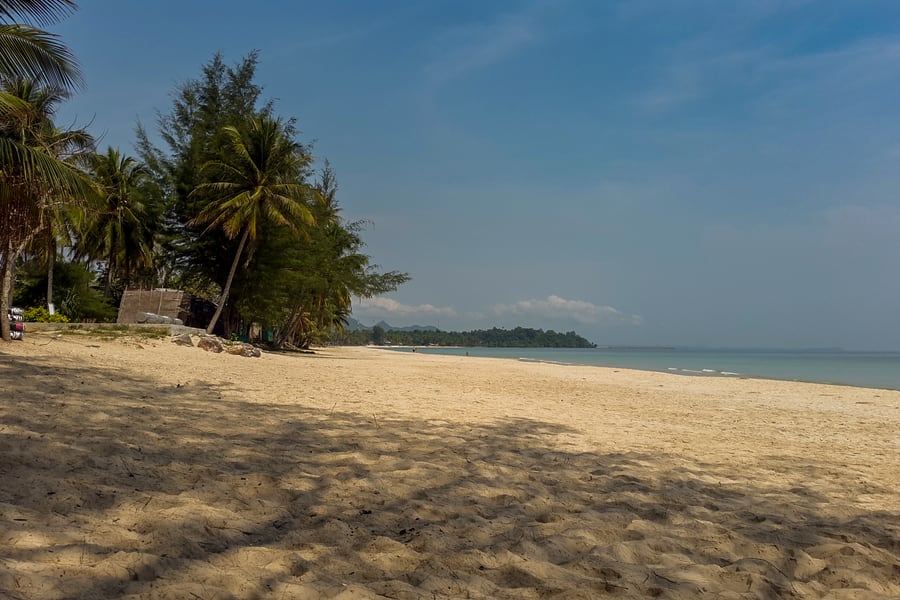 Lamacchiacosta / Wikimedia Commons · CC BY-SA 4.0 · cropped
Chumphon
Chumphon province has 222 km of coast. Hat Thung Wua Laen is 20 km from the station, a beach lined with resorts and food stalls; Hat Saphli, two kilometres on, was ranked the cleanest beach in the country in 2017. In the Second World War the town's volunteers fought the invading Japanese, and the station became a rail hub for Japan.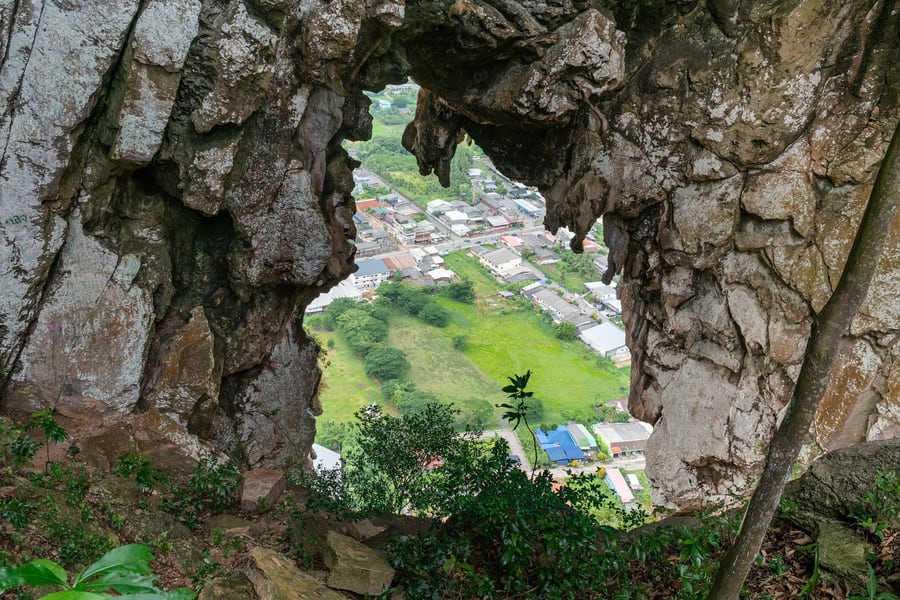 Dominic Nelson / Wikimedia Commons · CC BY-SA 4.0 · cropped
Phatthalung
Khao Ok Thalu stands just east of the station, a limestone peak with a hole through it near the top. It is on the provincial seal, and a flight of stairs climbs to a Buddhist shrine at the summit with the town below. The Thale Noi wetland, its buffalo and its birds lie north of town.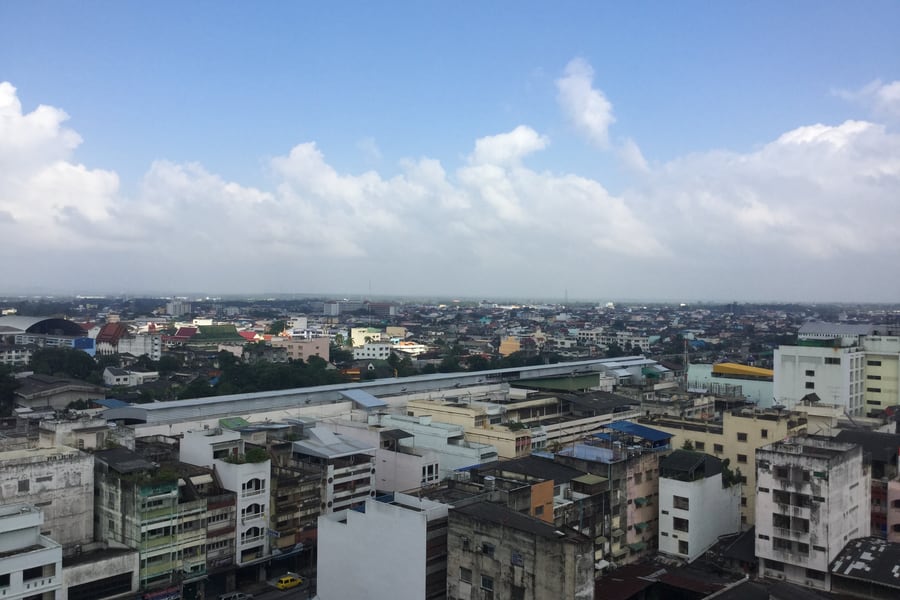 กิตติ เลขะกุล / Wikimedia Commons · CC BY 3.0 · cropped
Hat Yai
A village called Khok Samet Chun until the junction arrived in 1922, Hat Yai is now the largest city in southern Thailand and its business centre. The name is short for mahat yai, a big mahat tree, a relative of the jackfruit. Songkhla, on the sea, is the provincial capital.Where to Sleep
The berth is the night's accommodation, so the only beds to plan are at the ends. Hat Yai, under an hour from the border with five overnight trains from Bangkok, is the natural place to stop if you want to see the south by day, and Hua Hin, three and a half hours from Bangkok, is the place to break the journey at the start. The Railway Hotel the State Railways opened there in 1922 is still a hotel, by the beach.
Where to stay
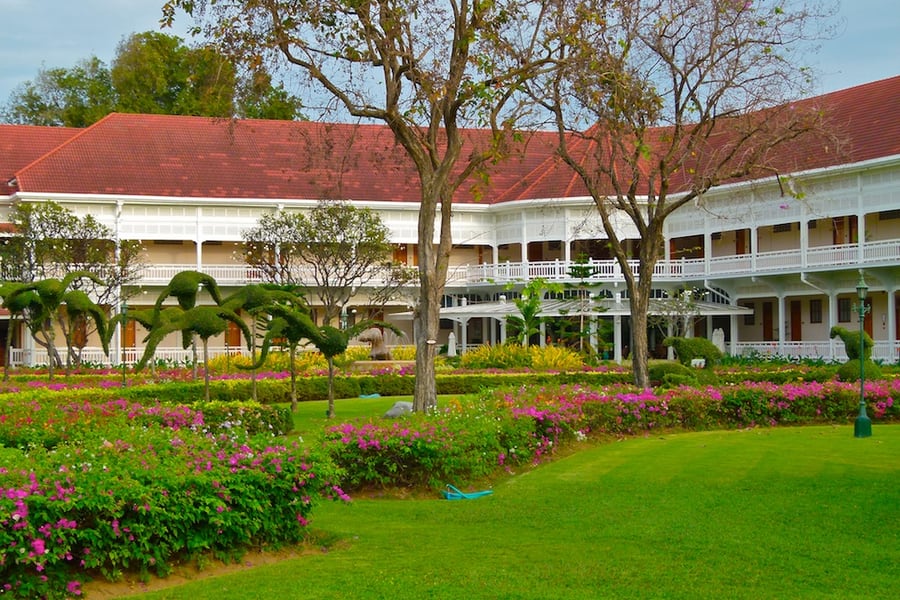 josef knecht / Wikimedia Commons · CC BY 3.0 · cropped
Centara Grand Beach Resort Hua Hin
The railway's own hotel of 1922
Opened by the State Railways as the Railway Hotel, on land still leased from SRT, beside the beach.
Check Availability (opens in a new tab, on centarahotelsresorts.com)via centarahotelsresorts.comQuestions or corrections
Planning this trip and stuck on something, or spotted a time, fare or detail that has changed? Send us a message about Bangkok–Padang Besar Sleeper. We read every one, and we update this page when something has changed.