Belgrade to Niš
Kolega2357 / Wikimedia Commons · CC BY-SA 4.0 · cropped
- DistanceBelgrade Centre–Niš · 271 km
- Duration5 h 31 to 6 h 38
- Best seasonDaily all year · August for the Nišville jazz festival
Introduction
The trains to Niš leave from Prokop, and the name says where they are. Prokop means a cut, a place dug through. When Serbia built its first railway in the early 1880s, the station in Belgrade was put down by the Sava on a marsh, Bara Venecija, and the marsh had to be filled before anything could stand on it. The earth and gravel came from a hillside, and what was left behind was a long, steep trench in the ground, which took its name from the digging.
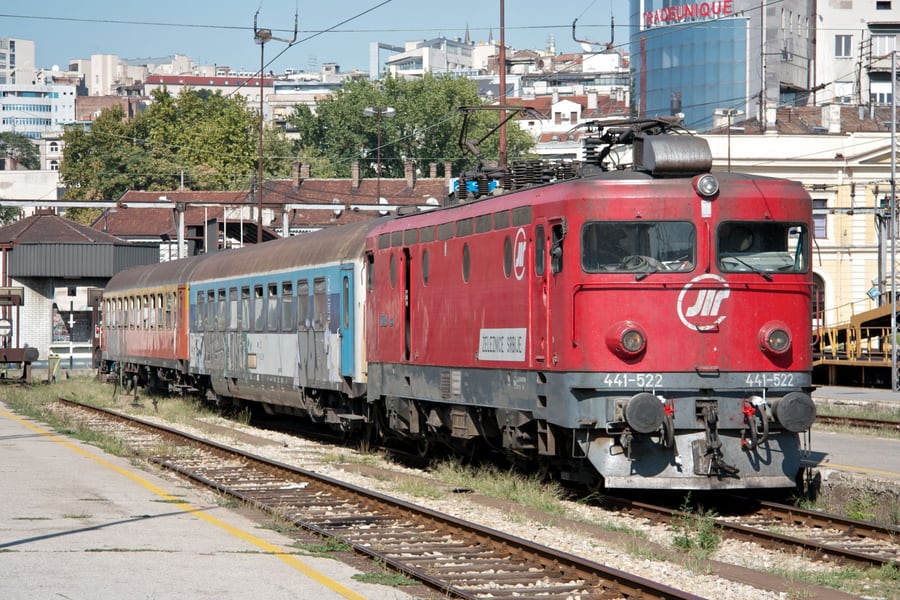
The old station opened in 1884, served the Orient Express and closed on 1 July 2018. The station that replaced it, Belgrade Centre, was built in the trench. So the train to Niš now starts in the hole that was dug to make room for its first terminus, and runs out over the same line, opened in September 1884, that Serbia was required to build as one of the conditions of the treaty that recognised its independence.
From there it is 271 kilometres south: through the hills beyond the city, down the valley of the Velika Morava, up the valley of the South Morava, and into Niš, with its Ottoman fortress, its Roman villa and the tower of skulls from the rising of 1809. Srbija Voz runs four trains a day south and three north, every day of the week, and the fastest takes five and a half hours.
The Journey
The line was not Serbia's idea. At the Congress of Berlin in 1878 the great powers recognised the principality's independence and, among the conditions, required it to build a railway from Belgrade to the Ottoman and Bulgarian frontiers, so that Vienna would be joined to Constantinople. Serbia had just fought two wars and had no money for it. Austria-Hungary pressed a separate railway convention on Belgrade in 1880, the French Union Générale won the only bid, and Prince Milan laid the first stone at Topčider on 3 July 1881. The first train reached Jagodina in June 1883, and the whole line opened in September 1884. From 1885 the Orient Express used it on one of its routes to Constantinople, with a carriage ride beyond Niš until the rails were joined up, and from 1889 the whole way by train.
Out of the cut
The trains leave Belgrade Centre heading south, through Rakovica and Resnik, where the railway to Bar on the Adriatic turns away to the west; its first section, from Resnik to Vreoci, was opened in 1958. That line has a page of its own, under Montenegro. The Niš line climbs on through Ripanj and Ralja into the hills, and reaches Mladenovac about an hour and twenty minutes out.
The Morava valley
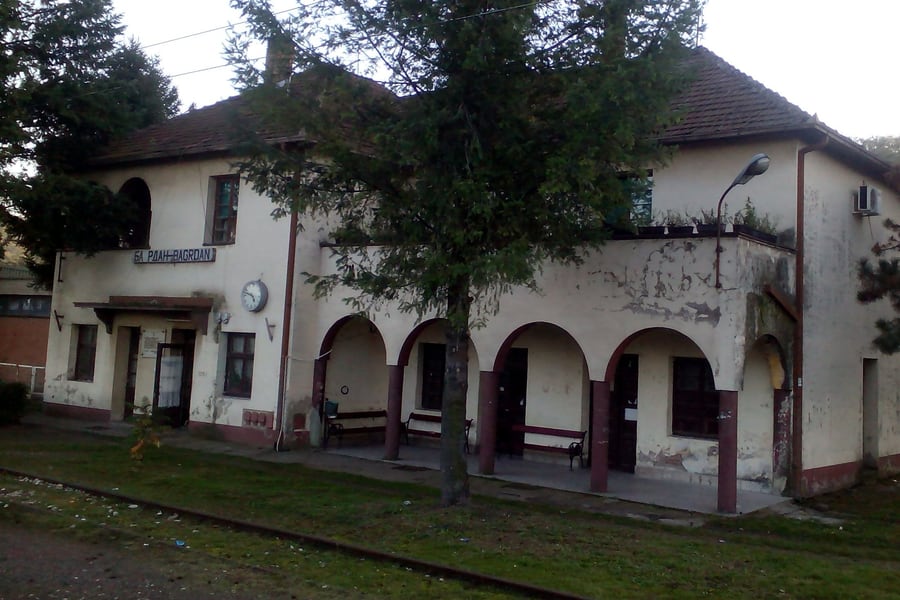
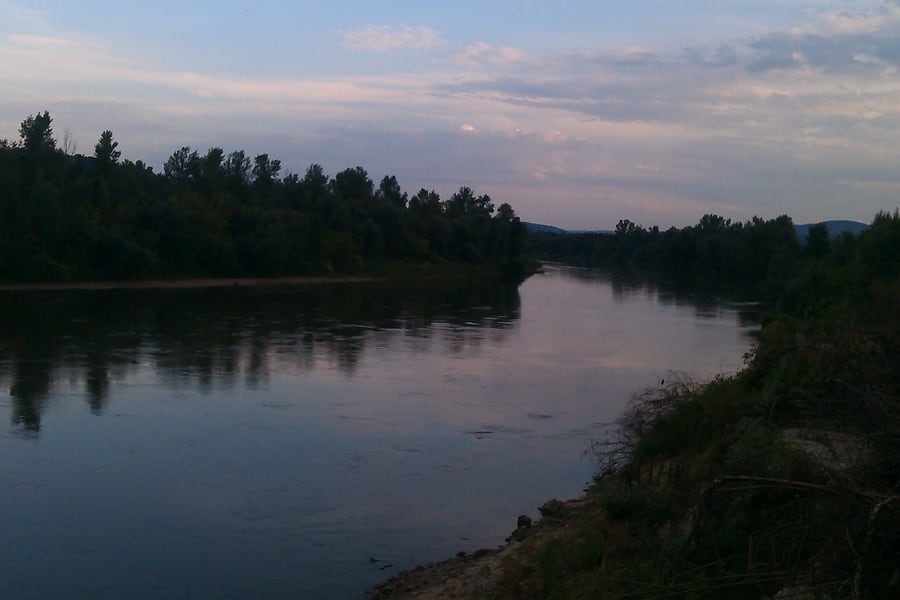
South of Mladenovac and Velika Plana the line runs down the valley of the Velika Morava. Lapovo is the junction where, on the opening run in 1884, the first train stopped for breakfast. Then come village stations such as Brzan and Bagrdan, and the towns of Jagodina, Ćuprija and Paraćin. At Stalać, two Regio trains a day leave for Kruševac.
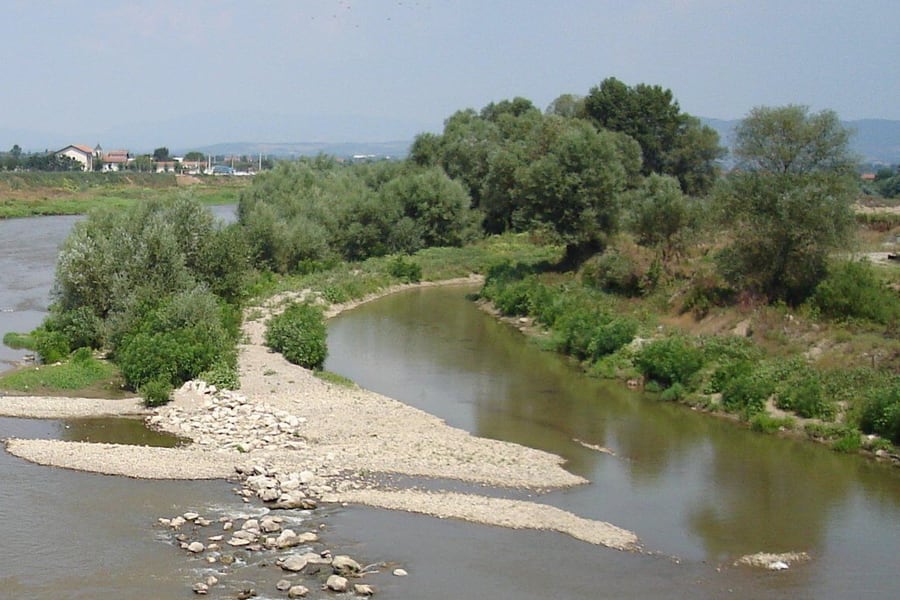
South of Stalać the line follows the South Morava, past the convent at Đunis and through Aleksinac, and comes into Niš at a station on the western edge of the city.
The trains and the track
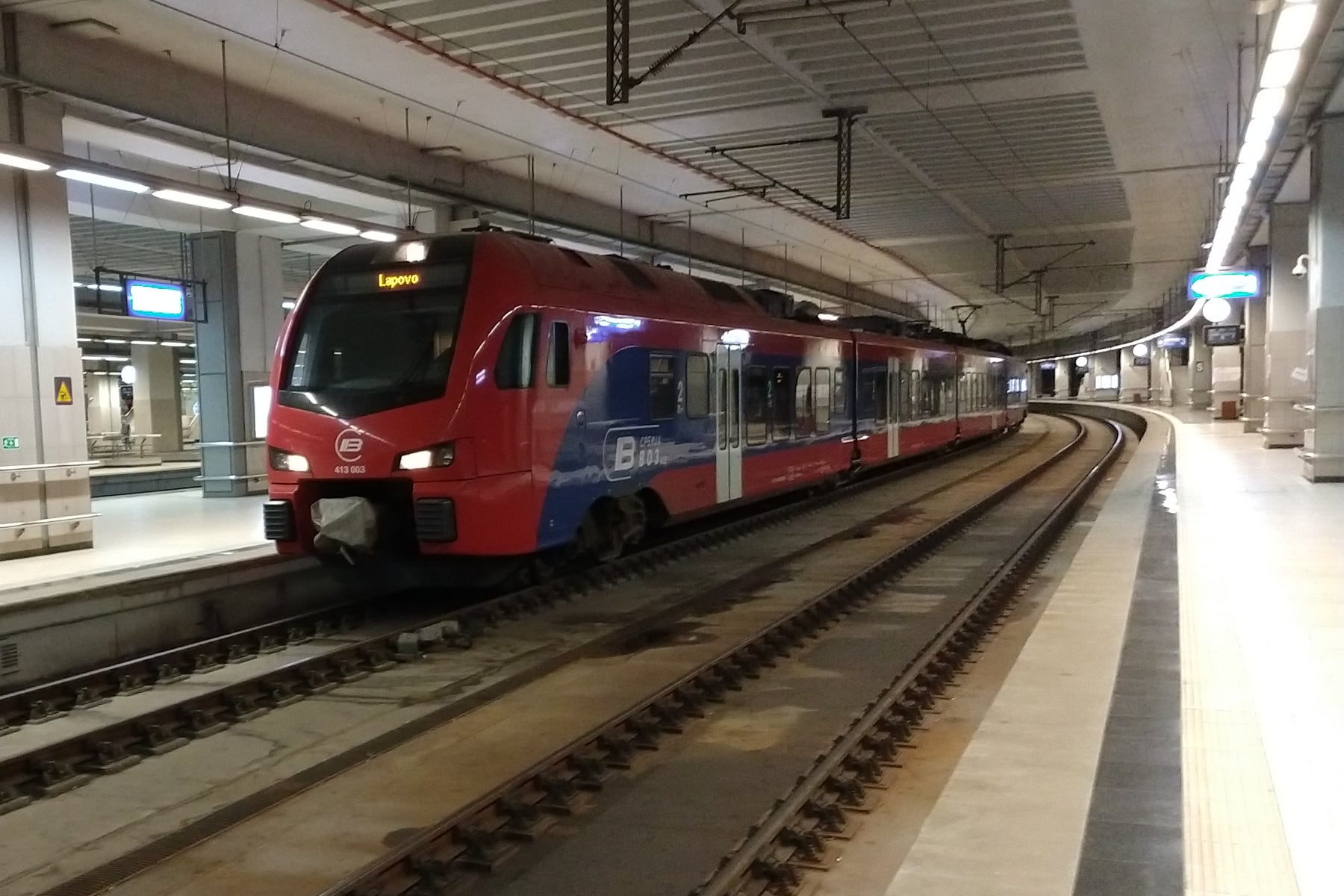
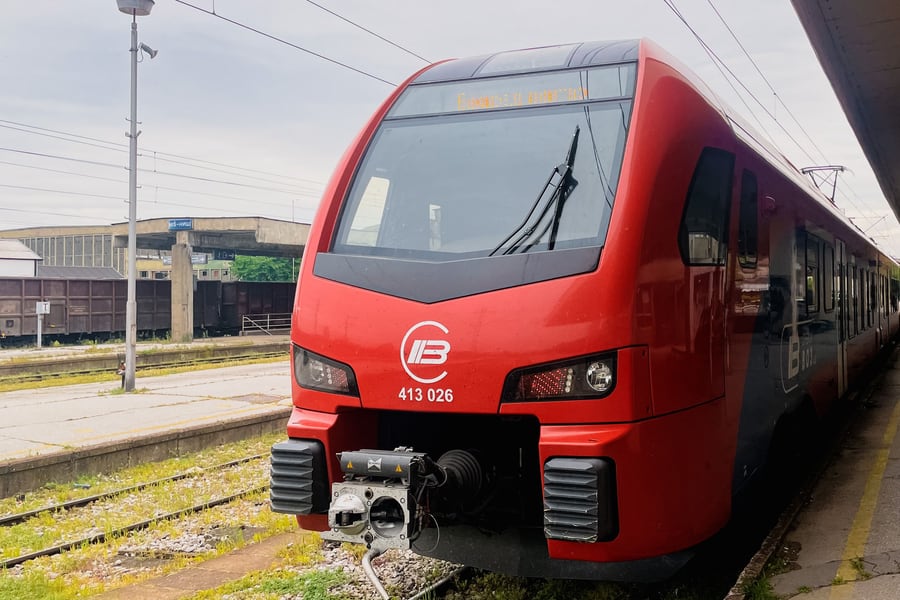
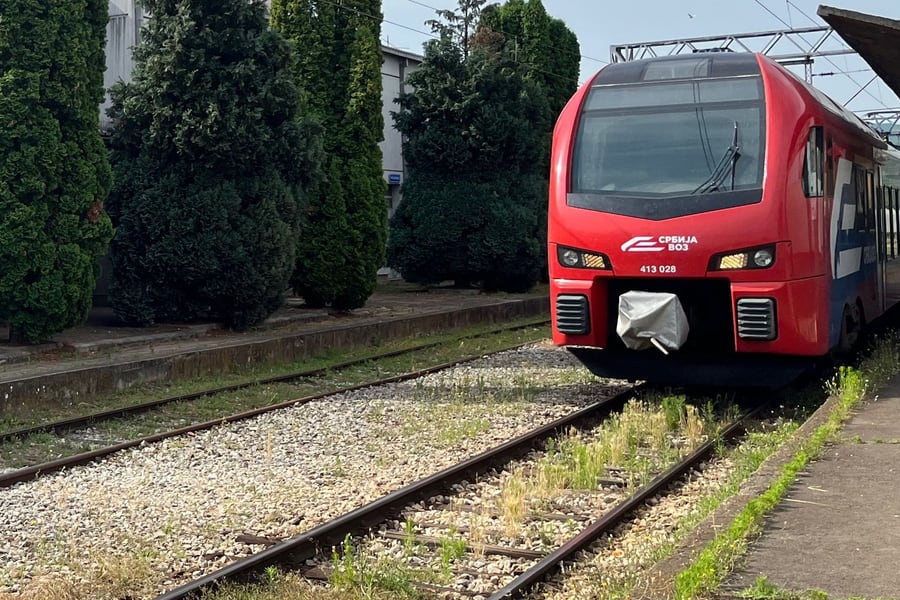
The trains photographed on the line in recent years are Srbija Voz's Stadler FLIRT electric units, class 413/417, in red and blue. The fastest service, the InterRegio, takes 5 hours 31 minutes; the Regio trains, calling at every village on the way, take up to 6 hours 38. In the 1920s, after the line was rebuilt for 100 km/h, the Orient Express ran from Belgrade to Niš in 5 hours 35.
The slowness is the track, which in places is limited to 30 km/h or less. A rebuild of the corridor for 200 km/h is being let in sections: the stretch from Stalać to Đunis is already under contract, and in August 2026 a tender went out for 65 kilometres more, from Paraćin to Stalać and from Đunis to Međurovo, just beyond Niš.
Beyond Niš
The old Orient Express route carries on east from Niš to Sofia, but no passenger trains run on it: the line from Sićevo to Dimitrovgrad has been closed for rebuilding since 11 November 2023. Southwards, trains to Leskovac returned on 9 October 2026 after the line was rebuilt. For the Bulgarian end of the old route, see the Sofia–Istanbul Express.
Along the route
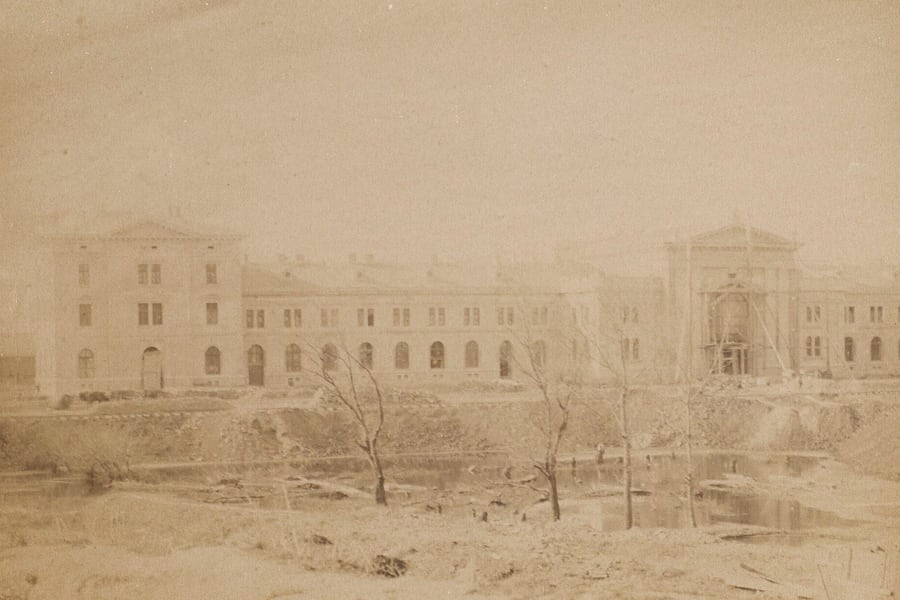 Armand Giben / Société de Géographie, via Wikimedia Commons · public domain · cropped
A station on a marsh
Belgrade's first station was built on Bara Venecija, a marsh by the Sava. To fill it, earth and gravel were dug from the hillside at Prokop and brought down. The cut they left is where the trains to Niš now start.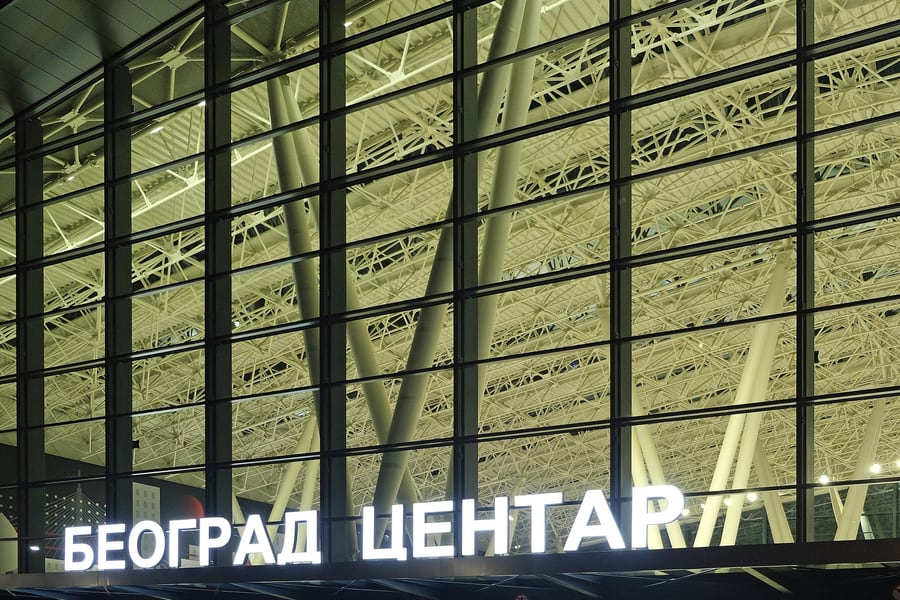 kallerna / Wikimedia Commons · CC BY-SA 4.0 · cropped
Belgrade Centre
Work on the new station in the cut began in 1977 and stopped and started for decades. It opened in 2016. The Niš trains moved there in December 2017, and the old station closed on 1 July 2018.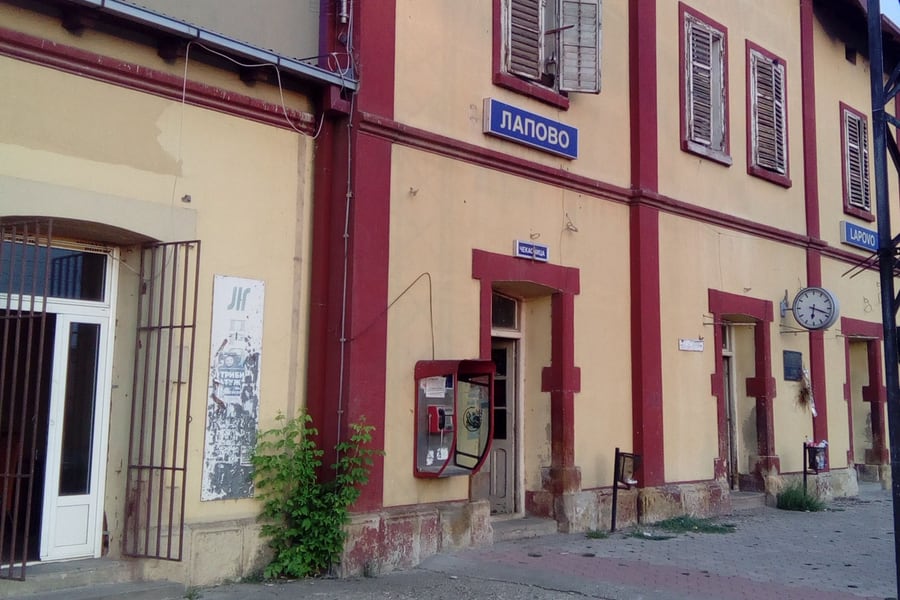 Marko Stanojević / Wikimedia Commons · CC BY-SA 4.0 · cropped
Breakfast at Lapovo
On the opening run in 1884 the first train left Belgrade at 8:30, reached Lapovo at 12:52 and stopped for a breakfast given by the railway company, then went on to Niš by 17:25. Lapovo is still one of Serbia's main railway junctions.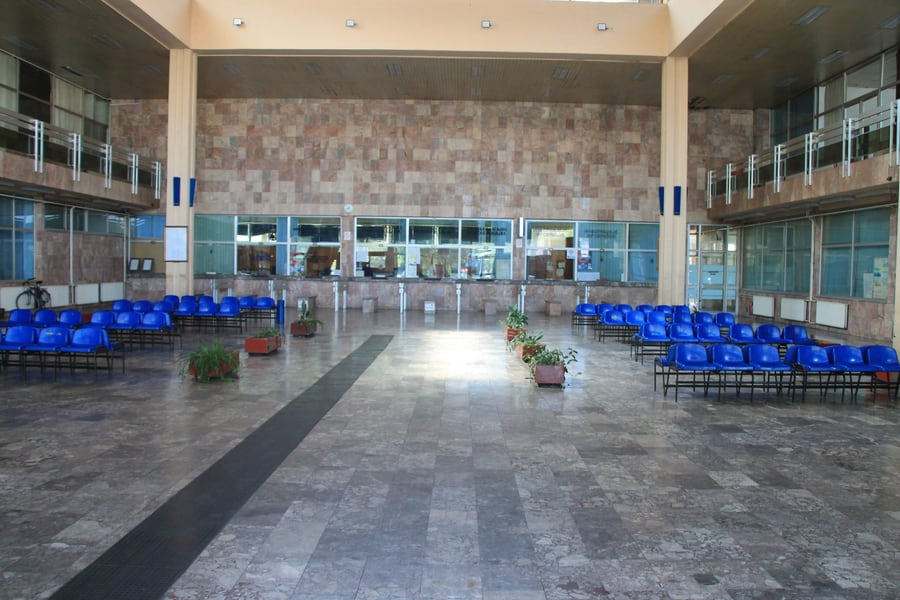 Ванилица / Wikimedia Commons · CC BY-SA 4.0
Niš station
Niš has had a station since 1884. The first building was wrecked in an air raid in 1943 and pulled down after the war. The present one, with its stone-walled booking hall, was handed over on 9 May 1979.A bit of history
Culture & experiences along the way
 Nenad Stevanović / Wikimedia Commons · CC BY-SA 3.0 · cropped
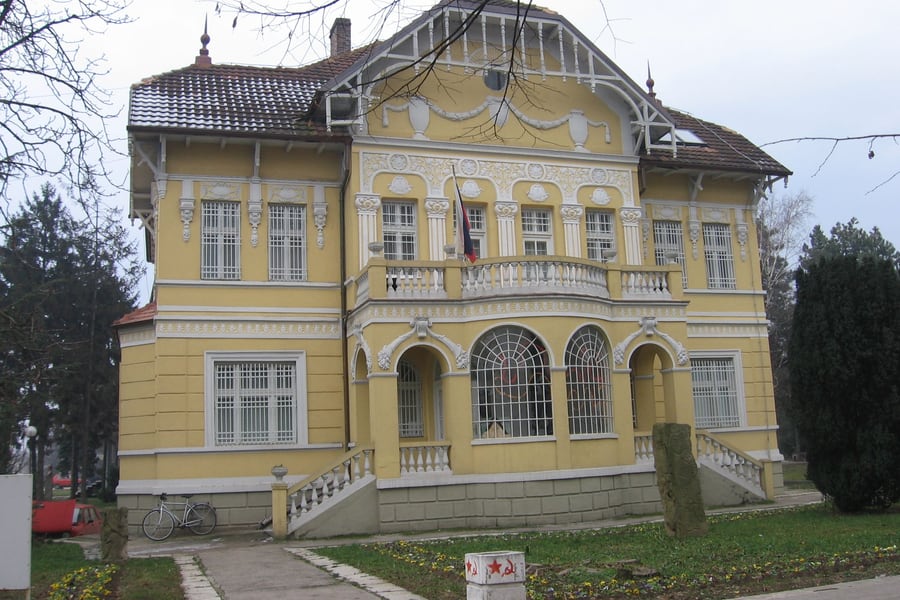
The Museum of Naïve and Marginal Art
In a park in the middle of Jagodina, a 1929 villa built for the merchant Ristić family holds some 3,500 works of naïve and marginal art by more than 400 artists from about forty countries: paintings, sculpture, prints and drawings, from the early twentieth century to now.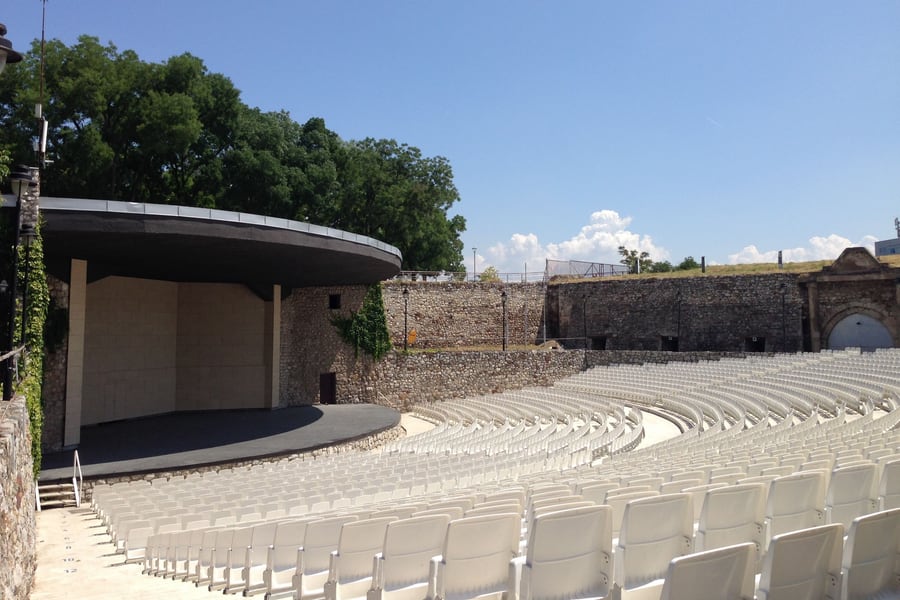 Intermedichbo - Milorad Dimić / Wikimedia Commons · CC BY-SA 4.0 · cropped
Nišville
Every August Niš holds Nišville, a jazz festival founded in 1995. Since 2006 it has played on open-air stages inside the Niš Fortress, mixing jazz with Balkan and world music, with free outdoor concerts and late jam sessions. Serbia's Ministry of Culture lists it as an event of national importance.Timetables
Srbija Voz runs four trains a day from Belgrade to Niš and three back, the same every day of the week. One each way is an InterRegio, which takes 5 hours 31 southbound and 5 hours 09 northbound; the others are Regio trains calling at every station, which take between 5 hours 55 and 6 hours 38. All of them start or end at Belgrade Centre, and there is no change of train.
Times as of November 2026, in the timetable that runs until 12 December 2026. Check departures in Srbija Voz's journey planner (opens in a new tab).
Belgrade to Niš
| Train | Belgrade Centre | Niš |
|---|---|---|
| Regio 2901 | 03:23 | 09:59 |
| Regio 2903 | 07:30 | 14:08 |
| Regio 2905 | 13:39 | 20:06 |
| InterRegio 691 | 15:40 | 21:11 |
Niš to Belgrade
| Train | Niš | Belgrade Centre |
|---|---|---|
| InterRegio 690 | 04:30 | 09:39 |
| Regio 2900 | 07:15 | 13:10 |
| Regio 2904 | 15:40 | 22:03 |
The InterRegio calls at Rakovica, Resnik, Ralja, Mladenovac, Smederevska Palanka, Velika Plana, Lapovo, Jagodina, Ćuprija, Paraćin, Stalać, Aleksinac and a handful of smaller stations; the Regio trains stop at more than fifty. From Belgrade Centre the InterRegio reaches Mladenovac in 1 hour 20, Lapovo in 2 hours 16 and Stalać in 4 hours 8.
Tickets
Since 15 July 2026 a second-class single from Belgrade to Niš has cost 1,322 dinars on a Regio train and 1,412 dinars on the InterRegio. Buying online or in the Srbija Voz app takes 5 per cent off. The Regio trains need no reservation; on the InterRegio a seat can be reserved.
Buy before you board. A ticket bought from the conductor carries a surcharge of 500 dinars if you got on at a station with a ticket office or a ticket machine, and the same applies to a return ticket used on a different train or date from the one printed on it.
Book your tickets
Belgrade to Niš
Srbija Voz · four trains south, three north
A Regio or InterRegio single bought at the station or online, 5 per cent cheaper online or in the app.
Book Tickets (opens in a new tab, on srbijavoz.rs)via srbijavoz.rsRail Passes
Interrail and Eurail passes cover the Regio trains. Interrail's list of railway companies includes Srbija Voz's Regional trains in both the Global Pass and the One Country Pass for Serbia, with no reservation needed. The list does not name the InterRegio, so a pass holder can count on three trains south and two north.
For this journey alone a pass is not worth buying: the fare is about 1,300 dinars. It is worth having only if you are already travelling around Serbia on one.
Pass conditions checked against Interrail's railway-companies page, last updated 21 October 2026. Conditions change with each season, and the pass issuer's page is the one that binds.
Places to Visit
Niš is the reason to make the trip: an Ottoman fortress on the Nišava, a Roman emperor's villa on the eastern edge of the city, and the Skull Tower. Prince Lazar's churches and a pilgrims' convent lie along the way, the convent beside a station on the line and Lazarica at the end of the branch train from Stalać.
For Belgrade, where the journey begins, see the Soko to Novi Sad, which also starts at Belgrade Centre.
 Ванилица / Wikimedia Commons · CC BY-SA 4.0 · cropped
Niš Fortress
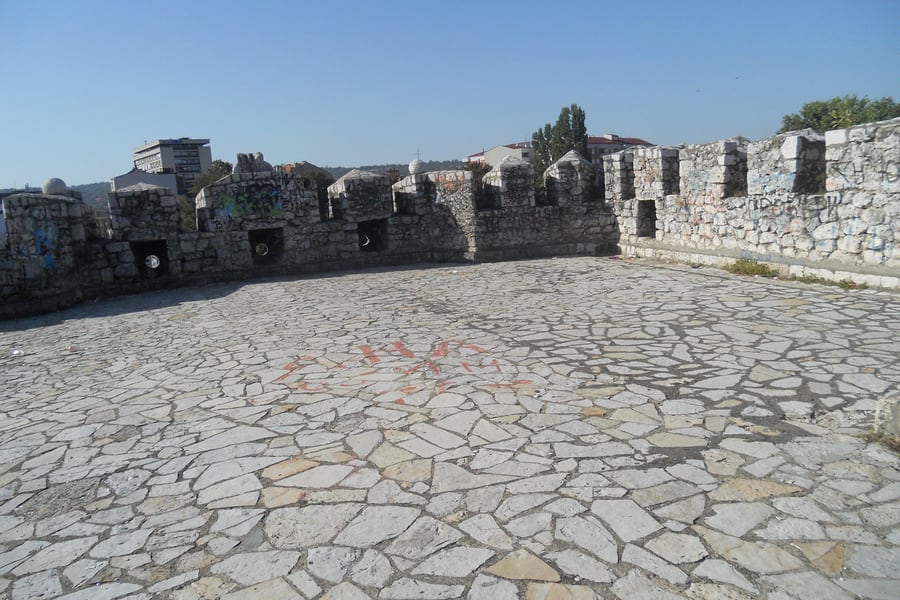
The walls on the right bank of the Nišava are Ottoman, built in 1719–23 on the site of Roman, Byzantine and medieval forts. They run for 2,100 metres, eight metres high, round 22 hectares, and the southern Stambol Gate still stands whole. It has been a protected monument since 1948 and is one of the best preserved fortresses in the Balkans.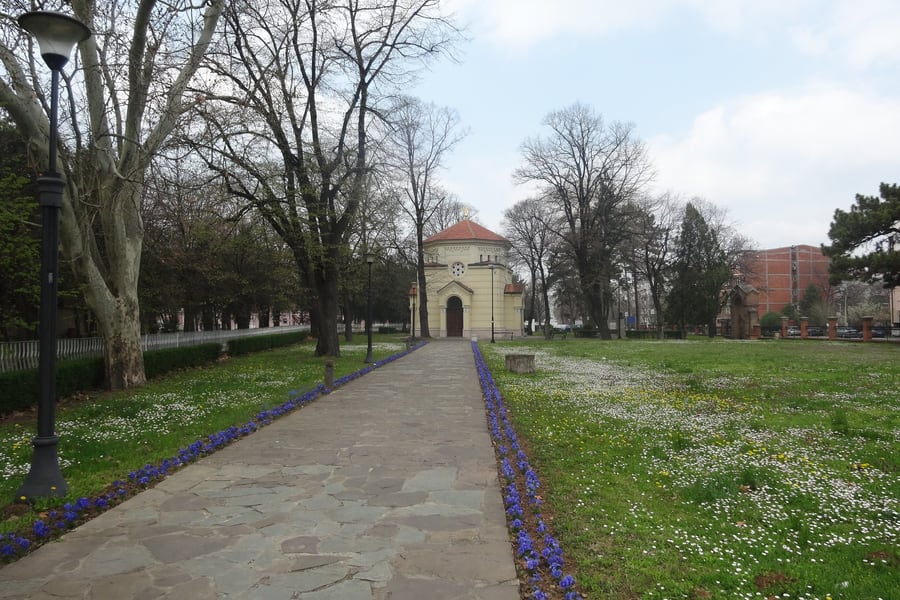 Djina / Wikimedia Commons · CC BY-SA 3.0 · cropped
Skull Tower
After the Battle of Čegar in 1809, when the rebel commander Stevan Sinđelić blew up his own powder store rather than be taken, the Ottoman governor had a tower built from the skulls of the fallen Serbs: 952 of them in fourteen rows. 58 remain, inside a chapel built round the tower in 1892–94.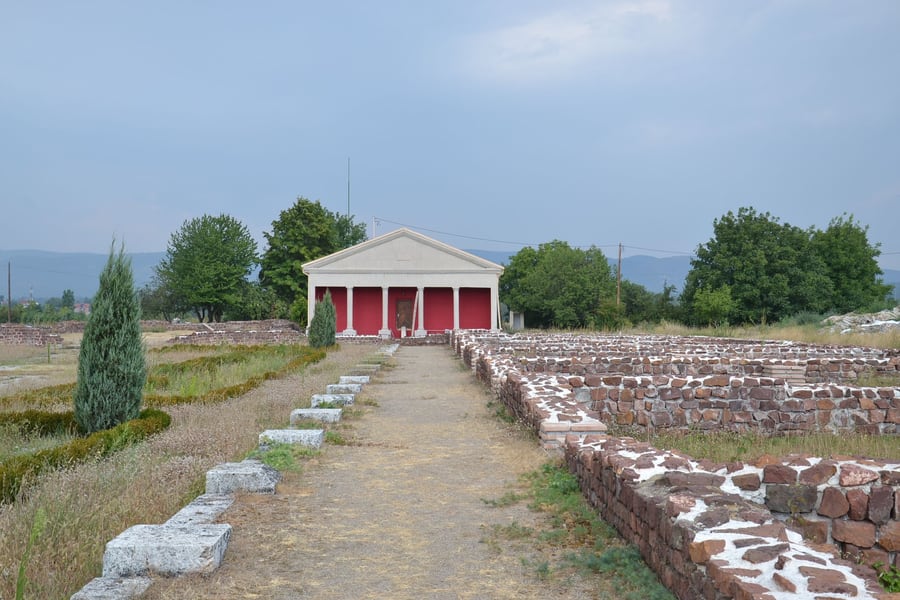 Pudelek (Marcin Szala) / Wikimedia Commons · CC BY-SA 3.0 rs · cropped
Mediana
Constantine the Great was born in Naissus, Roman Niš, and in its eastern suburb he built a residence where he stayed and passed laws. The excavated estate has a villa with a peristyle, baths, a granary and a water tower, the best preserved part of Roman Naissus. It has been protected as an archaeological site of exceptional importance since 1979.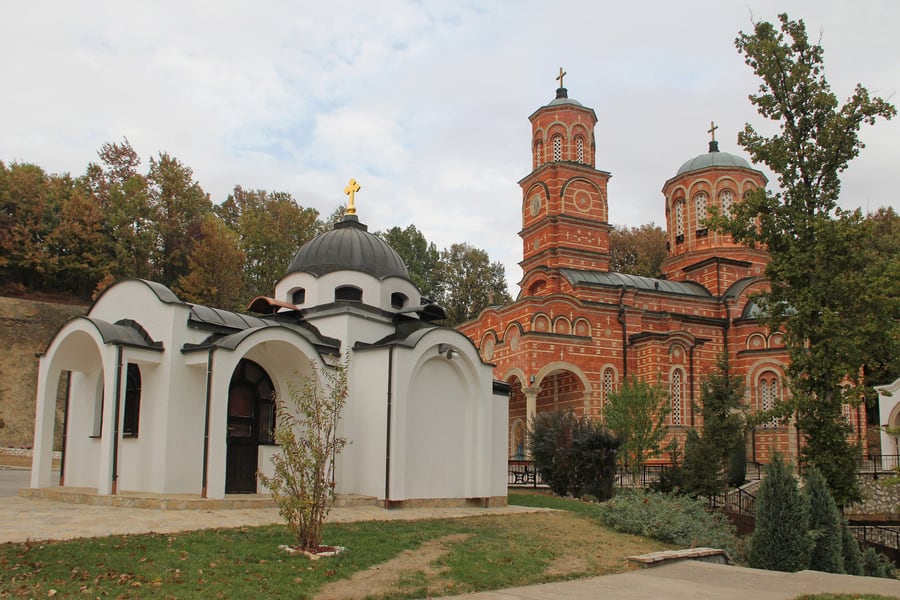 BrankaVV / Wikimedia Commons · CC BY-SA 4.0 · cropped
Đunis Monastery
The convent of the Protection of the Mother of God stands in the South Morava valley at Đunis, where the Regio trains stop. Tradition says the Virgin appeared to a thirteen-year-old village girl here in 1898. A wooden church came in 1934, the large church in 2001, and every 14 October thousands of pilgrims gather for the feast.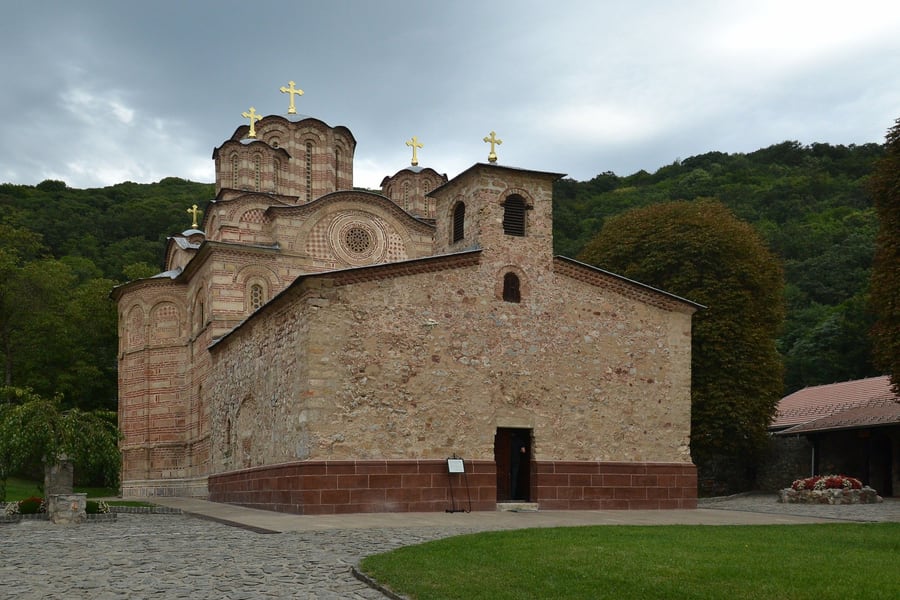 Pudelek / Wikimedia Commons · CC BY-SA 3.0 · cropped
Ravanica
Prince Lazar built Ravanica in 1375–77 in the Kučaj hills above Ćuprija, and was buried there after the Battle of Kosovo. Its church is called the birthplace of the Morava school of architecture, and the monastery has been a pilgrims' destination ever since. It has been a monument of exceptional importance since 1979.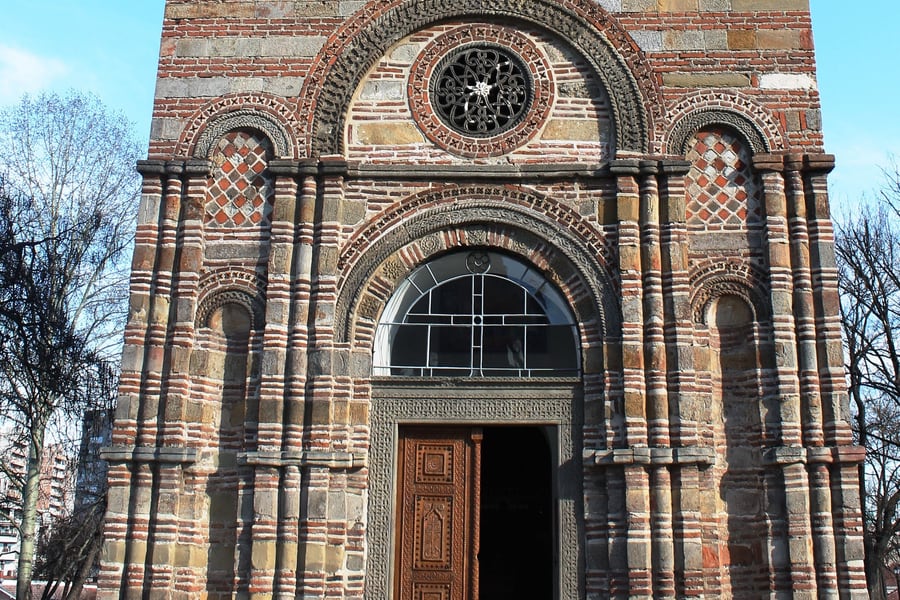 Manojlovic80 / Wikimedia Commons · CC BY-SA 3.0 · cropped
Lazarica
Lazar's palace church in his capital, Kruševac, was built in 1375–78 as the prototype of the Morava school. The Ottomans used it as a stable after 1455; today only the church and parts of the keep remain of the fortress. A branch train from Stalać takes 30 minutes, twice a day.Where to Sleep
At five and a half to six and a half hours each way, the journey is not a day trip. Stay in Niš: the InterRegio arrives at 21:11, and the morning Regio at 07:15 or the afternoon one at 15:40 brings you back.
In Niš, the hotels around King Milan Square are close to the fortress. To break the journey for Ravanica or Lazarica, stop in Ćuprija or Kruševac.
Where to stay
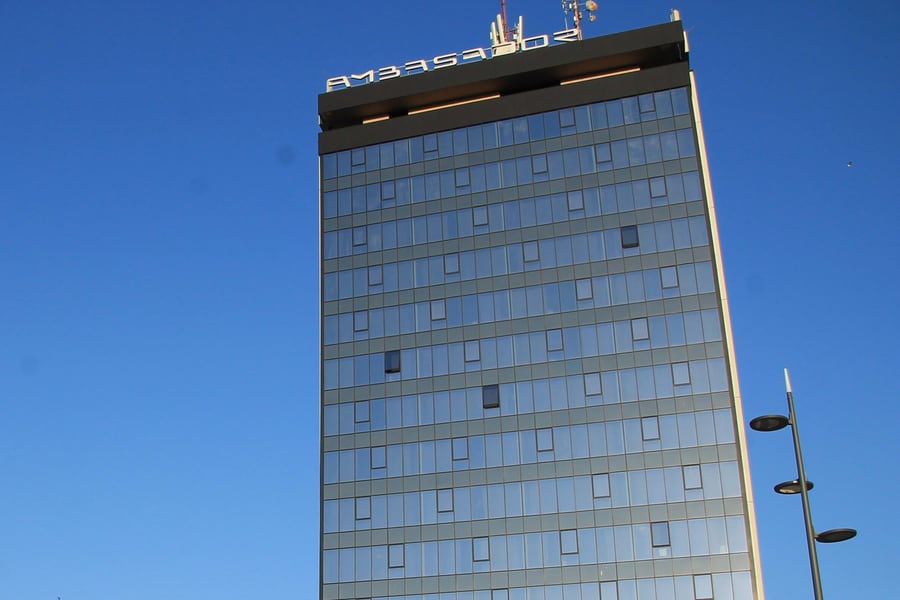 Ванилица / Wikimedia Commons · CC BY-SA 4.0 · cropped
Hotel Ambasador
On King Milan Square, Niš
The tower on the main square, opened in 1968 and reopened in 2019 after a renovation, near the Niš Fortress.
Check Availability (opens in a new tab, on ambasadorhotel.com)via ambasadorhotel.comQuestions or corrections
Planning this trip and stuck on something, or spotted a time, fare or detail that has changed? Send us a message about Belgrade to Niš. We read every one, and we update this page when something has changed.