Comboio Presidencial
Nelso Silva / Wikimedia Commons · CC BY-SA 2.0
- DistancePorto–Ferradosa · the Linha do Douro
- DurationAbout 11 hours (10:50–21:55)
- Best seasonSpring & autumn seasons · Saturdays
Introduction
In 1890, the French firm Désouches David & Cie built three railway saloons for the kings of Portugal: a Ministers' Salon, a Restaurant Salon, and a Salon for the entourage and the security men. They were the royal train — panelled, gilded, and entirely serious about what they were for.
Twenty years later the monarchy was gone. Portugal became a republic in 1910, and a republic has no use for a royal train.
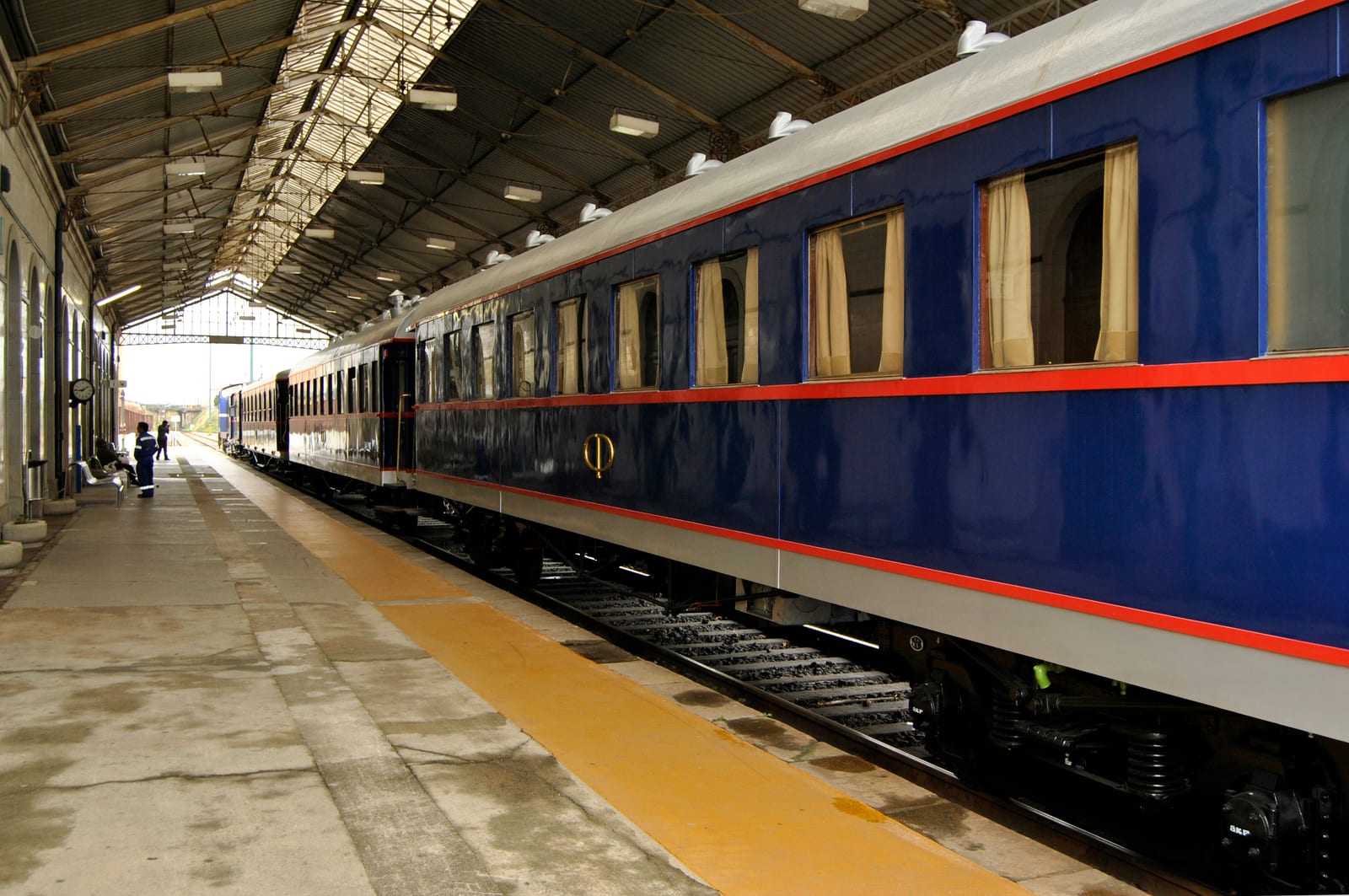
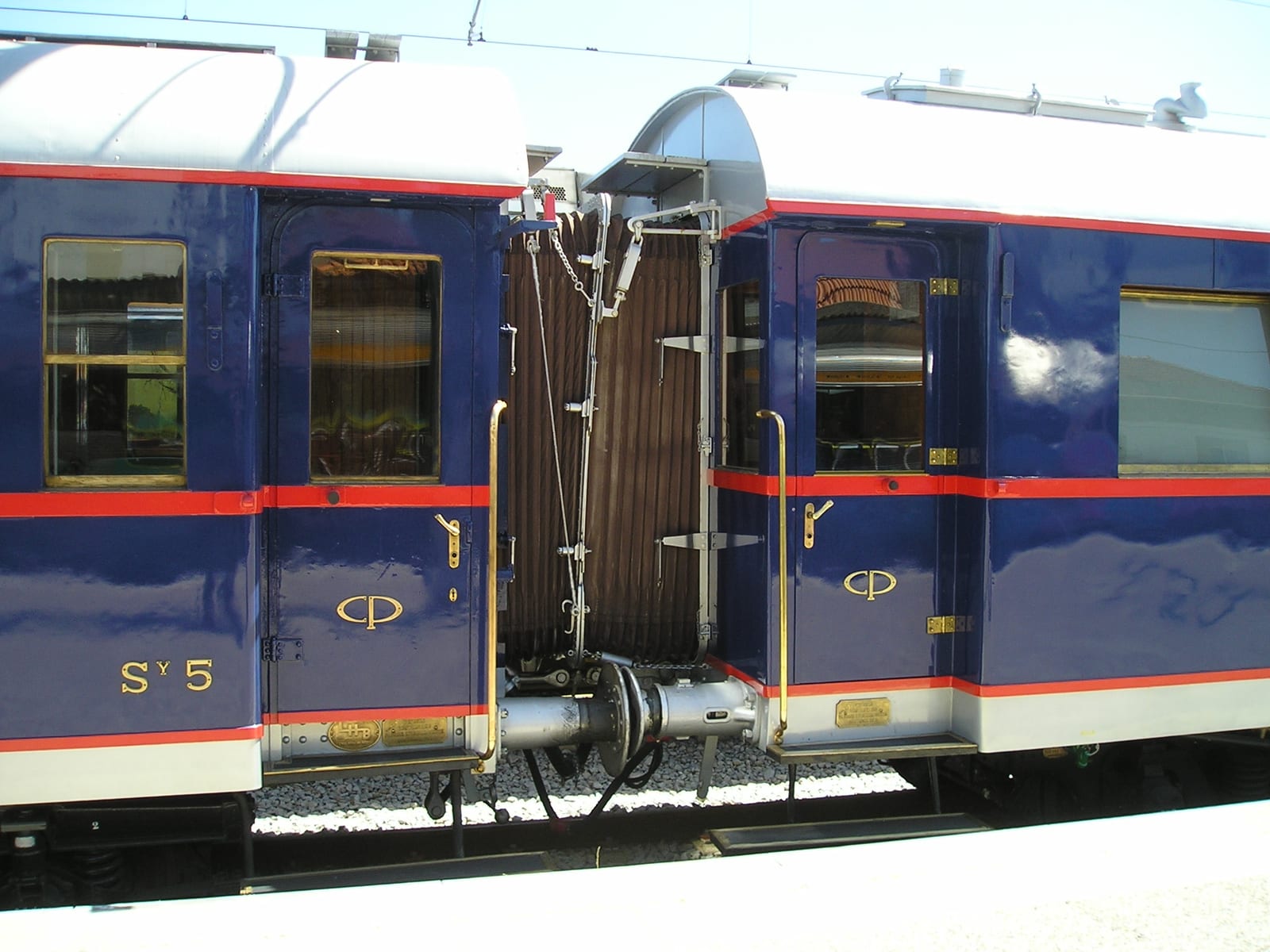
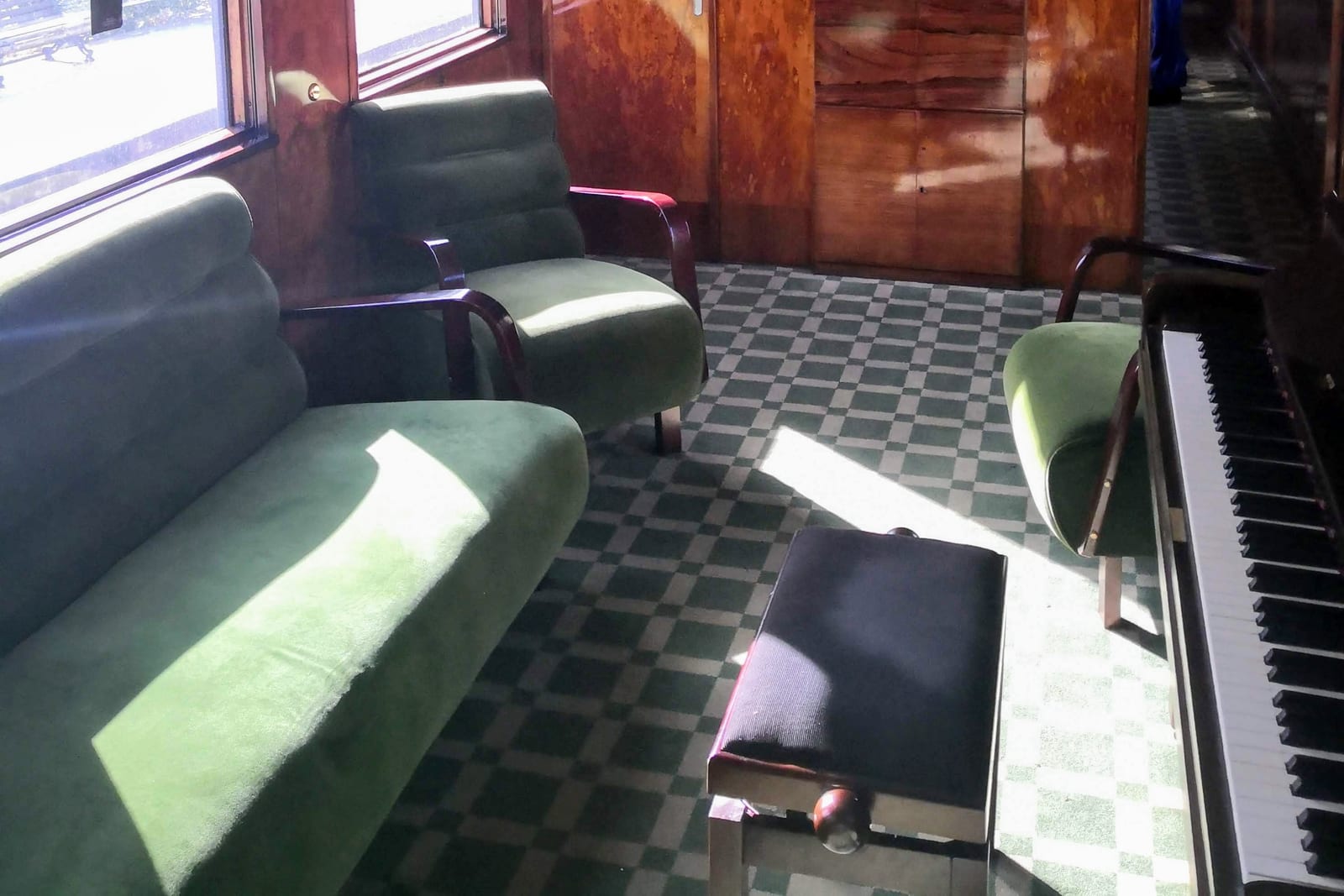
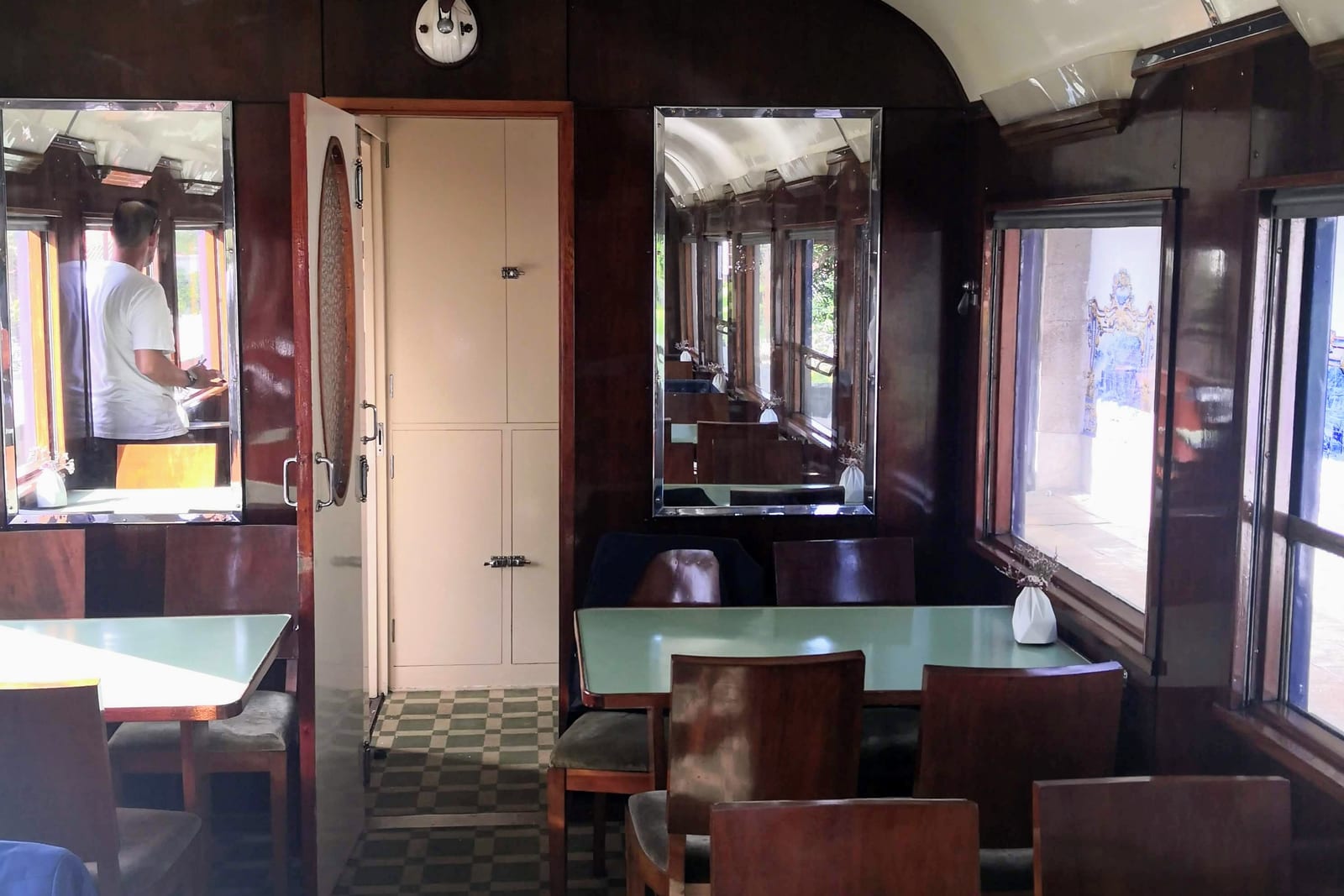
Except it did. Rather than break the carriages up, the new state simply renamed them. From 1910 the same saloons went on carrying the head of state around the country — as the Comboio Presidencial, the Presidential Train. In 1930 a fourth carriage joined them, the Head of State salon, built by Linke-Hofmann Busch in Germany with green-toned interiors, a vestibule, a kitchen and the president's own quarters; you can still see it lettered S 5 on the carriage side. In 1940 the originals were rebuilt at the Barreiro workshops and two more vehicles were added — a van, and a Journalists' Carriage, a first-class compartment car for the travelling press, which tells you exactly what these journeys were.
Six carriages. Kings, then presidents. Marshal Óscar Carmona, Admiral Américo Tomás, Marshal Craveiro Lopes; Queen Elizabeth II's entourage when she came in 1957. Mostly Lisbon to Porto, with the security laid on.
And then, on 30 July 1970, it made its last notable journey: carrying Salazar's funeral cortège from Lisbon to Santa Comba Dão. Eighty years of Portuguese power had ridden in these rooms, and that was the end of it. The train went to a museum and stayed there for forty years.
It came back. Restored between 2009 and 2013 at the National Railway Museum in Entroncamento — which still owns it — it now runs a handful of Saturdays a year on the Linha do Douro, out of Porto-São Bento and up the river as far as Ferradosa, with a menu by Chef Chakall and the wines of the estates you are rolling past.
It costs €750, and it is not a train journey in any ordinary sense. It is a day inside a national museum piece that happens to be moving through a UNESCO wine landscape while someone pours you a glass. If that sounds absurd, it is — gloriously, and on purpose.
The Journey
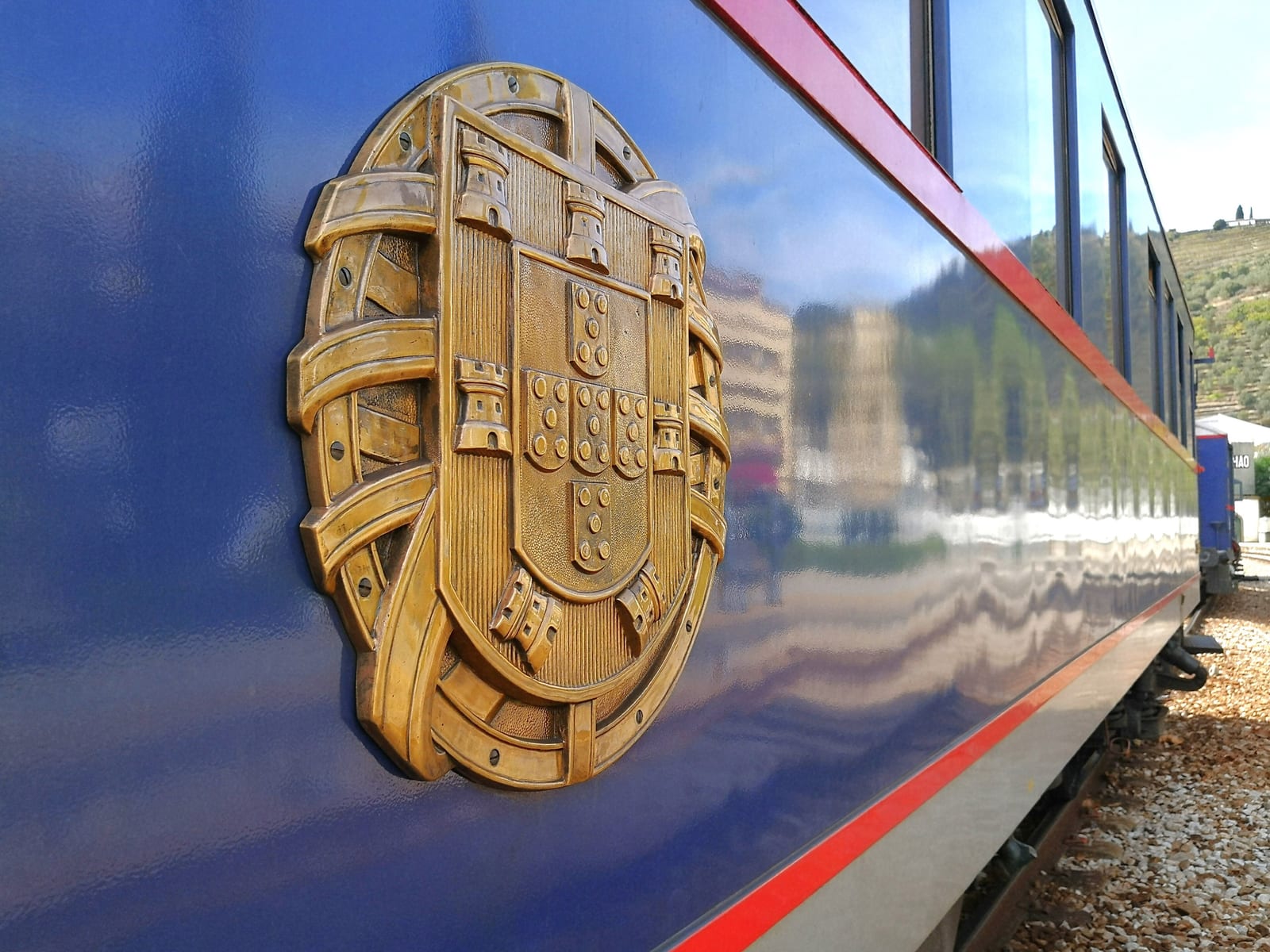
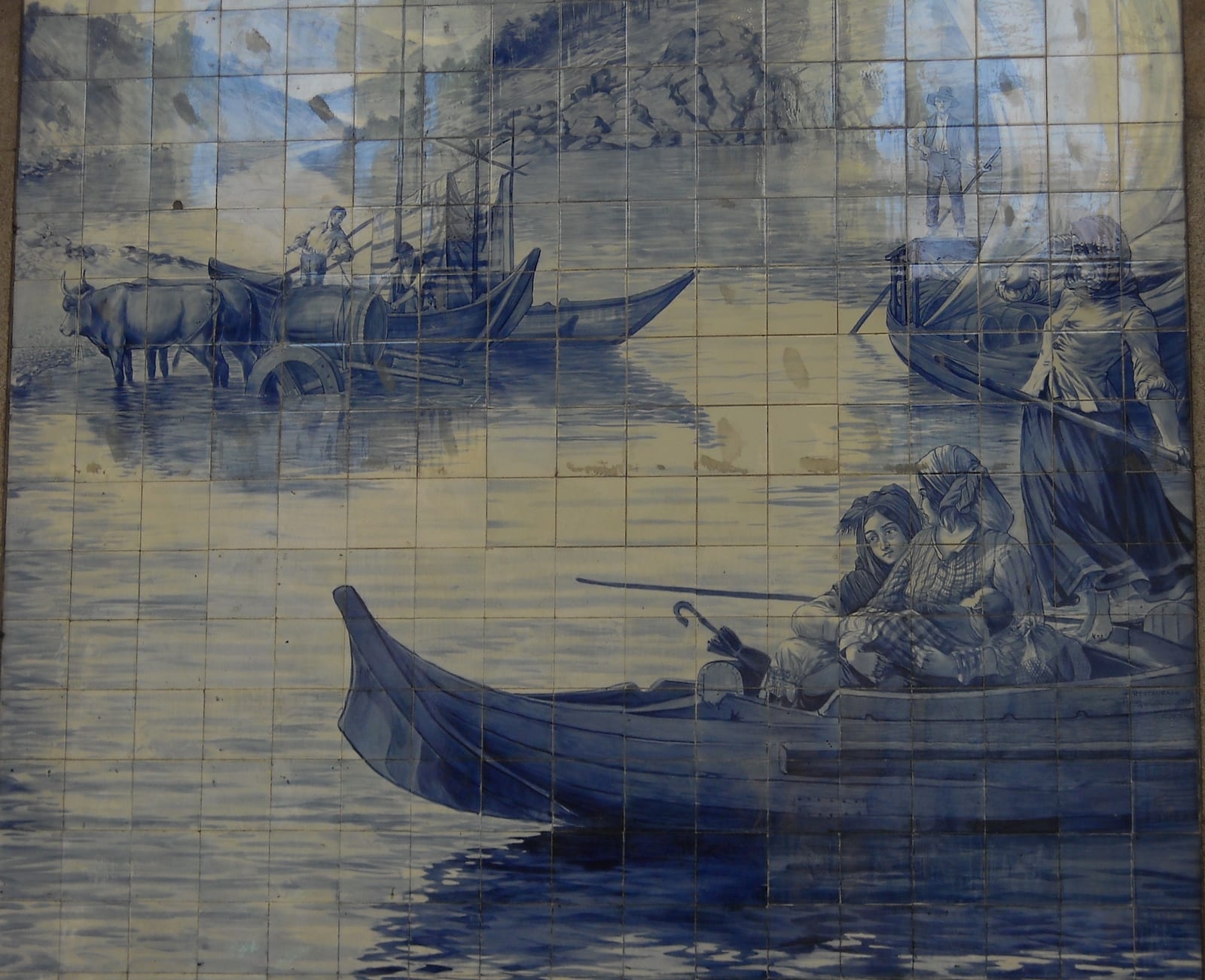
It begins at Porto-São Bento, which is the right place for it. The station hall is lined floor to ceiling with azulejos — great blue-and-white panels of Portuguese history, battles and harvests and royal processions — and you walk through all of it to reach a platform where six deep-blue carriages are standing with a red stripe along their flanks and the Portuguese coat of arms carved and bolted to the side.
Departure is 10:50. There is no hurry to any part of this day.
The Linha do Douro leaves Porto and takes a while to become itself: suburbs, then the river, and then — somewhere past Régua — the thing everyone comes for. The Douro is the oldest demarcated wine region in the world and a UNESCO World Heritage landscape, and the railway has the best seat in it, running the north bank on a ledge above the water with the terraces stacked up the hillsides above. In places the track is so close to the river that the whole train seems to be floating.
Inside, you are in rooms that are frankly hard to sit in casually. Panelled wood, brass, upholstered benches, a piano. These are the saloons where cabinet ministers sat, and where a president had his own quarters behind a door marked for him alone. There is live music in the carriages. Lunch is Chakall's, built out of the cooking of the north, and the wines are poured by the estates themselves — Rozés – Quinta do Grifo, Vallado, Vale D. Maria — which means you are frequently drinking something grown on a hillside currently going past the window.
The train runs up as far as Ferradosa, and the excursion goes up from there to São João da Pesqueira and its Museu do Vinho, a permanent exhibition about the only subject this valley has ever really had. Then back down the river, with the light going long and gold across the terraces, which is when the Douro is at its best and when — not coincidentally — the train has arranged for you to be looking at it.
You are back at São Bento at 21:55. Eleven hours, most of it barely moving.
The odd thing, and the thing that stays with you, is what you have actually been sitting in. Not a replica, not a themed carriage: the real vehicles, the ones that carried the kings and then the presidents and then the coffin. A museum piece with a table in it — and the museum let you eat at the table.
Along the route
sanjorgepinho / Wikimedia Commons · CC BY-SA 4.0A royal train that outlived the monarchy
The three original saloons — Ministers', Restaurant, and Entourage & Security — were built in 1890 by the French firm Désouches David & Cie for Portugal's kings. When the Republic arrived in 1910, the country did not scrap them. It simply renamed the train and carried on._morgado / Wikimedia Commons · CC BY 2.0The last journey, 30 July 1970
Its final duty was to carry Salazar's funeral cortège from Lisbon to Santa Comba Dão. After eighty years of kings, presidents and a dictator, the train stopped — and then sat in a museum for four decades.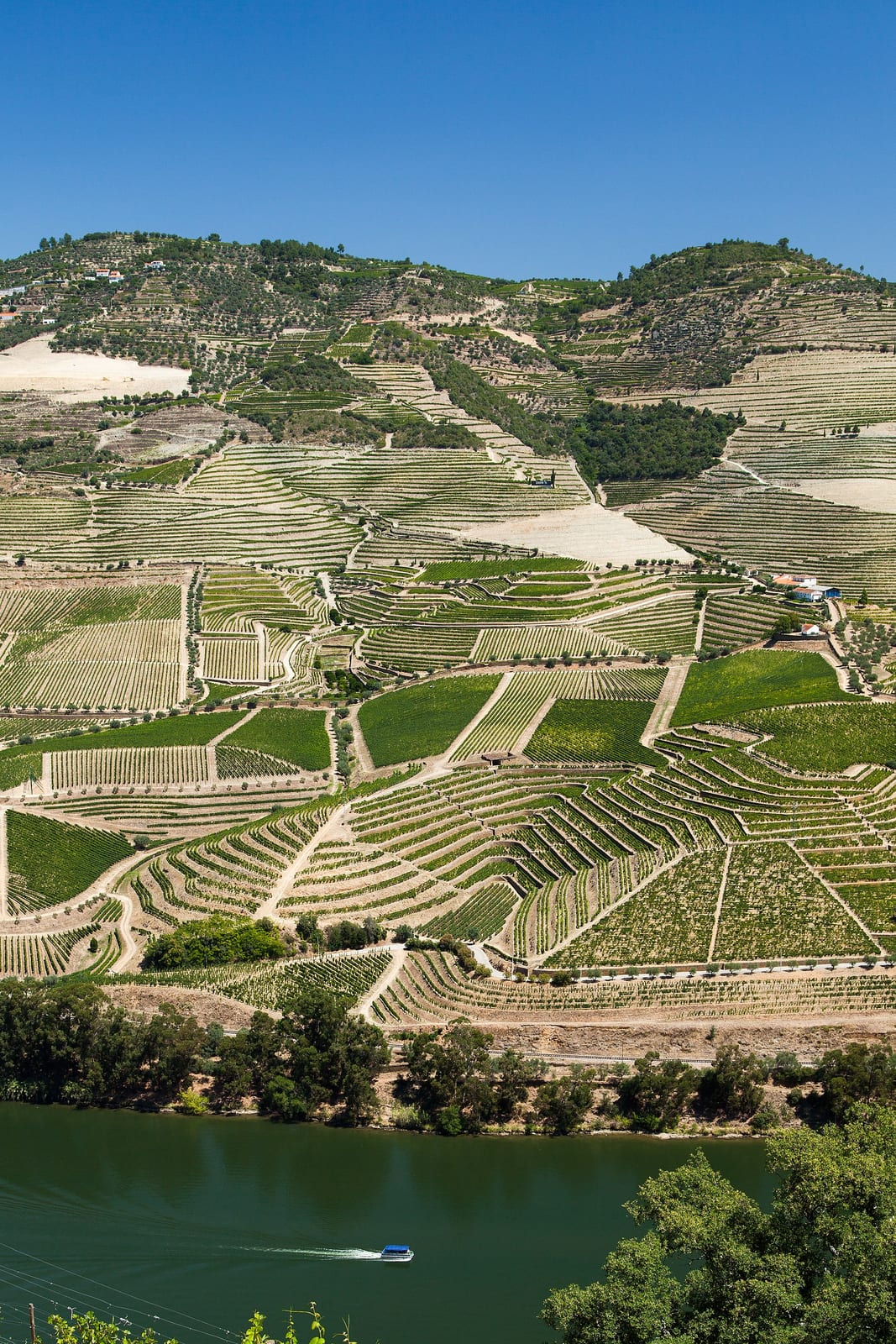 Grand Parc / Wikimedia Commons · CC BY 2.0
The Douro, from the best seat it has
The line runs the north bank as far as Ferradosa, through the oldest demarcated wine region on earth and a UNESCO World Heritage landscape. In places the track is close enough to the water to feel like a boat.A bit of history
Culture & experiences along the way
sanjorgepinho / Wikimedia Commons · CC BY-SA 4.0 · croppedChakall's table
The reason the train runs at all. Chef Chakall builds a menu around the cooking of the north and the Douro, and the wines come from estates like Rozés – Quinta do Grifo, Vallado and Vale D. Maria, poured as you pass the vineyards they came from.sanjorgepinho / Wikimedia Commons · CC BY-SA 4.0 · croppedLive music in the carriages
There is music played in the saloons as you go — in rooms that once held cabinet ministers and a queen's entourage. It should be too much, and somehow it isn't.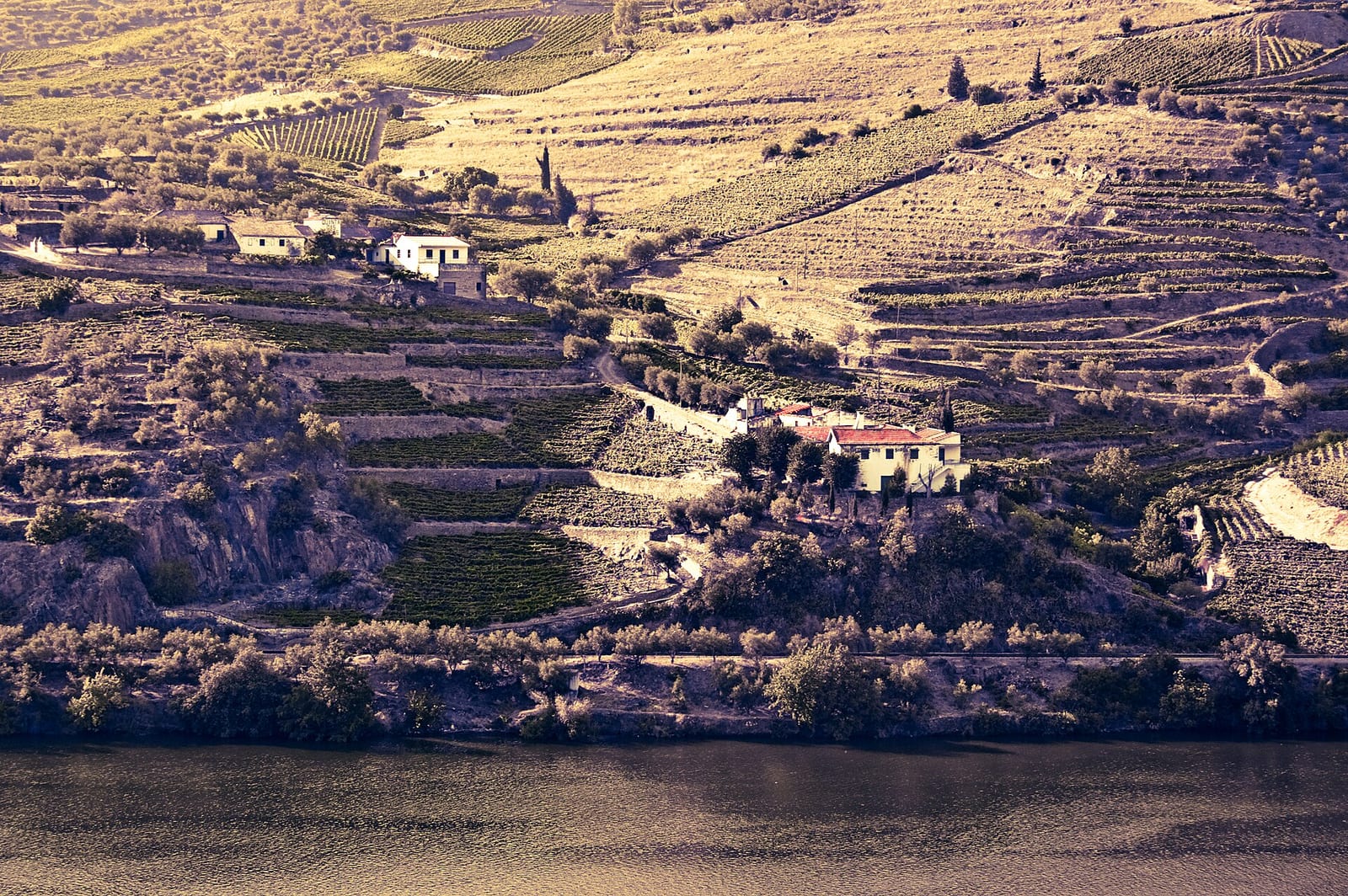 Feliciano Guimarães / Wikimedia Commons · CC BY 2.0
The Wine Museum at S. João da Pesqueira
The train reaches Ferradosa, and the excursion goes up to the Museu do Vinho at São João da Pesqueira — a permanent exhibition on the thing the whole valley is built around.Timetables
The Presidential Train runs a handful of Saturdays a year, in two short seasons. It is not a scheduled service and there is no turning up for it.
How the day runs:
| Time | What happens |
|---|---|
| 10:50 | Depart Porto-São Bento |
| Late morning | The Linha do Douro — Peso da Régua, then the river proper |
| Midday on | Lunch by Chef Chakall, Douro wines, live music in the saloons |
| Afternoon | Ferradosa — and up to the Museu do Vinho at São João da Pesqueira |
| Evening | Back down the Douro in the long light |
| 21:55 | Back at Porto-São Bento — about 11 hours |
Good to know:
- Two seasons, both short. Roughly April to early June, and again from about late September into October — Saturdays only, and only a few of them. CP publishes the dates each year and they move, so confirm before you build a trip around it.
- Autumn is the one. The Douro at harvest, with the terraces turning, is the valley at its absolute best — and it is also when the train sells out first.
- This is one price for everything. The menu, the wines, the music and the off-train visit are the product; there are no classes to choose between.
- It's a long, slow, seated day. Eleven hours, most of it at a table. That is the point, but go in knowing it — this is not a sightseeing trip with a restaurant attached.
- Book far ahead. Six carriages, a few Saturdays a year, and a lot of interest.
- If it's sold out, the valley isn't. The ordinary Linha do Douro regional train runs the same river every day for a few euros, and the view out of the window is identical.
Tickets
Tickets come from CP – Comboios de Portugal, who run the train with the National Railway Museum Foundation and Chef Chakall. CP's published price is €750 a passenger, and that is the whole thing: the day, the menu, the wines, the music and the visit ashore. There is no upgrade to buy and no class system — one train, one price. It runs a few Saturdays in autumn, at harvest and in colour, and a few more in spring with the valley green.
Dates change every year and the seasons are tiny — a handful of Saturdays, six carriages — so treat the date as the fixed point of the trip rather than something to fit in, and start in Porto the night before. If the price rather than the date is the obstacle, the ordinary Douro line train gives you the same river and the same terraces; what you are paying for here is the carriages.
Book your tickets
Autumn season
Saturdays, September–October
The autumn run, which catches the Douro at harvest and in colour — the best time to be in the valley. Departs Porto-São Bento at 10:50 and returns at 21:55. All-inclusive of the menu, the wines and the off-train visit.
Book Tickets (opens in a new tab, on CP – Comboios de Portugal)via CP – Comboios de PortugalSpring season
Saturdays, April–early June
The same day earlier in the year, with the valley green and the terraces newly worked. Same departure, same six carriages. Seasons and dates shift each year, so check CP before you plan around it.
Book Tickets (opens in a new tab, on CP – Comboios de Portugal)via CP – Comboios de PortugalRail Passes
No rail pass covers the Comboio Presidencial. Interrail's table of railway companies names it among the trains excluded in Portugal. It is sold by CP as a single all-inclusive day.
A pass does cover the same river. CP's regional trains up the Douro line are included in Portugal and need no reservation, so a pass holder can ride from Porto to the terraces on the ordinary train.
Checked October 2026 against interrail.com (opens in a new tab) and Interrail's Portugal page (opens in a new tab).
Places to Visit
The train gives you the Douro through a window and a wine glass. The valley deserves that you get out and walk around in it — which is the argument for building a few days around the Saturday rather than treating it as a day trip from Porto.
Régua and Pinhão are both worth stopping at properly, and both are covered on the Douro line, which runs the same rails on an ordinary ticket every day of the week.
 Ken & Nyetta / Wikimedia Commons · CC BY 2.0 · cropped
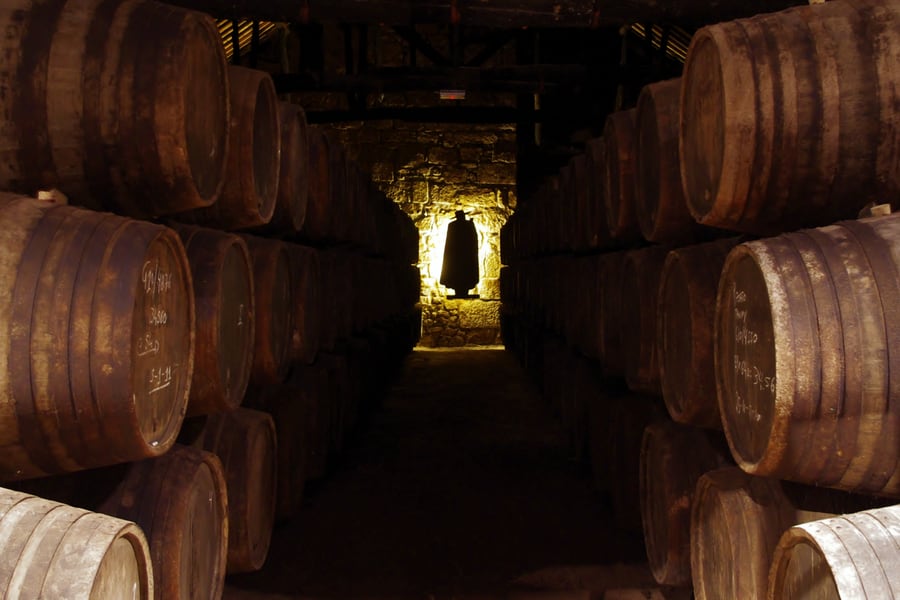
Vila Nova de Gaia
Directly across the water from where the day begins, and where the wine you drink on the train ends up. The lodges of Gaia have aged port in cool riverside cellars for three centuries, and most of the great houses run tours that finish in a tasting. On the Presidential you spend the day drinking the Douro at its source; Gaia is the other half of that story — the shipping end rather than the growing end.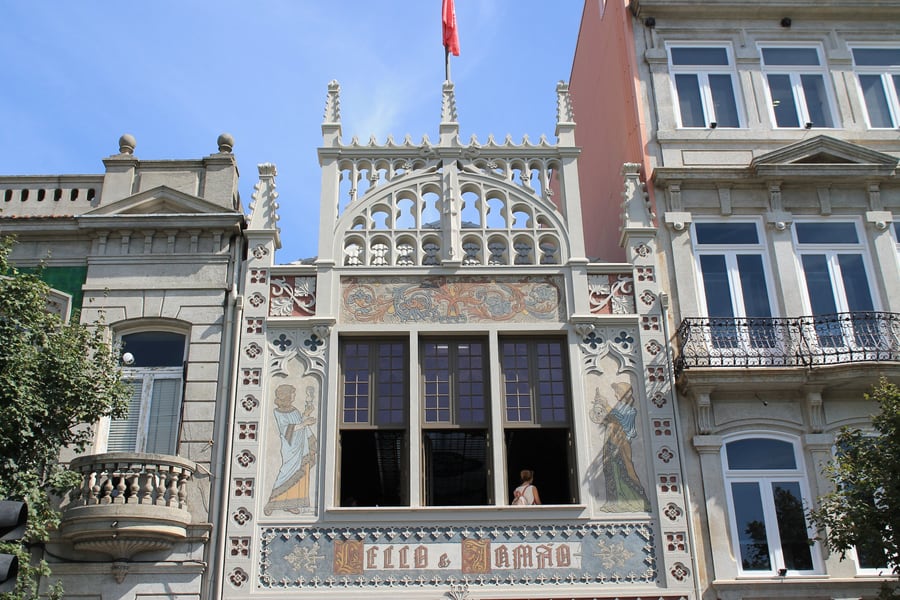 John Samuel / Wikimedia Commons · CC BY-SA 4.0 · cropped
Livraria Lello
Ten minutes uphill from São Bento, and worth the queue. The Lello brothers opened it in 1906 to a design by the engineer Francisco Xavier Esteves — a neo-Gothic front, a forked staircase in carved wood, an 8-by-3.5-metre stained-glass ceiling — and it has charged admission since July 2015. Ignore the Harry Potter marketing: J.K. Rowling has said plainly that she never went in and that it had nothing to do with Hogwarts.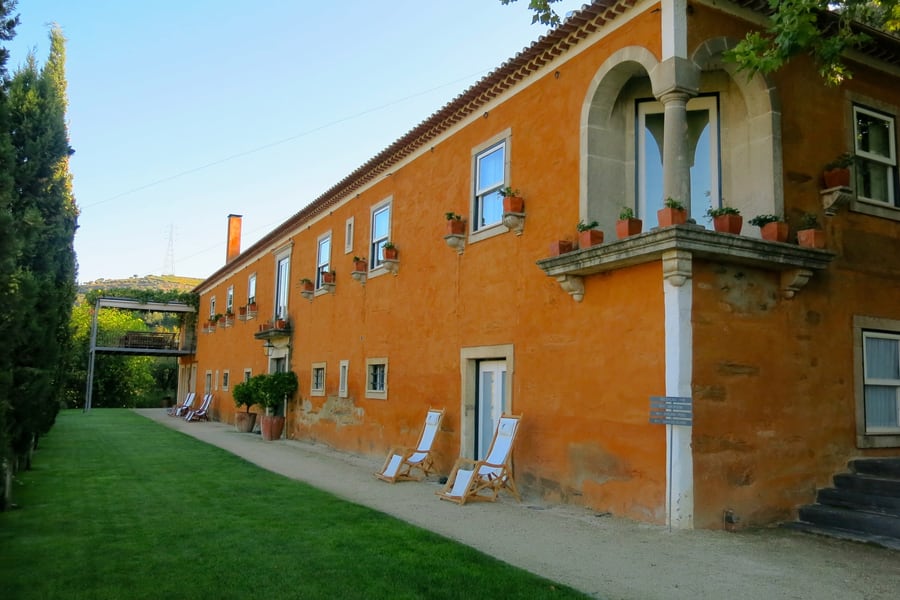 Kyle Taylor / Wikimedia Commons · CC BY 2.0 · cropped
Quinta do Vallado
One of the wines poured on the train, and one of the oldest estates in the valley — the house dates from 1716. It sits just outside Peso da Régua, close enough to the line to fold into an ordinary Douro trip, and like most of the serious quintas it takes visitors for tastings and for lunch. Drinking a wine within sight of the terraces that made it is the whole argument for coming up here at all.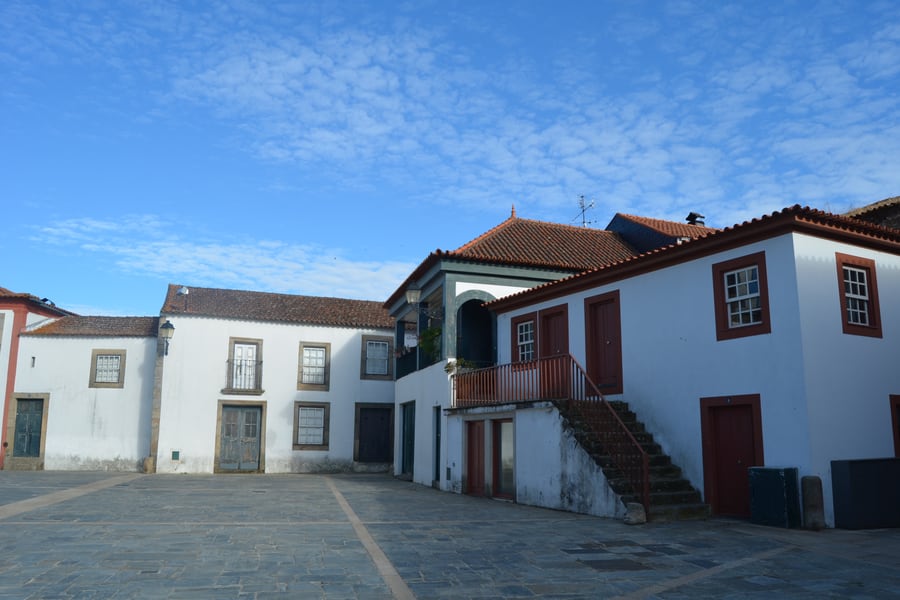 Pedro from Maia (Porto) / Wikimedia Commons · CC BY 2.0 · cropped
São João da Pesqueira
Where the excursion goes while the train waits down at Ferradosa. The Museu do Vinho is a proper account of Douro viticulture, and the Praça da República is a square of restored old buildings worth a slow circuit. The municipality holds around 20% of the classified Alto Douro area — and it was granted the first royal charter issued anywhere in what is now Portugal, between 1055 and 1065.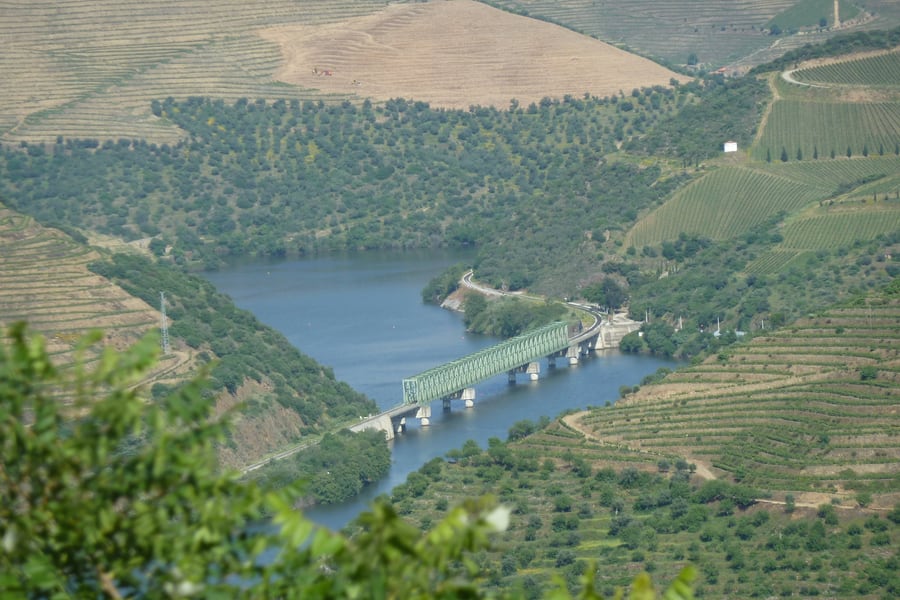 Edgar Jiménez / Wikimedia Commons · CC BY-SA 2.0 · cropped
Ferradosa
The train runs the north bank this far and no further; the quay and the iron railway bridge at Ferradosa are where it stops and turns for home. It is a good place to read the shape of the valley — the river swings hard, the terraces climb both banks — and to notice that the Douro line carries on east without you, towards Tua and Pocinho and the hottest, emptiest end of the wine country.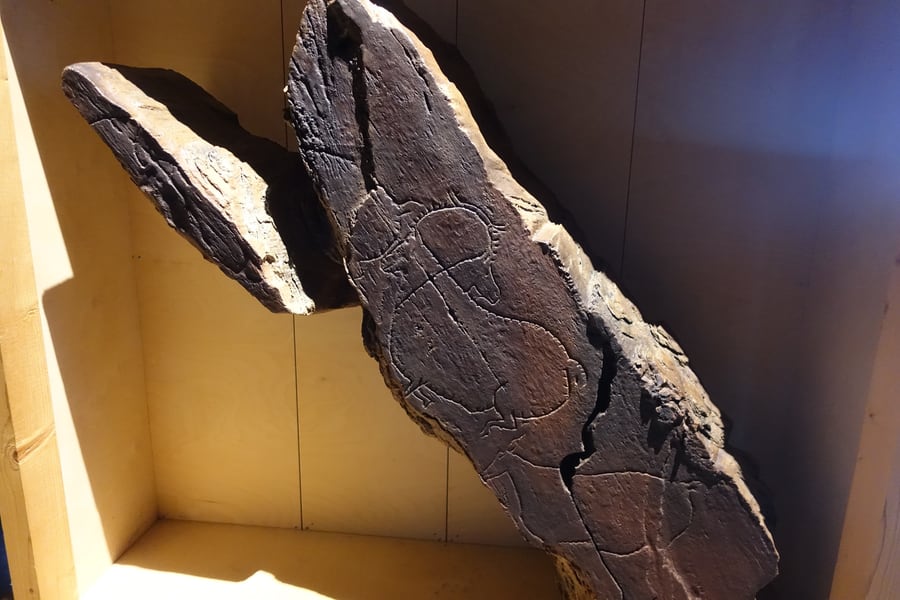 Joseolgon / Wikimedia Commons · CC BY-SA 4.0 · cropped
Foz Côa
Beyond the end of everything, and the reason to come back with a car. The Museu do Côa opened on 30 July 2010 — a long concrete wedge by Camilo Rebelo and Tiago Pimentel, set above the point where the Côa runs into the Douro — and it shows engraved schist indoors, lit so you can actually read it. The art itself is out in the open along the river, UNESCO-listed in 1998 and reachable only on a booked four-wheel-drive tour.Where to Sleep
The train starts and ends at Porto-São Bento on the same day, so there is nothing to book along the line — you sleep in Porto, on both sides of it.
Stay somewhere you can walk to São Bento from. Porto's centre is compact and hilly and the station sits in the middle of it, so anywhere around the Baixa, Ribeira or Cedofeita puts you ten or fifteen minutes from the platform on foot. The city has the full range, from serious design hotels in restored townhouses down to a very good hostel scene, and prices are still gentler than most Western European cities of its pull.
Two things worth planning:
- Arrive the night before. A 10:50 departure is not brutal, but €750 is a lot to risk on a delayed flight, and Porto is not a city you want to see only from a taxi window.
- Keep the evening after free. You return at 21:55 having eaten and drunk for eleven hours. Do not book dinner.
If you are making a trip of the valley rather than a day of it, the better move is to sleep in the Douro and come back to Porto for the train — or to do the train and then head up the line afterwards on an ordinary service. Pinhão and Peso da Régua both have hotels and both are on the railway; and the real luxury of the region is the quintas, the wine estates, many of which take guests. Waking up on a terrace above the river, having ridden through it the day before, is the correct order to do this in.
Questions or corrections
Planning this trip and stuck on something, or spotted a time, fare or detail that has changed? Send us a message about Comboio Presidencial. We read every one, and we update this page when something has changed.