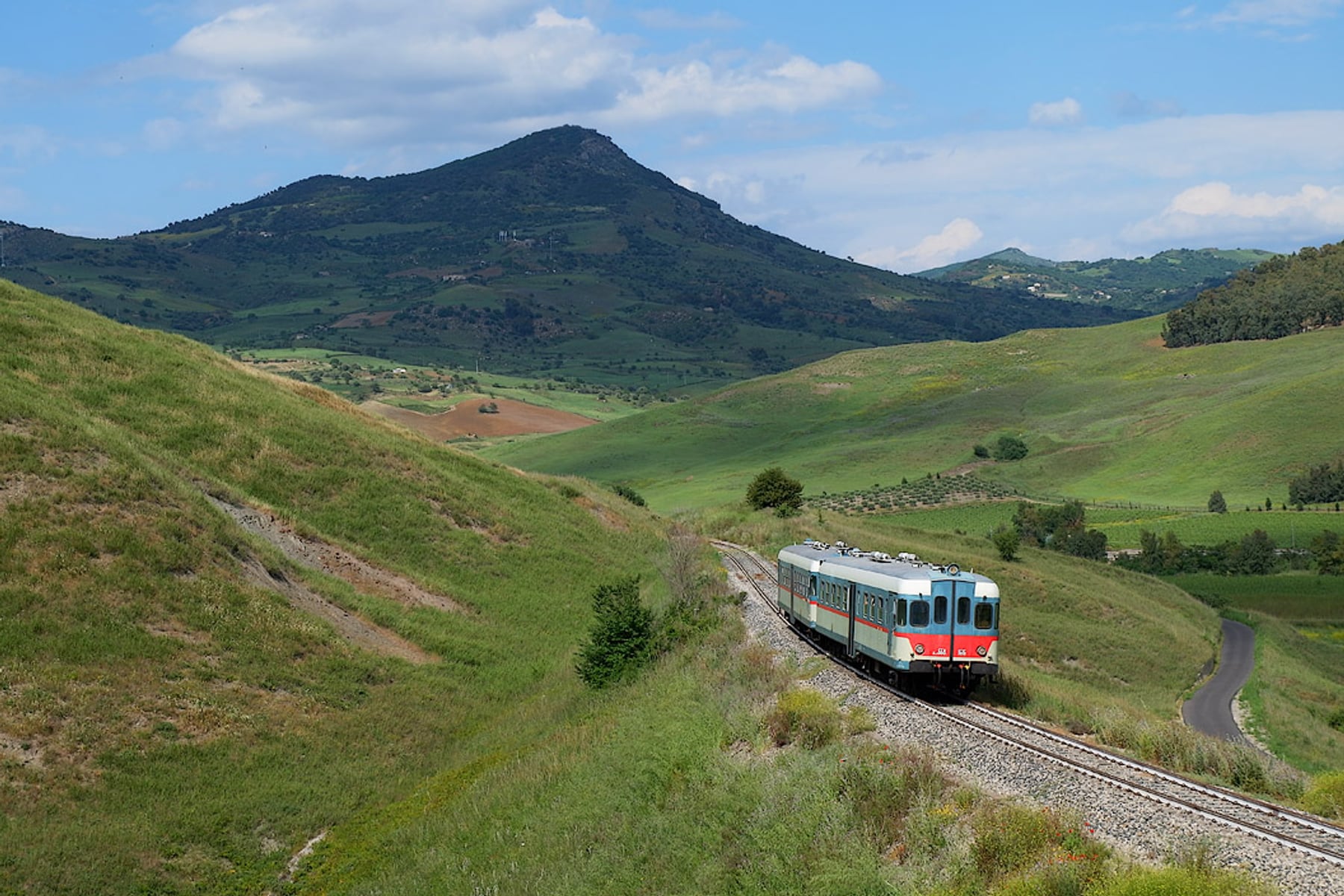
Ferrovia dei Templi
Giorgio Stagni / Wikimedia Commons · CC BY-SA 3.0 · cropped
- Distance12 km (Agrigento Bassa–Porto Empedocle)
- DurationAbout 30 minutes on the line; 3½ hours from Palermo
- Best seasonLate autumn to early spring, when the historic trains run
Introduction
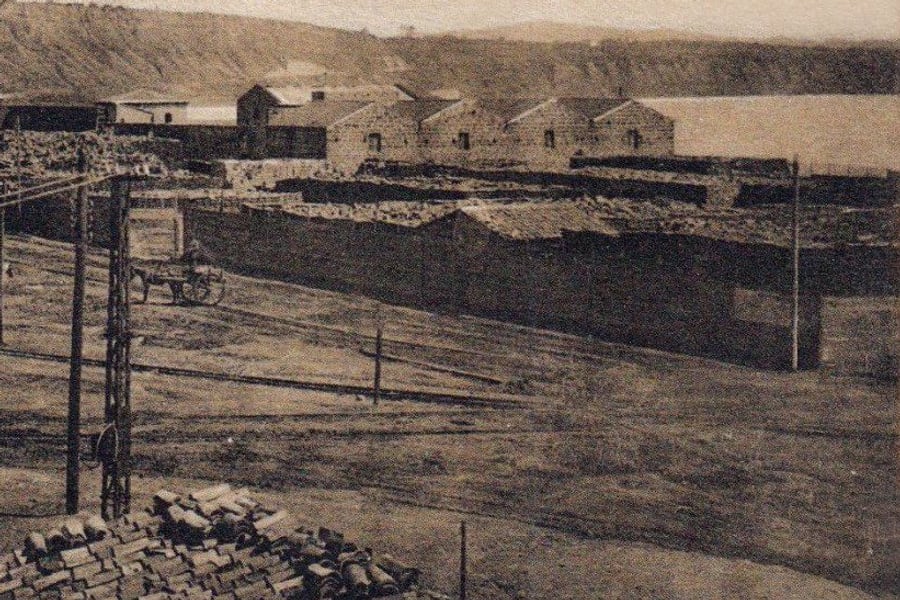
This railway was not built for the temples, and it was not built for the city either. It was built for sulphur. In the 19th century the mines of the Agrigento hills sent their sulphur to the sea at Porto Empedocle, and the line from Palermo was laid to reach the loading quays there. It was finished on 16 December 1876. The city then called Girgenti got a station only because the line passed below it: opened on 1 November 1874 at the foot of the hill, it stayed the city's only station until 1933.
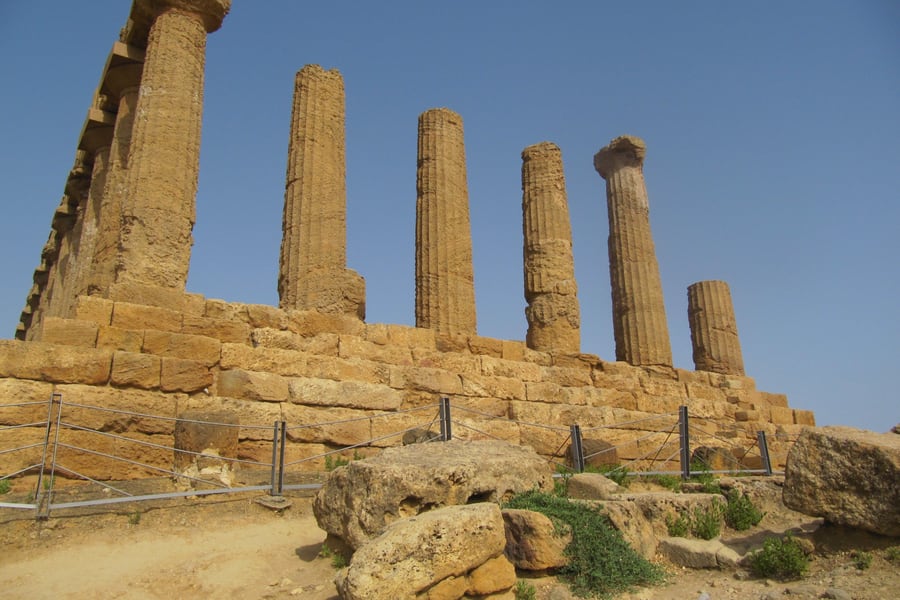
Between that station and the port lay the ridge of ancient Akragas, with its Greek temples. The track goes past them because the sulphur had to get to the ships, and the shortest way ran through the remains of the ancient city. A century on, the sulphur trade is gone, regular passenger trains stopped in 1976, and the temples are the only reason the trains still run.
The 12 km from Agrigento Bassa to Porto Empedocle reopened for tourist trains on 8 June 2014 as one of Fondazione FS's Binari senza Tempo, the timeless tracks. On a few days a year the Treno dei Templi comes down from Palermo with 1930s carriages and stops at a halt named after the Temple of Vulcan, in the middle of the World Heritage park.
The Journey
The Treno dei Templi leaves Palermo Centrale at 09:50 and follows the coast to Bagheria and Termini Imerese before turning inland up the valley of the Torto. It climbs through the hills of the interior, past Roccapalumba-Alia and Cammarata, then comes down the steep descent from Aragona Caldare to Agrigento Bassa, the old Girgenti station, just before one o'clock.
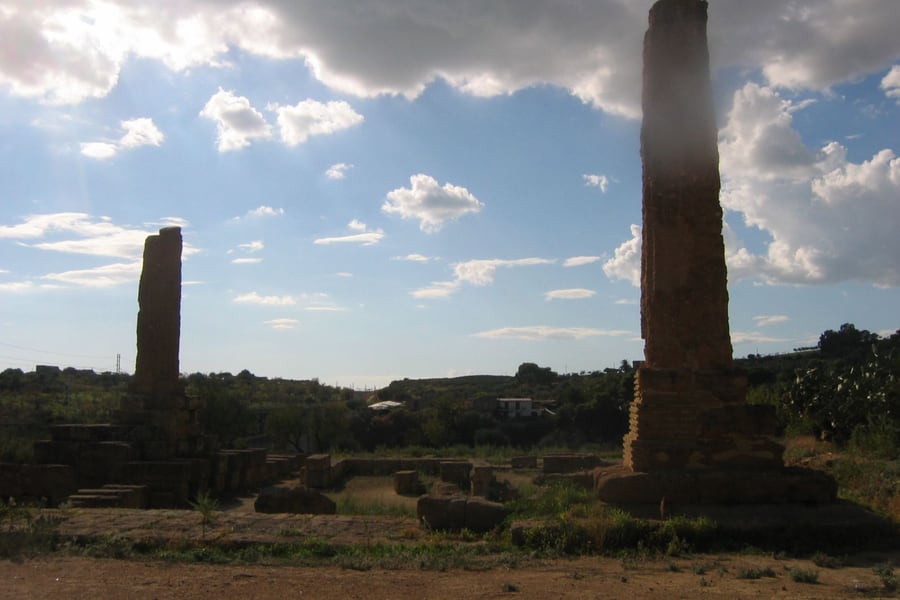
Here the 12 km of the Ferrovia dei Templi begin. The ordinary trains go on uphill through a tunnel to Agrigento Centrale; the historic train turns the other way. It ducks under the line to Centrale, runs in a tunnel beneath the outskirts, and goes down through a second tunnel under the hill of San Gerlando. From the first viaduct, half stone and half iron, the Valley of the Temples opens on one side and the city on the other. After a short tunnel under Monte Cappello the train stops at Tempio di Vulcano, beside the Kolymbethra garden and the last two columns of the temple. Most passengers get off here for the park.
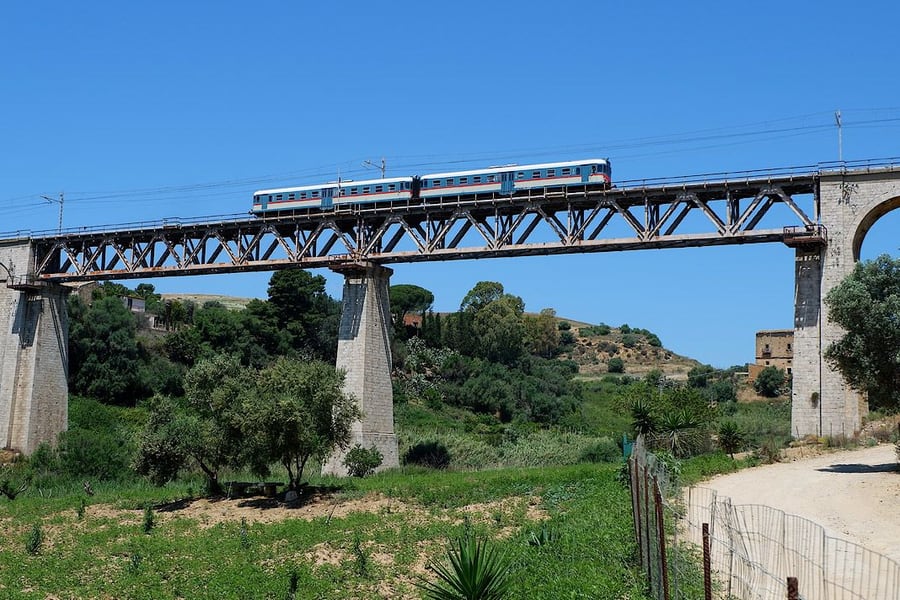
Beyond the halt the line crosses the Sant'Anna viaduct, five stone arches and two iron spans over a branch of the San Leone, and runs straight to the Kaos tunnel, at 476 metres the longest of its four. It passes directly under the house where Luigi Pirandello was born in 1867 and the place where his ashes were buried in 1947; his father was in the sulphur trade. Out of the tunnel the sea comes into view, and the train drops at 30 per thousand to Porto Empedocle Centrale, a 19th-century yard with its original tracks, protected since 2014 and kept by the volunteers of Ferrovie Kaos. It is open to visit on train days. The line goes on another 800 metres to Porto Empedocle Succursale, near the harbour, the terminus since 2016.
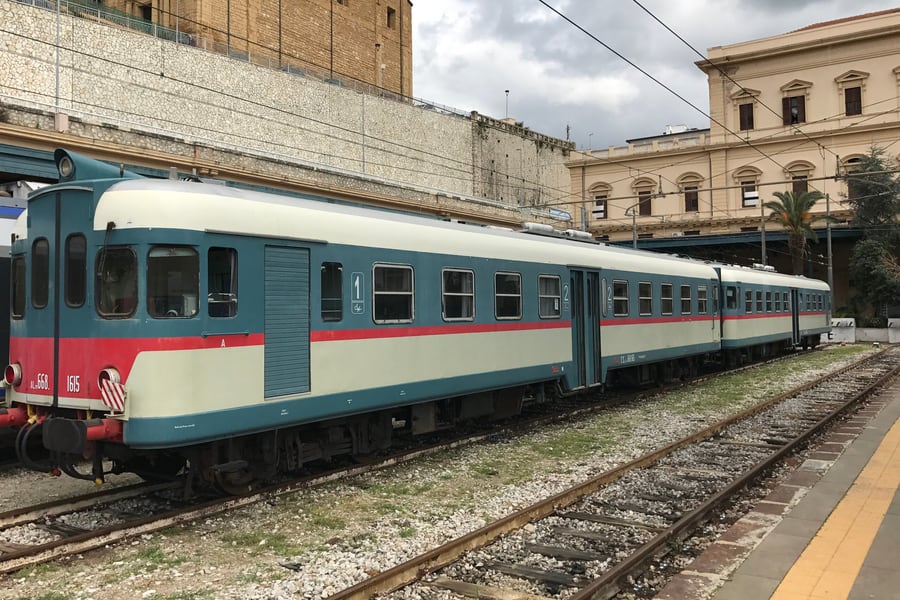
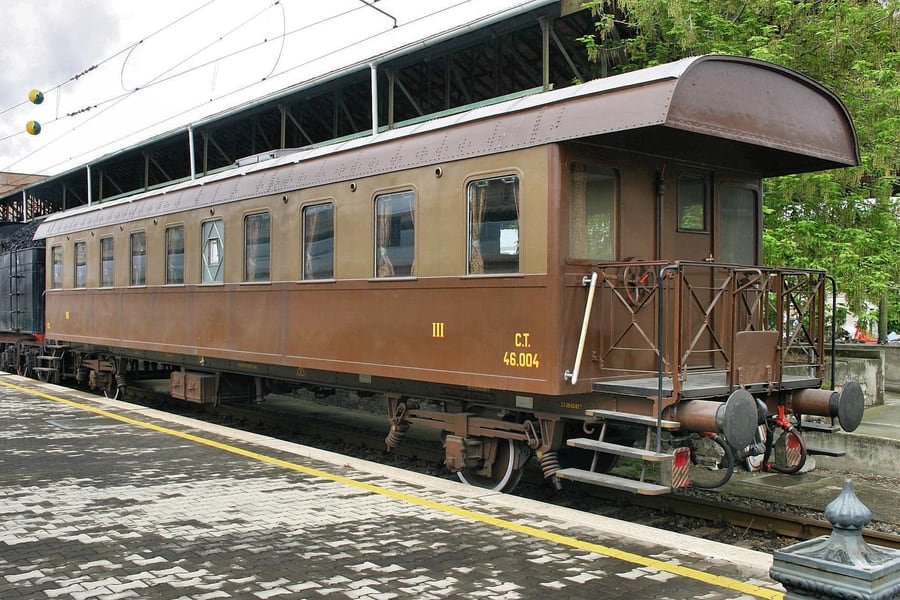
From 1951 to 1976 the line had a third rail, so that narrow-gauge railcars from Castelvetrano could run through to Agrigento. The 1930s carriages of today's train are Terrazzini, with open end platforms, and Centoporte, the hundred-door coaches, behind an electric or diesel locomotive. In 2018 the trips were worked by a pair of ALn 668 railcars in their original livery. The same programme runs the Ferrovia della Val d'Orcia in Tuscany.
Along the route
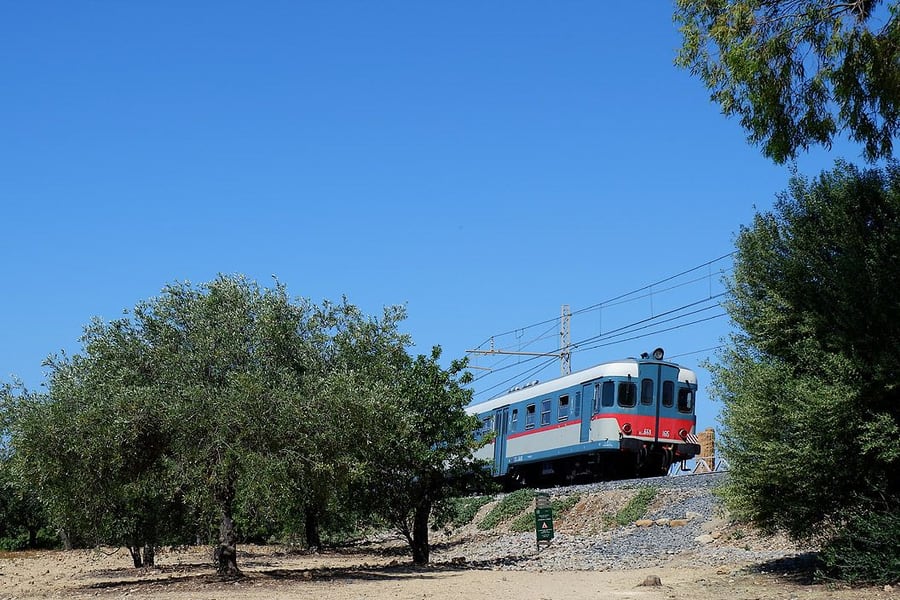
 Sharon Hahn Darlin / Wikimedia Commons · CC BY 2.0 · cropped
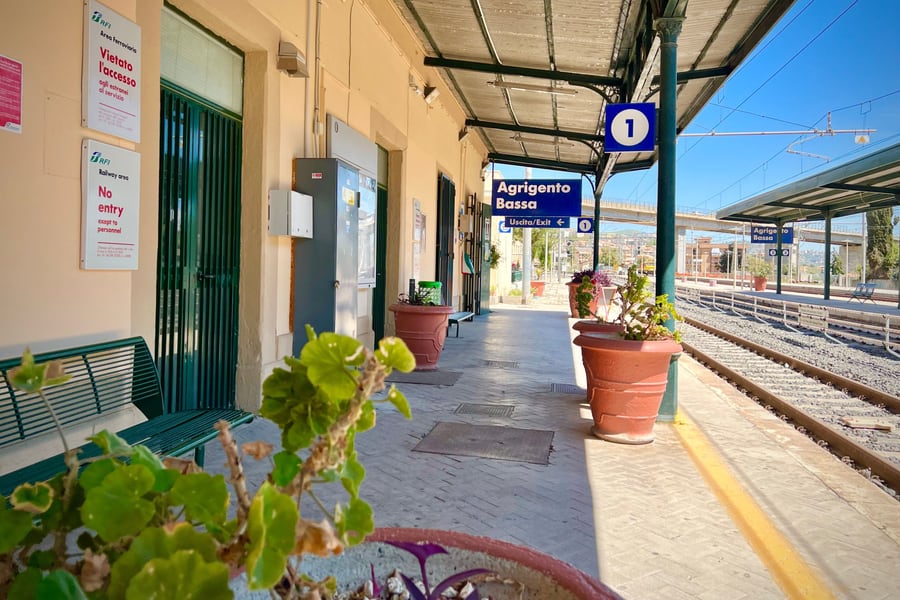
Agrigento Bassa, the city's first station
Opened in 1874 as Girgenti, at the foot of the hill, it was Agrigento's only station until 1933. The trains from Palermo now go on through a tunnel to Agrigento Centrale; the historic train turns the other way, downhill towards the sea.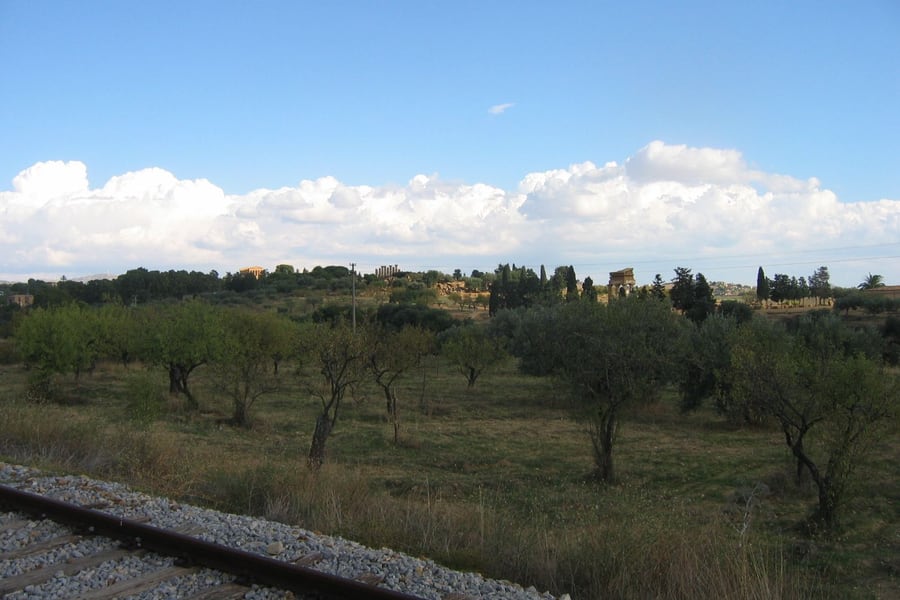 Hein56didden / Wikimedia Commons · CC BY-SA 4.0 · cropped
Tempio di Vulcano, a halt in the park
Past three tunnels and a viaduct with the temples in view, the train stops beside the Kolymbethra garden, a few metres from the Temple of Vulcan. The halt was built in 2001 and is where most passengers get off for the Valley of the Temples.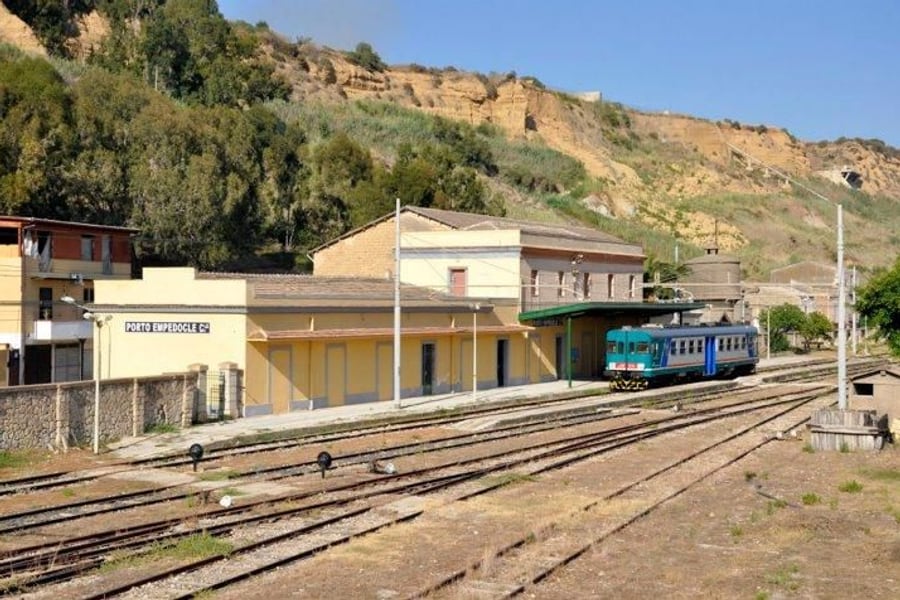 Pietrofattori / Wikimedia Commons · CC BY 2.0 · cropped
Down to Porto Empedocle
Across the Sant'Anna viaduct and through the Kaos tunnel, under Pirandello's birthplace, the line drops at 30 per thousand to the 19th-century yard of Porto Empedocle Centrale, open to visit on train days, then runs 800 metres on into the town.A bit of history
Culture & experiences along the way
 Kalima / Wikimedia Commons · CC BY-SA 3.0 · cropped
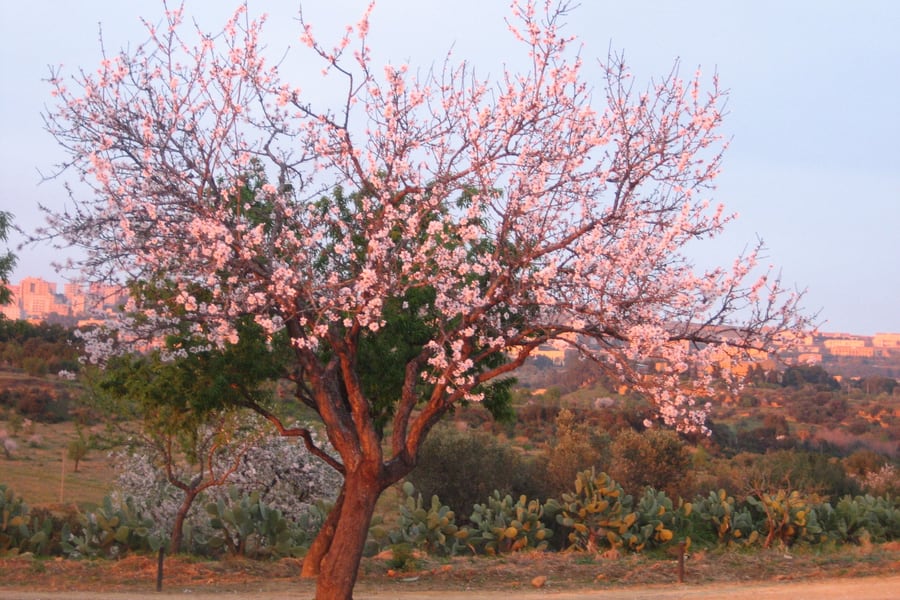
The almond blossom festival
Every year in early March, when the almond trees flower, Agrigento holds the Festa del Mandorlo in Fiore. Folk groups from many countries parade with Sicilian carts and bands from the city down to the Valley of the Temples and perform at the foot of the Temple of Concordia. Historic trains have run for the festival.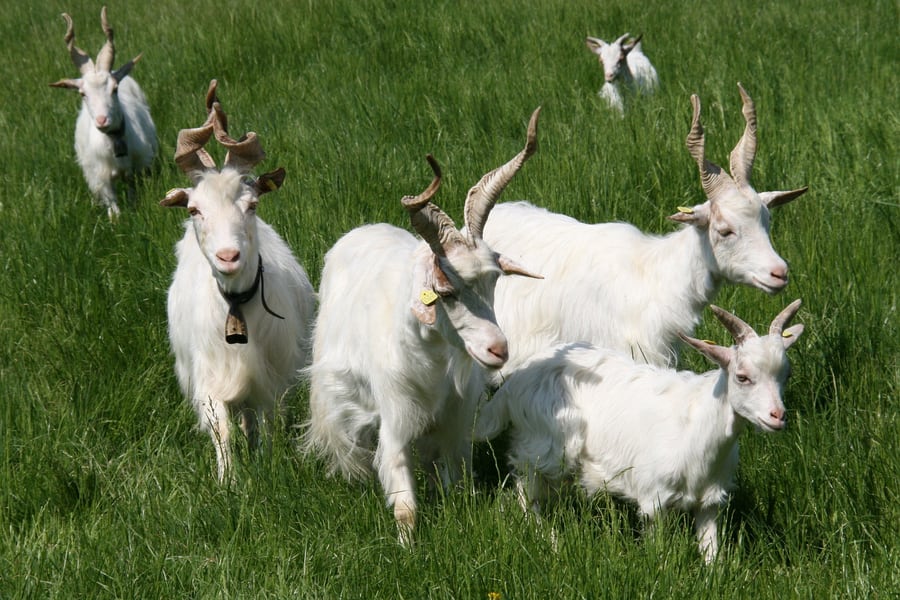 böhringer friedrich / Wikimedia Commons · CC BY-SA 2.5 · cropped
The Girgentana goat
A goat with long corkscrew horns, native to the province of Agrigento and named after Girgenti, the city's old name. The hills and coast of the province once held more than 30,000 of them; in this century the breed is in danger of disappearing.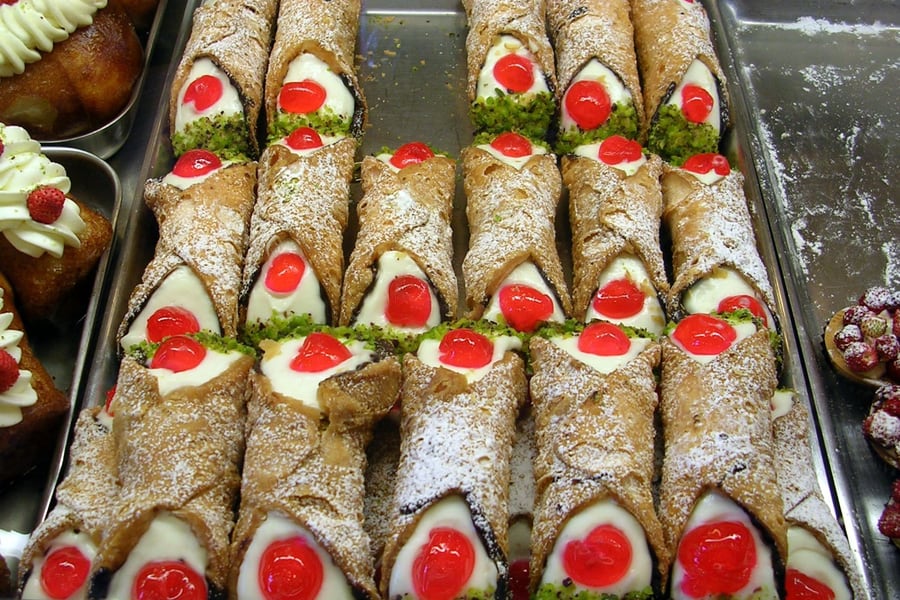 Stefano Mortellaro / Wikimedia Commons · CC BY 2.0 · cropped
Cannoli
Tube-shaped shells of fried pastry, 9 to 20 centimetres long, filled with sweetened ricotta. Each part of Sicily finishes them its own way: candied orange peel in Palermo, chopped pistachios in Catania, and even purple artichoke at Ramacca. Unknown author / Wikimedia Commons · public domain · cropped
Arancine
Rice balls stuffed with ragù, cheese and peas, or with ham and mozzarella, rolled in breadcrumbs and fried, and a staple of Sicilian cooking. Their name changes with the region, arancine or arancini, and so does their shape: in Catania and Messina the ragù kind is made as a cone, after Etna.Timetables
There is no regular service on the Ferrovia dei Templi. The Treno dei Templi runs on dates that Fondazione FS publishes a few months ahead, usually from Palermo, with the whole day in the Valley of the Temples or at Porto Empedocle and the return in the late afternoon. In November 2026 the calendar listed one date, Sunday 13 December 2026. Trenitalia's regional trains link Palermo and Agrigento Centrale every day, but none run on to Porto Empedocle.
Sunday 13 December 2026
| Station | Outward | Return |
|---|---|---|
| Palermo Centrale | dep 09:50 | arr 20:26 |
| Bagheria | 10:09 | 20:00 |
| Termini Imerese | 10:34 | 19:36 |
| Roccapalumba-Alia | 11:17 | 18:38 |
| Cammarata-San Giovanni Gemini | 11:47 | 18:16 |
| Aragona Caldare | 12:39 | 17:36 |
| Agrigento Bassa | 12:55 | 17:26 |
| Tempio di Vulcano | 13:05 | 17:16 |
| Porto Empedocle Centrale | 13:15 | 17:08 |
| Porto Empedocle Succursale | arr 13:22 | dep 17:04 |
That leaves about four hours at the temples or at the port. Check the calendar before you plan: the train runs on only a handful of dates, and none were listed for 2027 in November 2026.
As of November 2026, from Fondazione FS (opens in a new tab) and its historic trains calendar for Sicily (opens in a new tab).
Tickets
The Treno dei Templi is sold like an ordinary train, through every Trenitalia channel: trenitalia.com, station ticket offices and machines, and travel agents. On 13 December 2026 a one-way ticket costs €10 for adults and €5 for ages 4 to 11; children under 4 travel free. The fare covers one direction, so a return from Palermo is €20. Tickets went on sale on 14 November.
Entry to the Valley of the Temples and to the Kolymbethra garden is bought separately; the visit to the Porto Empedocle Centrale railway park is free on train days. A ticket to Porto Empedocle Succursale is also valid to Centrale. Fares as of November 2026.
Book your tickets
Treno dei Templi, 13 December 2026
Adults €10 · ages 4–11 €5 · each way
Sold through every Trenitalia channel, online, at stations and through travel agents.
Book Tickets (opens in a new tab, on fondazionefs.it)via fondazionefs.itFondazione FS historic trains in Sicily
Every historic train on the island, by month
Fondazione FS lists the Treno dei Templi dates alongside its other Sicilian trains, a few months ahead.
Book Tickets (opens in a new tab, on fondazionefs.it)via fondazionefs.itRail Passes
No rail pass covers the Treno dei Templi. It is a historic train run by FS Treni Turistici Italiani with its own fare, and Interrail and Eurail list only Trenitalia's ordinary train types in Italy.
A pass can still bring you to Agrigento. Trenitalia's regional trains are included without a reservation, so a pass covers Palermo to Agrigento on any day. At €10 each way the historic train is not a reason to buy a pass.
Checked November 2026 against Interrail's table of railway companies (opens in a new tab).
Places to Visit
The train gives about four hours on the ground, enough for the Valley of the Temples from the Tempio di Vulcano halt, or for Porto Empedocle and its railway park. Agrigento's old town and the Scala dei Turchi need a second day.
 Palickap / Wikimedia Commons · CC BY-SA 4.0 · cropped
Palermo
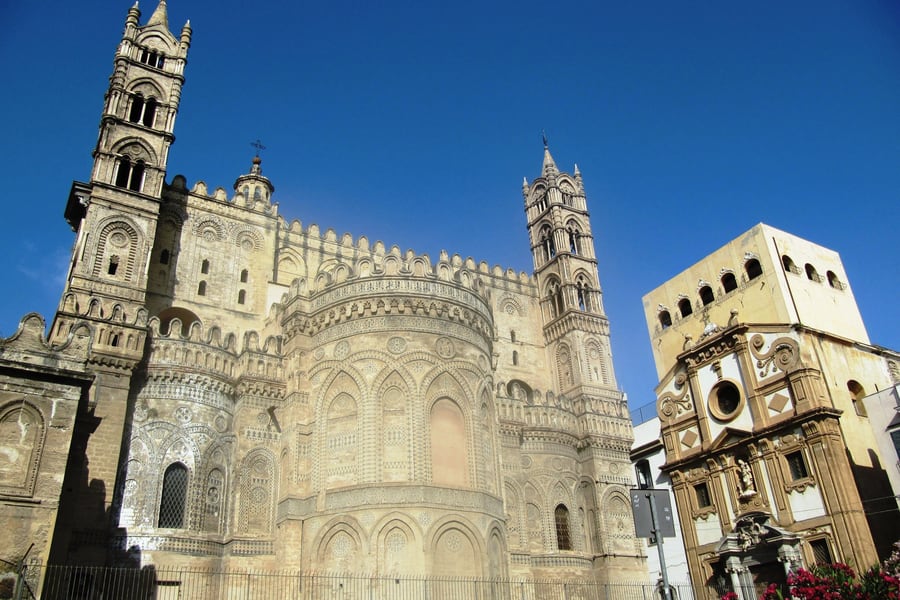
The Treno dei Templi leaves Palermo Centrale in the morning and is back in the evening. The cathedral, built over centuries in a mix of styles, is part of the World Heritage listing of Arab-Norman Palermo since 2015, and keeps the silver urn of Santa Rosalia, the city's patron, carried through the streets every 15 July.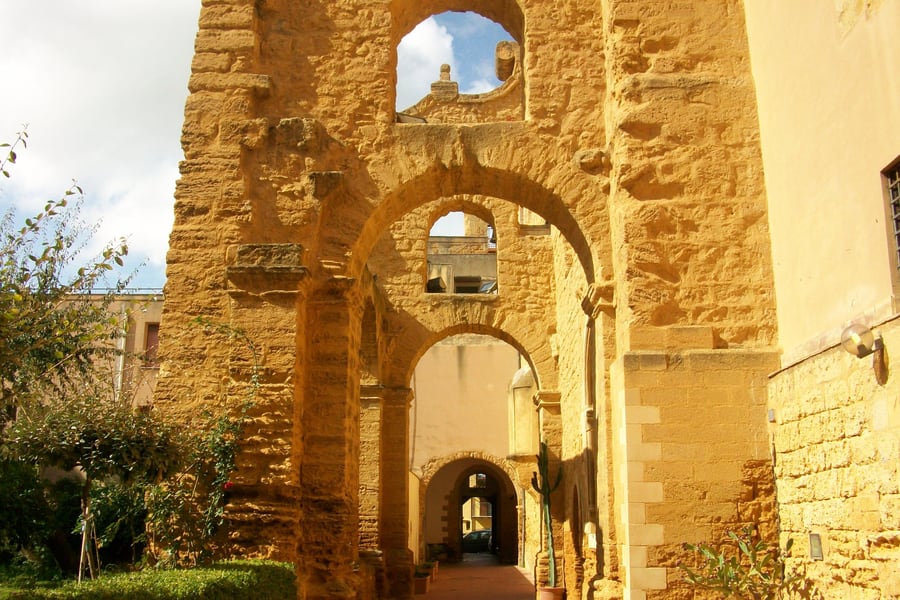 Max5783 / Wikimedia Commons · CC BY-SA 3.0 · cropped
Agrigento
The medieval city stands on the hill above its stations. The monastery of Santo Spirito, founded in 1299 by Marchisia Prefoglio for Cistercian nuns and called the "Bataranni", the big abbey, by Agrigentines, is now the civic museum. Via Atenea is the main street.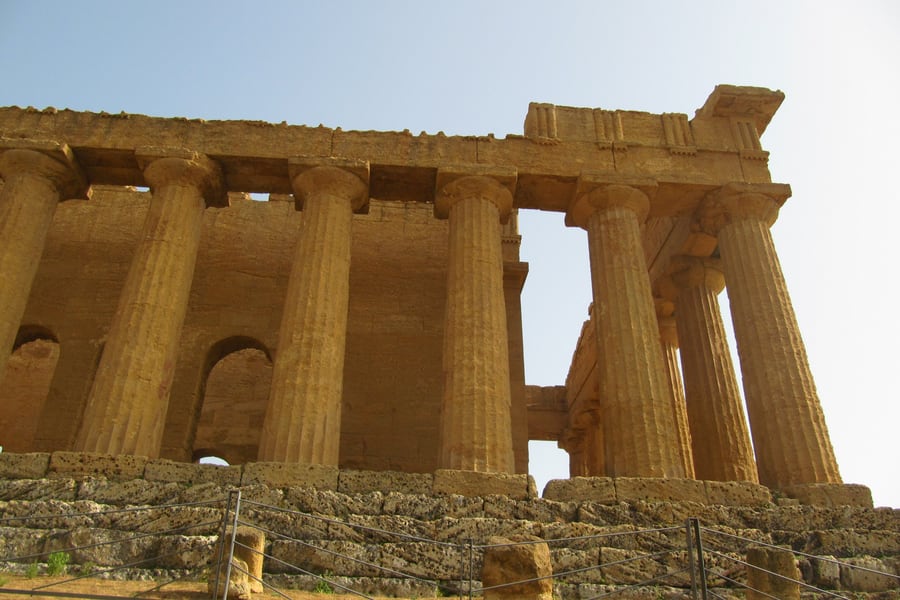 Palickap / Wikimedia Commons · CC BY-SA 4.0 · cropped
Valley of the Temples
The temples of ancient Akragas stand along a ridge south of the city, not in a valley. The whole area has been a World Heritage Site since 1997, and its archaeological park covers 1,300 hectares. The Temple of Concordia is the largest and best-preserved Doric temple in Sicily. Tickets are sold separately from the train.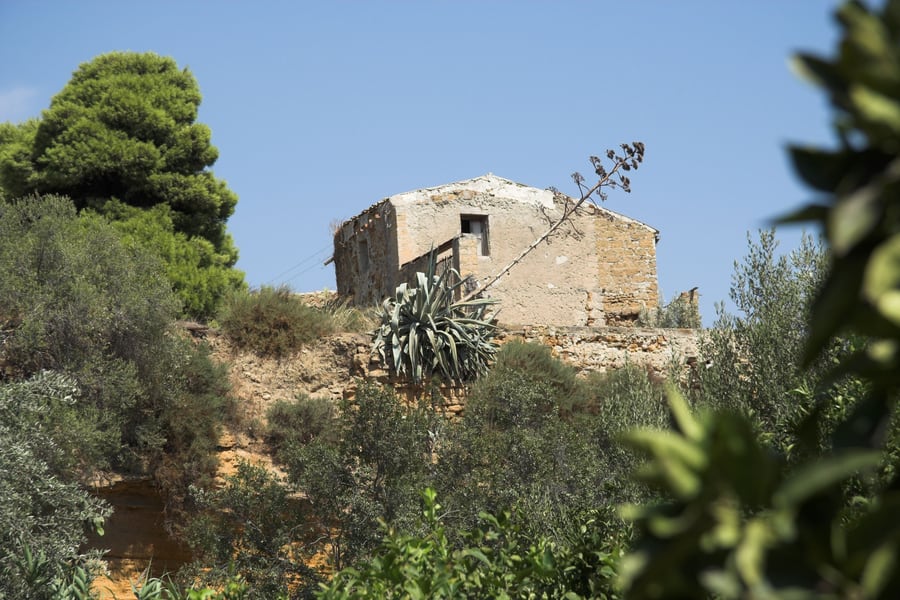 Zde / Wikimedia Commons · CC BY-SA 4.0 · cropped
Giardino della Kolymbethra
A small valley in the heart of the park where the tyrant Theron had a great pool dug after the battle of Himera in 480 BC, fed by tunnels cut to collect water from the rock. Abandoned for decades, it has been run by FAI, the Italian National Trust, since 1999, with visits to the temple and the tunnels.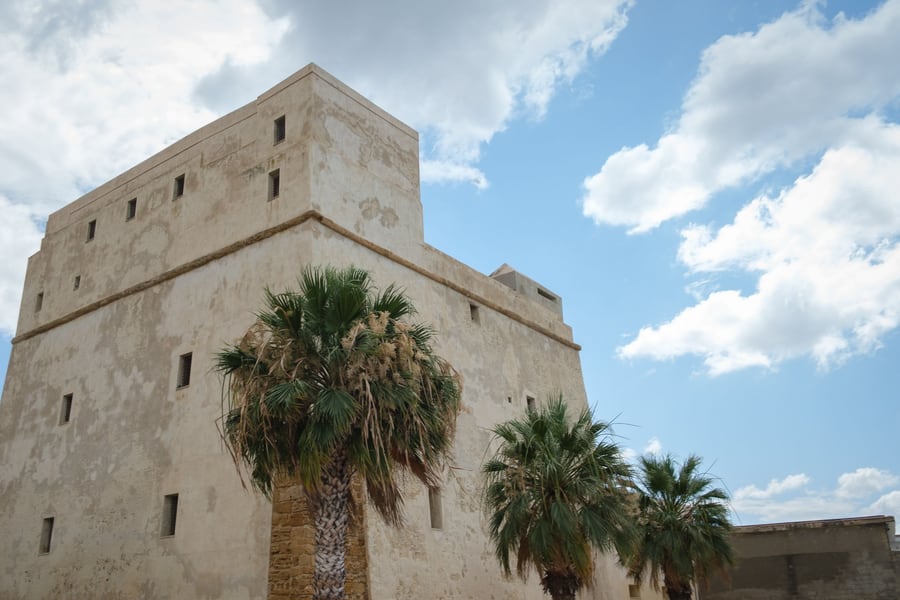 Antonio Pignato / Wikimedia Commons · CC BY-SA 4.0 · cropped
Porto Empedocle
The port the line was built for, named after the philosopher Empedocles of Akragas. Its tower, in records from 1355 and given its present shape in 1549–54, guarded the loading quay against corsairs; it is closed for structural problems and seen from outside. Andrea Camilleri was born here, and his Vigàta is drawn from the town.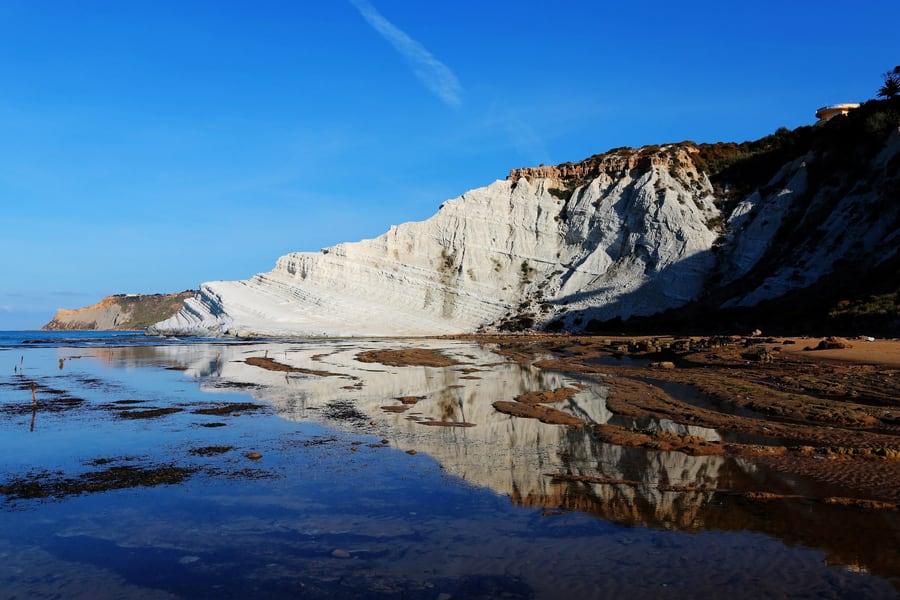 Enrico Strocchi / Wikimedia Commons · CC BY-SA 2.0 · cropped
Scala dei Turchi
A cliff of white marl at Realmonte, a few kilometres along the coast, worn into the shape of a great staircase between two sandy beaches. The name recalls the corsairs who landed here. Climbing on the rock is no longer allowed and access to the beach is regulated, to stop the soft stone eroding.Where to Sleep
The train is a day out from Palermo, so most passengers sleep there. To stay among the temples, a handful of hotels stand inside or beside the archaeological park, a short walk or taxi ride from the Tempio di Vulcano halt.
Where to stay
Villa Athena
An 18th-century villa inside the archaeological park
A former noble residence among olive trees in the Valley of the Temples, looking across to the Temple of Concordia.
Check Availability (opens in a new tab, on hotelvillaathena.it)via hotelvillaathena.itVilla Igiea
Rocco Forte hotel above the sea at Acquasanta, Palermo
A villa remodelled by Ernesto Basile as a hotel in 1900, keeping its Art Nouveau frescoes and dining room.
Check Availability (opens in a new tab, on roccofortehotels.com)via roccofortehotels.comQuestions or corrections
Planning this trip and stuck on something, or spotted a time, fare or detail that has changed? Send us a message about Ferrovia dei Templi. We read every one, and we update this page when something has changed.