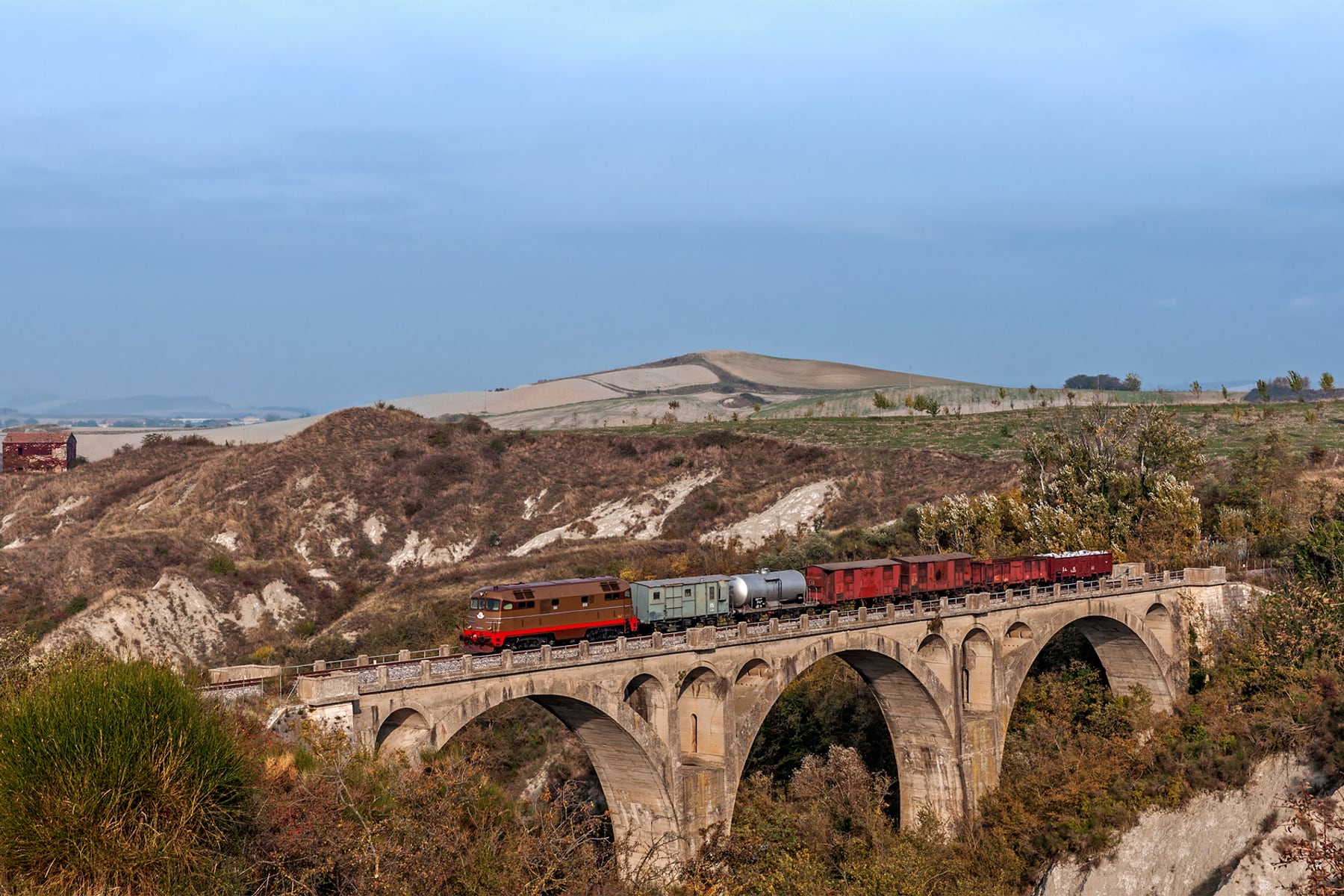
Ferrovia della Val d'Orcia
maurizio messa / Wikimedia Commons · CC BY-SA 2.0 · cropped
- Distance51 km (Asciano–Monte Antico)
- DurationA full day out of Siena, about 09:00 to 17:30–18:45
- Best seasonSpring and autumn, when the festival trains run
Introduction
For fifty-five years this was the railway between Siena and Grosseto. It opened in full on 27 May 1872, branching off the Siena–Chiusi line at Asciano and winding south and west through the clay hills of the Crete Senesi and down the valley of the Orcia towards Grosseto and the Maremma. The 51 km from Asciano to Monte Antico are the part that survives. In 1927 a shorter, straighter route was opened from Siena through Buonconvento, and the old line became a branch.
Then, on 16 June 1966, a flood wrecked the new line, and it stayed shut until May 1980. For those fourteen years every train between Siena and Grosseto went back the long way, by Asciano and the Val d'Orcia. When the newer line was cut again by floods in the 2010s, the old one could not stand in a second time: it had closed to regular trains on 27 September 1994, and its points and loops were taken out in 2000.
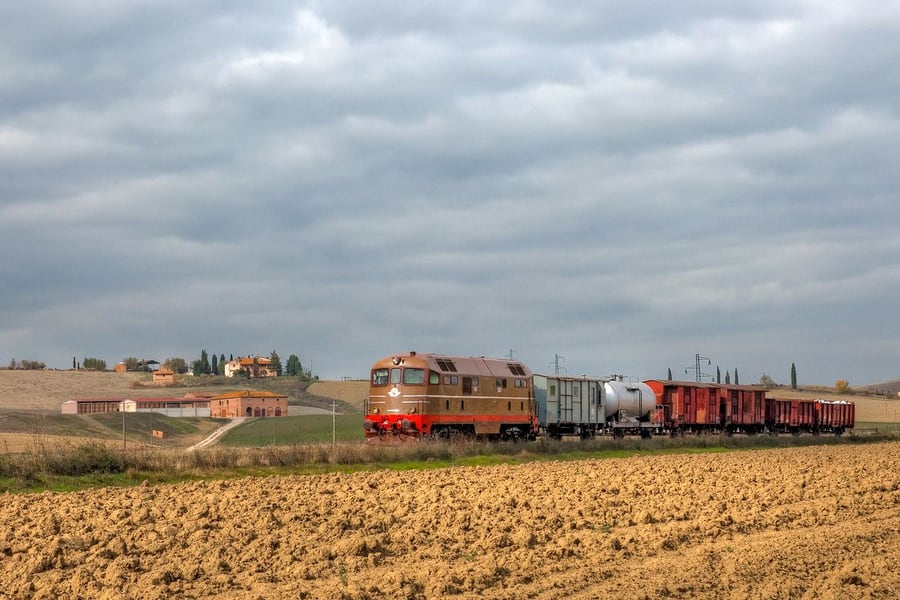
What saved the track was the people along it. They stopped it being lifted, and from 1996 volunteers ran tourist trains over it. Today it belongs to Fondazione FS's Binari senza Tempo, the timeless tracks, and the Treno Natura runs it: a steam locomotive and carriages of the 1930s and 1950s, out of Siena on about fifteen dates a year, nearly all of them timed to a village festival, from the spring truffle fair in March to the December market in Siena's Piazza del Campo.
The Journey
A Treno Natura day usually makes a loop. The train leaves Siena around nine and runs out on the 1927 line through the Arbia and Ombrone valleys to Buonconvento and Monte Antico, where it stops for twenty minutes. There it turns onto the old line, so the steam train goes out on the railway that replaced the Val d'Orcia line and comes home on the one it replaced.
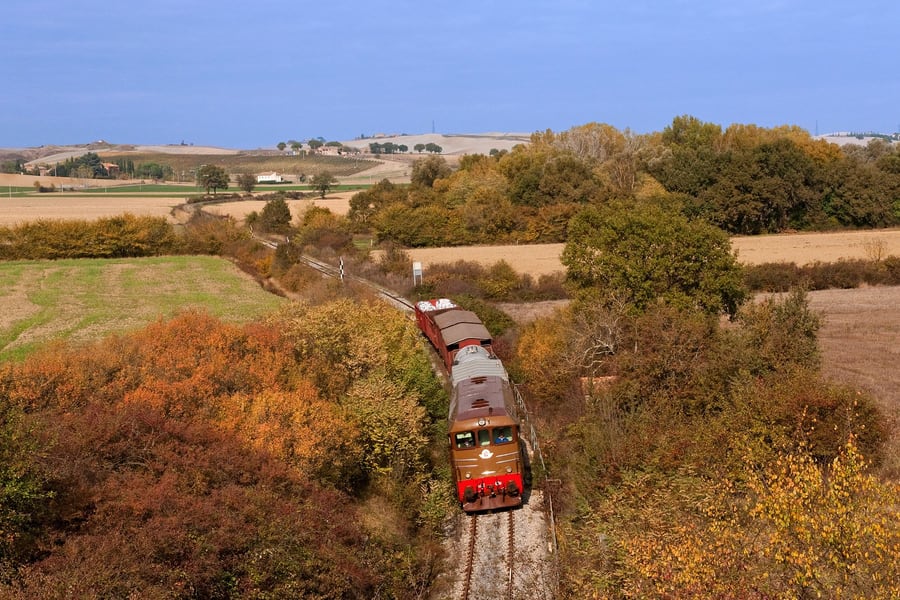
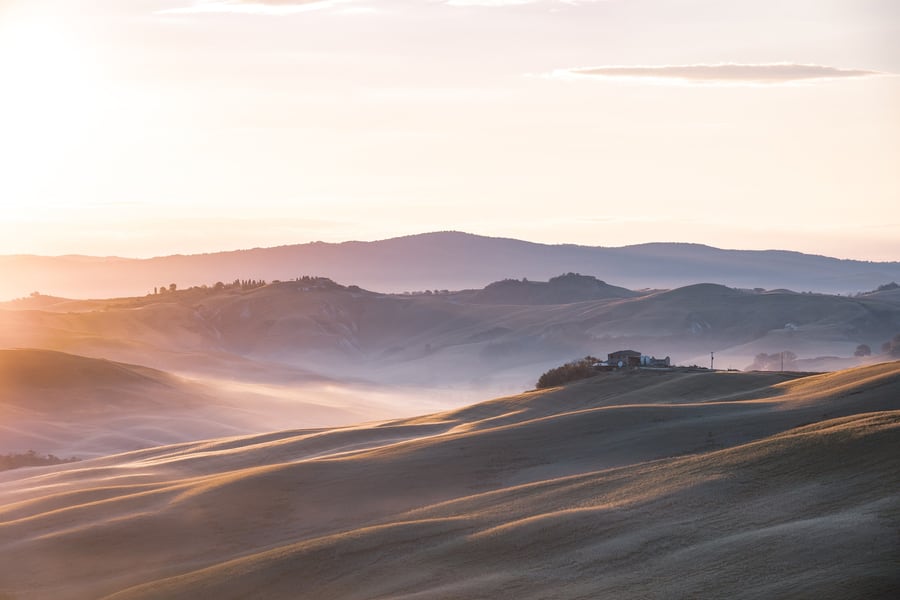
From Monte Antico the line crosses the Ombrone and heads east up the Orcia, with Montalcino's vineyards on the hills to the left of a train travelling this way. Past Sant'Angelo-Cinigiano it reaches Monte Amiata station, about 34 km from Asciano, at the foot of the mountain. Here buses wait for the trips to Montalcino, Castiglione d'Orcia and the Amiata villages. Beyond, it follows the valley of the Asso up to Torrenieri-Montalcino, the station where it leaves the Val d'Orcia, a UNESCO World Heritage landscape since 2004.
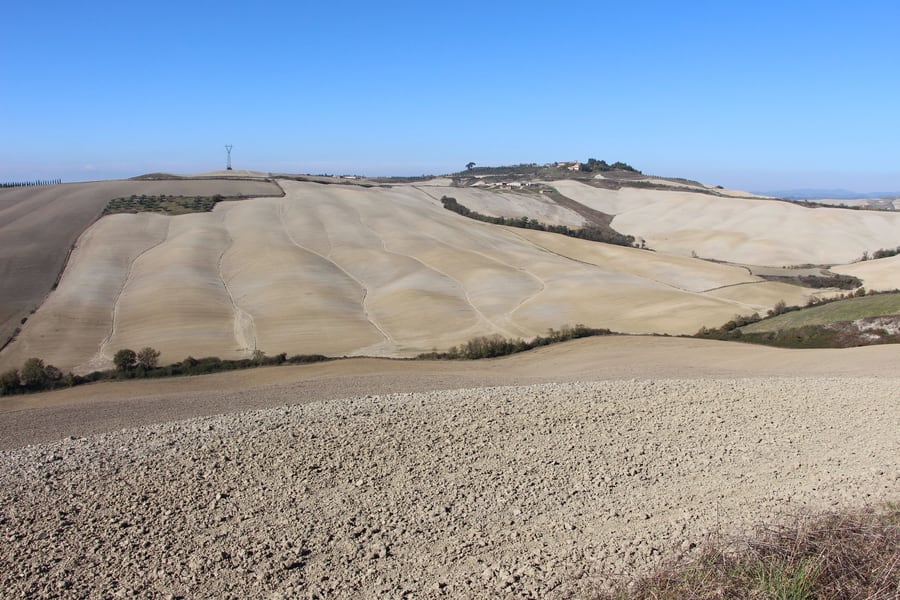
Then come San Giovanni d'Asso, below its castle village, and Trequanda, restored in 2016 after years of neglect, and the Crete Senesi proper: bare clay hills, gullies white as chalk, and stone viaducts and tunnels to get across them, the longest the Finerri at 852.8 m. At Asciano the line joins the Siena–Chiusi railway for the run back to Siena, where the train arrives between 17:30 and 18:45. The middle of the day is spent at the festival: a truffle fair, a wine harvest, a market.
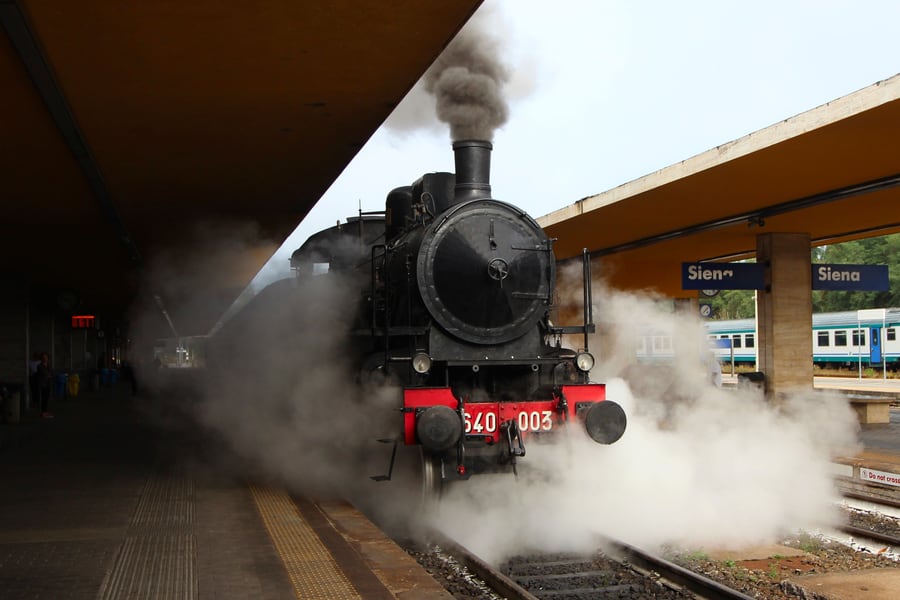
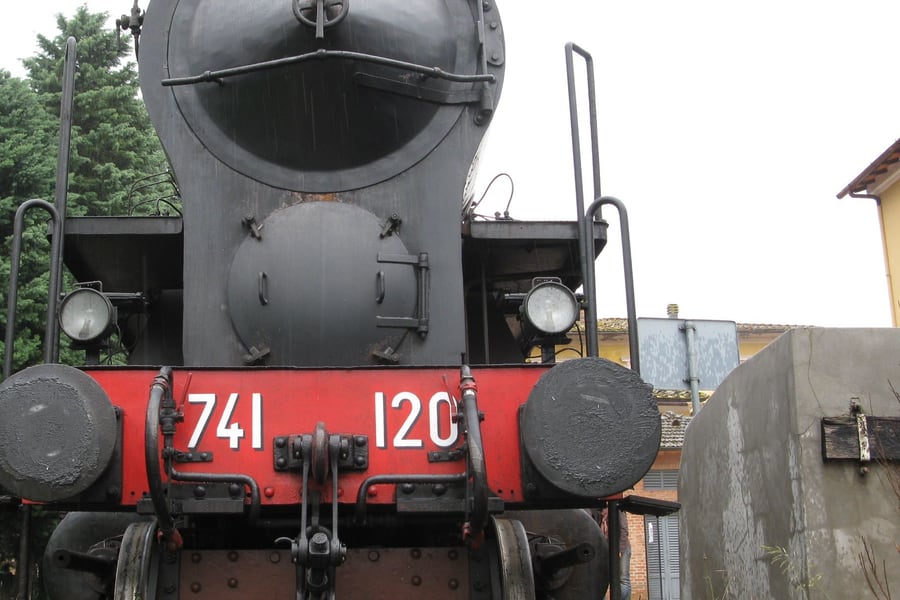
The line has no regular trains and no passing places except Monte Amiata, so the steam train has it to itself. Engines that have worked the Treno Natura include 640.003, a two-cylinder locomotive of a class first built for fast passenger trains in the 1900s, and 741.120, one of the last group of steam locomotives built in Italy, rebuilt with a Franco-Crosti preheater. The carriages are Centoporte, the hundred-door coaches of the 1930s, and Corbellini coaches of the 1950s. The same Binari senza Tempo programme includes the Transiberiana d'Italia across the Abruzzo highlands.
Along the route
 Simone80 / Wikimedia Commons · public domain · cropped
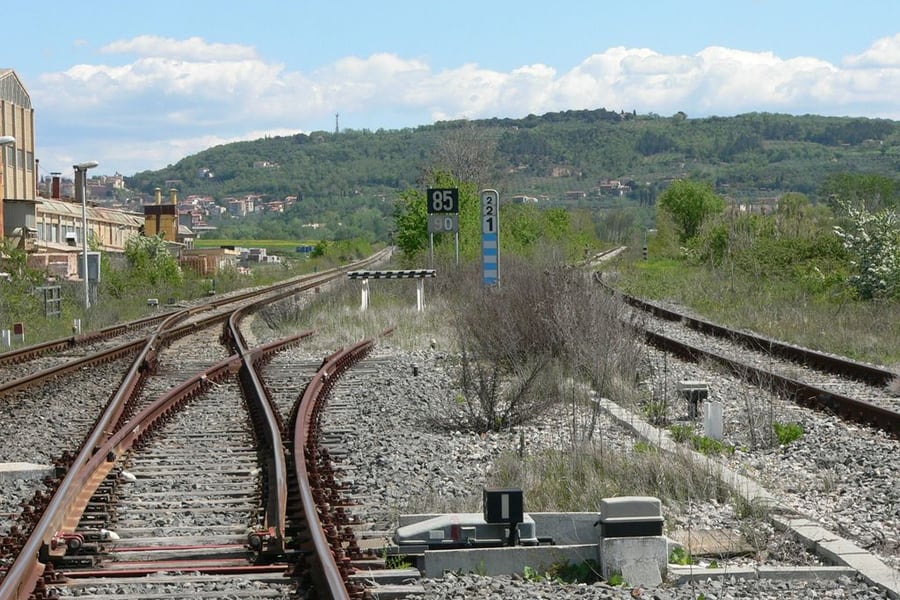
Asciano, where the line turns south
The line leaves the Siena–Chiusi railway just beyond Asciano station and swings south into the Crete Senesi, clay hills cut into gullies that read as a moonscape. Tunnels and viaducts carry it across; the longest tunnel, the Finerri, runs 852.8 metres.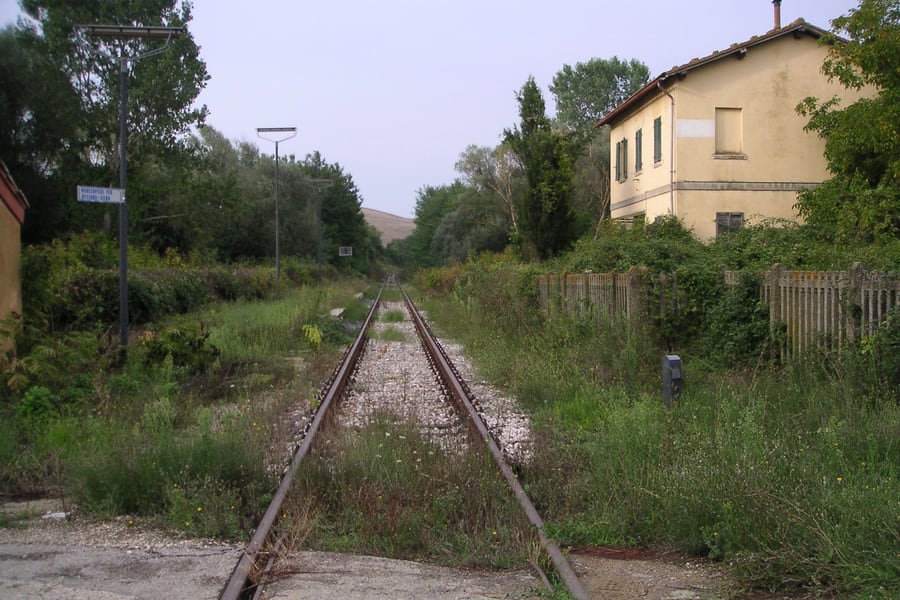 Pufui Pc Pifpef I / Wikimedia Commons · CC BY 3.0 · cropped
Trequanda, a station brought back
Trequanda station closed with the line in 1994 and stood empty for years. It was restored for the first Treno Natura to stop there, in the autumn of 2016, and the train now calls on its way to the village's new-oil festival in October.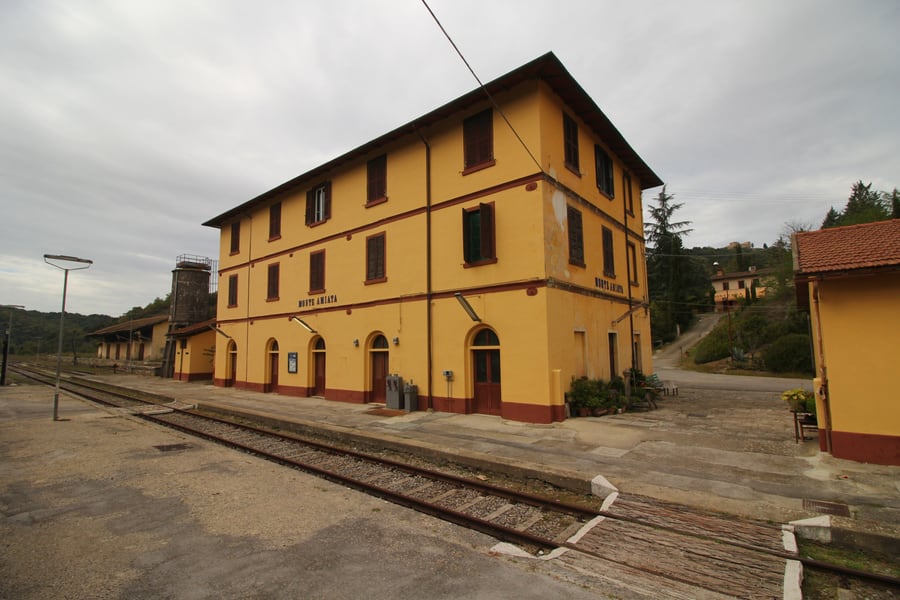 Giovanni Cerretani / Wikimedia Commons · CC BY-SA 4.0 · cropped
Monte Amiata, the one passing loop
About 34 km from Asciano, at the foot of Monte Amiata, this is the only station that kept its points and loop when the rest were removed in 2000. Buses meet the train here for Montalcino, Abbadia San Salvatore and the Amiata villages.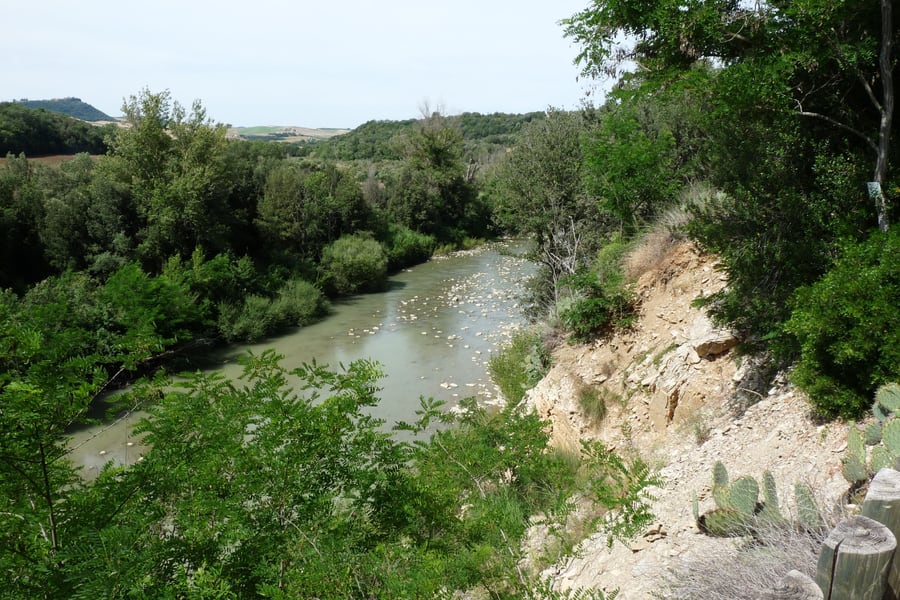 Smiley.toerist / Wikimedia Commons · CC BY-SA 4.0 · cropped
West along the Orcia to Monte Antico
Beyond Monte Amiata the line bends west and follows the Orcia, with Montalcino's vineyards on the right. It crosses the Ombrone on a nine-arch stone viaduct and ends at Monte Antico, where most Treno Natura trips pause for twenty minutes.A bit of history
Culture & experiences along the way
 Marco Plassio / Wikimedia Commons · CC BY-SA 3.0 · cropped
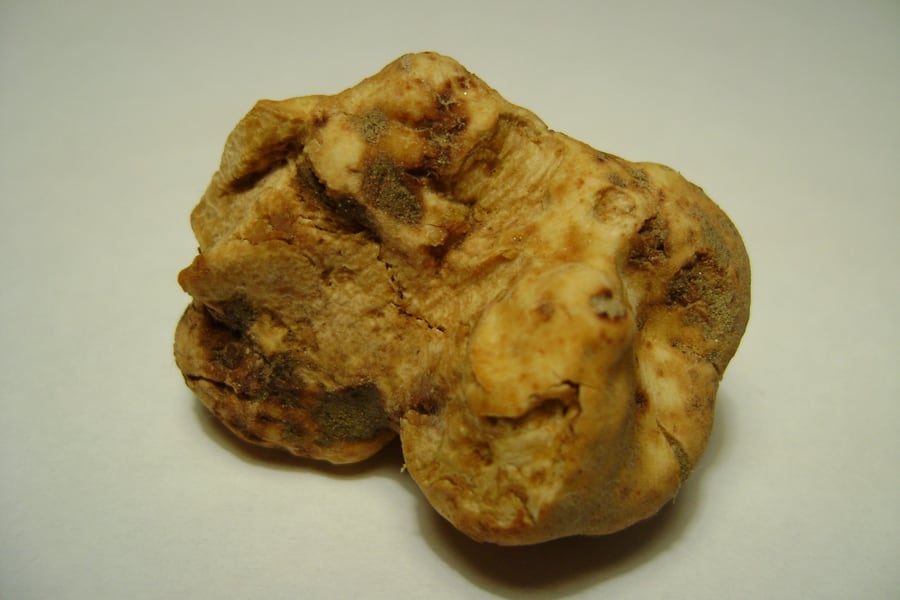
White truffles at San Giovanni d'Asso
Since 1985 San Giovanni d'Asso has held a market of the white truffle of the Crete Senesi on the second and third weekends of November, its 40th edition in 2026. The Treno Natura runs to it on both Sundays, and again in March for the fair of the spring truffle, the marzuolo.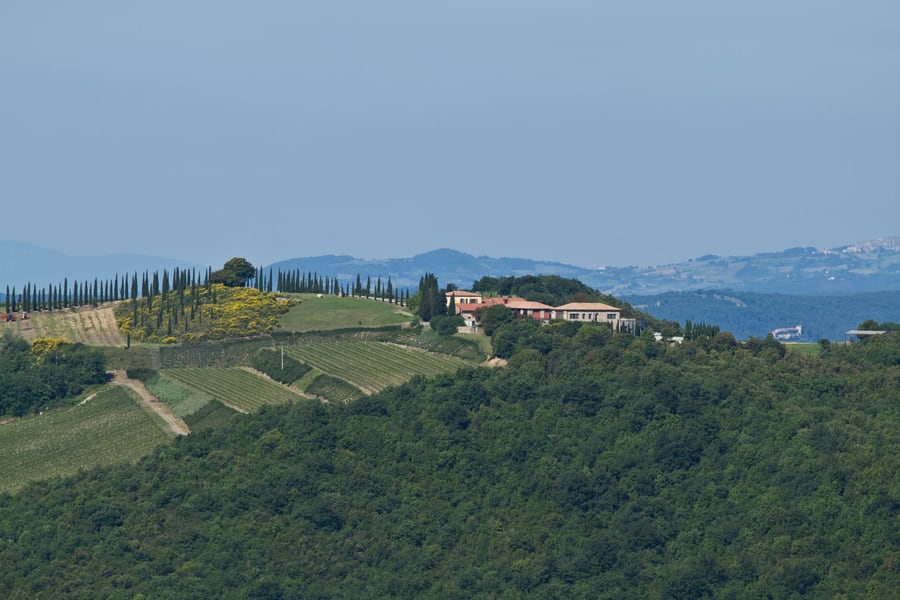 trolvag / Wikimedia Commons · CC BY-SA 3.0 · cropped
Brunello di Montalcino
Montalcino's vineyards line the right-hand windows west of Monte Amiata. Brunello is made only in the commune, from Sangiovese alone, aged at least two years in oak and four months in bottle, and cannot be sold until five years after the harvest. Torrenieri-Montalcino is its station.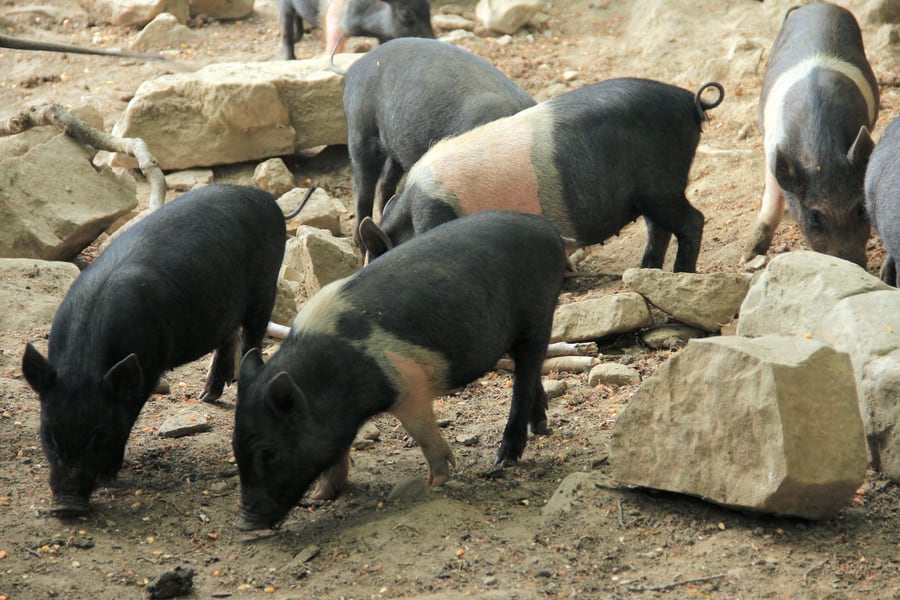 Michela Simoncini / Wikimedia Commons · CC BY 2.0 · cropped
The pig in Lorenzetti's fresco
The Cinta Senese, a black pig with a white belt, is old enough to appear in Ambrogio Lorenzetti's Allegory of Good and Bad Government of 1338 in Siena's Palazzo Pubblico. Its meat has been a protected designation since 2012, and its salumi are a speciality of the valleys the line runs through.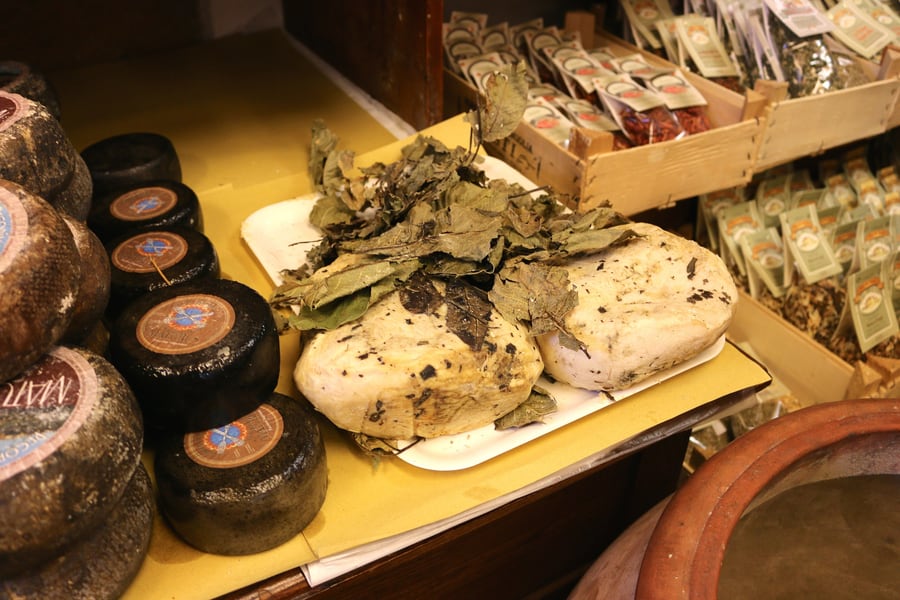 Ryan Snyder / Wikimedia Commons · CC BY 2.0 · cropped
Pecorino di Pienza
Pienza, in the heart of the Val d'Orcia, gives its name to a sheep's cheese, some of it aged for at least 90 days in oak barriques. With the valley's honey and the chestnuts of Monte Amiata, protected as an IGP, it is what the Val d'Orcia is known for after its wine.Timetables
There is no daily service on this line. The Treno Natura runs on a published calendar of dates, about fifteen a year, almost all on Sundays and holidays, each built around a festival in one of the villages. Seats must be booked for a named date. Most days follow the same pattern: out of Siena between 08:50 and 09:00, a stop of about twenty minutes at Monte Antico, the middle of the day at the festival, and back in Siena between 17:30 and 18:45. Some days end with a coach rather than the train.
A typical day: Siena to Torrenieri, 17 May 2026
| Station | Time |
|---|---|
| Siena | dep 08:50 |
| Monte Antico | arr 10:21 · dep 10:41 |
| Torrenieri-Montalcino | arr 11:04 |
| Festa del Treno in Torrenieri | |
| Torrenieri-Montalcino | dep 17:15 |
| Asciano | arr 17:49 |
| Siena | arr 18:45 |
The 2026 calendar
| Date | Festival | Where the train goes |
|---|---|---|
| 15 March | Spring truffle (marzuolo) fair | San Giovanni d'Asso |
| 6 April | Antiques fair | Asciano, Monte Antico, Buonconvento |
| 25 April | Spring festival | Monte Amiata, coach to Castiglione d'Orcia |
| 1 May | Maggiolata | Sant'Angelo Scalo |
| 10 May | Contrade in festa | Asciano |
| 17 May | Festa del Treno | Torrenieri |
| 2 June | Crete Senesi market | Asciano, calling at Trequanda |
| 27 September | Grape and wine festival | Chiusi |
| 10 October | Autumn festival | Monte Amiata, coach to Abbadia San Salvatore |
| 11 October | Amiata woodland produce | Monte Amiata, coach to Vivo d'Orcia |
| 18 October | New olive oil | Trequanda, coach to the village |
| 25 October | Sagra del Tordo | Monte Amiata, coach to Montalcino |
| 8 and 15 November | White truffle fair | San Giovanni d'Asso |
| 6 December | Market in Piazza del Campo | From Grosseto via the Val d'Orcia line to Siena |
The 2027 calendar had not been published in November 2026. Fondazione FS lists the trains a few months ahead, and most 2026 dates sold out, so book as soon as the next season appears.
As of November 2026, from the timetables published for each date by Visione del Mondo (opens in a new tab), which sells the trains, and the Fondazione FS historic trains calendar (opens in a new tab).
Tickets
Each Treno Natura date is sold as its own excursion by Visione del Mondo, a travel agency in Siena that charters the historic train from Fondazione FS. Book on its website with PayPal or bank transfer, or by phone on +39 0577 48003. In 2026 most days cost €42 for adults and €30 for ages 11 to 18, plus €7 a person for booking and insurance; children up to 10 travel free without a seat of their own, one per paying adult. The December train from Grosseto was €49, with €13 extra for the coach back.
Booking is compulsory, and most 2026 dates sold out. The trip runs in any weather. The carriages have steep, narrow steps and no step-free access, so the train is not suitable for wheelchairs. Fares as of November 2026.
Book your tickets
Treno Natura day trip from Siena
Adults €42 · ages 11–18 €30 · plus €7 booking and insurance
Each date is its own booking with its own timetable, sold online by Visione del Mondo in Siena.
Book Tickets (opens in a new tab, on visionedelmondo.com)via visionedelmondo.comFondazione FS historic trains calendar
Every historic train in Italy, by region and month
Fondazione FS lists the Treno Natura dates alongside its other historic trains, with the booking contact for each.
Book Tickets (opens in a new tab, on fondazionefs.it)via fondazionefs.itRail Passes
No rail pass covers the Treno Natura. It is a chartered excursion sold by a Siena travel agency, and neither Fondazione FS nor the agency is among the Italian railway companies Interrail and Eurail list.
A pass can still bring you to Siena. Trenitalia's regional trains are included in Italy without a reservation, so a pass covers the journey to the start, and the excursion is bought on top. It is not worth buying a pass for this trip alone.
Checked November 2026 against Interrail's table of railway companies (opens in a new tab).
Places to Visit
The Treno Natura spends the middle of each day at a village festival, so the places along the line are seen on foot from the station or by the coach that meets the train. With a car or a free day, the Val d'Orcia's towns and abbeys are all within a short drive of its stations.
 Sailko / Wikimedia Commons · CC BY 3.0 · cropped
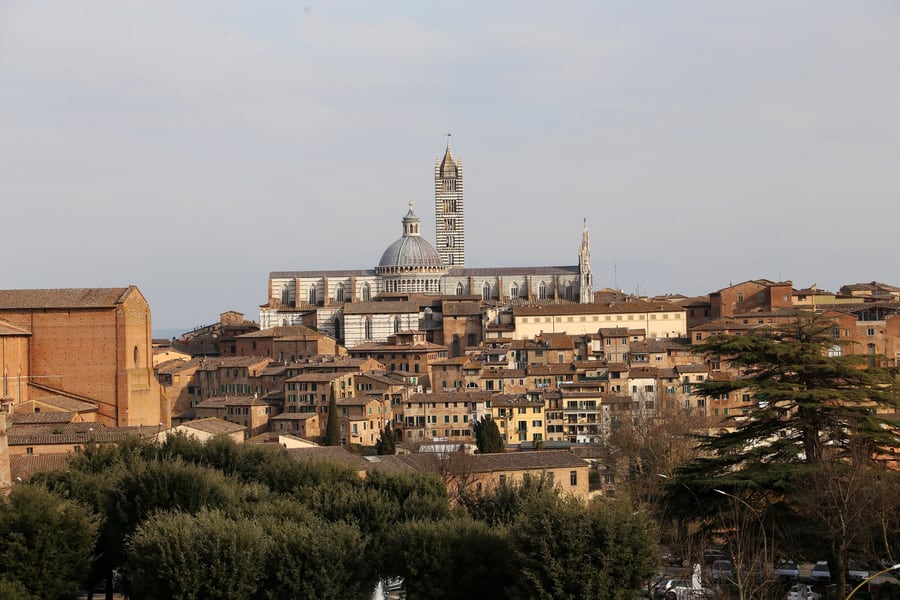
Siena
Almost every Treno Natura leaves from Siena station and comes back to it, so the city is the natural base. The striped bell tower and dome of its cathedral rise over a hill town of brick palaces, and Lorenzetti's frescoes of good and bad government, painted in 1338, are in the Palazzo Pubblico.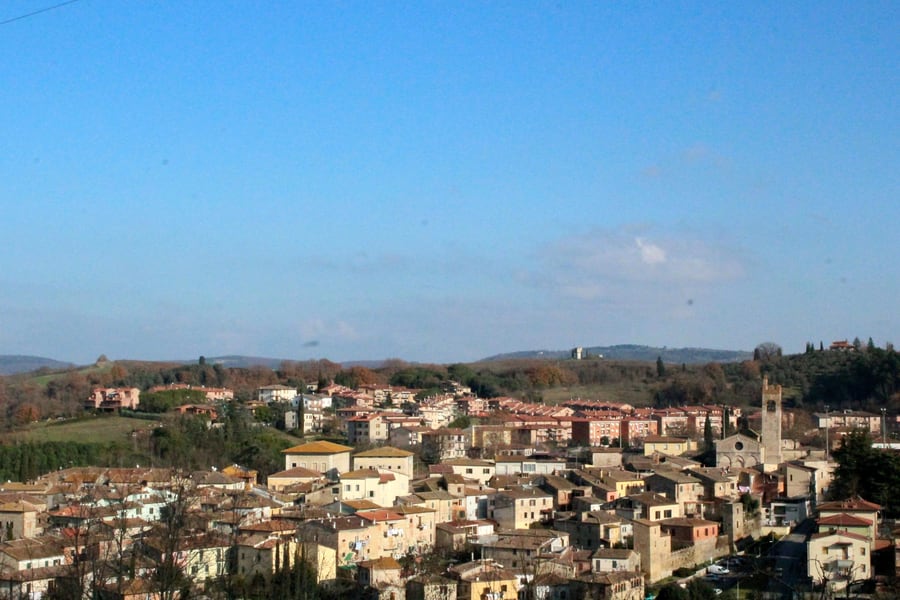 LigaDue / Wikimedia Commons · CC BY-SA 4.0 · cropped
Asciano
A town of medieval origin with Etruscan tombs on its doorstep, among them the Molinello tumulus, in use from the 7th to the 1st century BC. The clay hills around it have been called the desert of Accona since the Middle Ages, and the abbey of Monte Oliveto Maggiore, one of the great monuments of Tuscany, is a few kilometres away.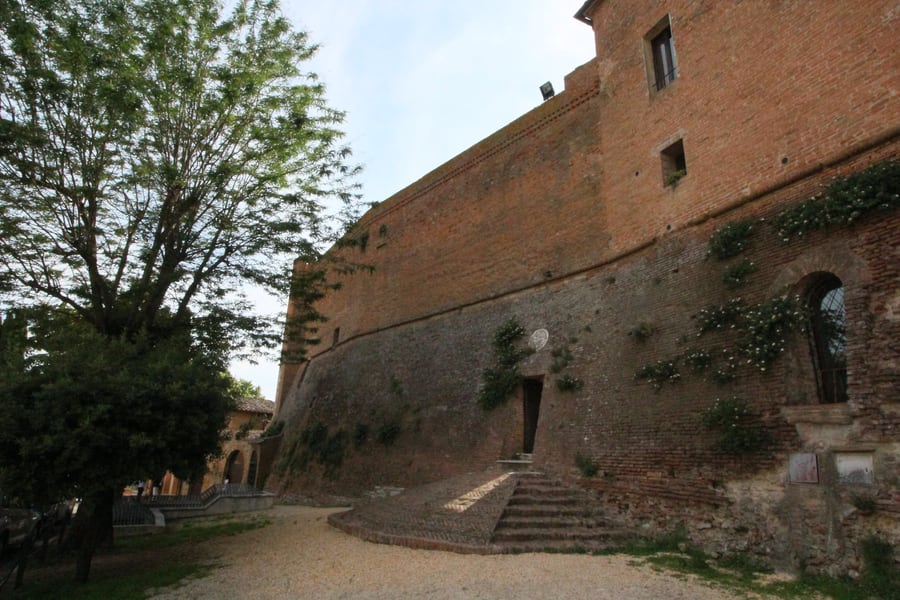 LigaDue / Wikimedia Commons · CC BY-SA 4.0 · cropped
San Giovanni d'Asso
A small village on the Asso in the middle of the Crete Senesi, built around its castle, with the station down in the valley below. It was a commune of its own until 2016 and is now part of Montalcino. The truffle fairs fill it in March and November, and those are the days the steam train comes.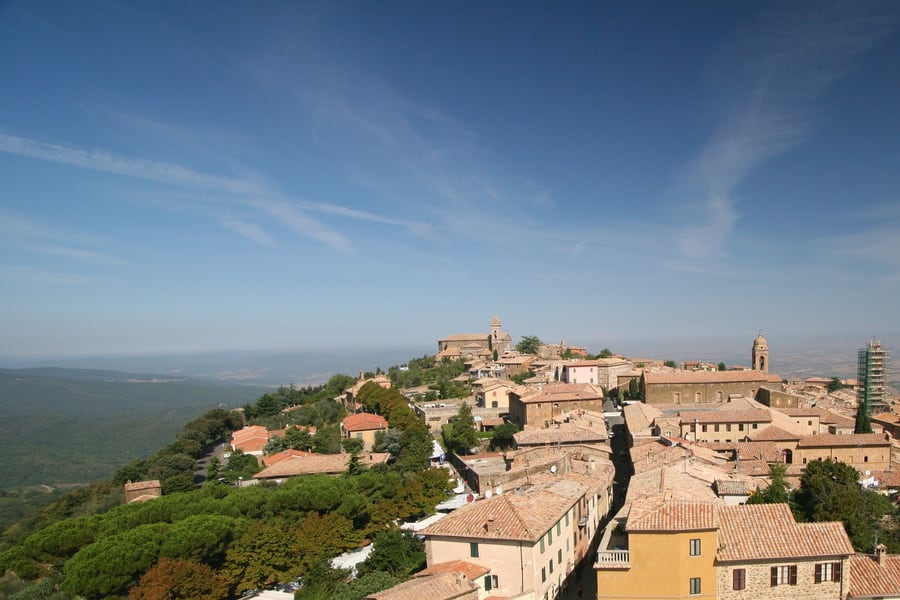 Type17 / Wikimedia Commons · CC BY-SA 2.5 · cropped
Montalcino
The city of Brunello stands at 564 metres inside 13th-century walls, under a fortress built at the highest point in 1361, with the Palazzo dei Priori and its tower in the centre. On the last Sunday of October, since 1958, the town has held the Sagra del Tordo; the train goes to Monte Amiata and a bus climbs the rest.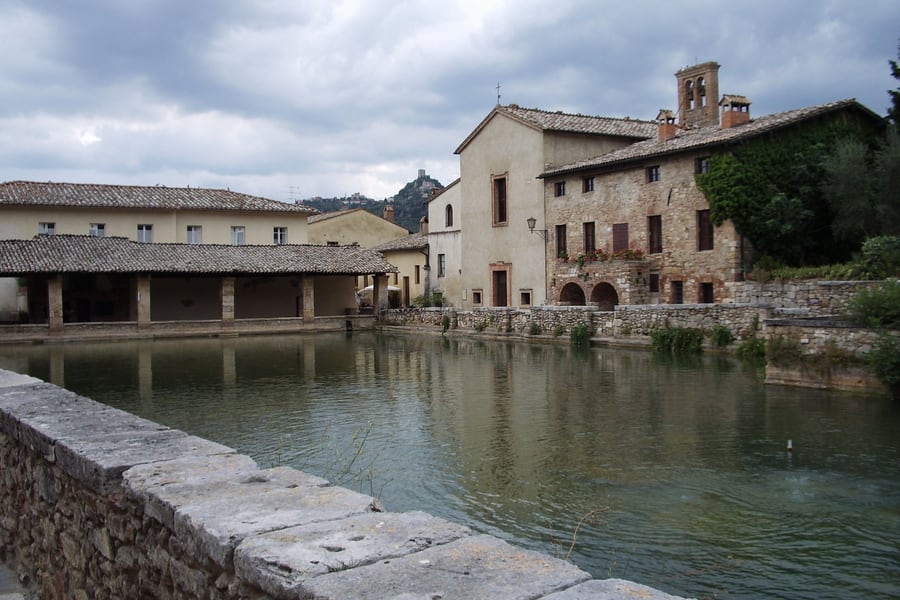 Petitverdot / Wikimedia Commons · public domain · cropped
Bagno Vignoni
A few kilometres from Torrenieri, near San Quirico d'Orcia, the village square is a 16th-century pool fed by a hot spring used since Roman times. The water runs on down to four medieval mills cut into the rock, which turned even in summer when the rivers ran dry. Tarkovsky filmed much of Nostalghia here.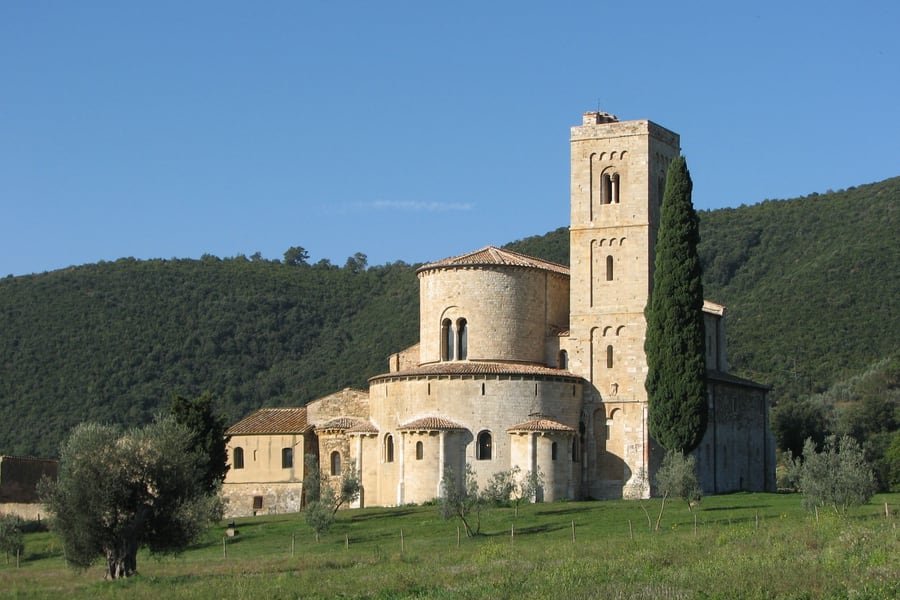 Dongio / Wikimedia Commons · public domain · cropped
Abbey of Sant'Antimo
A few kilometres from Monte Amiata station, below Castelnuovo dell'Abate, stands one of the most important examples of Tuscan Romanesque. The monastery's first buildings go back to the 8th century; the pale stone church, its bell tower and a single cypress stand alone in a valley of olive trees.Where to Sleep
Siena is the base: almost every train leaves from its station and comes back there in the evening. To stay in the Val d'Orcia itself, San Quirico d'Orcia and Bagno Vignoni are a few kilometres from Torrenieri-Montalcino station.
Where to stay
Grand Hotel Continental Siena
In a 16th-century palazzo on Banchi di Sopra
A former private palazzo with frescoed ceilings and a wine cellar, a few steps from Piazza del Campo and the cathedral.
Check Availability (opens in a new tab, on starhotels.com)via starhotels.comLa Posta
Thermal hotel at Bagno Vignoni
A family-owned hotel of 35 rooms whose indoor and outdoor pools are fed by the village's hot springs.
Check Availability (opens in a new tab, on lapostahotel.it)via lapostahotel.itQuestions or corrections
Planning this trip and stuck on something, or spotted a time, fare or detail that has changed? Send us a message about Ferrovia della Val d'Orcia. We read every one, and we update this page when something has changed.