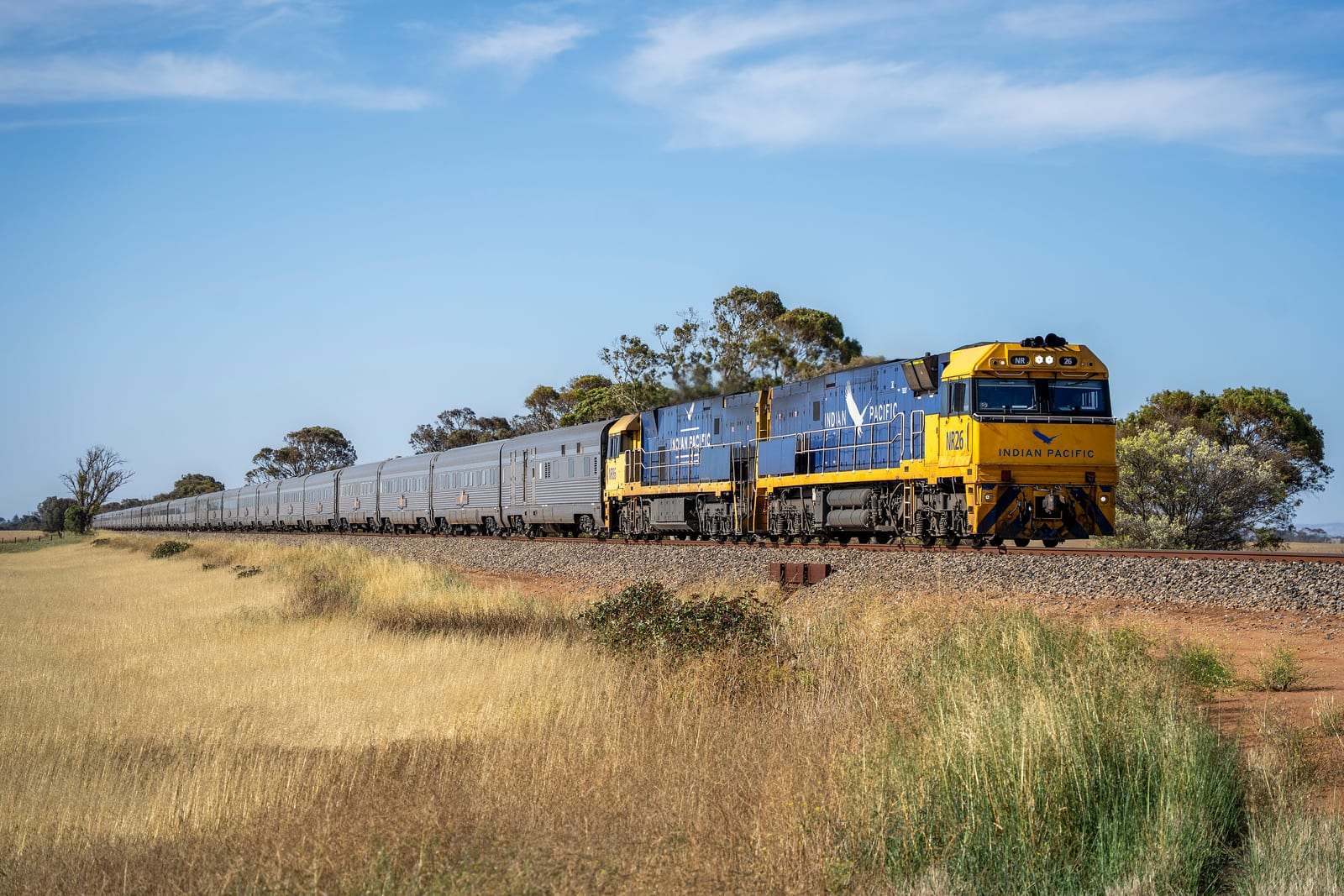
Indian Pacific
Tomoyn / Wikimedia Commons · CC BY 4.0
- Distance4,352 km · standard gauge
- Duration70–75 hours · three nights
- Best seasonYear-round · spring & autumn are kindest
Introduction
Somewhere in the middle of the Nullarbor Plain, the Indian Pacific runs for 478 kilometres without a single bend. It is the longest dead-straight stretch of railway track in the world — not the longest in Australia, the longest anywhere — and it exists because out here there was quite literally nothing to build around. No hill, no river, no town. Just a flat, treeless, endless plain, and a surveyor who drew a line across it and saw no reason to stop.
That straight is the emblem of the whole journey, which is this: 4,352 kilometres from Sydney on the Pacific to Perth on the Indian Ocean — ocean to ocean, across the entire width of a continent, in one go. It takes seventy to seventy-five hours, which is three nights aboard.
What surprises people is how young it is. Australia had railways from the 1850s, but a through train from Sydney to Perth did not run until 23 February 1970. The reason is one of the great self-inflicted wounds of railway history: the Australian colonies each chose a different track gauge, so trains couldn't run between them. Crossing the country meant changing trains at every border. The Indian Pacific only became possible once decades of gauge-conversion work had finally stitched the country into a single railway.
When it launched, it was the third longest passenger train journey on earth by distance — behind only the Trans-Siberian and the Canadian. It still crosses a continent, and it still does it the slow way, three nights of it, run once a week by Journey Beyond — the same company behind the Ghan.
Like the Ghan, it is a luxury train now, in Gold and Platinum sleepers, and like the Ghan the product it is actually selling is distance — the sheer, disorienting scale of crossing Australia at ground level. The difference is what you cross. The Ghan goes up the red centre. The Indian Pacific goes across the Nullarbor, which is emptier still, and out there it passes places that have no reason to exist except the railway: a fuel stop called Cook with a population you could count on your fingers, rows of abandoned railway cottages at Loongana where families once lived to keep the line open.
Three nights, one train a week, and half a continent of nothing. If that is a holiday to you — and to some people it profoundly is — book it.
The Journey
Sydney to Perth is one of those journeys where the map does more than any description can: a line straight across the bottom third of Australia, ocean to ocean, with almost nothing written along it.
The first day is the gentle one. The train climbs out of Sydney and over the ranges onto the western plains, and for a while there is still farmland, still towns, still the ordinary furniture of a settled country. Adelaide comes on the second day, a proper city and one of the major stops on the way across.
And then, west of Adelaide, the country empties out and stays empty in a way that has to be experienced at ground level to land. This is the Nullarbor — the name is dog-Latin for "no trees", and it is accurate. A vast, flat, treeless limestone plain, one of the largest single pieces of nothing on the planet, and the railway crosses the whole of it.
Somewhere in the middle comes the straight: 478 kilometres without a curve. On a map it is a ruled line. On the train it is a strange, hypnotic stretch of hours where the track ahead and the track behind vanish to identical points and nothing changes at all. People find it either unbearable or unforgettable, and often both.
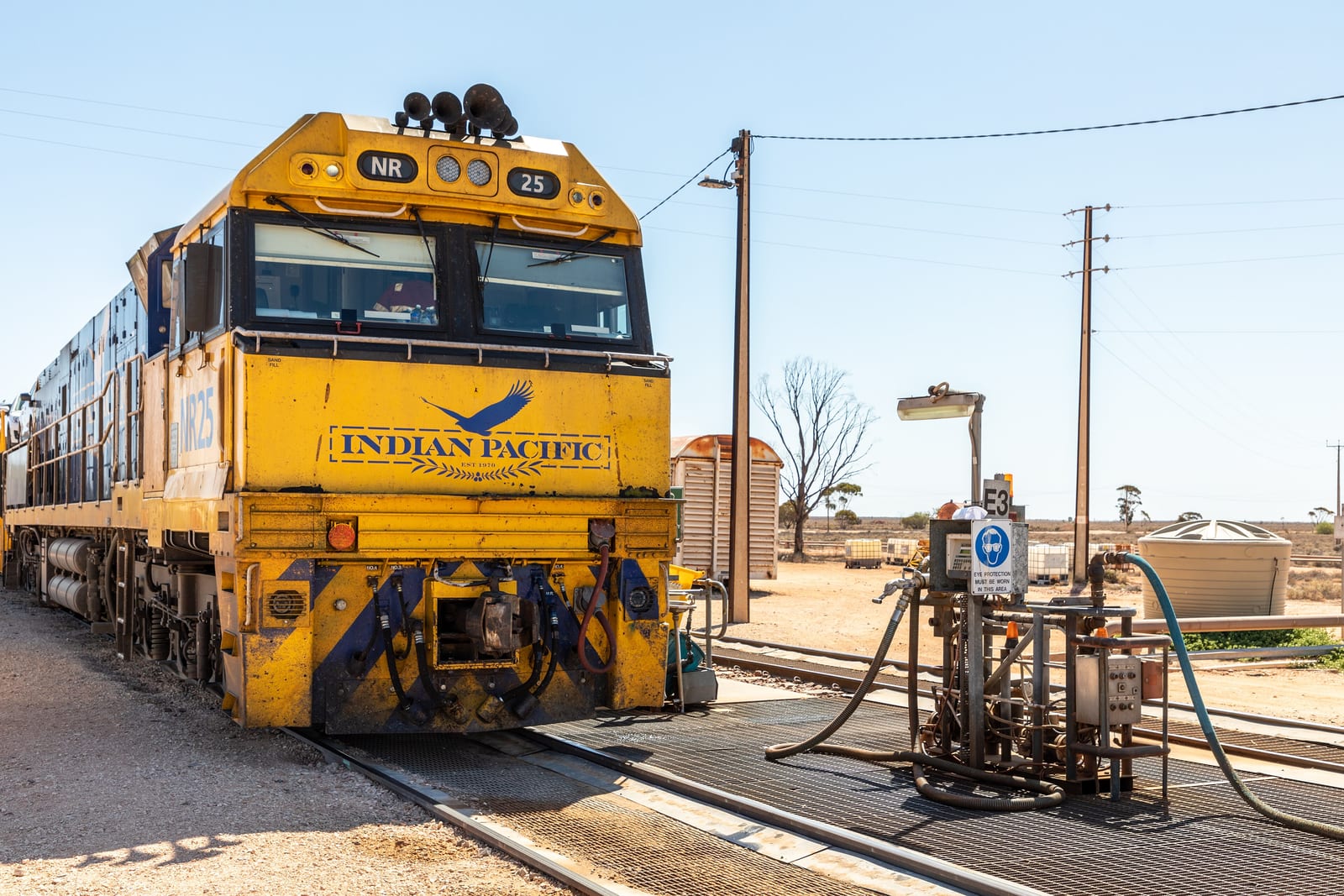
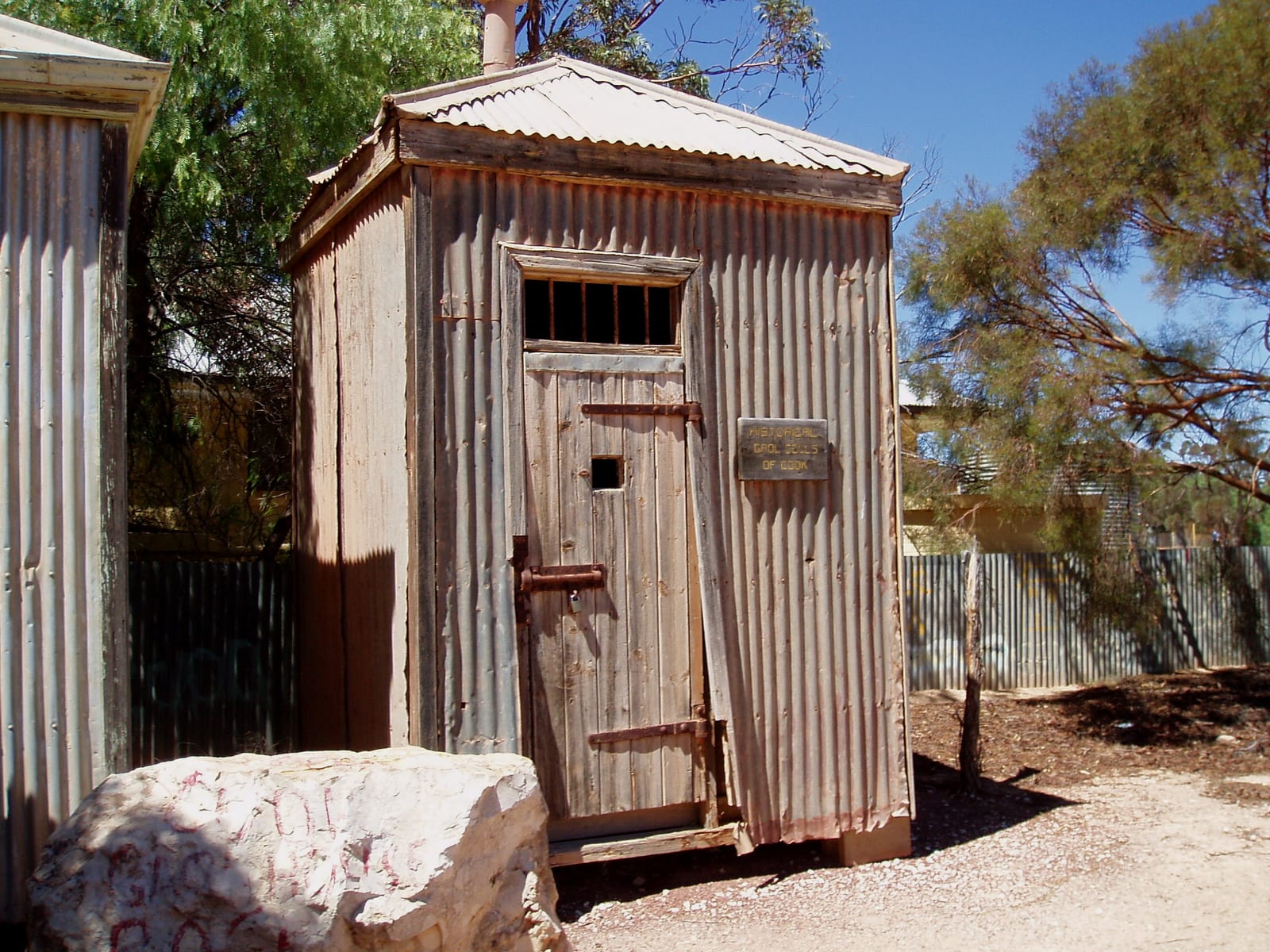
The stops out here are the strange, wonderful part. The train pauses at Cook, South Australia — a settlement that was built purely to service the railway, once had a few hundred people, and now has almost none. There are some old buildings, a set of gaol cells, a sign with a bleak joke on it, and an enormous quantity of silence. It exists because trains crossing a desert need fuel and water, and for no other reason.
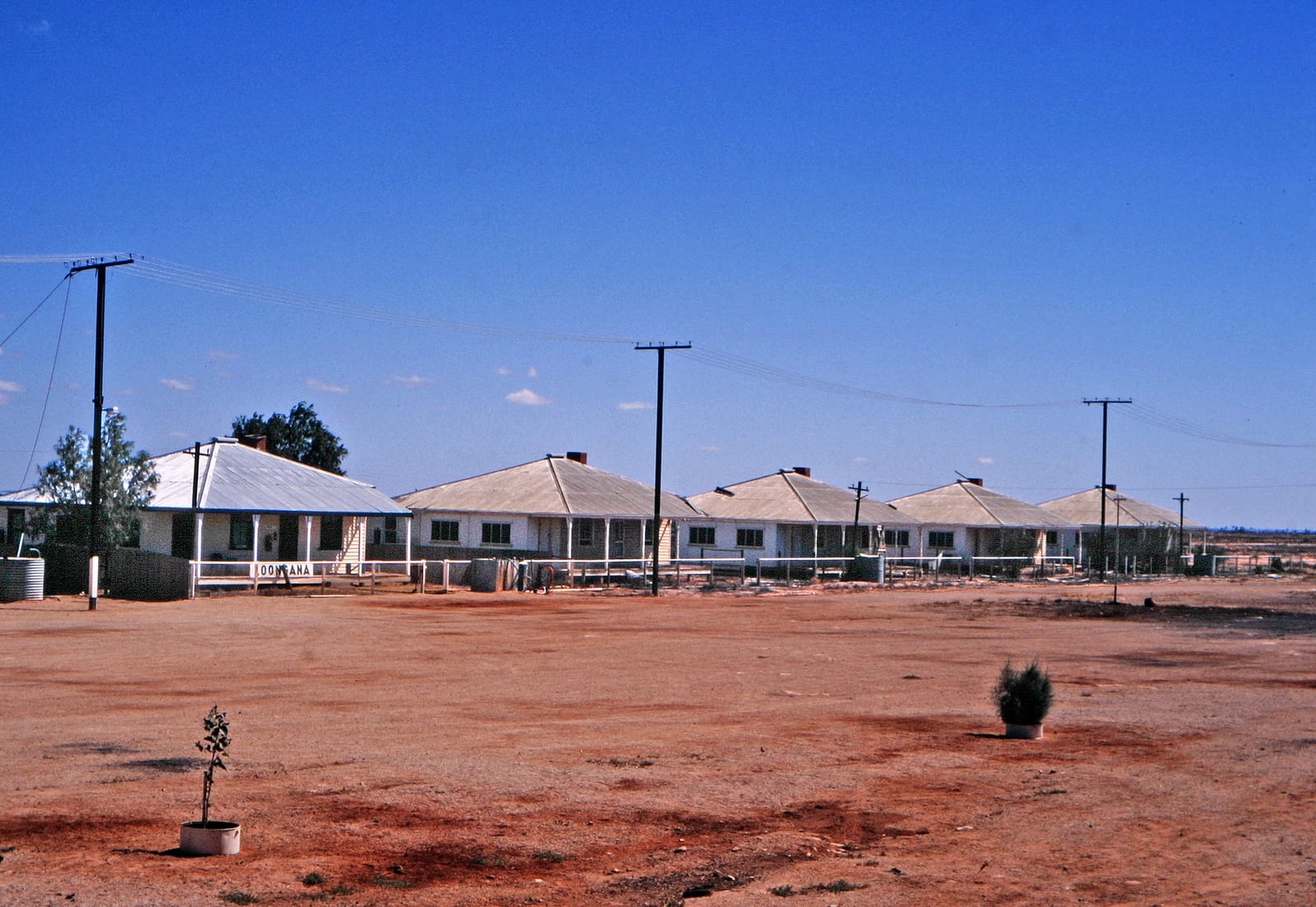
The train also stops at Rawlinna, a tiny settlement out on the Nullarbor sheep country, where the off-train experience is dinner under the stars in the middle of the plain. And at Loongana you pass the ghosts of the old railway: rows of Commonwealth Railways cottages, abandoned on red dirt, where families once lived hundreds of kilometres from anywhere solely to keep the line open. Modern trains don't need them. The houses are still standing, slowly going back to the plain.
Then the Nullarbor ends, the mining country of Western Australia arrives, and on the third night the train comes down out of the interior towards the coast and into Perth — one of the most isolated cities of its size anywhere, which you have just reached from the far side of the country by three days of railway.
Onboard, the rhythm is the Ghan's: eat, sit in the lounge, talk to people who have chosen this, watch the plain. But the Indian Pacific is a night longer, and the emptiness is more total. The Ghan crosses a landscape. The Indian Pacific crosses an absence — and if you are the sort of traveller who finds that thrilling rather than tedious, there is nothing else in the world quite like the middle day.
Along the route
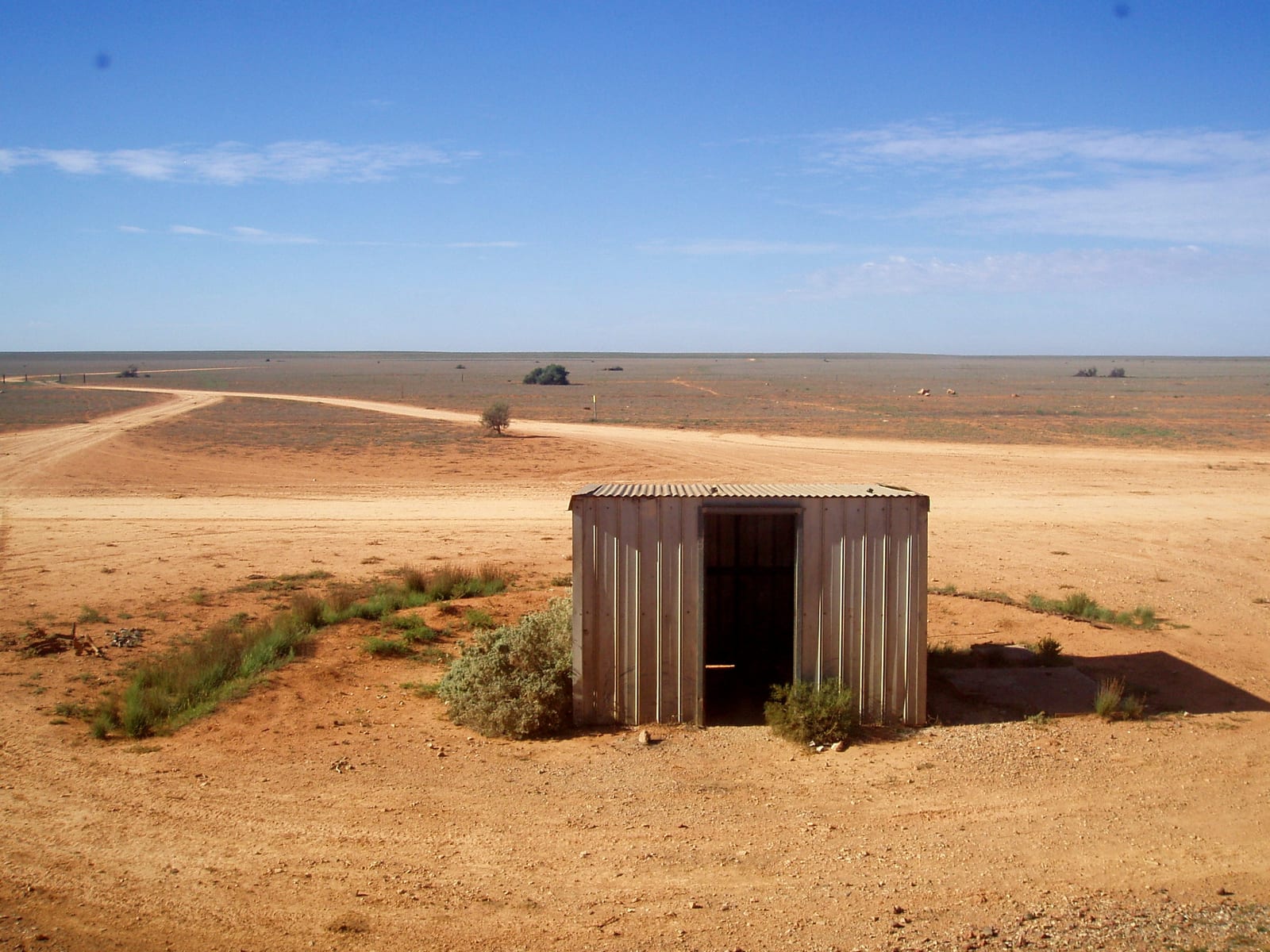
Amanda Slater / Wikimedia Commons · CC BY-SA 2.0478 kilometres without a curve
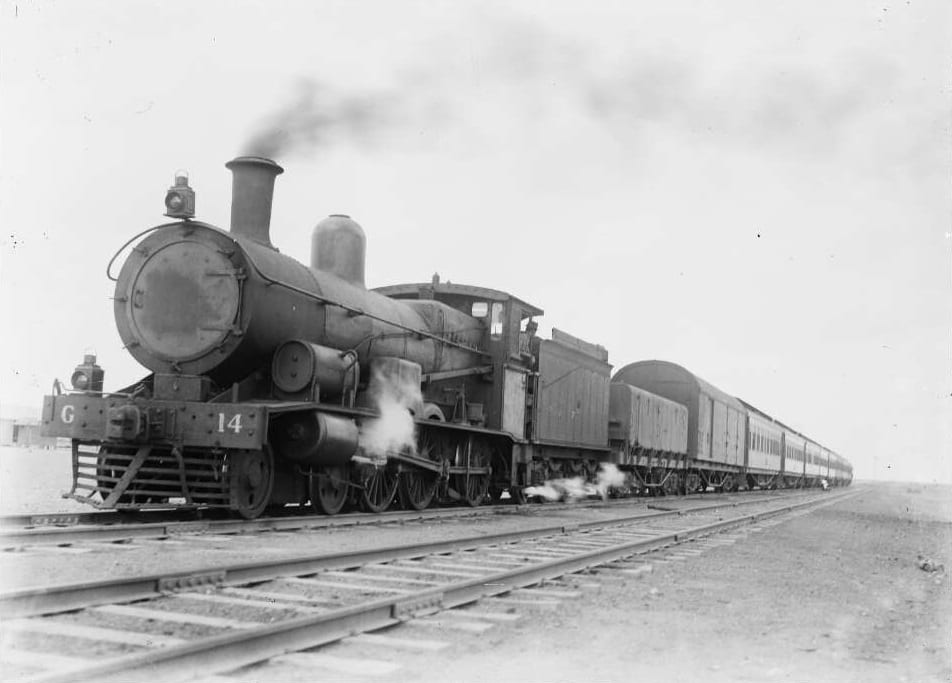
The longest straight stretch of railway track in the world, across the Nullarbor Plain. Not the longest in Australia — the longest anywhere. 478 kilometres without a single curve, because there was nothing out there to build around.Herbert H. Fishwick / Wikimedia Commons · Public domainIt needed the gauges to agree
The first Indian Pacific ran only on 23 February 1970, and the reason is gauge: a through train from Sydney to Perth was simply not possible until Australia's gauge-conversion projects finally allowed continuous standard-gauge running right across the country.Tomoyn / Wikimedia Commons · CC BY 4.0Third in the world
When it launched, this was the third longest passenger train journey on earth by distance — behind only the Trans-Siberian and the Canadian. It still crosses an entire continent, ocean to ocean, in one go.A bit of history
Culture & experiences along the way
Amanda Slater / Wikimedia Commons · CC BY-SA 2.0Cook, population almost nobody
Out on the plain there is a place called Cook — a railway settlement with a few buildings, some old gaol cells and essentially no one. It exists because trains need fuel and water in the middle of a desert, and for no other reason at all.W. Bulach / Wikimedia Commons · CC BY-SA 4.0The empty houses
At Loongana, rows of Commonwealth Railways cottages stand abandoned on red dirt. Families lived out here — hundreds of kilometres from anywhere — purely to keep the line open. Modern trains don't need them. The houses are still there.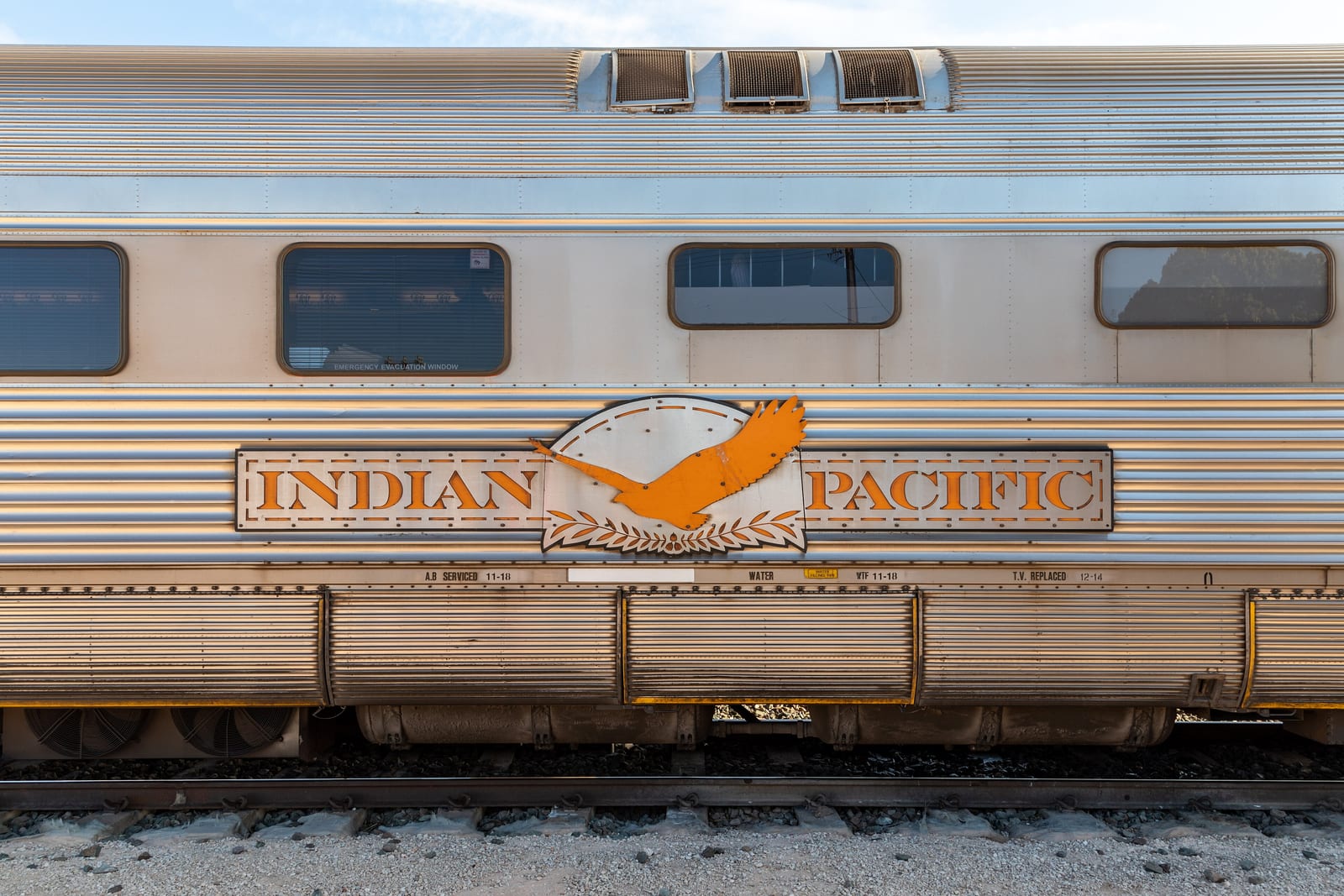 Dietmar Rabich / Wikimedia Commons · CC BY-SA 4.0
Three nights of it
Seventy to seventy-five hours. That is the deal, and it is longer than the Ghan by a full night. Gold gets you a roomette or twinette and your meals in the restaurant car; the rest is the lounge, the window and the plain.Timetables
One train a week, three nights aboard, ocean to ocean. Like the Ghan, the timetable is more a shape than a thing to catch to the minute — but it runs on fixed weekly departure days, so pin those first.
Real 2026 departures (Journey Beyond — confirm before booking):
| Direction | Departs | Pattern |
|---|---|---|
| Sydney → Perth | Wednesday 15:03 | 4 days / 3 nights; arr Adelaide Thu, Perth Sat |
| Perth → Sydney | Saturday | 5 days / 4 nights; arr Adelaide Mon, Sydney Wed |
It runs weekly, all year, covering 4,352 km including the 478 km dead-straight across the Nullarbor — the longest stretch of straight track in the world — in 70–75 hours.
Good to know:
- It is a night longer than the Ghan — three nights versus two.
- The Nullarbor day is the point, and the test — the emptiness is either the best day of the trip or the one that breaks you.
- The stops out there are brief — Cook and the plain settlements are photo-stops and leg-stretches, not excursions; what's offered varies by departure.
- It runs all year; spring and autumn are kindest at the Sydney and Perth ends, though the plain itself is hot whenever.
- Fly one leg. Almost everyone flies the return — book that before the train.
Departure days/times as of the 2026 season. Confirm the current schedule with the operator — see the Tickets section below.
Tickets
Tickets come from Journey Beyond, which also runs the Ghan. It is one train a week across the width of the country, so book early and expect luxury-train prices. Gold Service is a roomette or twinette sleeper with meals in the restaurant car — comfortable, but compact, and it is your world for three nights. Platinum buys much larger cabins and a private lounge, and on a 75-hour journey the case for space is stronger than on almost any train anywhere.
Three nights is the commitment, so be honest about whether you want that before paying for it. Almost everyone flies one way; arrange that before booking the train. And know what the product is: unlike the Ghan's tour-heavy schedule, much of the Indian Pacific is simply crossing the plain. That is the point of it, not an omission.
Book your tickets
Gold Service
Roomette or twinette
A sleeper cabin with your meals included in the restaurant car — the standard way to cross the continent. Three nights, one train a week, and the cabin is your world for most of it.
Book Tickets (opens in a new tab, on Journey Beyond)via Journey BeyondPlatinum Service
More room, for longer
The larger cabins and the private lounge. On a journey of up to 75 hours, the argument for extra space is stronger here than on almost any other train — you are living in that cabin for three nights.
Book Tickets (opens in a new tab, on Journey Beyond)via Journey BeyondRail Passes
No rail pass covers the Indian Pacific. Interrail and Eurail are European schemes, and Australia is not among the 33 countries in Interrail's list of covered railway companies (opens in a new tab). Journey Beyond sells it as Gold or Platinum cabins with meals included, one train a week.
Checked October 2026 against Interrail's list of covered railway companies (opens in a new tab).
Places to Visit
The Indian Pacific is really about the space between places, but it starts, passes through and ends somewhere, and those somewheres are worth time.
On planning around it: because the train runs weekly and takes three nights, treat it as the spine of a longer Australian trip rather than a thing you slot in. Fly in to one coast, take the train to the other, and spend real time at both ends.
 Takeshi Aida / Wikimedia Commons · CC BY-SA 2.0 · cropped
Sydney
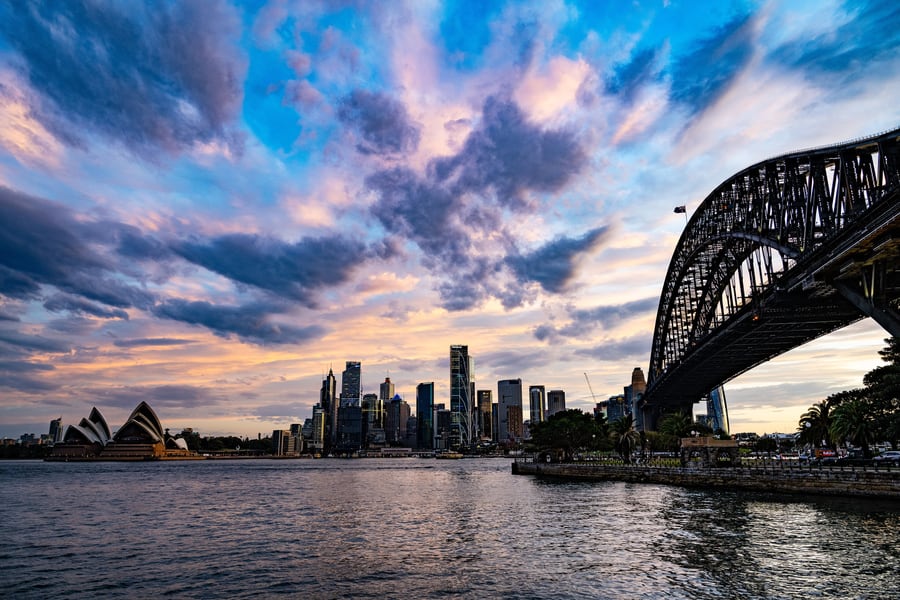
The line begins at Central, but the city is its harbour: the Opera House, the bridge, and ferries that are the cheapest good sightseeing in Australia. Sydney deserves several days at whichever end of the trip you put it, and the beaches at Bondi, Manly and Coogee are all reachable on public transport. Because the train runs weekly, build the trip around it rather than trying to slot it in.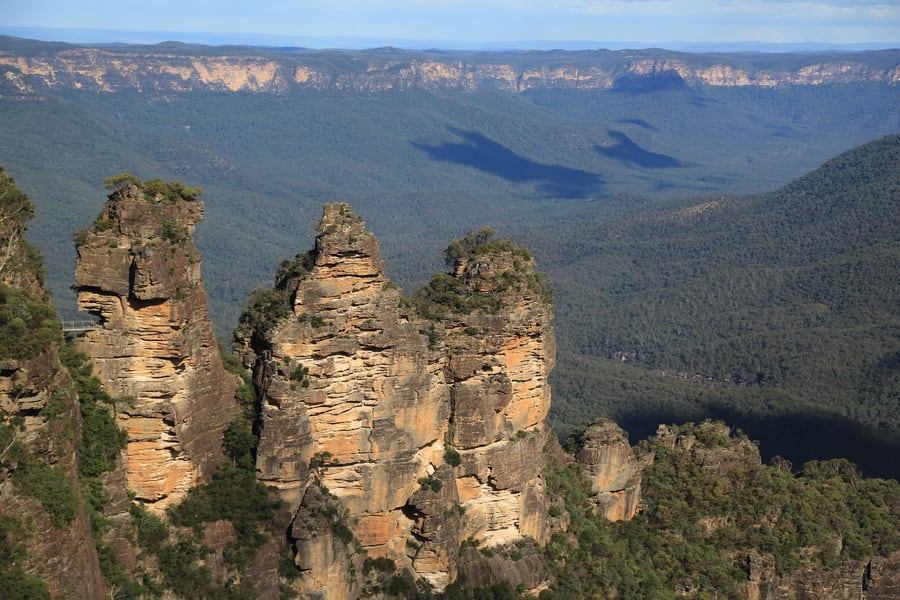 Stu's Images / Wikimedia Commons · CC BY-SA 4.0 · cropped
The Blue Mountains
Ninety minutes west of Sydney, and the first country the train climbs into: eucalypt forest, sandstone escarpments and the Three Sisters — Meehni, Wimlah and Gunnedoo, at 922, 918 and 906 metres — seen from Echo Point at Katoomba. The Giant Stairway drops 998 steps to the valley floor. The much-repeated tale of three sisters turned to stone is probably not a traditional story; the Gundungurra are the traditional owners regardless.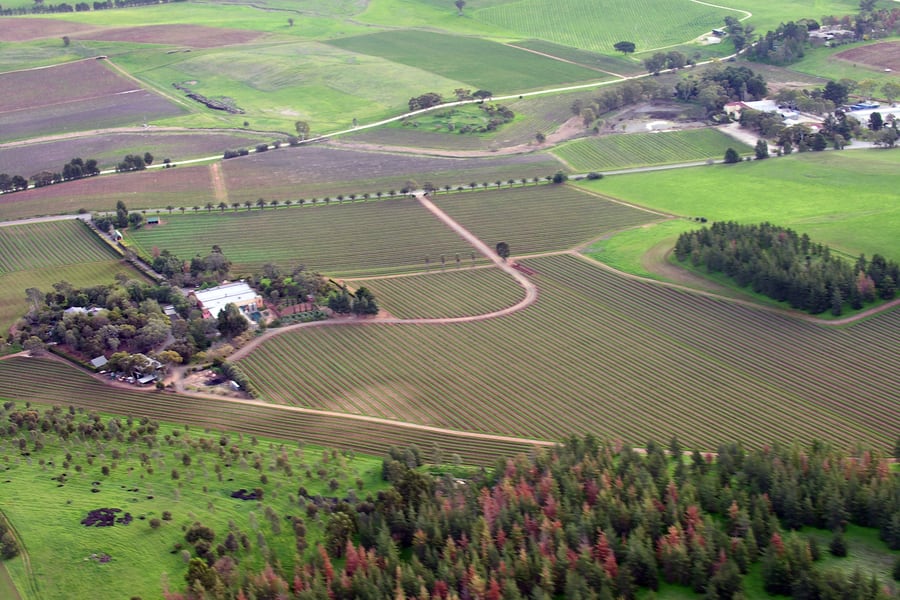 Louis Roving / Wikimedia Commons · CC BY 2.0 · cropped
Adelaide & the Barossa
The longest civilised stop on the crossing, and a relaxed, walkable capital — but the reason to build days around it lies an hour up the road. The Barossa was settled in the 1840s by Lutherans from Prussian Silesia, who called it Neu-Schlesien; Colonel William Light had already named the range after the Battle of Barrosa, and the misspelling stuck. Shiraz vines planted in 1847 are still in commercial production.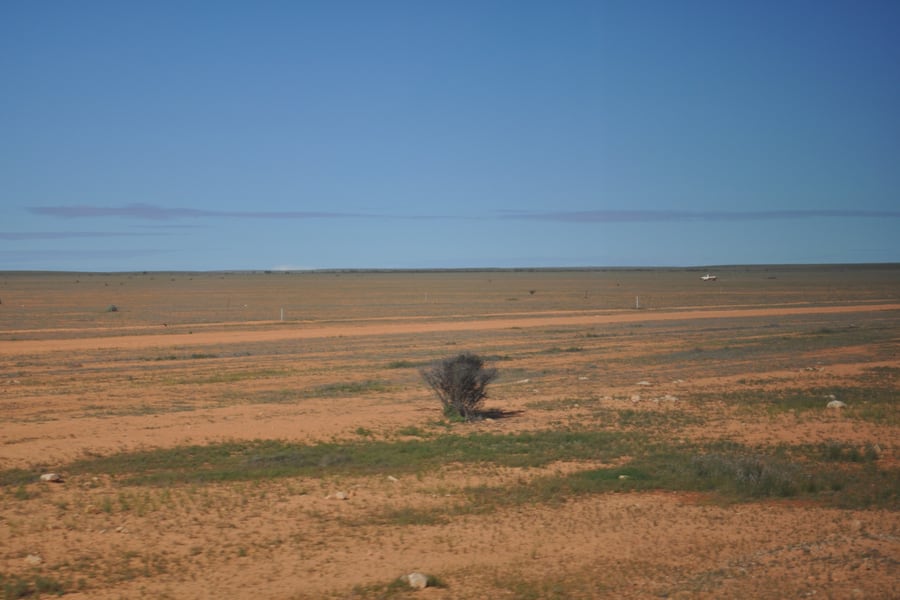 ross bate / Wikimedia Commons · CC BY 3.0 · cropped
The Nullarbor
Not a place you visit so much as one you cross: 200,000 square kilometres of limestone with, as the Latin name admits, no tree. The railway's 478-kilometre straight is the longest in the world, and it is the reason to take this train instead of flying. There is a highway version for drivers, but from a carriage window, with nothing to fix your eye on for hours, the scale lands differently.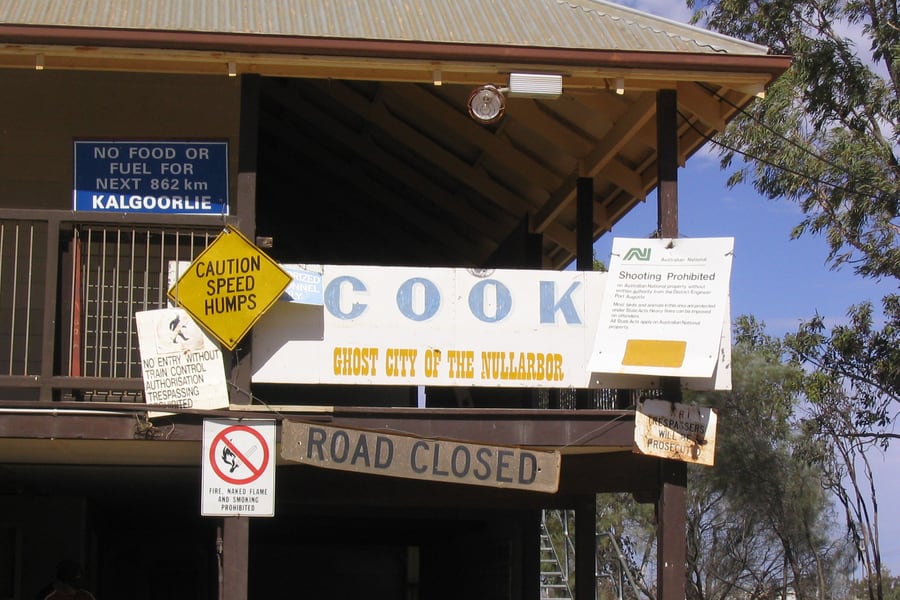 Johndarrington / Wikimedia Commons · public domain · cropped
Cook
A railway town built in 1917 and named after a prime minister, Cook once held 200 people and now holds four. The train stops to take on fuel and water, and you step down into total silence: a few buildings, old gaol cells, seven houses, and a sign advertising the last food or fuel for 862 kilometres. It is not a destination in any normal sense, and it is the stop everybody remembers.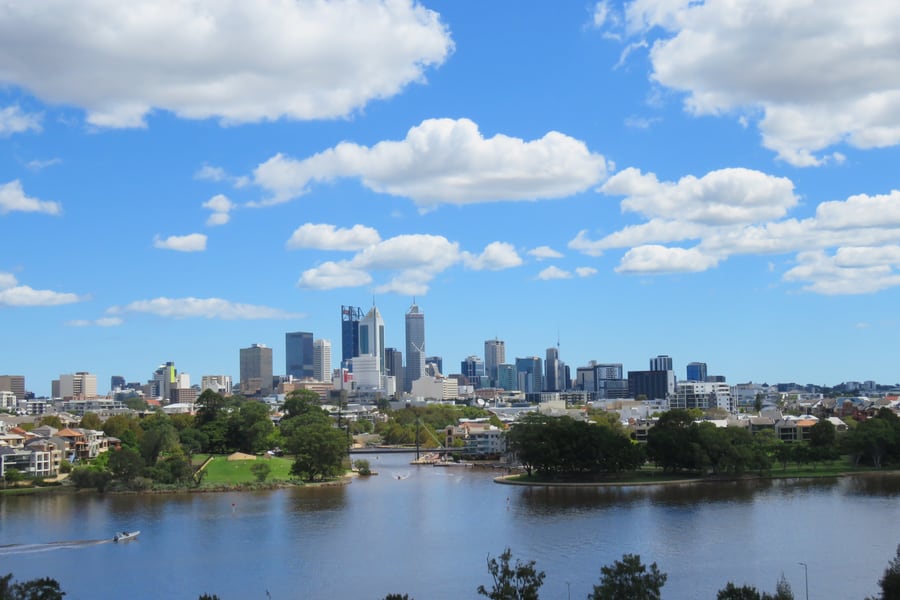 Calistemon / Wikimedia Commons · CC BY-SA 4.0 · cropped
Perth
The reward at the end of the line: a sunny, spread-out city on the Swan River, a very long way from anywhere else. Kings Park — 400 hectares of bush and botanic garden on the escarpment above the water — holds the view of the skyline everybody photographs, and its Western Australian Botanic Garden grows some 2,000 native species. Give the city a couple of days to recover from three nights on a train.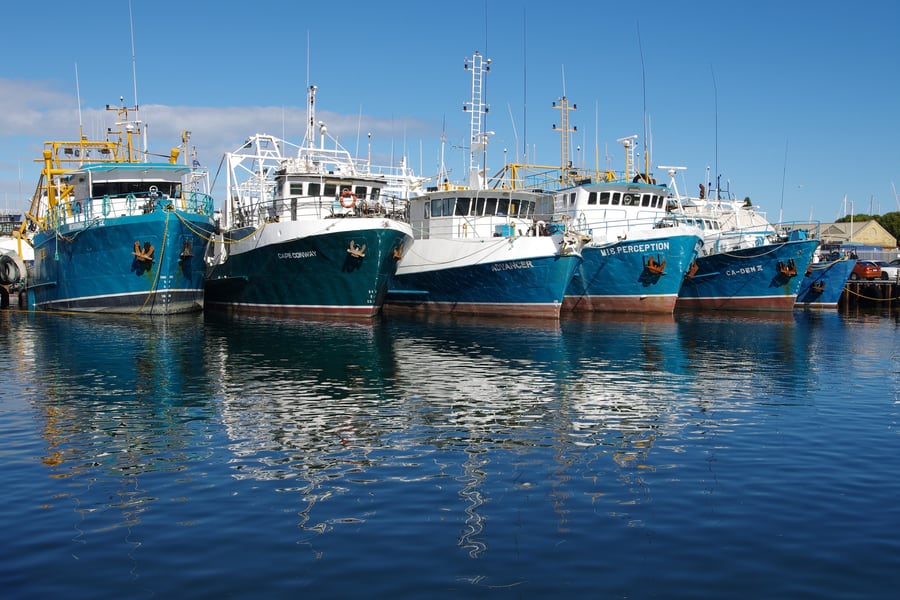 Gnangarra / Wikimedia Commons · CC BY 2.5 AU · cropped
Fremantle
Nineteen kilometres down the Swan and a world away from the city: a working port with a heritage West End of late Victorian and Edwardian streets, and a fishing harbour ringed by breweries and fish-and-chip shops. The Round House, built in 1830–31 as the colony's first gaol, is the oldest intact building in Western Australia. Fremantle Prison joined the World Heritage list in 2010.Where to Sleep
The train is the hotel — three nights of it — and there is no other option, because the Indian Pacific is sleepers only. So the choice, as on the Ghan, is Gold or Platinum, and here it matters even more, because this is a night longer.
A Gold roomette or twinette is comfortable and includes your meals, but it is a small space and you will be in it, awake and asleep, for the better part of three days. Platinum buys a much larger cabin and a private lounge. On a 75-hour journey — the longest on this site outside the Trans-Siberian — that is not a frill; it is the difference between three nights you enjoy and three you endure. Decide by how well you cope with small rooms and long stretches of the same view.
At the two ends:
- Sydney — the full range of a major world city. Arrive a night early; a transcontinental train is not something to risk on a tight connection.
- Perth and Fremantle — plenty of choice, and the port town of Fremantle is the nicer place to base yourself if you have a few days: smaller, older, on the water.
Unlike the Ghan, there is no sensible way to break this journey partway. The stops on the Nullarbor are minutes long and in the middle of nowhere; there is nowhere to stay at Cook, and no next train for a week. This is a ride-it-through proposition. Settle in, take the cabin you'll be comfortable in, and let three days of Australia go past the window.
And the practical rule is the Ghan's rule again: one train a week, so fly one leg. Plan the flight first, the train second, and the days at each end around both.
Questions or corrections
Planning this trip and stuck on something, or spotted a time, fare or detail that has changed? Send us a message about Indian Pacific. We read every one, and we update this page when something has changed.