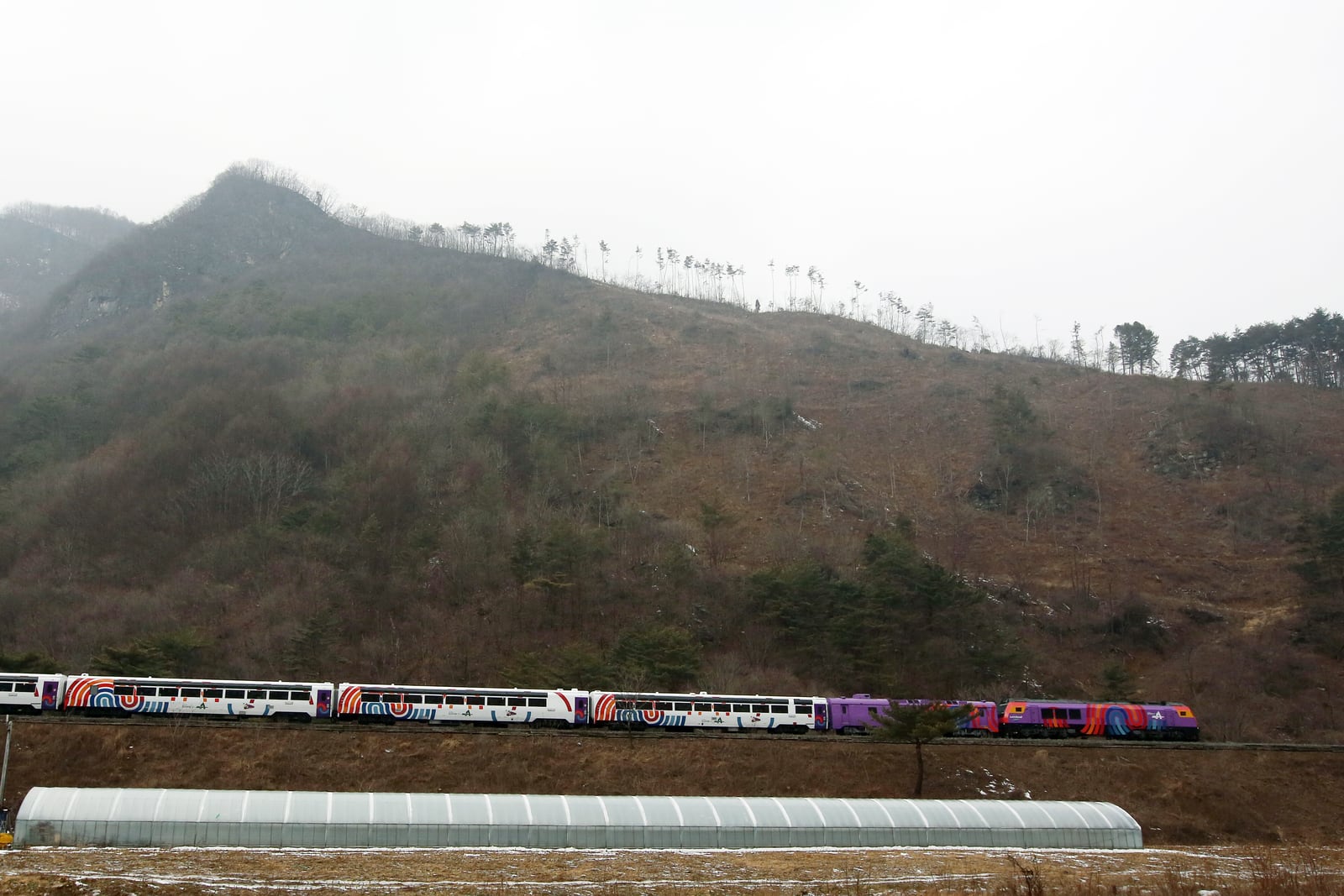
The Jeongseon Arirang Train
Republic of Korea (Korea.net) / Wikimedia Commons · CC BY-SA 2.0
- DistanceJecheon–Auraji · 9 stops
- DurationAbout 2 hours 30 minutes each way
- Best seasonAutumn for the colour · the market days matter more than the month
Introduction
Two hundred kilometres east of the KTX and its 305 km/h, there is a railway that runs two days a week, is hauled by a second-hand diesel, and exists because a folk song does.
The Jeongseon Line was built for coal. It ran back into the mountains of Gangwon, the highest and emptiest province in South Korea, and for a while it was at the front of the country's industrialisation — pit after pit, and trainloads of anthracite coming down to the power stations. Then in the late 1980s the government's coal rationalisation policy closed the mines, the people left, and the railway was suddenly a line to nowhere with nothing on it.
For years it limped on. At one point it was the last line in Korea worked by the Bidulgi, the "Pigeon", the slowest and cheapest class of train the country had. Latterly it had a two-carriage Mugunghwa. It lost money continuously.
So in January 2015, Korail tried something else.
A train named after a song
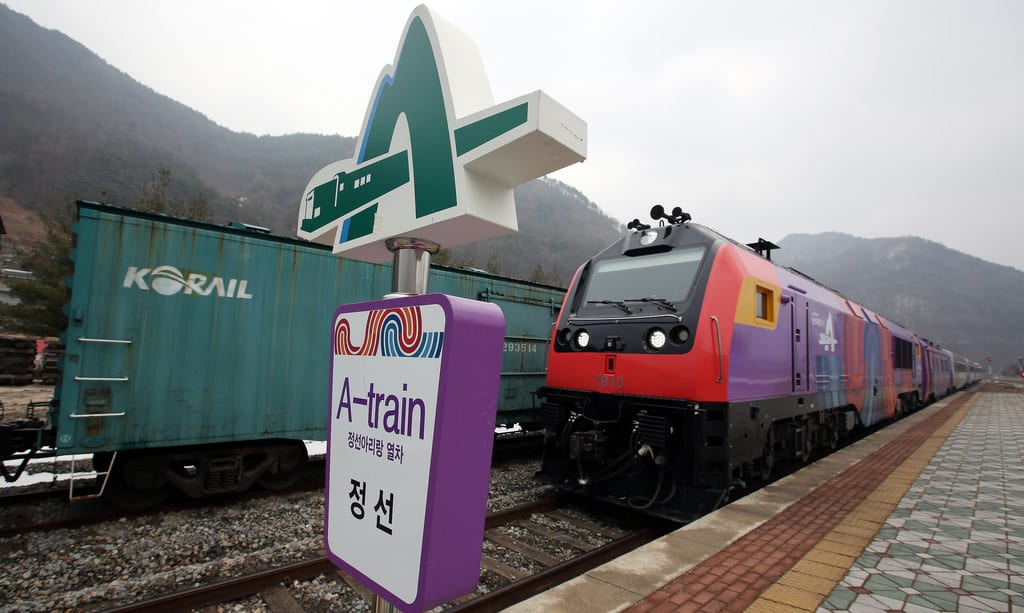
The A-Train takes its letter from Arirang — and, the operator adds, from amazement and adventure, which is the sort of thing operators add.
Arirang is the Korean folk song: some 3,600 variations of sixty versions, all sharing the same refrain, inscribed on UNESCO's Intangible Cultural Heritage list twice — by South Korea in 2012 and by North Korea in 2014 — and sung on both sides of a closed border as a song about being separated from what you love.
And it is believed to have originated in Jeongseon. The Jeongseon Arirang is the oldest strand of it, and the line runs through the valleys it came from, to a place called Auraji where the song is set.
That is a good deal more than a marketing hook. It is why this railway still has trains on it.
What it actually does
The train runs from Jecheon to Auraji — nine stops, about two and a half hours — on Saturdays and Sundays, and on the 2nd, 7th, 12th, 17th, 22nd and 27th of every month, which are the days of the Jeongseon five-day market.
The rake is four rebuilt "Haerang" rail-cruise carriages with observation windows in the roof and an observation car at the back, and there is storytelling, live music, a magic show and quizzes on board. It is aimed at Korean families, not at foreign railway enthusiasts, and it is much the better for it.
The complicated part
Two things sit awkwardly together, and both are true.
The A-Train displaced the local service: since it started, regular passenger trains no longer run on the Jeongseon Line, and the fare is a tourist fare. That is a real loss for a poor and remote county.
But it is not the whole story. People who live in Jeongseon-gun and travel within it — between Yemi and Auraji — are issued a ticket on the spot at the ordinary Mugunghwa rate of about ₩2,600 on showing ID, because the roads up here are bad and this is genuinely how some of them get about. And three stations that had closed to passengers in 2011 — Najeon, Sonpyeong and Byeoreogok — reopened in 2015 because of this train.
Compare that with the Baekdudaegan Canyon Train, which was set up specifically to stop people using it as transport, and the A-Train looks rather good.
It is running on borrowed time
Be clear about this before you plan anything.
The A-Train has been suspended over and over: for bridge works before the 2018 Olympics, twice for COVID, for five months in 2021 while two overbridges were built, and — after a rockfall on 19 February 2024 damaged the track between Mindungsan and Byeoreogok — for a stretch when buses replaced the trains.
Then in February 2026 it stopped again, because the carriages had reached the end of their service life. It went away for a safety assessment and an interior refit and came back on 22 May 2026, with the route shortened and different locomotives on the front.
It is running now — which, on this line's record, is never something to take for granted.
The Journey
Jecheon is a junction town in North Chungcheong province where several lines meet, about two hours east of Seoul. The A-Train leaves at 09:02, and it leaves once.
The rake
Four carriages, rebuilt from "Haerang" rail-cruise stock that Korail had spare, hauled by a diesel locomotive. The seats are the same as an ITX-Saemaeul — ordinary, comfortable, reclining — but there are observation windows set into the roof, which matters a great deal in a valley where the interesting things are above you, and the last carriage is an observation car.
The livery is decorated with the shapes of the Dong River and the ridges of Jeongseon. There is a power car in its own paint, and until recently the whole thing was the only regular passenger train in Korea hauled by a 7600-series locomotive — a small distinction, but the kind of thing that gets noticed here.
On board there is live music, storytelling, a magic show and quiz games. None of it is in English and none of it needs to be.
Up the valleys
From Jecheon the line runs east to Yeongwol at 09:34 and then turns north into the mountains.
This is Gangwon: the high, cold, thinly populated eastern province that holds most of South Korea's remaining forest and, until recently, most of its coal. The train follows rivers because there is nowhere else to go — the valleys are narrow and steep-sided, the villages are strung out along the water, and the railway crosses from bank to bank on plate girders.
Yemi at 10:02. Mindungsan — the name means "bald mountain", after the treeless summit above it, famous for silver grass in autumn — at 10:25. Then Byeoreogok and Sonpyeong, two of the stations that had been closed to passengers since 2011 and were reopened for this train.
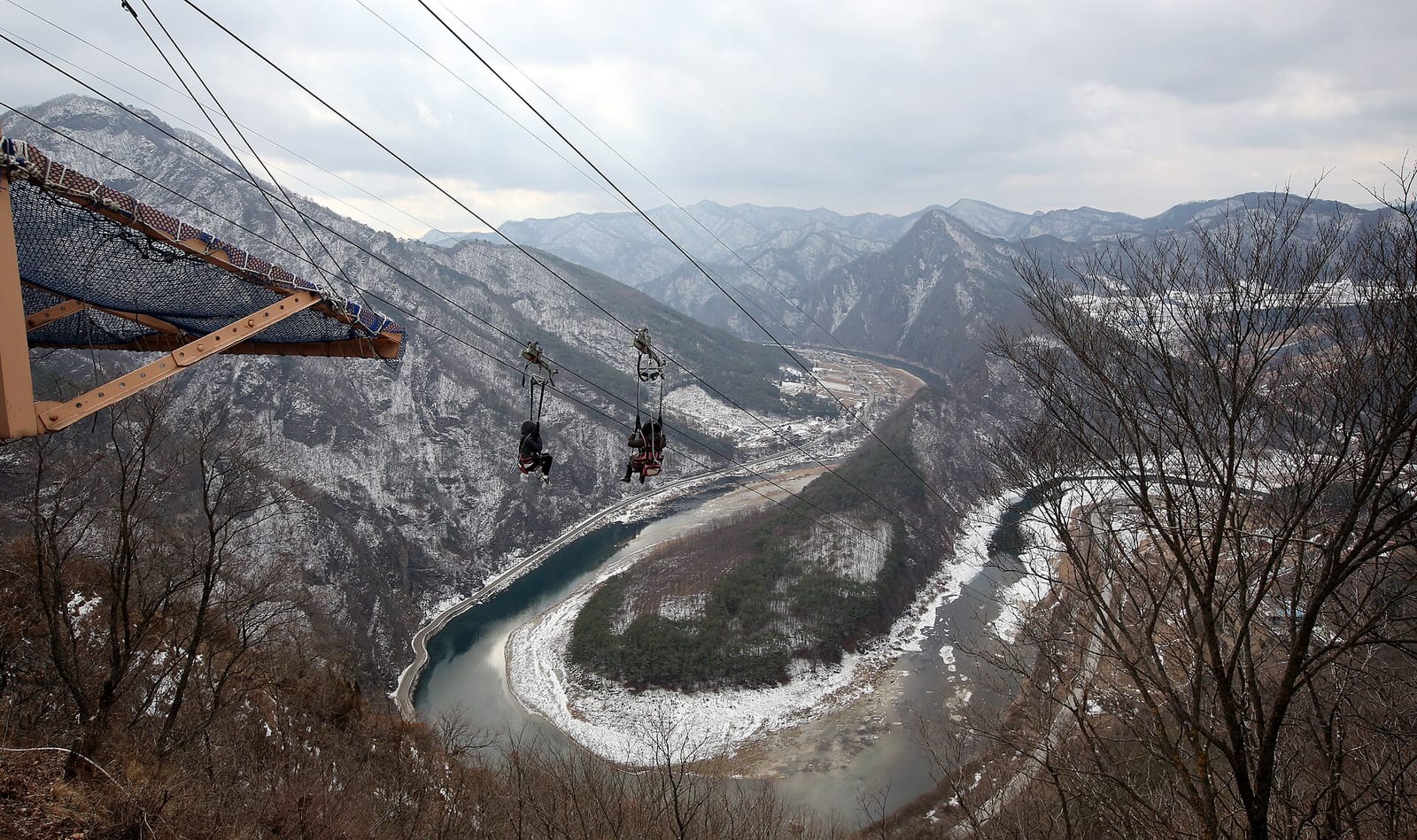
The scars of the coal industry are still in the landscape: spoil heaps going green, the concrete stumps of washing plants, and villages that are visibly emptier than the houses in them would suggest. Jeongseon county has lost a great deal of its population since the mines shut, and the train is part of a deliberate effort to give it something else — along with a casino, a zip line over the gorge and a rafting business.
Jeongseon
11:00, and the county town. If you are going to the market, this is where you get off — though the timetable is generous enough that you can go on to the end and come back.
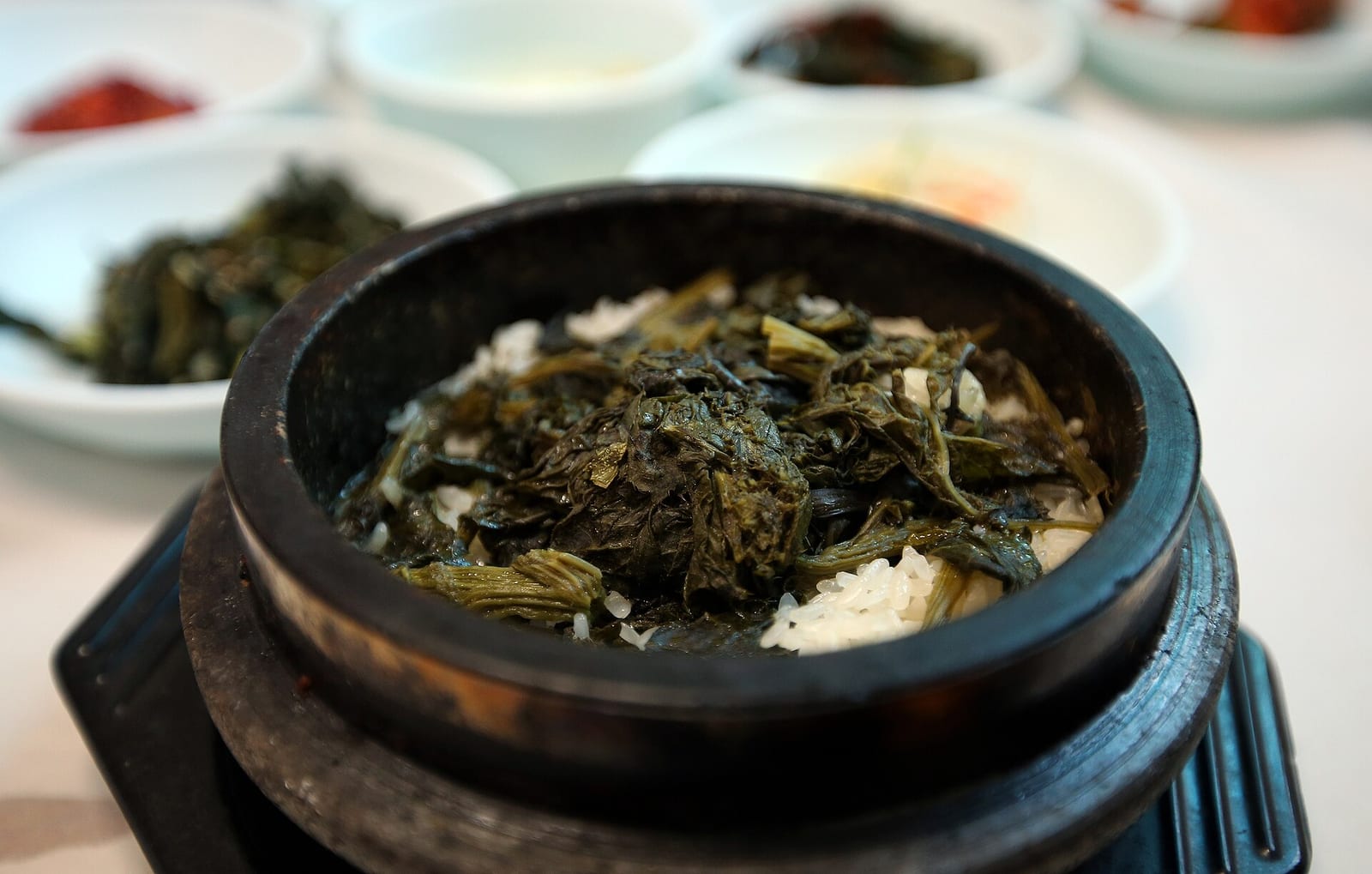
The Jeongseon five-day market, held on days ending in 2 and 7, is one of the best-known traditional markets in Korea: mountain vegetables, medicinal roots and mushrooms, buckwheat pancakes, and gondre-bap — rice steamed with thistle leaves, which is what this county is known for and what you should eat.
Auraji
11:33, the end of the line.
Auraji is where the Goljicheon and Songcheon streams come together to form the Joyang River, which becomes the Han — the river that runs through Seoul. Auraji means "mingling together", and it is also the name of the ferry crossing that used to be here.
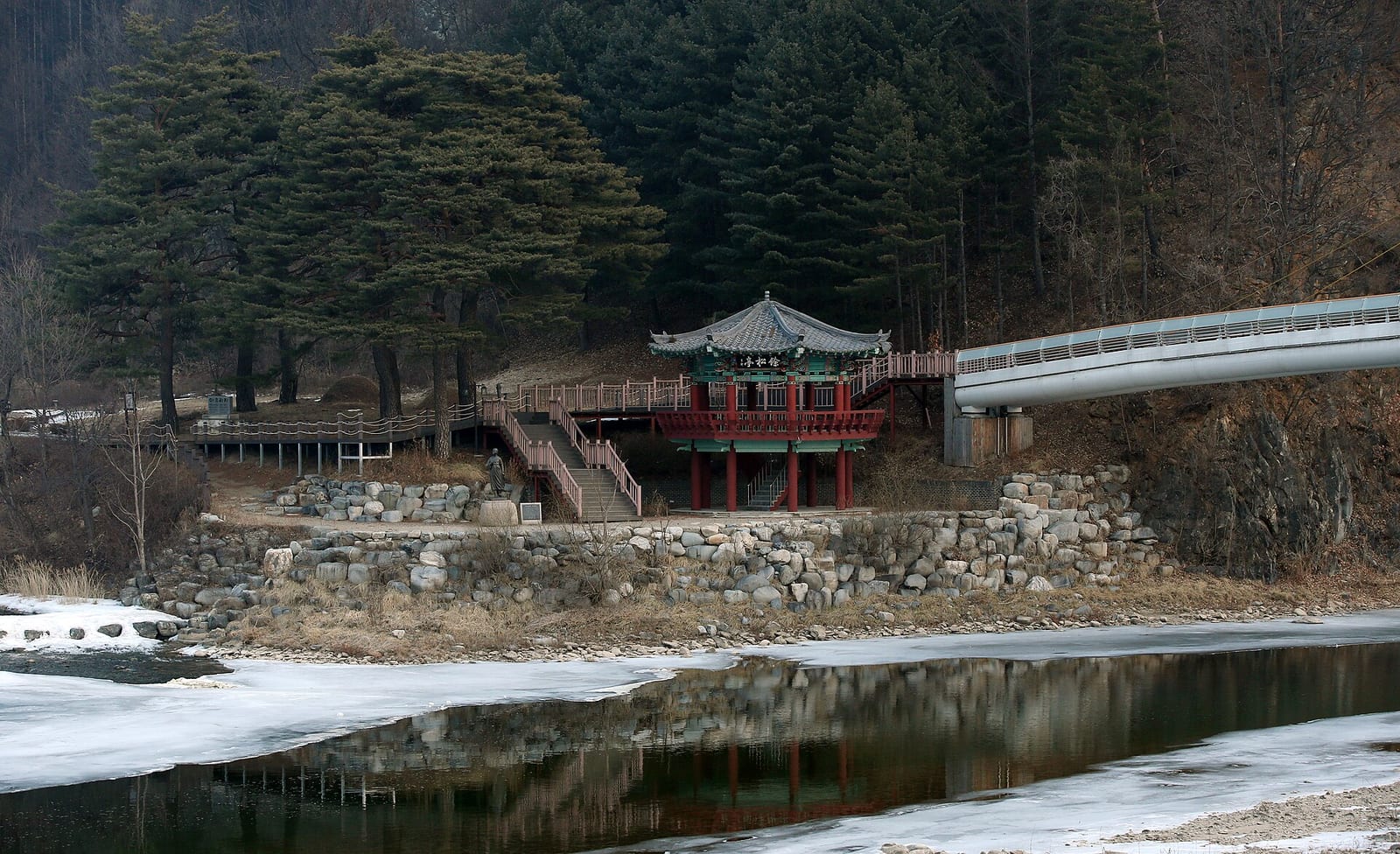
And it is the place in the song. The Jeongseon Arirang tells of two lovers on opposite banks who arranged to meet and pick camellias at Ssarigol, and could not, because rain in the night had swollen the river between them. There is a statue of the girl looking across the water, a stone carved with the lyrics, and a ferry.
It is a small, quiet, rather bleak spot, and standing there in winter with the song in your head is the entire point of the journey.
The long afternoon
The train does not go back until 17:20. That is nearly six hours at the far end, and it is not an accident — the timetable is built around the market and the county, not around a quick look at a view.
Use it. The market, Hwaam Cave, the river, lunch. Then the train works back down the valleys, reaching Jecheon at 19:49.
Practical notes
- It is cold. Gangwon in winter is the coldest part of South Korea by some margin.
- Nothing is in English. Signage, announcements and the on-board entertainment are all Korean. It does not matter much, but know it going in.
- Cash for the market. Most of Korea is cashless; a rural five-day market is not.
- Check it is running. See the timetable section — this line has stopped more often than most.
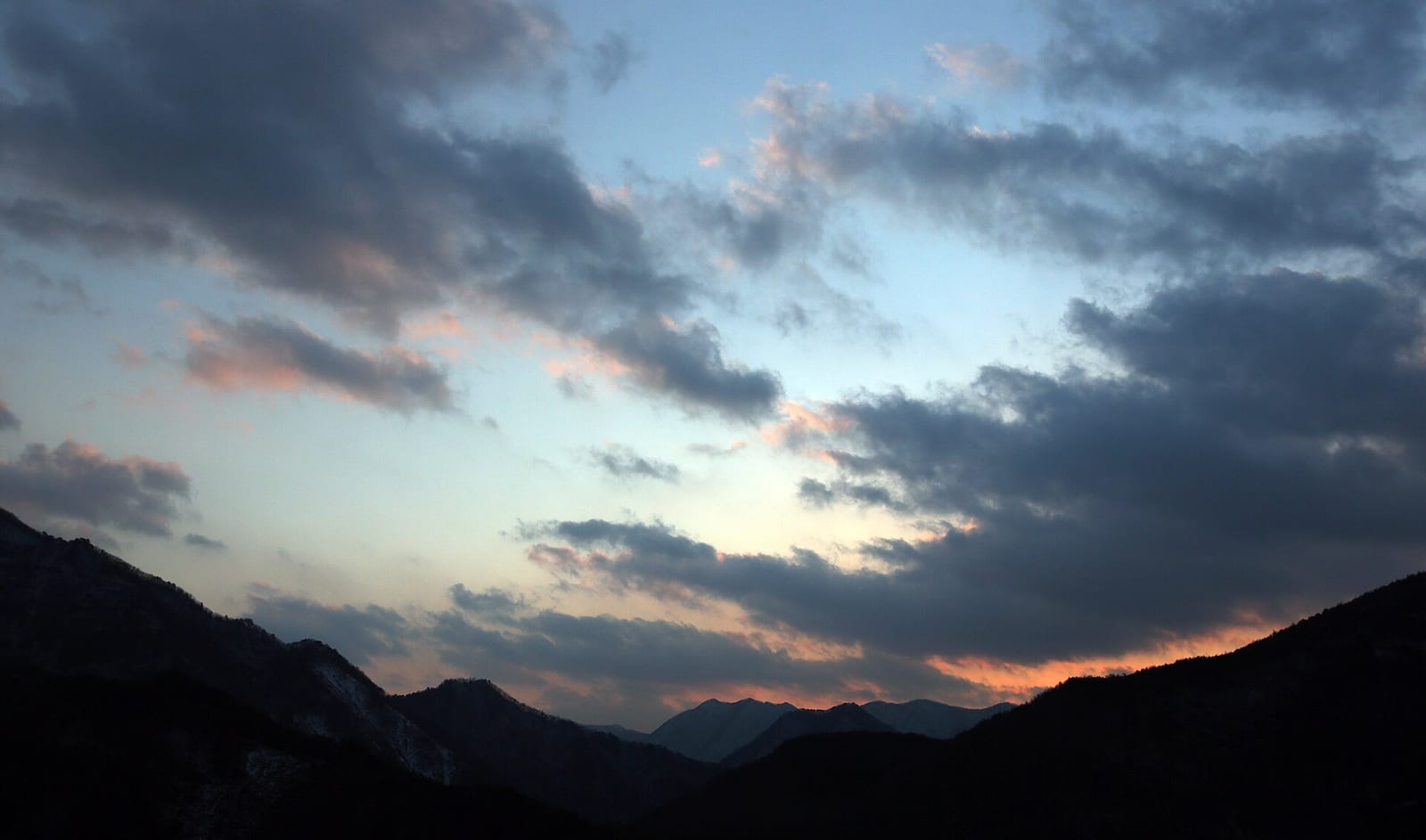
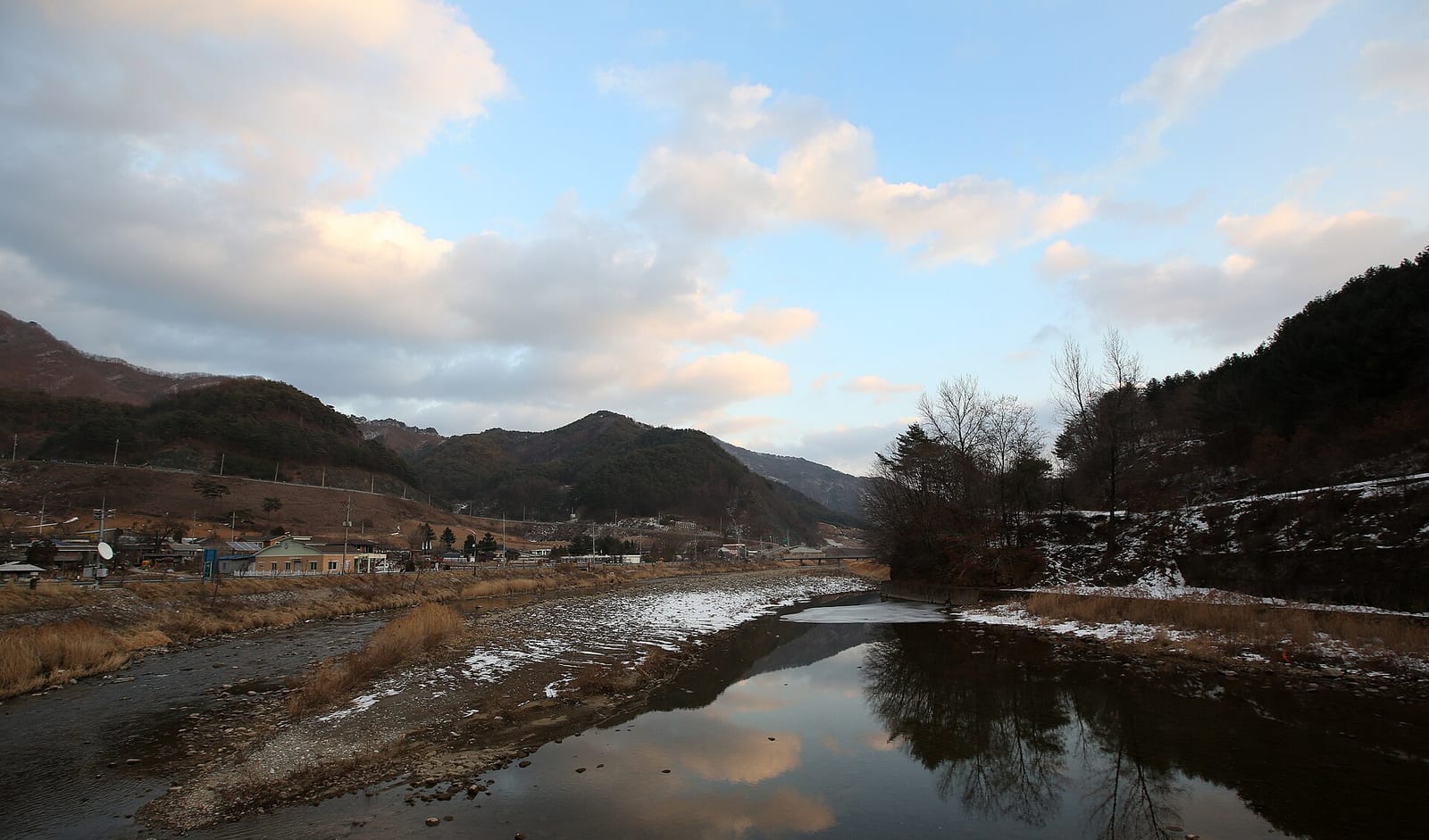
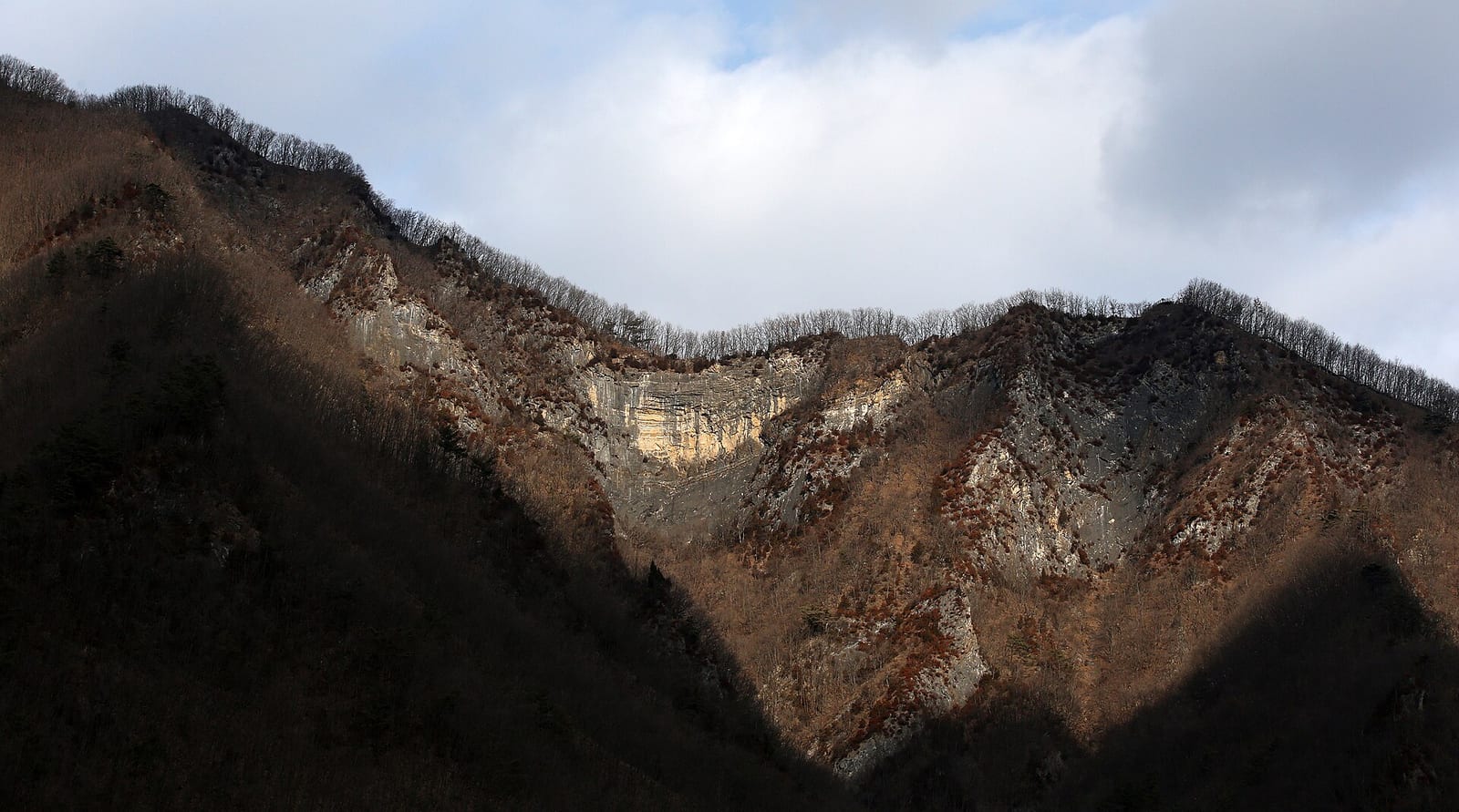
Along the route
Jeon Han / Korea.net / Wikimedia Commons · CC BY-SA 2.0A train named after a song
The A stands for Arirang. There are some 3,600 variations of the song, UNESCO-listed from both Koreas, and Arirang is believed to have originated in Jeongseon — so this is not a train named after a national song but one running through the place it came from.Republic of Korea (Korea.net) / Wikimedia Commons · CC BY-SA 2.0The line the coal left behind
The Jeongseon Line was built to bring coal out of the mountains of Gangwon. Then the pits closed, the people left, and it became one of the emptiest railways in the country — at one point the last line in Korea worked by the humblest class of train.Republic of Korea (Korea.net) / Wikimedia Commons · CC BY-SA 2.0Three stations reopened for it
Najeon, Sonpyeong and Byeoreogok had all stopped handling passengers in 2011, and all three reopened when the A-Train started in 2015. Residents travelling within the county still get a ticket at the ordinary ₩2,600 fare, because the roads up here are poor.A bit of history
Culture & experiences along the way
Republic of Korea (Korea.net) / Wikimedia Commons · CC BY-SA 2.0Go on a market day
The train runs at weekends and on the 2nd, 7th, 12th, 17th, 22nd and 27th of every month — because those are the days of the Jeongseon five-day market, and the market is the reason the timetable exists. You get nearly six hours at the far end before the train goes back. Spend them there: mountain vegetables, medicinal roots, buckwheat pancakes and gondre-bap, rice steamed with thistle.Republic of Korea (Korea.net) / Wikimedia Commons · CC BY-SA 2.0Sit in the observation car
The rake is four rebuilt "Haerang" rail-cruise carriages — the seats are the same as an ITX-Saemaeul, but there are observation windows set into the roof, which makes a serious difference in a valley this steep, and the last carriage is an observation car. There is storytelling, live music, a magic show and quizzes on board, aimed squarely at Korean families rather than foreign visitors.Republic of Korea (Korea.net) / Wikimedia Commons · CC BY-SA 2.0Get out at Auraji
The end of the line, where the Goljicheon and Songcheon streams join to form the Joyang, the main stream of the Han River. Auraji means "mingling together", and it is the setting of the Jeongseon Arirang: two lovers on opposite banks who arranged to meet, and could not, because a night of rain had swollen the river. There is a statue of the girl from the song, a stone carved with the lyrics, and a ferry.Timetables
One train each way, on operating days only, and the operating days are unusual.
When it runs
| Days | Saturdays and Sundays |
| Plus | the 2nd, 7th, 12th, 17th, 22nd and 27th of every month |
| Why those dates | They are the days of the Jeongseon five-day market |
| Operator | Korail Tourism Development |
If the 2nd or the 17th falls on a Tuesday, the train runs on that Tuesday. Work out your dates before you book anything else.
The timetable (from 22 May 2026)
Train 2541 — Jecheon to Auraji
| Station | Arrive | Depart |
|---|---|---|
| Jecheon | — | 09:02 |
| Yeongwol | 09:34 | 09:36 |
| Yemi | 10:02 | 10:04 |
| Mindungsan | 10:25 | 10:27 |
| Byeoreogok | 10:36 | 10:37 |
| Sonpyeong | 10:47 | 10:49 |
| Jeongseon | 11:00 | 11:01 |
| Najeon | 11:18 | 11:20 |
| Auraji | 11:33 | — |
Train 2542 — Auraji to Jecheon
| Station | Arrive | Depart |
|---|---|---|
| Auraji | — | 17:20 |
| Najeon | 17:32 | 17:33 |
| Jeongseon | 17:50 | 17:52 |
| Sonpyeong | 18:03 | 18:04 |
| Byeoreogok | 18:13 | 18:14 |
| Mindungsan | 18:23 | 18:24 |
| Yemi | 18:44 | 18:46 |
| Yeongwol | 19:15 | 19:17 |
| Jecheon | 19:49 | — |
About 2 hours 31 minutes down and 2 hours 29 back — and five hours and forty-seven minutes at the Auraji end, which is the whole design of the thing.
Read this before you book
This railway has an exceptional record of suspension, and the most recent one was about the trains themselves wearing out.
- Jul–Dec 2016 — Najeon–Auraji closed for bridge works connected to the 2018 Pyeongchang Olympics; buses substituted.
- Feb 2020 — suspended for COVID; back on 1 August; suspended again on 23 December.
- Feb–Jul 2021 — closed for the construction of two overbridges between Mindungsan and Jeongseon; the closure was extended repeatedly into March 2022.
- 2 June 2022 — resumed, but weekends and market days only.
- 19 February 2024 — a rockfall damaged the track between Mindungsan and Byeoreogok. Mindungsan–Auraji was suspended from the 22nd and replaced by buses.
- February 2026 — suspended because the carriages had reached the end of their service life, for a detailed safety assessment and interior refurbishment.
- 22 May 2026 — resumed after test running, with the route shortened to Jecheon–Auraji and haulage by 7300–7500 series diesel locomotives.
Check letskorail.com (opens in a new tab) for your date. Do not build a trip to Gangwon around this train without confirming it.
Fares
The tourist fare is not published in a form we could verify, so we will not print one. What is documented is the local rate: residents of Jeongseon county travelling within the county, between Yemi and Auraji, are issued a ticket on the spot at the basic Mugunghwa fare of about ₩2,600 on showing identification. Visitors pay the tourist fare — ask Korail.
Getting to Jecheon
Jecheon is about two hours from Seoul's Cheongnyangni station by Mugunghwa or ITX-Cheongchun on the Jungang Line, and is also reachable from Wonju and Andong. Given the 09:02 departure, most people travelling from Seoul stay in Jecheon the night before.
Operator: Korail Tourism Development, via Korail — letskorail.com (opens in a new tab). Timetable as of July 2026, taken from the most recent published schedule; times were last revised on 22 May 2026.
Tickets
Tickets are sold by Korail through letskorail.com (opens in a new tab), its app and station windows. This is a reserved-seat tourist service, so book rather than turn up — and before anything else, confirm the train is running on your date. The pattern is unusual (weekends plus the 2nd, 7th, 12th, 17th, 22nd and 27th of each month) and the service has been suspended repeatedly, most recently to May 2026 because the carriages had reached the end of their life.
Korail does not publish the tourist fare in a form we could verify, so no figure is quoted. Book the market days early, because that is when Korean families come and the train is small. Nothing is in English — signage, announcements and the on-board storytelling are all Korean. Take cash for the five-day market, and dress for Gangwon, the coldest province in the country.
Book your tickets
The A-Train · Jecheon to Auraji
Two days a week, plus market days
One train each way on operating days — down in the morning, back in the early evening, with most of the day at the Jeongseon end. Booked through Korail. Confirm the service is running before you travel: it has been suspended repeatedly and the carriages have already outlived their design life once.
Book Tickets (opens in a new tab, on Korail)via KorailLocal fare within Jeongseon county
For residents, and worth knowing about
Between Yemi and Auraji, people who live in Jeongseon county are issued a ticket at the basic Mugunghwa rate of about ₩2,600 on showing ID — the county has poor roads and this remains a genuine local service, not only a tourist product. Visitors pay the tourist fare.
Book Tickets (opens in a new tab, on Korail)via KorailRail Passes
Whether the KORAIL PASS covers this train could not be confirmed. The pass is valid on Korail's ordinary trains, including what Korail calls regular tourist trains, but not on special tourist trains, and Korail does not say which group the Jeongseon Arirang Train belongs to. Ask Korail on +82-1599-7777 before relying on a pass.
The pass is sold only to foreign visitors, for 2 to 5 days, and allows seat reservations on up to two trains a day.
Checked October 2026 against Korail's KORAIL PASS details (opens in a new tab) and pass booking page (opens in a new tab).
Places to Visit
Almost six hours at the far end means this is a day out in Jeongseon county, not just a train ride. The market is the reason the timetable exists; the rest of the day is yours.
Around the terminus
Auraji, the end of the line, is where the Goljicheon and Songcheon streams join to form the Han. There is a statue of the girl from the song, a stone carved with the lyrics, and a ferry. It is small and quiet, and it is the reason the line goes where it does. In the county town, the Jeongseon Arirang Center is a performance hall and museum devoted to the song, with regular staged performances — worth an hour if you have any curiosity about why a railway is named after a piece of music.
The mountain and the mine
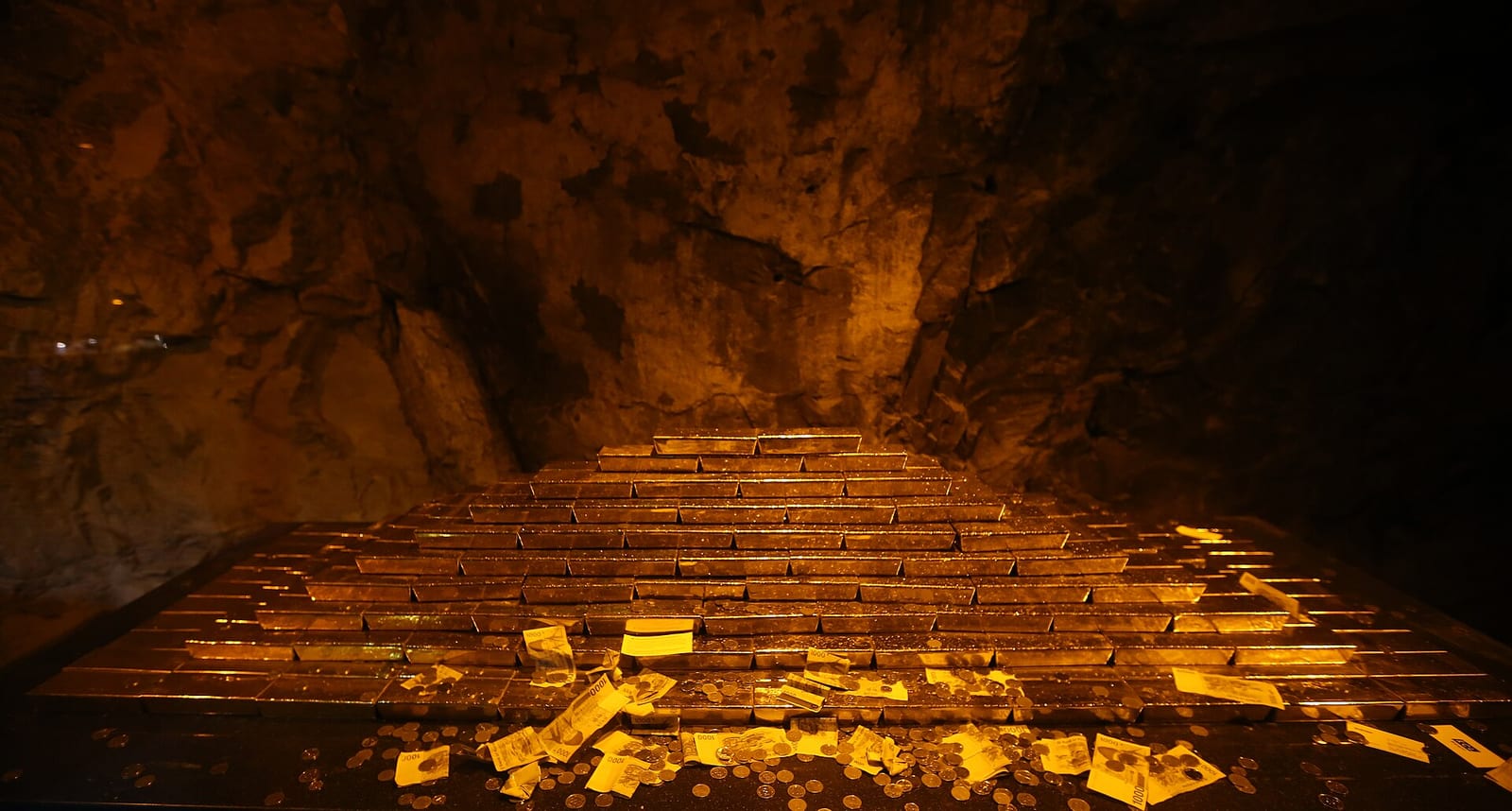
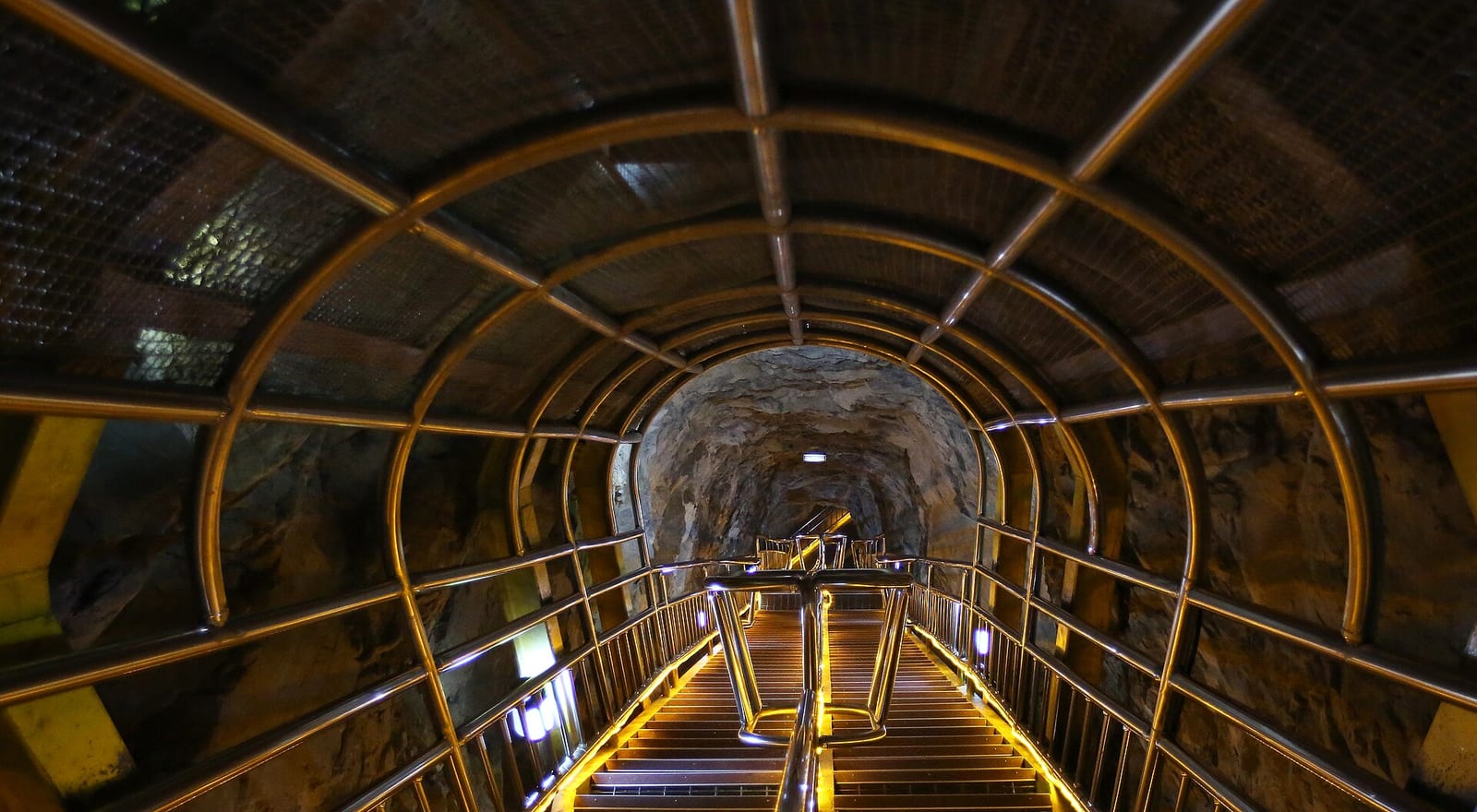
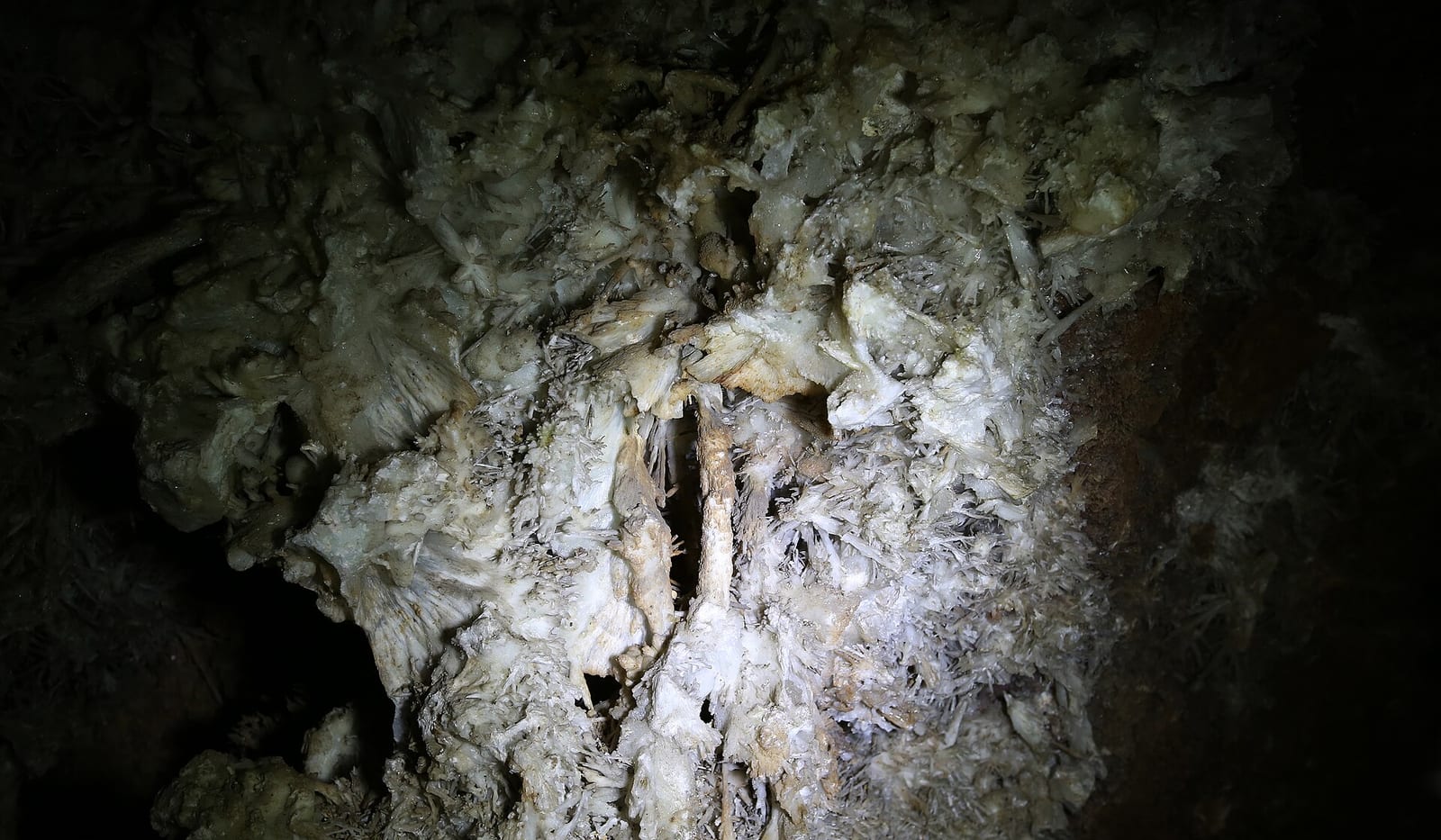
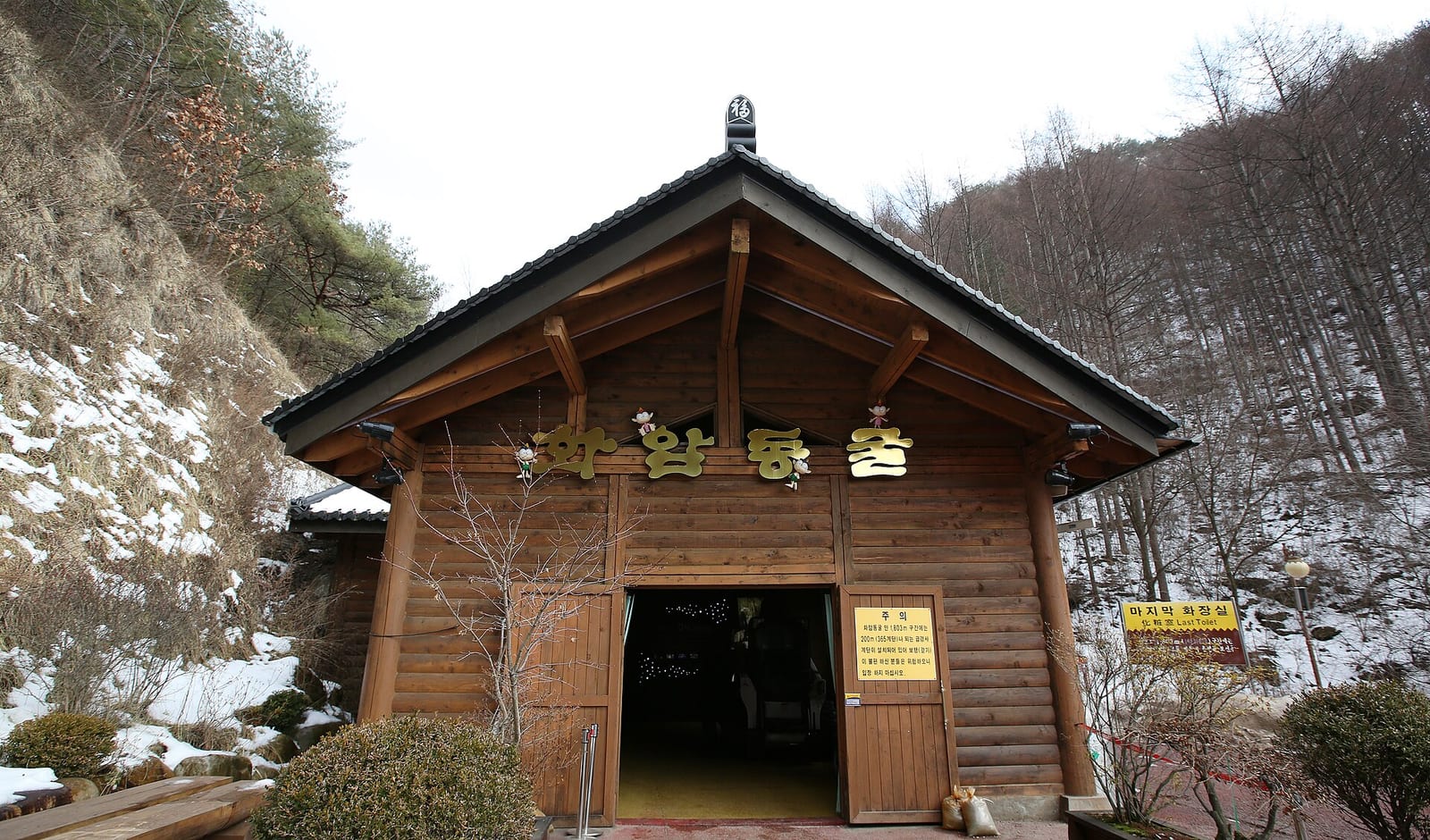
Hwaam Cave, half an hour from Jeongseon town by road, was the Cheonpo gold mine, worked commercially from 1922 to 1945 and at one point the fifth largest in the country, producing nearly 23 kilograms of pure gold a year. While digging it, the miners broke into a natural limestone cavern. The visitor route runs about 1,800 metres — 515 metres of upper mine shaft, 365 steps down, then 676 metres of lower shaft and the stalactite chambers — and takes about an hour and a half.
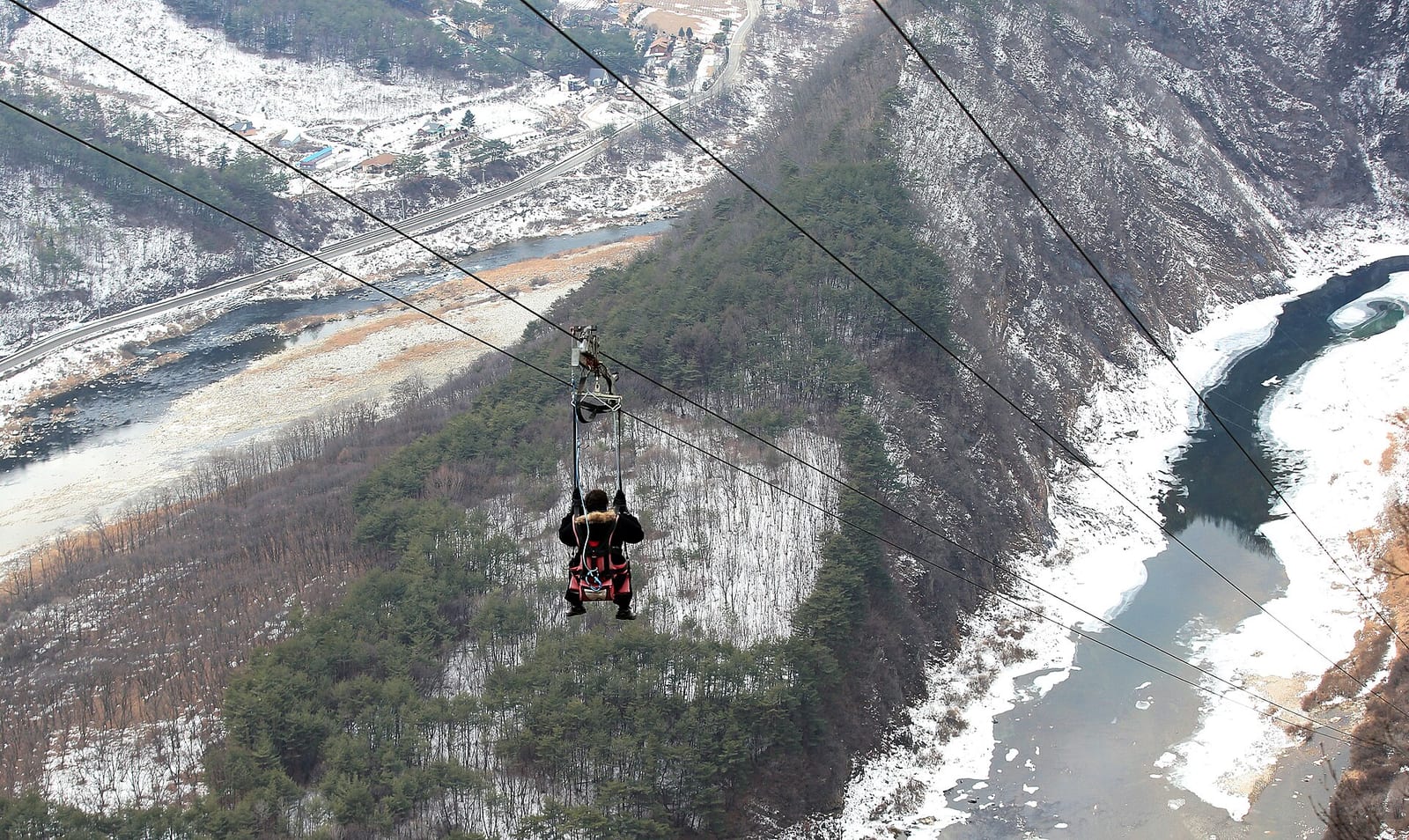
Mindungsan is a station on the line and the mountain above it, whose name means "bald mountain" because the summit is bare. In late September and October it is covered in silver grass, and it is one of the best-known autumn walks in Korea — a couple of hours up from the platform. Below both runs the Dong River, in enormous meanders between cliffs, with rafting in summer, a zip line across the gorge, and viewpoints over the great horseshoe bends. This is the landscape painted on the side of the train.
Yeongwol and Jecheon, at the other end of the line, carry more than their share of what follows — worth knowing before you plan the whole day around Auraji.
 IRTC1015 / Wikimedia Commons · public domain · cropped
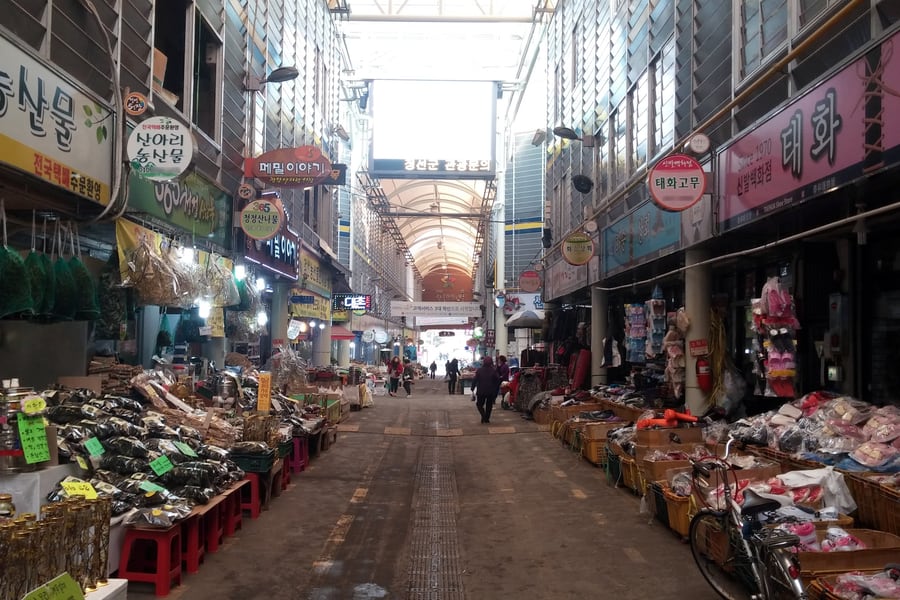
The Jeongseon five-day market
Held on the days of the month ending in 2 and 7 — which is exactly why the train runs on those dates. One of the best-known traditional markets in Korea, and a genuine one: mountain vegetables, wild greens, medicinal roots and mushrooms rather than souvenirs. Eat gondre-bap, rice steamed with thistle leaves, and buckwheat pancakes cooked in front of you. Market days also bring out performances of the Jeongseon Arirang, the regional song the train is named for.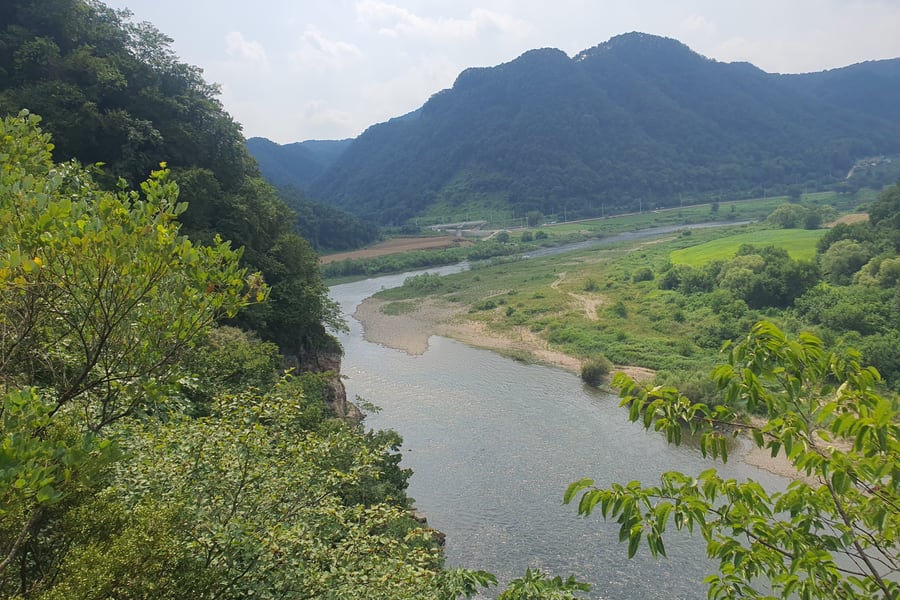 쿠키몬스터 / Wikimedia Commons · CC BY-SA 4.0 · cropped
Cheongnyeongpo
The wooded river-bend where the boy-king Danjong was confined in 1457 after his uncle took the throne — water on three sides, a cliff on the fourth, and you still cross by boat as he did. He lasted about two months before a flood forced him into Yeongwol town, and was dead before the year was out. The pine he is said to have sat under is a Natural Monument reckoned at six hundred years. The lodging on the site is a 2000 reconstruction; the original was washed away in 1996.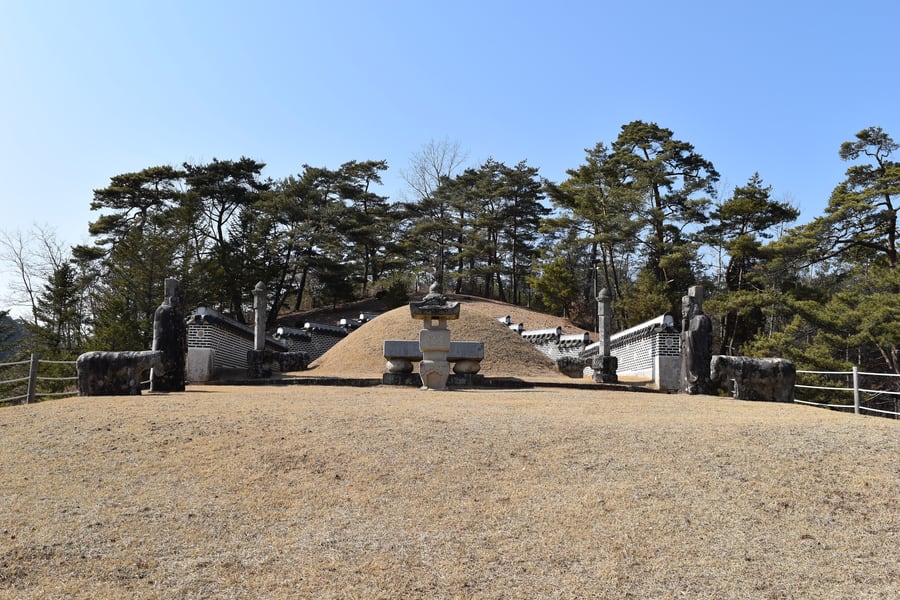 Jjw / Wikimedia Commons · CC BY-SA 4.0 · cropped
Jangneung
Danjong was killed in 1457 and nobody dared bury him, until Eom Heung-do, an official of Yeongwol, carried the body off and put it in his own family's ground. The grave stayed lost until 1516; only in 1698 was the king restored to the record and the tomb formally named Jangneung. It is now part of the UNESCO-listed Royal Tombs of the Joseon Dynasty — and the only one of them outside the Seoul region, which tells you the story by itself.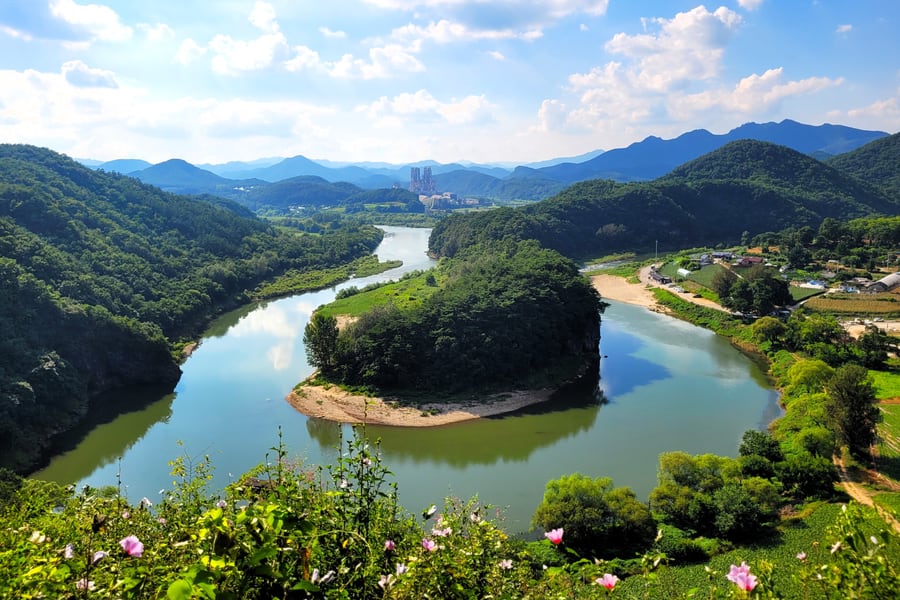 Trainholic / Wikimedia Commons · CC BY 4.0 · cropped
The Korean Peninsula bend
West of Yeongwol town the Seogang has cut a meander so exactly like a map of the country that the township around it is called Hanbando-myeon — "Korean Peninsula district". A quarter of an hour uphill from the car park puts you on the viewpoint, and there it is below: an east coast falling steeply to deep water, a west coast shelving into sandbank, and an East Sea of its own. The wetland around it is a Ramsar site.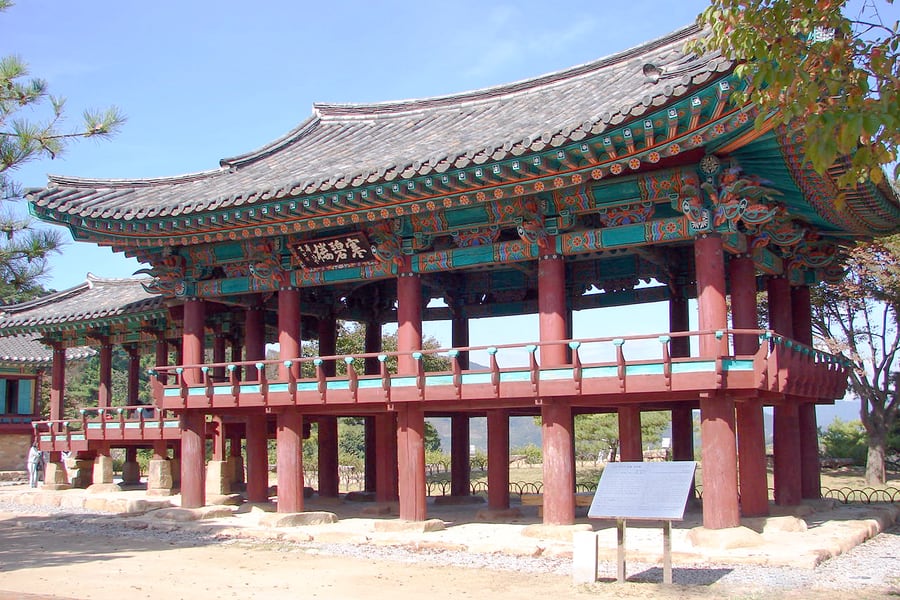 Steve46814 / Wikimedia Commons · CC BY-SA 3.0 · cropped
Cheongpung
When the Chungju Dam drowned the valley in 1985, the old riverside town of Cheongpung was taken to pieces and rebuilt on the hillside above the new lake — pavilions, a Confucian school, magistrates' offices and farmhouses, moved over three years. The best of it is Hanbyeongnu, pictured, a pavilion of 1317 built as an annexe to the magistrate's office and now a national Treasure. It stands where it never stood, looking out over water that did not exist.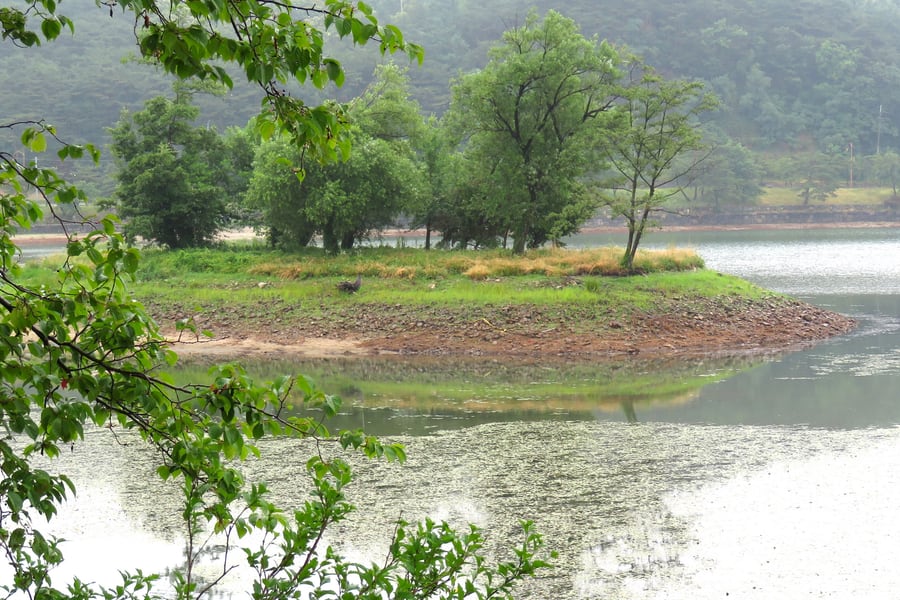 Kyle Magnuson / Wikimedia Commons · CC BY 2.0 · cropped
Uirimji
On the edge of Jecheon, a reservoir that has held water since long before anyone wrote down when it was dug: one tradition puts it around AD 300, another credits the Silla musician Ureuk about 550, a third a Goryeo official around 1200. It is 1.8 km around and up to 13 m deep, fringed by the old pine wood called the Jerim. It looks like an ordinary lake, which is the point — it is one of the three great irrigation works of the Three Kingdoms, and it still works.Where to Sleep
The 09:02 departure from Jecheon is the thing that decides this. Coming out from Seoul on the morning itself leaves no margin, so plan a night at one end or the other.
Jecheon
The practical choice. A middling provincial city with ordinary, inexpensive hotels and motels near the station, nothing remarkable about any of them, and a five-minute walk to the platform in the morning. If the train is the point, sleep here.
Jeongseon town
Better, if you can get there. A small county town with guesthouses, pension accommodation and a couple of hotels, right by the five-day market. Staying here lets you be at the market when it opens rather than when the train arrives, and see the county in the evening when the day visitors have gone.
Getting there without the train means a bus from Jecheon or Wonju.
Yeongwol
An hour along the line and rather nicer than Jecheon: a small town on a river bend with the Danjong sites, a scatter of small hotels and guesthouses, and considerably more to look at. A reasonable base if you are exploring the area for a few days by road.
Pensions and stay-in-a-village
Gangwon is full of pensions — self-catering cabins and small guesthouses, usually family-run, often beautifully sited by a river or under a ridge, and heavily used by Korean families. Around Jeongseon and along the Dong River there are a good many. You will need a car.
Some villages in the county also run farm-stay programmes, which are cheap, basic and much the most interesting way to spend a night up here.
High1 and the resorts
High1 at Gohan, in the same county, is a large ski and casino resort — the casino is the only one in South Korea that Korean nationals may legally enter, and it exists precisely because the coal mines closed and the region needed an economy. It is a strange, useful piece of context for the whole journey, and it has plenty of rooms.
Seoul, at a push
If you must, Cheongnyangni to Jecheon is about two hours and there are early trains — but you would need to leave Seoul before 07:00 and any delay costs you the whole day, since the A-Train runs once. Not recommended.
Season
Autumn is the best time: the silver grass on Mindungsan in late September and October, and the valleys turning. Winter is severe — this is the coldest corner of the country — but the landscape under snow is extraordinary, and the train is warm. Book around the market days rather than around the weather.
Questions or corrections
Planning this trip and stuck on something, or spotted a time, fare or detail that has changed? Send us a message about The Jeongseon Arirang Train. We read every one, and we update this page when something has changed.