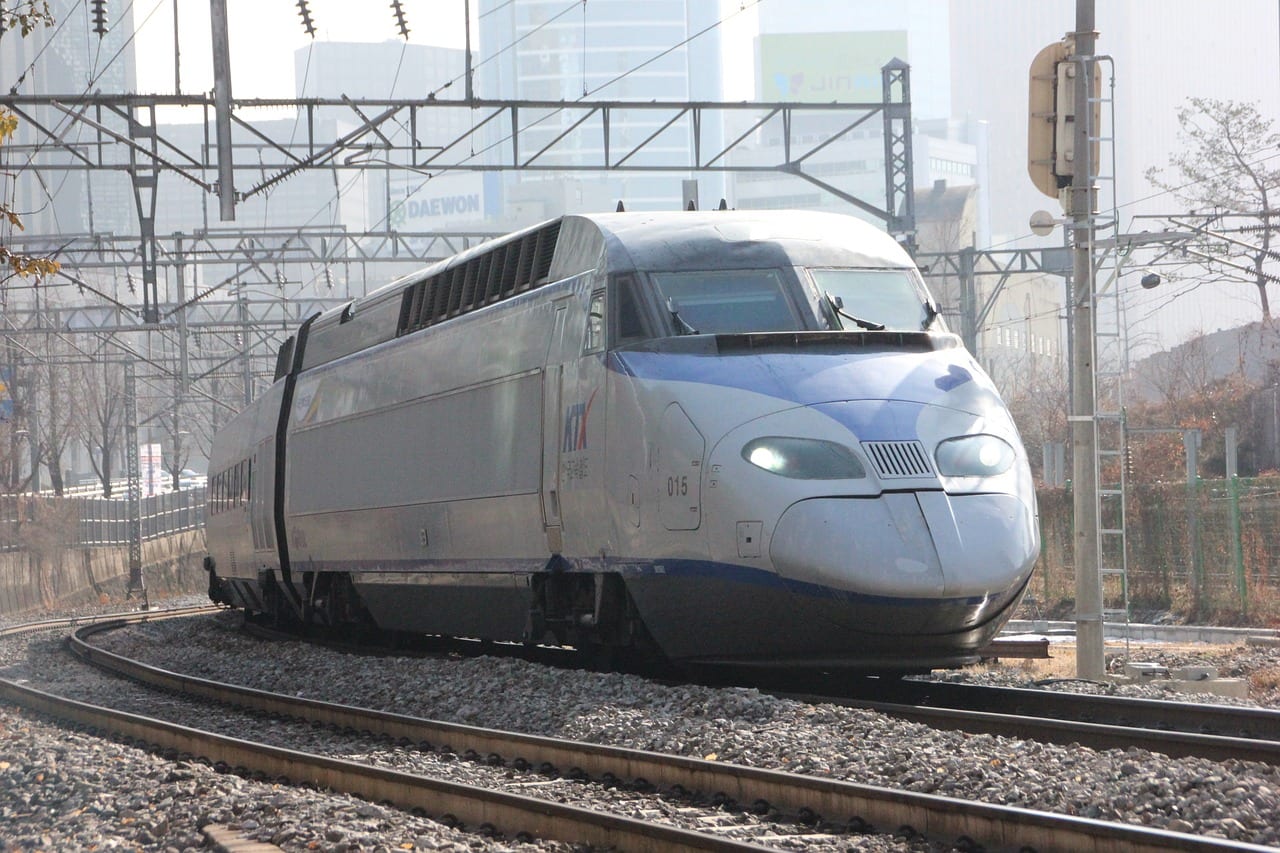
The KTX · Seoul to Busan
zheng2088 / Wikimedia Commons · CC0
- DistanceSeoul–Busan · about 400 km
- DurationAbout 2 hours 15 minutes
- Best seasonApril–May and September–November · avoid the summer rains
Introduction
South Korea is about four hundred kilometres long in the direction that matters, and the KTX crosses it in two hours and a quarter.
That sentence has done more to change the country than almost any other piece of infrastructure built in the last fifty years. Busan, the port at the far end of the peninsula, is now a day trip from the capital — Koreans go down for lunch at the fish market and come home in the evening — and the whole southern half of the country has been pulled inside Seoul's orbit.
Why it had to exist
The Seoul–Busan axis is not one corridor among several. It is South Korea. By 1995 it accounted for 73 per cent of the population, 70 per cent of freight and 66 per cent of passenger traffic, and by the late 1970s both the Gyeongbu Expressway and the old Gyeongbu railway were full.
Studies began early: SNCF and the Japan Railway Technical Service were asked to look at a second Seoul–Busan line as far back as 1972. Construction finally started on 30 June 1992, on a test section between Cheonan and Daejeon.
A French train, and then not
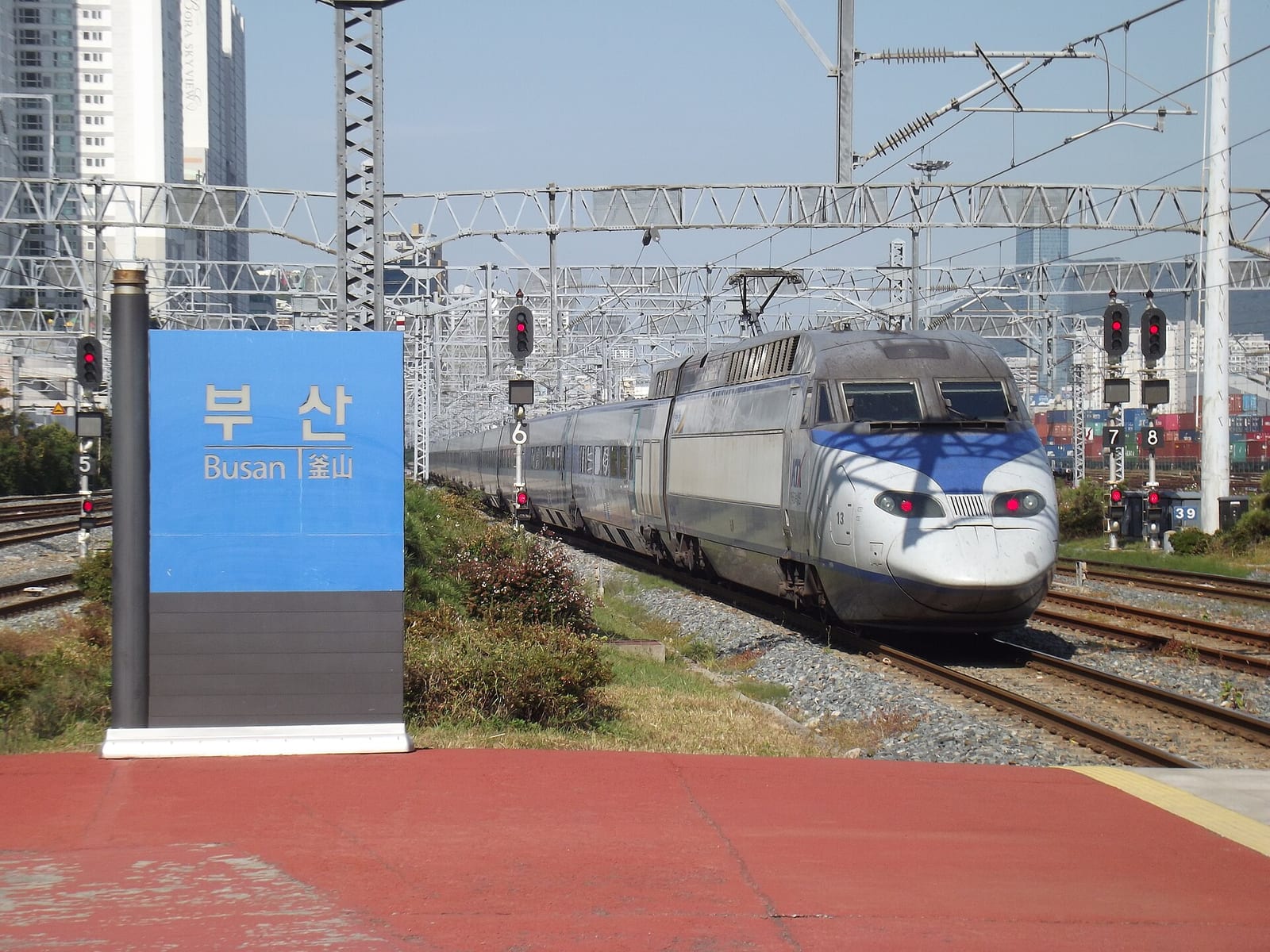
In 1994, after a three-way fight between GEC-Alsthom (TGV), Siemens (ICE) and Mitsubishi (Shinkansen), Korea chose the French. The first KTX trains were TGV Réseau derivatives; a handful came from France and the rest were assembled at Changwon.
But buying the train was never the point. The point was learning to build one. Korea developed the HSR-350x, which entered service in 2010 as the KTX-Sancheon — the first high-speed train designed in the country. Then came the HEMU-430X, which in 2013 ran at 430 km/h and made South Korea the fourth nation on earth, after Japan, France and China, to develop a train capable of that speed on conventional rails. Its descendants, the KTX-Eum and the KTX-Cheongryong, entered service in 2021 and 2024.
Thirty years after buying a French railway, Korea exports its own.
Built in pieces
The line opened on 1 April 2004, but only two-thirds of it: Seoul to Daejeon and Daejeon to Daegu, with trains dropping onto the old conventional railway for the rest. The Asian financial crisis of 1997 had forced the project to be split in two.
Daegu to Busan followed on 1 November 2010. The final gaps, through the middle of Daejeon and Daegu, were closed on 1 August 2015 — twenty-three years after the first cut. Only then was the 387-kilometre Gyeongbu high-speed railway a continuous piece of railway.
What it is like
Fast, quiet and entirely unremarkable, which is the highest compliment you can pay a high-speed line. Trains run at up to 305 km/h on curves laid to a minimum radius of seven kilometres, so there is almost no sensation of speed at all until you look sideways at a road and find the cars going backwards. There are more than sixty-nine departures a day on this route, roughly one every twenty minutes at peak.
It is not a scenic railway. Much of the Gyeongbu HSR is in tunnel or on viaduct, deliberately, because Korea is 70 per cent mountains and the engineers went through rather than round. If you want the view, take the Jeongseon Arirang Train instead, which does the opposite in every respect.
What the KTX offers is something rarer: the experience of a large, mountainous, densely populated country made small. Breakfast in Seoul, and the sea by mid-morning.
The Journey
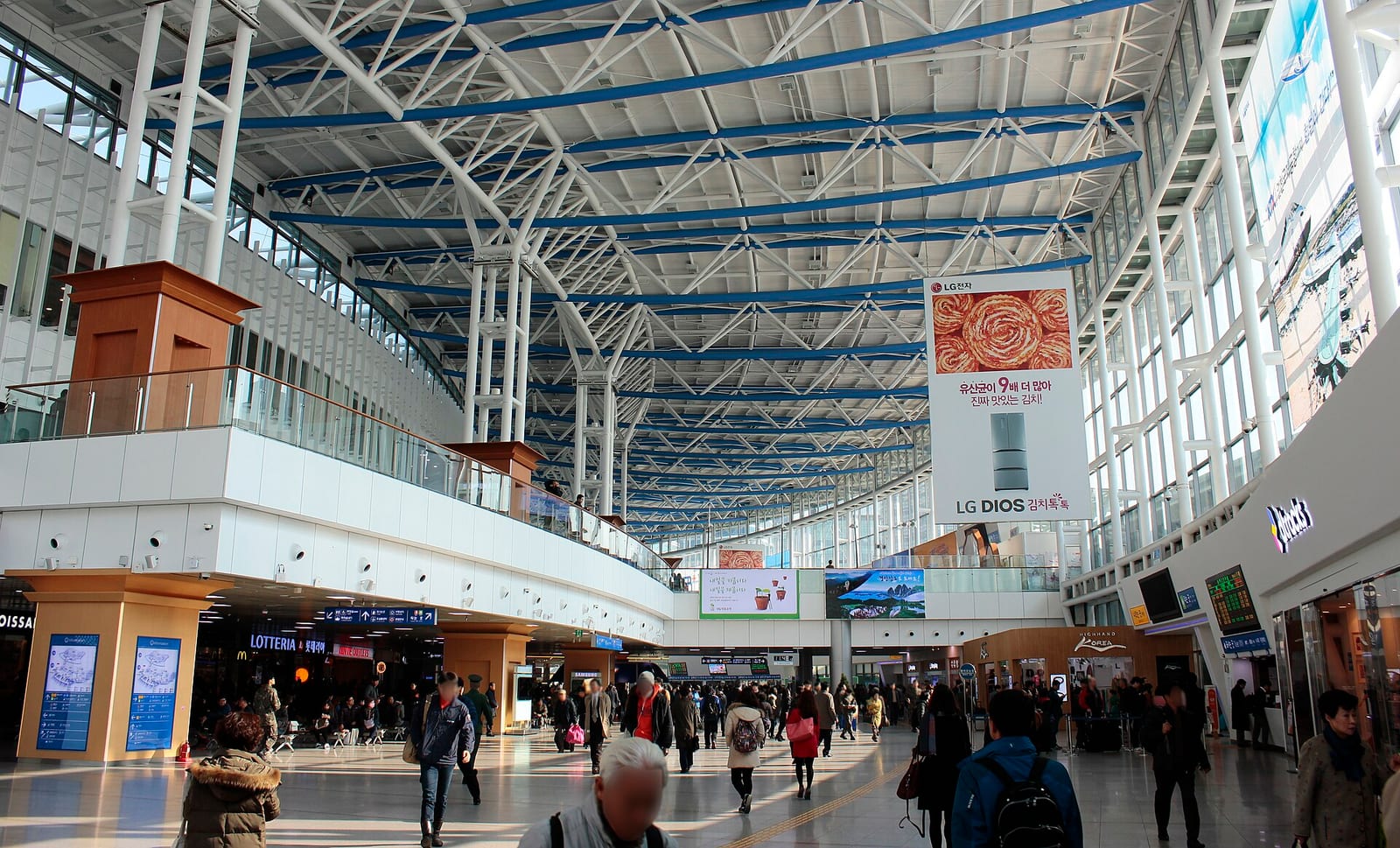
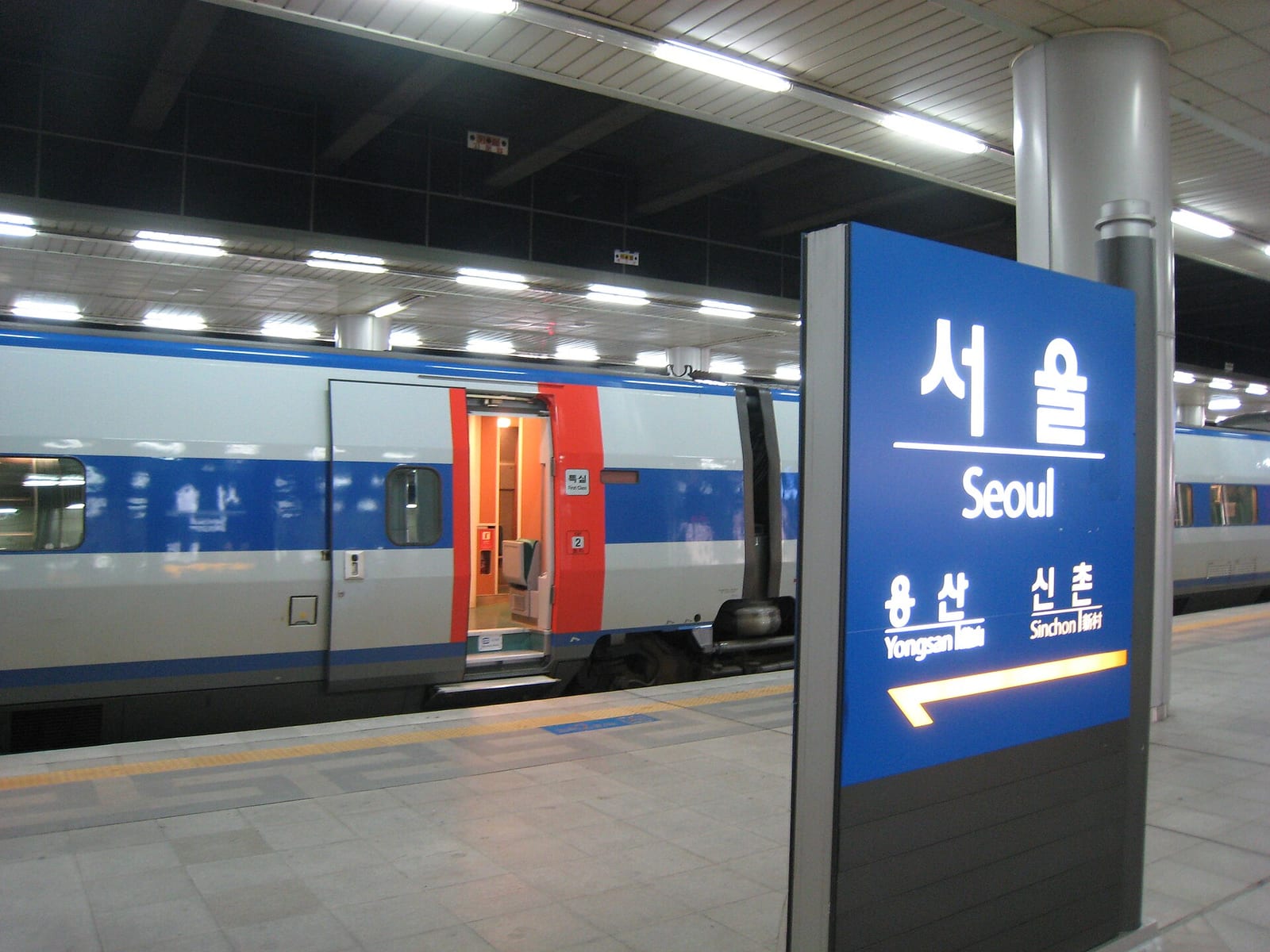
Seoul Station is the busiest railway station in the country and it does not feel like it. The concourse is wide, bright and calm, with a departure board that turns over constantly and a food hall that is genuinely good. Trains are called about ten minutes before departure and the platforms are down escalators.
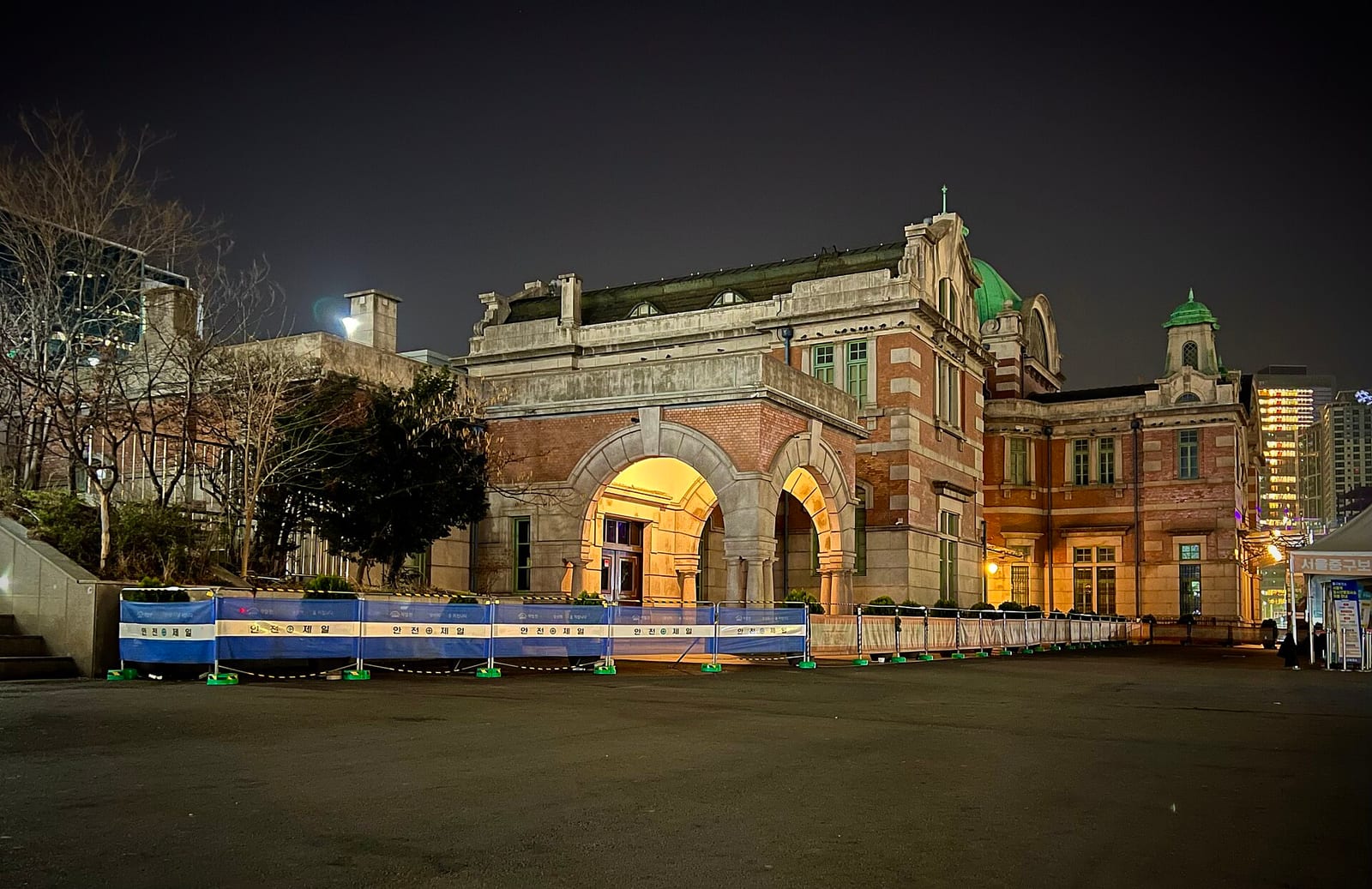
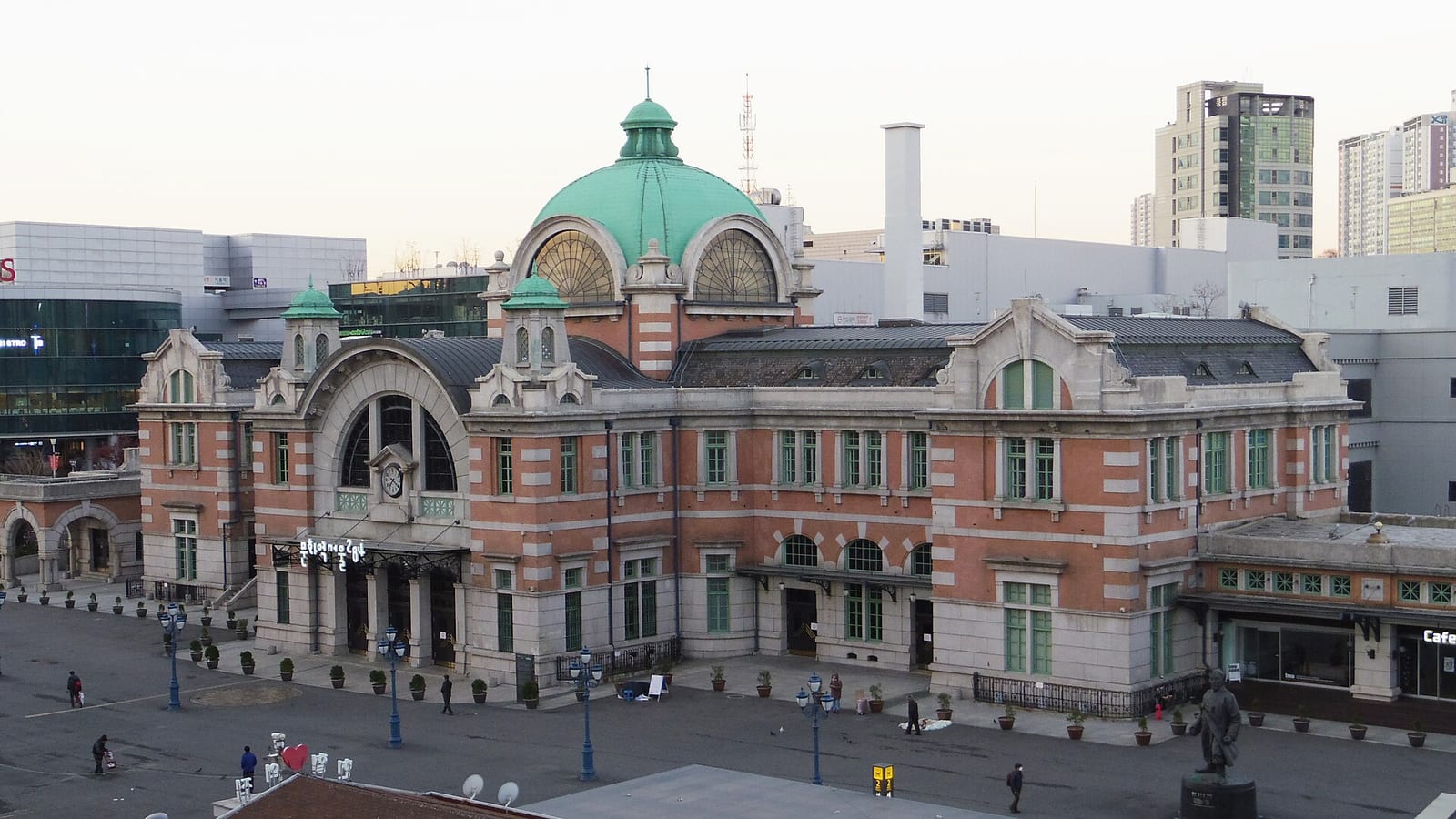
Before you go down, walk outside and look left. The 1925 station building is still standing — domed, red brick, vaguely Byzantine, built under Japanese rule and modelled loosely on Tokyo Station. It handled every train on the peninsula for eighty years, closed to traffic in 2004 when the KTX opened, and is now an arts venue called Culture Station Seoul 284. It is the best twenty minutes you can spend before boarding.
Out of the city
The KTX leaves Seoul on conventional tracks, threading south through the city at ordinary speed past apartment blocks stacked twenty and thirty storeys high, and calls at Gwangmyeong — a station built out in the suburbs as the intended terminus before politics put the trains into Seoul Station proper.
Then it joins the high-speed line and simply goes.
Two hours of Korea at 305 km/h
What follows is a lesson in what Korean geography actually is. The country is about seventy per cent mountain, and the engineers dealt with that by going straight through: the Gyeongbu HSR is a long alternation of tunnel, viaduct, tunnel, viaduct, with brief bright intervals of rice paddy, greenhouse plastic, river and apartment tower.
It is not a scenic railway and does not pretend to be. But there is a real pleasure in the rhythm of it, and in how still it is — the curves are laid to a minimum radius of seven thousand metres, so at three hundred kilometres an hour the water in your cup does not move.
The stops are few: Cheonan-Asan, Osong (where the Honam line to the south-west branches off), Daejeon, Gimcheon-Gumi, Dongdaegu. Between Daejeon and Daegu you cross the middle of the country; after Dongdaegu the line turns south-east through Ulsan, the shipbuilding and Hyundai city, and runs down to the coast.
Busan
You come into Busan past hills covered in housing and then, suddenly, water.
Busan is South Korea's second city and its great port — six or seven times the size of anything else on this coast, wedged between mountains and the sea, and about as different from Seoul as a Korean city gets: hotter, saltier, slower, and noticeably more relaxed. The station puts you a few minutes from the harbour.
On board
Standard class is comfortable and well spaced, with power at the seat and a trolley. First class adds width, recline and a slightly quieter carriage; it costs around forty per cent more and is not necessary for two hours.
A few practical points that catch people out:
- Some seats face backwards. On KTX-I sets, half the carriage does, and the seats do not rotate. If it matters, choose when you book.
- Luggage racks are small. There are larger racks at the carriage ends; use them for anything bigger than cabin size.
- Sit on the left going south for marginally more of the coast on the Ulsan–Busan stretch, though frankly the tunnels decide most of it.
- Eat before you board or buy at the station. There is no restaurant car, only a trolley, and the station food halls at both ends are excellent.
The other high-speed operator
One thing almost no visitor knows: since 2016 there has been a second high-speed operator on this line. SRT runs from Suseo, in the south-east of Seoul, over the same Gyeongbu high-speed railway, at very similar journey times and usually at a lower fare.
If you are staying in Gangnam or anywhere south of the river, Suseo may well be closer than Seoul Station, and the ticket cheaper. It is worth ten seconds of comparison before you book.
Along the route
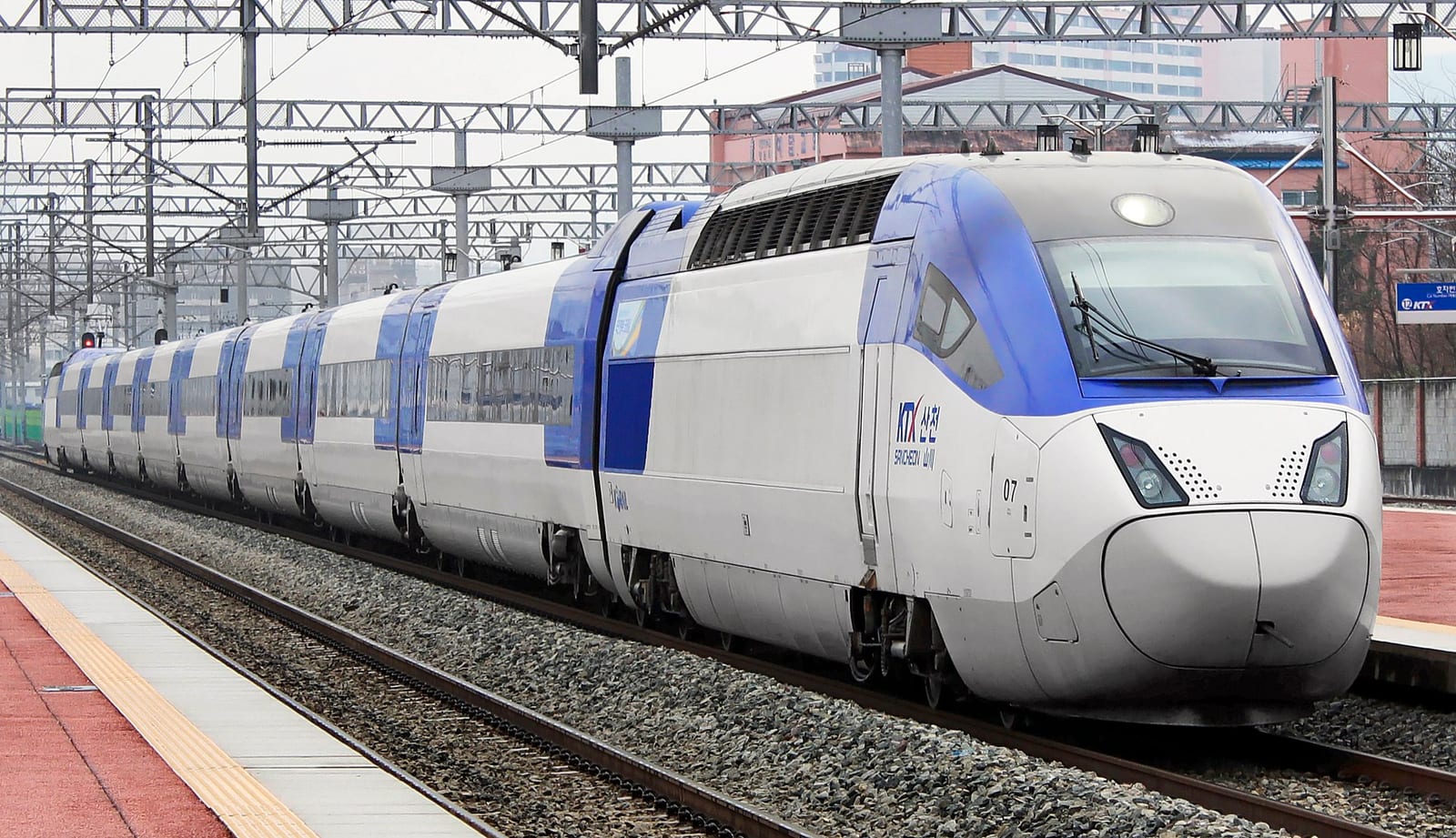
Minseong Kim / Wikimedia Commons · CC BY-SA 4.0A French train that became a Korean one
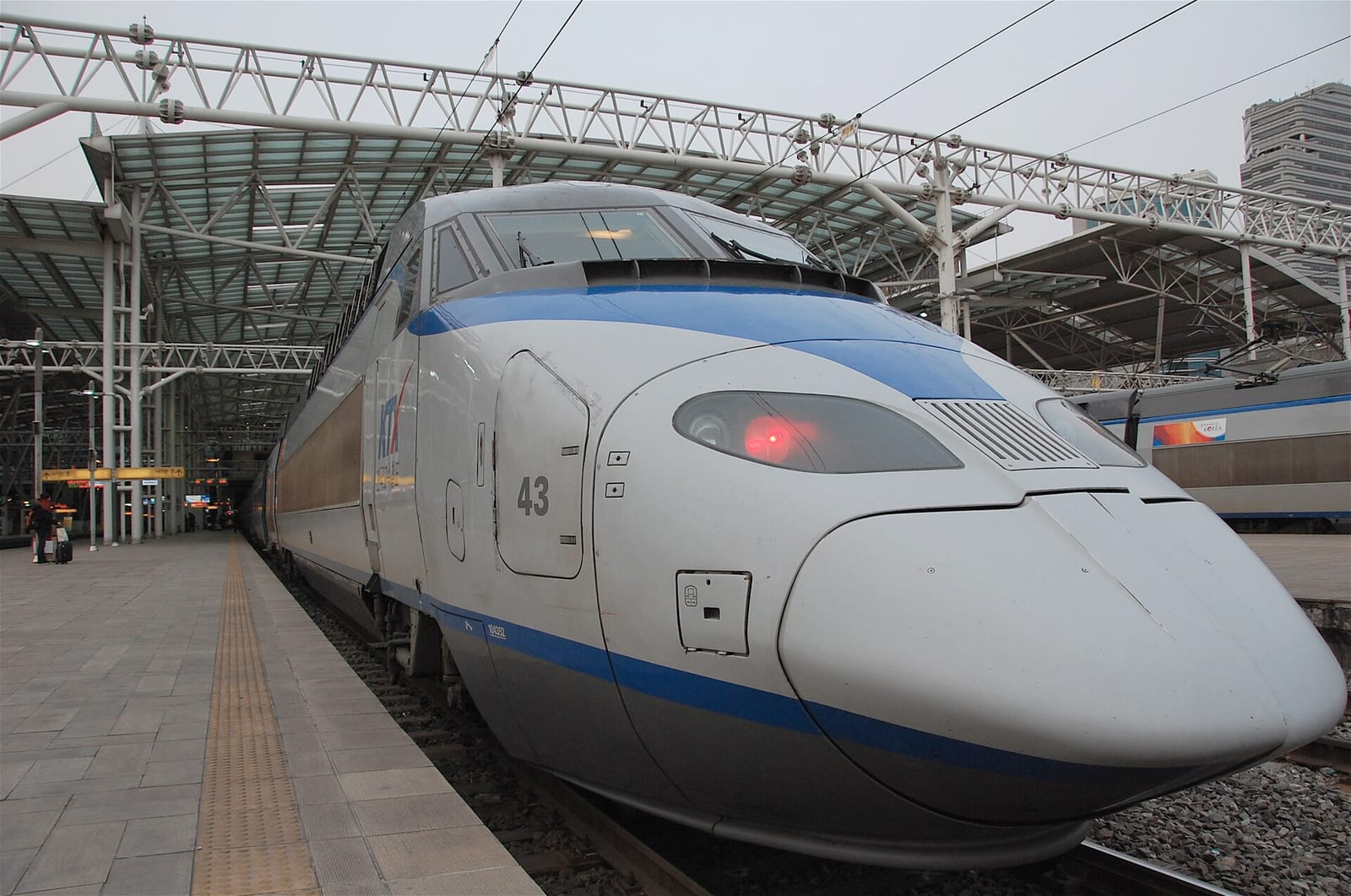
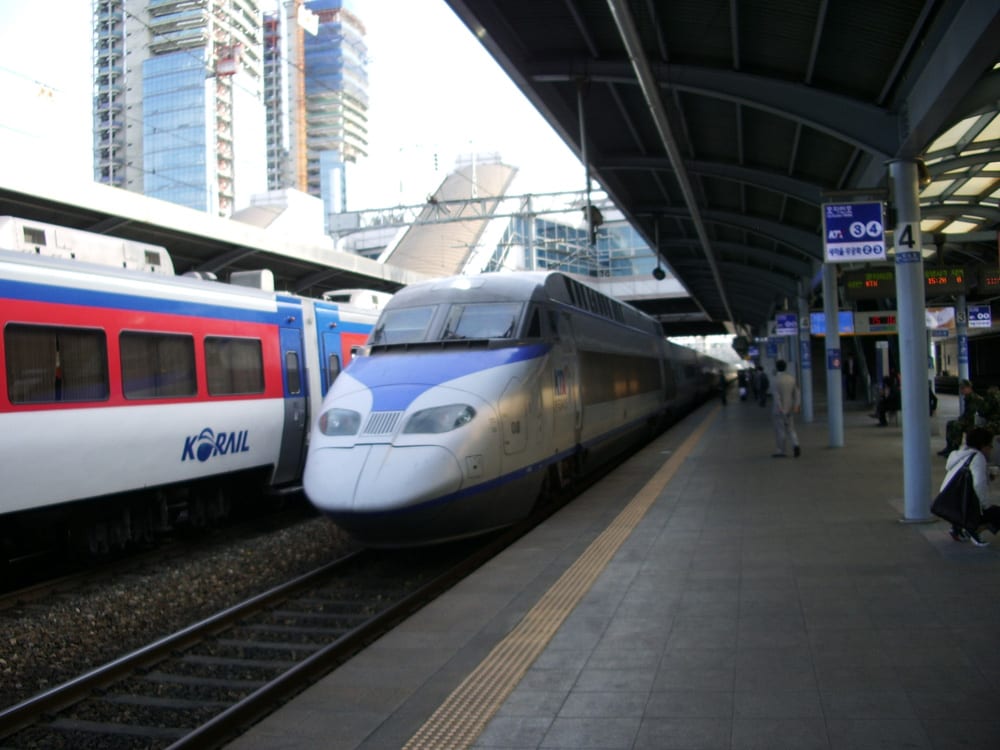
In 1994 Korea chose GEC-Alsthom, and the first KTX trains were TGV derivatives. But the point was always technology transfer: Korea went on to develop the KTX-Sancheon, and then a test train that reached 430 km/h in 2013.zheng2088 / Wikimedia Commons · CC0The line the whole country lives on
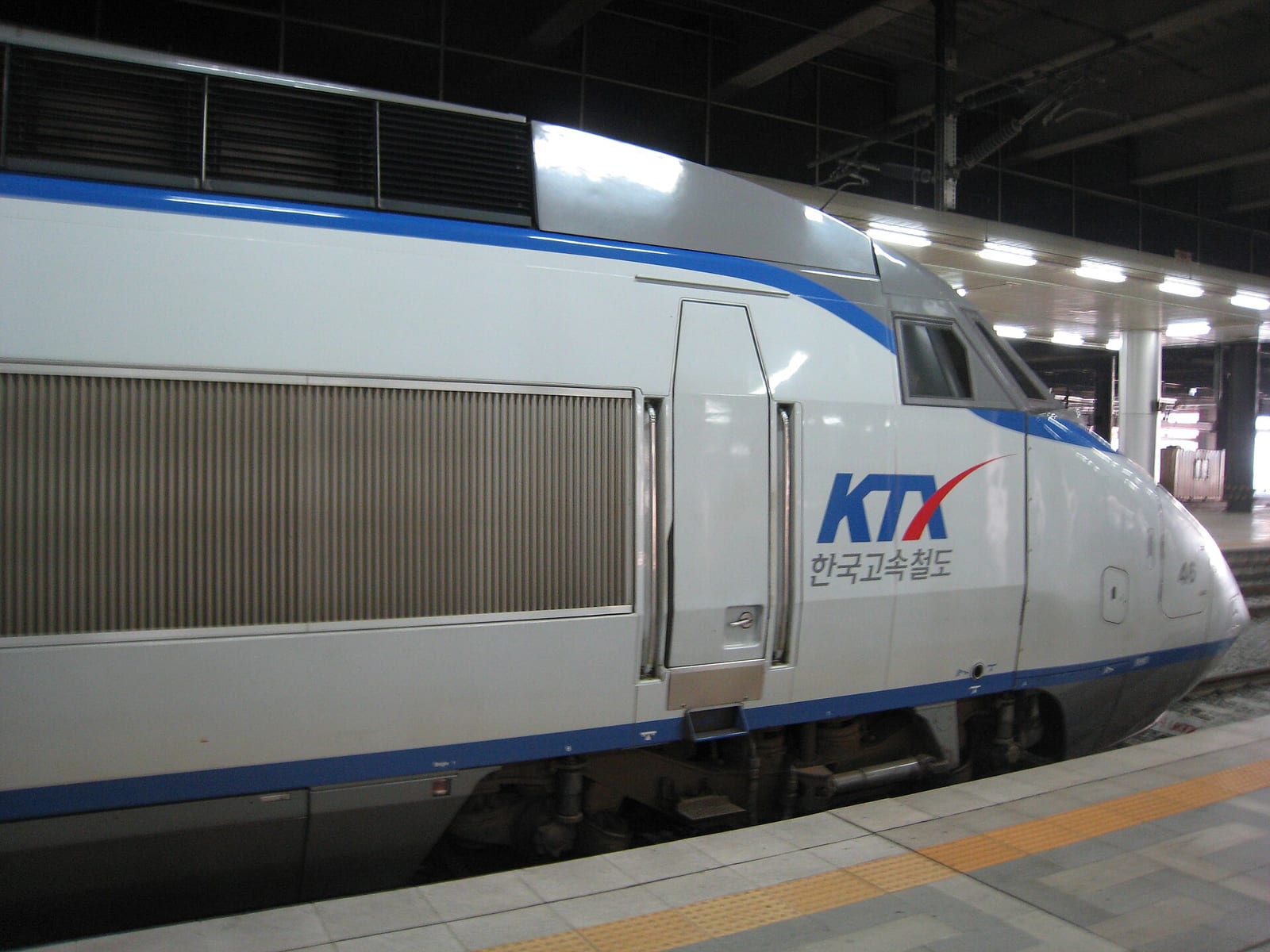
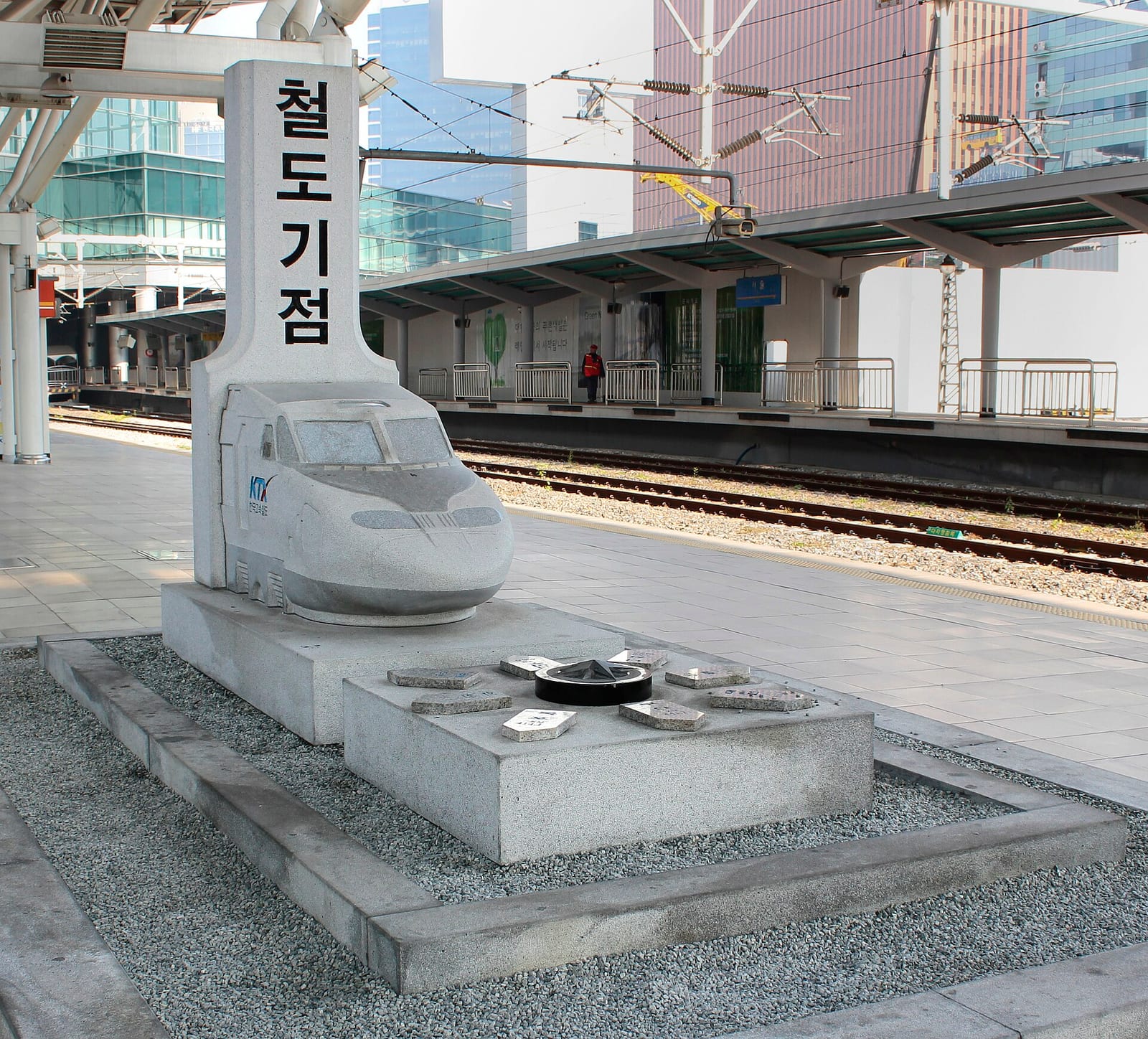
By 1995 the Seoul–Busan axis held 73 per cent of South Korea's population and 70 per cent of its freight, and both the motorway and the old railway were full. Construction started in 1992 and the first trains ran on 1 April 2004.Smiley.toerist / Wikimedia Commons · CC BY-SA 4.0Twenty-three years from first cut to finished line
It opened in pieces — Seoul to Daegu in 2004, on to Busan in 2010, and the last gaps through the middle of two cities in 2015. The curves are laid to a minimum radius of 7,000 metres, which is why it feels so oddly still at 300 km/h.A bit of history
Culture & experiences along the way
Syced / Wikimedia Commons · CC0Do it as a day trip, because you can
Two and a quarter hours each way, and more than sixty-nine departures a day from about 05:13 to 22:40, means Busan is a genuine day trip from Seoul: the fish market at Jagalchi, an afternoon on Haeundae beach, the painted hillside of Gamcheon, and home for dinner. Koreans do exactly this. It is the clearest demonstration of what high-speed rail actually changes about a country.LERK / Wikimedia Commons · CC BY-SA 4.0Look at the old station before you go
Beside the modern concourse stands the 1925 Seoul Station — a domed, red-brick Japanese colonial building loosely modelled on Tokyo Station, and for most of the twentieth century the gateway to the whole peninsula. It closed to trains in 2004, when the KTX opened, and reopened as an arts venue, Culture Station Seoul 284. Twenty minutes there is a good way to understand what the new railway replaced.LWYang / Wikimedia Commons · CC BY 2.0Consider the SRT instead
Since 2016 a second high-speed operator, SRT, has run over the same line from Suseo in south-eastern Seoul. It is usually cheaper than the KTX and about as quick, and if you are staying in Gangnam it is closer than Seoul Station. The catch is simply that it starts somewhere else. Compare both before booking; most visitors never learn it exists.Timetables
The KTX runs frequently enough that you do not really need a timetable — you need to know the span, the frequency and the journey time, and then to book a seat.
The service (as of July 2026)
| Departures | More than 69 KTX services a day on the Seoul–Busan route |
| First and last | About 05:13 to 22:40 from Seoul |
| Frequency | Every 20–30 minutes at peak, less often mid-morning and late evening |
| Fastest journey | About 2 hours 15 minutes |
| Standard fare | About ₩59,800 one way |
| First class | Roughly 40% more |
| Operator | Korail |
Journey times vary by about half an hour depending on how many intermediate stops a given train makes. The fastest workings run Seoul–Daejeon–Dongdaegu–Busan and little else; the slowest add Gwangmyeong, Cheonan-Asan, Osong, Gimcheon-Gumi and Ulsan.
Fares and frequencies above are reported figures current in mid-2026. Korail does not publish a static timetable poster — its schedule is a query-driven booking engine — so check letskorail.com (opens in a new tab) for your date rather than relying on these numbers.
Principal stops
| Station | |
|---|---|
| Seoul | The main terminus, central and on metro lines 1 and 4 |
| Gwangmyeong | Suburban, built as the original intended terminus |
| Cheonan-Asan | |
| Osong | Junction for the Honam high-speed line to Gwangju and Mokpo |
| Daejeon | |
| Gimcheon-Gumi | |
| Dongdaegu | Daegu's main station |
| Ulsan | For the shipyards and Gyeongju |
| Busan |
The alternative: SRT
Since 2016, a second operator — SRT — has run high-speed trains over the same Gyeongbu line, departing from Suseo in south-eastern Seoul instead of Seoul Station.
- Journey times are broadly comparable.
- Fares are usually lower than the KTX.
- Suseo is on metro lines 3 and Suin-Bundang, which is convenient if you are staying in Gangnam and inconvenient if you are not.
Book at etk.srail.kr (opens in a new tab). It is worth comparing both, and very few visitors do.
Slower, cheaper alternatives
If speed is not the point, the conventional Gyeongbu Line still runs:
- ITX-Saemaeul — the express, about 4 hours 30 Seoul–Busan, and considerably cheaper.
- Mugunghwa — the all-stations service, around 5 hours 30, cheaper again, and the way to see the country properly at ground level.
Both leave from Seoul Station and both are perfectly comfortable.
Booking
Reserved seats are the norm and sell out on Friday evenings, Sunday afternoons and around the two big holidays, Seollal (lunar new year) and Chuseok (harvest festival), when the whole country moves at once. Book those weeks as far ahead as you can.
Foreign visitors can buy a KORAIL PASS giving unlimited travel on Korail services — including the KTX — for two, three, four or five days. It does not cover SRT.
Operator: Korail — letskorail.com (opens in a new tab). Service pattern as of July 2026.
Tickets
Buying a KTX ticket is easy. Korail's English site letskorail.com (opens in a new tab) and its Korail Talk app take foreign cards and issue a mobile ticket; the machines at Seoul Station have an English mode; and with more than sixty-nine departures a day you can genuinely turn up and travel mid-week. The standard fare to Busan was around ₩59,800 one way in mid-2026, with first class about 40 per cent more — a luxury rather than a necessity for two and a quarter hours.
The KORAIL PASS, sold to foreign visitors only, gives unlimited travel on Korail services for two to five days and usually pays for itself if you are doing anything beyond this one journey. ⚠️ It does not cover the SRT, a separate company running the same line from Suseo, usually more cheaply. Book months ahead for Seollal and Chuseok, when the entire country travels.
Book your tickets
KTX · Seoul to Busan
The fast one, about 2 hours 15
Korail's flagship service, up to five departures an hour at peak from Seoul Station. Standard and first class; reserved seats, at-seat power and a trolley. Book through Korail or its English site — foreign visitors can also buy a KORAIL PASS for unlimited travel over two, three, four or five days.
Book Tickets (opens in a new tab, on Korail)via KorailSRT · Suseo to Busan
The cheaper high-speed alternative
The privately operated service that has shared the Gyeongbu high-speed line since 2016, leaving from Suseo in the south-east of Seoul rather than Seoul Station. Usually cheaper than the KTX for a very similar journey time — worth checking if you are staying south of the river.
Book Tickets (opens in a new tab, on SR)via SRRail Passes
The KORAIL PASS covers the KTX. It is sold only to foreign visitors, for 2, 3, 4 or 5 days, and is valid on Korail's KTX and ordinary trains. Seats can be reserved on up to two trains a day; otherwise the pass covers non-reserved and standing places. It is not valid on the SRT, the separate company running high-speed trains from Suseo on the same line, or on the metropolitan subway.
For Seoul to Busan alone, buy a ticket. The pass pays when you take several long trains within its few days.
Checked October 2026 against Korail's KORAIL PASS details (opens in a new tab) and pass booking page (opens in a new tab).
Places to Visit
The whole point of this railway is that it makes the ends of the country reachable from each other. Both ends are worth several days, and the best stop of all is in the middle.
The two cities
Beyond the hanok quarter, Seoul has five royal palaces — Gyeongbokgung is the largest and Changdeokgung, with its Secret Garden, the loveliest — plus Insadong for tea and paper, Gwangjang market for food eaten standing up, Zaha Hadid's enormous silver blob at the Dongdaemun Design Plaza, and the Han River parks in the evening. The DMZ is a couple of hours north and can be visited on organised tours only.
Busan is a complete change of register. Jagalchi is the largest fish market in Korea, run mostly by women, and you pick your fish and eat it upstairs. Gamcheon Culture Village is a hillside of small houses painted every colour, once a refugee settlement and now firmly on the tour-bus circuit. Haeundae and Gwangalli are proper city beaches, and Haedong Yonggungsa sits on rocks directly over the sea.
Breaking the journey
Get off at Singyeongju for Gyeongju — capital of the Silla kingdom for a thousand years, and essentially an open-air museum. Besides the burial mounds and the observatory below, there are the Bulguksa temple and the Seokguram grotto, both UNESCO-listed. If you do one stop on this line, do this one.
Daejeon, halfway, is largely a science and government city, but the hot springs at Yuseong are old and the barefoot trail above it is a genuinely strange local pastime. Ulsan, on the Busan side, is industrial Korea at full scale — the world's largest car plant and one of its largest shipyards in a single city — with the Taehwagang bamboo grove as the relief.
The other South Korean journey
For the exact opposite of the KTX — a slow train on a dying coal railway through the mountains — see the Jeongseon Arirang Train, which runs from Jecheon in the north-east.
 Basile Morin / Wikimedia Commons · CC BY-SA 4.0 · cropped
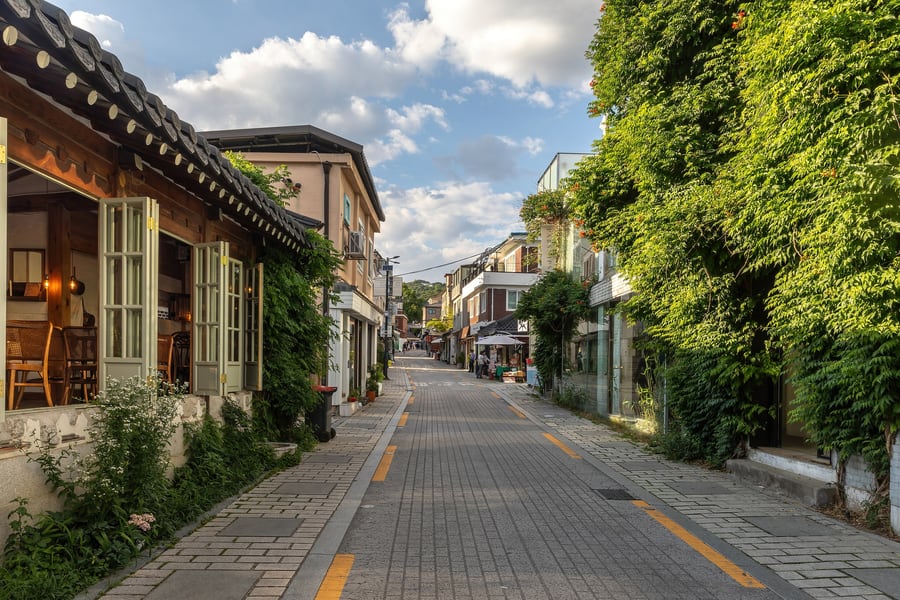
Bukchon, Seoul
The tiled wooden houses between Gyeongbokgung and Changdeokgung are a working neighbourhood, not a museum, and since March 2025 that has been enforced: Bukchon-ro 11-gil is a Red Zone where visiting between 5 p.m. and 10 a.m. carries a ₩100,000 fine, and chartered buses have been barred from nearby streets since January 2026. Gyedong-gil, pictured, is one of the streets with no time limit. Go in the morning and keep your voice down.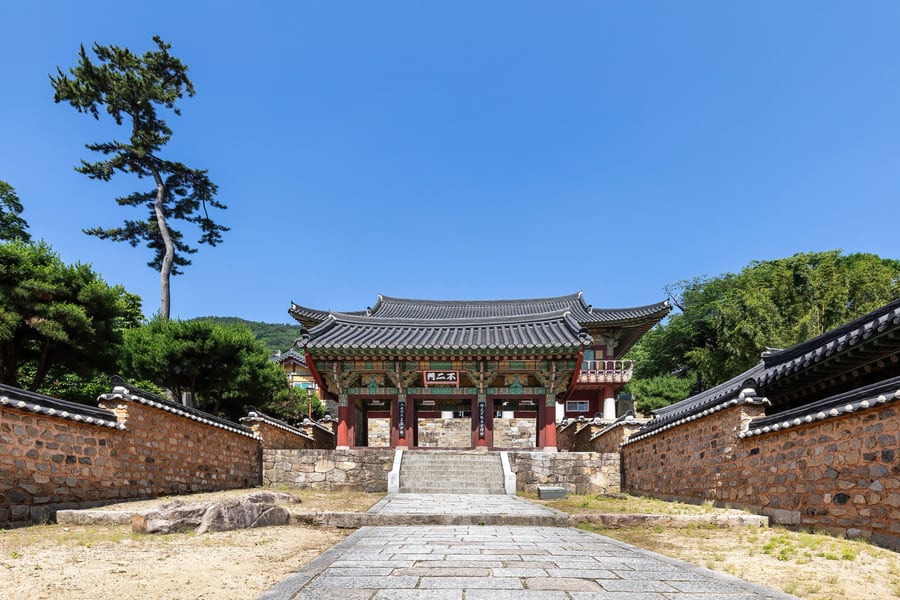 Basile Morin / Wikimedia Commons · CC BY-SA 4.0 · cropped
Beomeosa, Busan
High on Geumjeongsan above the city, at the end of a subway line and a bus. Founded in 678 and burnt out in the Japanese invasions of the 1590s, it was rebuilt from 1613: the Iljumun of 1614 appears to stand on a single line of pillars, the main hall of the same year is a national Treasure, and Burimun — the Gate of Non-duality, pictured, of 1699 — is the last gate before the courtyard. The name means "temple of the nirvana fish".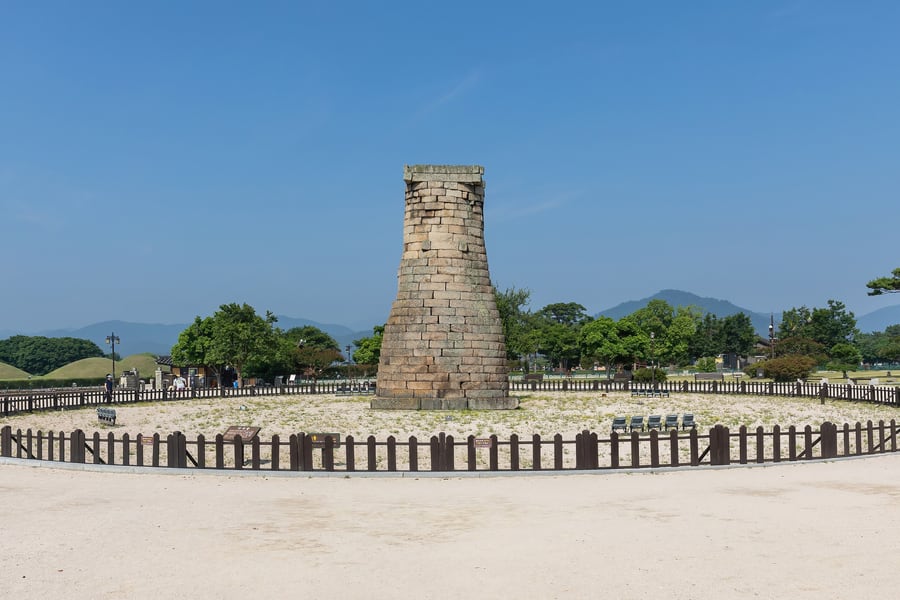 Basile Morin / Wikimedia Commons · CC BY-SA 4.0 · cropped
Cheomseongdae, Gyeongju
A bottle-shaped tower of 365 cut granite blocks, 9.17 m high, raised under Queen Seondeok (r. 632–647) and standing where it was put — there is no reconstruction story here, which in Korea is rarer than it sounds. Seen from above, the square top course makes the character 井, "a well". It is National Treasure No. 31, designated in 1962, and is generally called the oldest surviving astronomical observatory in Asia and possibly anywhere.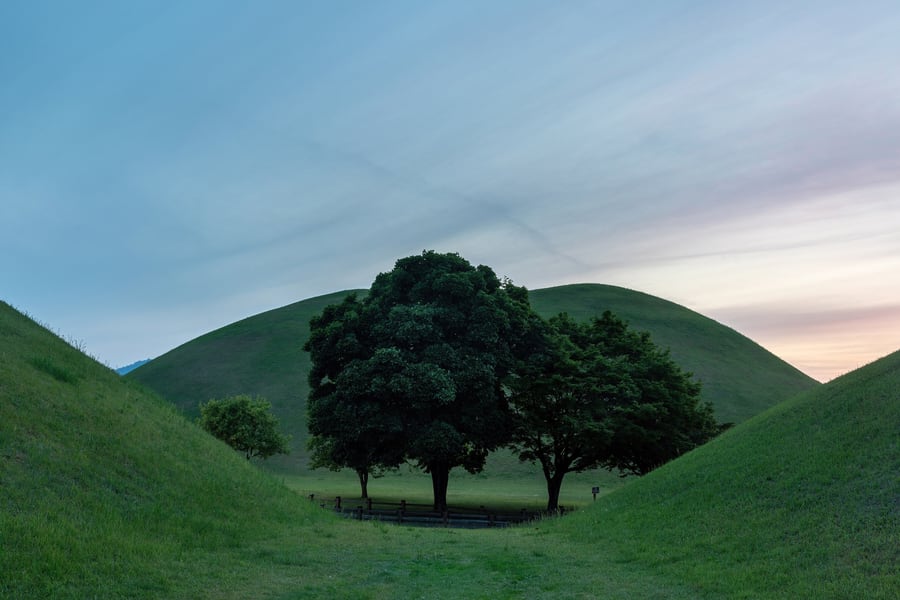 Basile Morin / Wikimedia Commons · CC BY-SA 4.0 · cropped
Daereungwon, Gyeongju
Twenty-three grass mounds holding Silla kings, queens and nobles, several of them the size of a small hill, in a walled park in the middle of the modern town — and the reason Gyeongju feels unlike anywhere else in Korea. Cheonmachong was excavated in 1973; a pair of gilt-bronze ceremonial shoes came out of the complex as recently as 2020, dated to about the year 500. All of it sits inside the UNESCO-listed Gyeongju Historic Areas.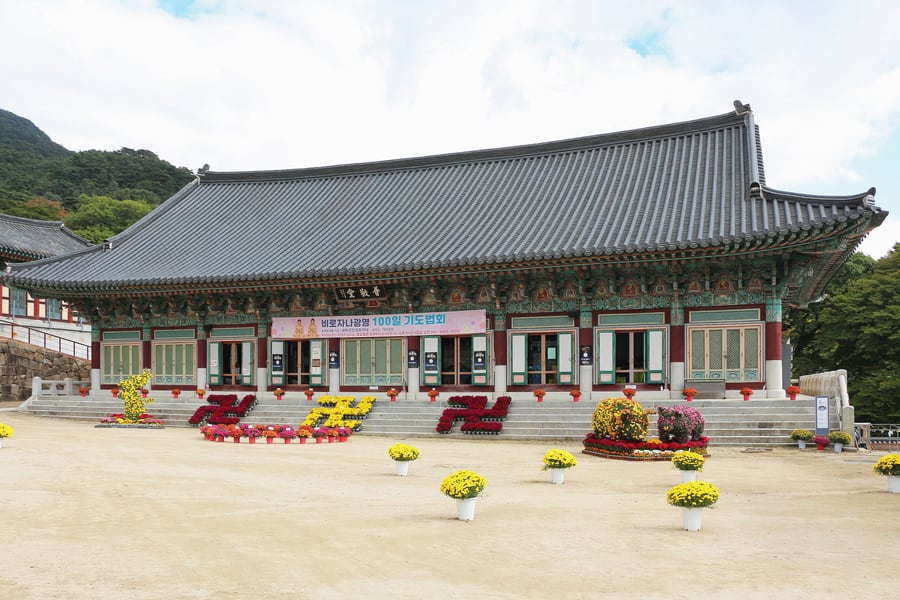 Bernard Gagnon / Wikimedia Commons · CC0 · cropped
Haeinsa, for Daegu
In the Gayasan mountains west of Daegu, and the reason to make the detour: the Tripitaka Koreana, 81,258 woodblocks carved in the thirteenth century and the most complete corpus of Buddhist texts anywhere. They are kept in the Janggyeong Panjeon, timber halls whose north and south walls carry windows of different sizes and whose clay floors were packed with charcoal, lime, salt and sand — which is why the blocks have survived seven centuries. UNESCO-listed since 1995.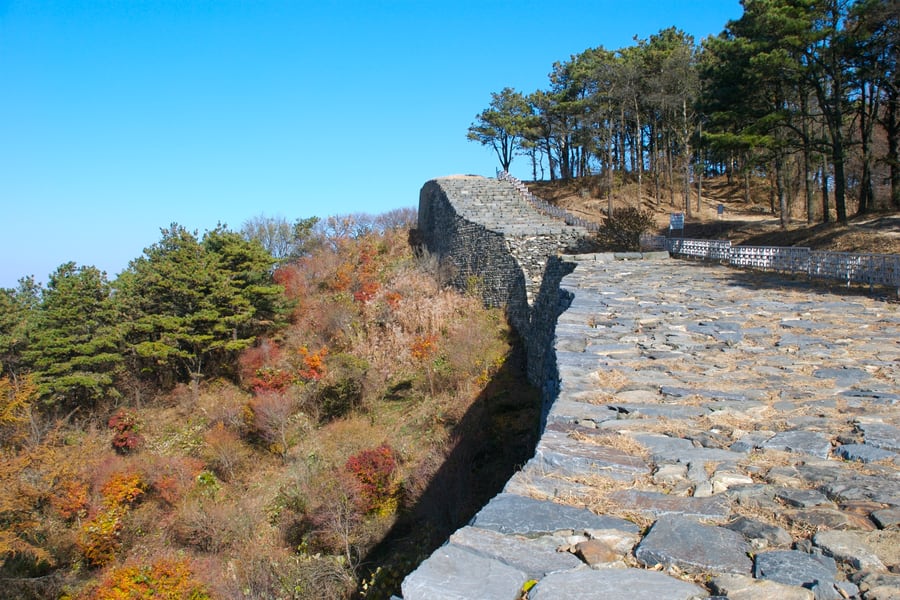 Yoo Chung / Wikimedia Commons · CC BY-SA 3.0 · cropped
Gyejoksan, Daejeon
Daejeon's own mountain, and the Hwangtot-gil — 14.5 km of soft red clay laid along its flanks through pine forest, opened in 2006 as Korea's first barefoot walking trail and still its longest. Take your shoes off; everybody else has. Partway round, the path forks, and 2.3 km of one fork climbs to Gyejoksanseong, pictured: a Three Kingdoms fortress wall at 420 m, with the whole city on one side and Daecheong Lake on the other.Where to Sleep
Both ends of this line have every kind of accommodation at every price, and the train is quick enough that you can reasonably base yourself at one end and visit the other.
Seoul — around the station
Myeongdong and Namdaemun, within walking distance of Seoul Station, are the obvious choice if the train is your priority: dense, well served, full of mid-range hotels and business towers, and a short walk to the platform with luggage. Myeongdong is heavily geared to shopping and can feel like an airport terminal at street level.
Seoul — better neighbourhoods
Bukchon and Ikseon-dong have restored hanok guesthouses — single-storey tiled courtyard houses, some of them centuries old, converted to a few rooms each. Small, atmospheric and central to the palaces. Seochon, west of Gyeongbokgung, is quieter and full of small restaurants.
Hongdae is young, loud and cheap; Itaewon is international; Gangnam is polished, expensive and — usefully — close to Suseo for the SRT.
Busan — Haeundae
Where most visitors stay: a long city beach backed by high-rise hotels, including several of the best in Korea, with a metro line into town. Busy in summer, calm out of season, and a very pleasant place to end a journey from Seoul.
Busan — Nampo and the old town
Around Jagalchi market and Gukje market, close to Busan Station and the harbour. Older, denser, cheaper and much more interesting than Haeundae if you want the working port city rather than the beach.
Gyeongju
Worth a night rather than a day trip. There are hanok guesthouses in the old quarter within walking distance of the burial mounds, and a resort area at Bomun Lake outside town. Getting up early and walking among the tombs before the coaches arrive is the whole point.
Something different: a temple stay
Many Korean Buddhist temples run templestay programmes for visitors — a night in a mountain monastery, a 4 a.m. start, meals eaten in silence, and a good deal of sitting. Haeinsa near Daegu and Beomeosa in Busan both offer them in English. It is not a hotel and is not meant to be.
Practicalities
Korean hotels are reliable and clean at every price point, and jjimjilbang — 24-hour bathhouses where you can sleep on a heated floor for a few thousand won — remain a legitimate budget option, including at both Seoul and Busan stations.
Book well ahead for Seollal and Chuseok, and for Busan in July and August, when the whole country goes to the beach at once.
Questions or corrections
Planning this trip and stuck on something, or spotted a time, fare or detail that has changed? Send us a message about The KTX · Seoul to Busan. We read every one, and we update this page when something has changed.