Minièresbunn — Through the Doihl Mine
Nordwaldedampflok / Wikimedia Commons · CC BY 4.0 · 2018 · cropped
- DistanceAbout 4 km, Fond-de-Gras to Saulnes via Lasauvage; 1.4 km of it underground
- Duration45 min to Lasauvage with the mine visit; 15 min more to Saulnes
- Best seasonSundays and holidays, May to late September · afternoon trains only
Introduction
Most railways go round a hill or through it in a tunnel built for the trains. The Minièresbunn goes through the hill in a tunnel built for the ore. For 1,400 metres its 700 mm track follows the main haulage gallery of an iron mine that closed in 1978, driven through the black seam of the minette beds that made southern Luxembourg rich. Before the train goes in, everyone aboard puts on a helmet.
The ride starts at Fond-de-Gras, the old mining valley at the top of the Train 1900, and runs through the woods to the Doihl mine yard, where an electric locomotive takes the train underground. It stops in the mine for a visit, then comes out into daylight at Lasauvage, a miners' village in a narrow valley on the French border. Some trains carry on over the border to Saulnes.
Minièresbunn Doihl, the volunteer association that runs it, laid the track back into the gallery after the mine had been stripped of every rail and wire, and has gathered 51 locomotives from mines in Luxembourg and Lorraine. Trains run on Sunday and holiday afternoons from May to September, and a return ticket costs €10.
The Journey
The Minièresbunn does not leave from Fond-de-Gras station, where the Train 1900 from Pétange terminates, but from its own platform a little way up the valley, beside the café Bei der Giedel. The first departure of the afternoon also picks up at the Train 1900 station ten minutes earlier, so a passenger off the standard-gauge train need not walk.
Through the woods to Doihl
The first leg runs on the surface, through woodland, to the Doihl mine yard in Rodange. The Minett Park, the open-air museum that groups the sites of the valley, lists it as steam-hauled by Krauss No 1, a small tank engine built in Munich in 1897 for the Société des Mines d'Esch. It worked at the Providence mine in Fond-de-Gras until around 1944, stood as a monument in Pétange for twenty years, and has been back in service here since 1992. At Doihl the mine's surface buildings still stand: the changing rooms, the compressor hall, the station of the old ore cableway and the crushing plant, where ore was broken before it went to the blast furnaces.
Under the hill
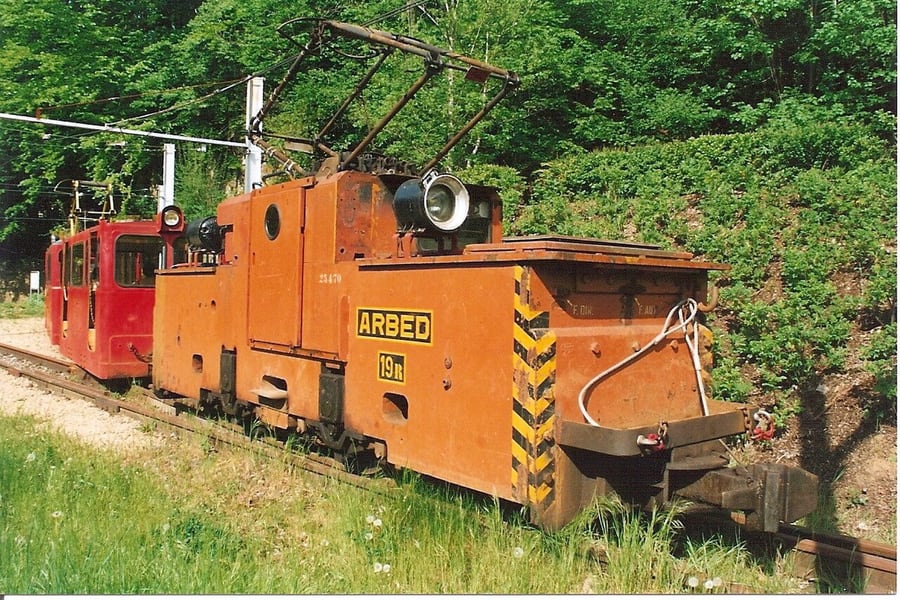
From Doihl the line is electrified at 500 volts DC, and the train goes underground behind an electric mine locomotive. The gallery was the mine's main haulage road, driven through the couche noire, the black seam of the ore bed. It had collapsed in two places when the association reopened it, and it has been passable all the way to Lasauvage again since February 1994. The temperature inside is about eleven degrees all year, the floor is uneven and wet, and the operator strongly advises anyone who is claustrophobic not to come. The train stops underground for a visit of the workings, included in the fare, and then runs on in the dark until the track leaves the hill in the oldest part of the mine, opened in 1908. Lasauvage Carreau, the mine yard on the edge of the village, is the end of the regular run.
Lasauvage and over the border
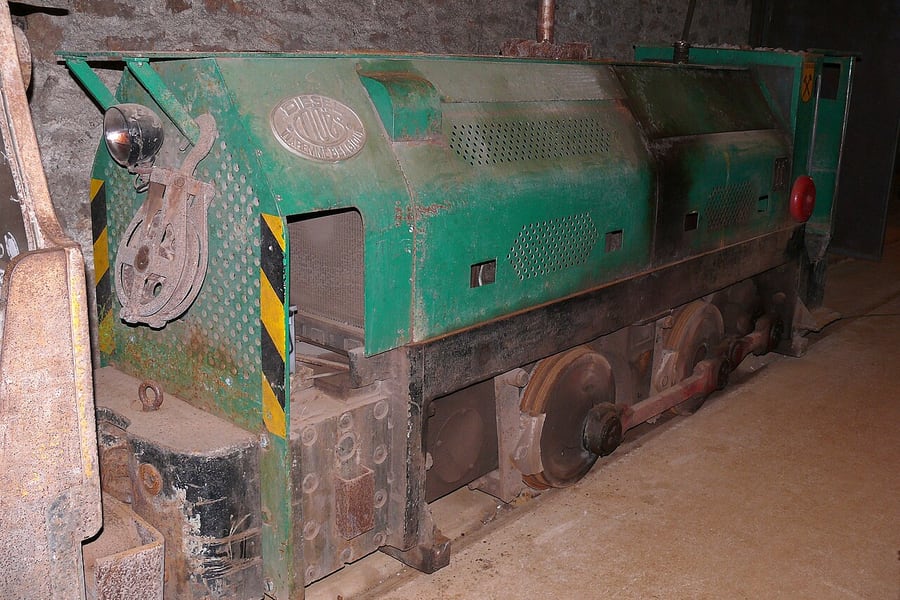
At Lasauvage two shorter trains connect: a five-minute run up to the village church, a branch opened in 2006, and fifteen minutes over the border to Saulnes in France. The Saulnes line, opened in 2002, made the Minièresbunn the first heritage railway in the European Union to cross a national border, by the association's own account. It follows the route that once carried ore from Lasauvage to the steelworks at Longlaville, through the forest along the frontier, and in late summer 2026 it was worked by a diesel built by LKM in Babelsberg in 1959.
The traction
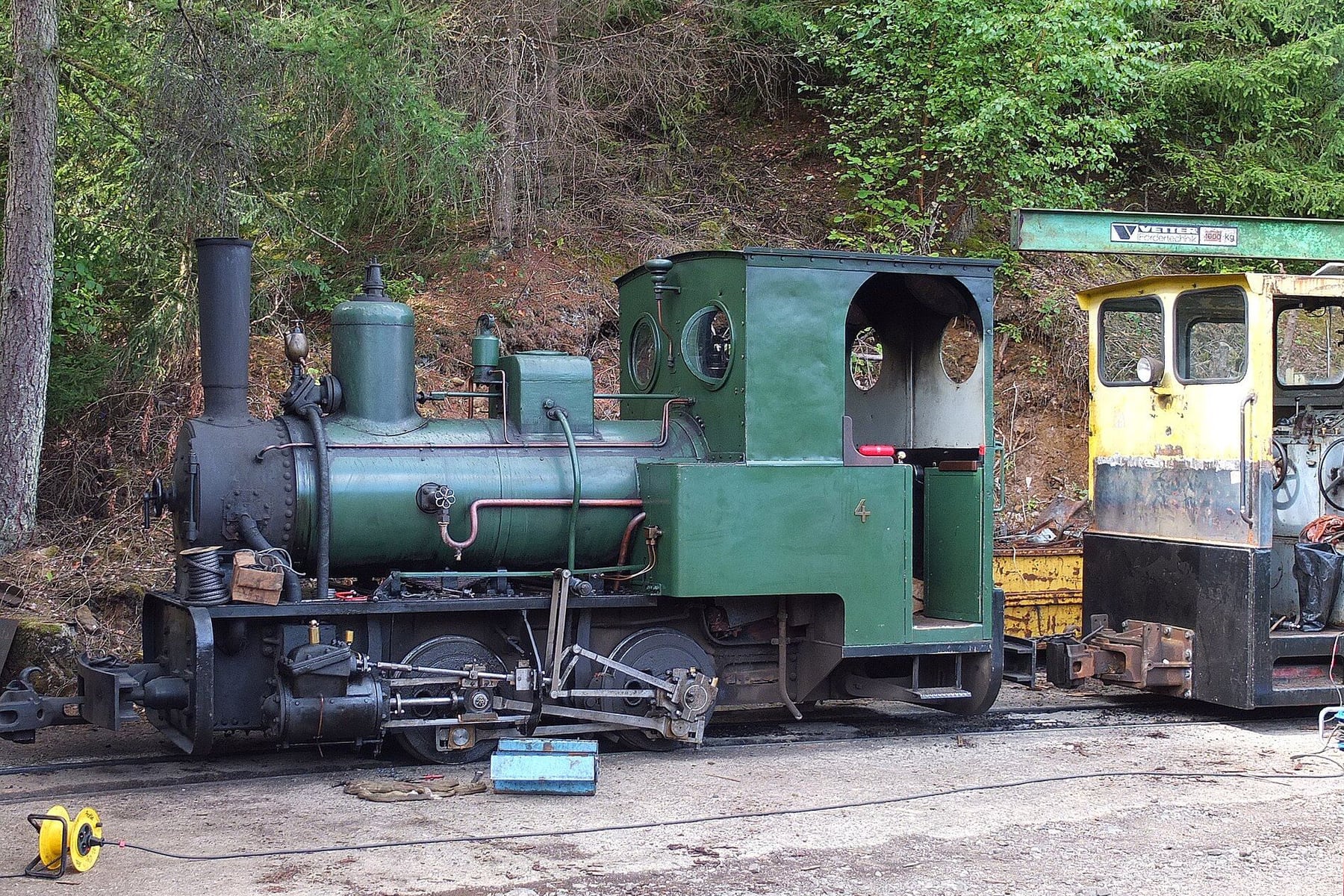
The association has collected 51 locomotives from mines in Luxembourg and from the iron mines of Lorraine, bought in the 1990s as the French mines closed: steam, diesel and electric, many of them from ARBED and from MMR-A, the company whose mine this was. Besides Krauss No 1, the steam fleet includes Krauss No 4, built in 1895 for the Steinfort ironworks, later converted to 800 mm for a leather factory in Wiltz, rescued from a scrap dealer and in service here since 2004; it is the oldest surviving steam locomotive in Luxembourg. The electric locomotives draw current from an overhead wire through a cam controller and resistors, as they did in the mine.
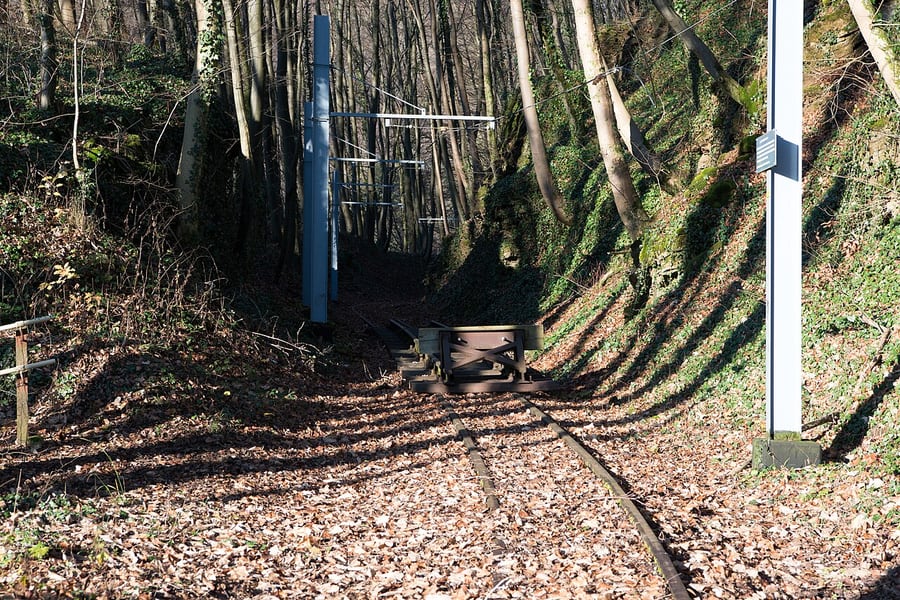
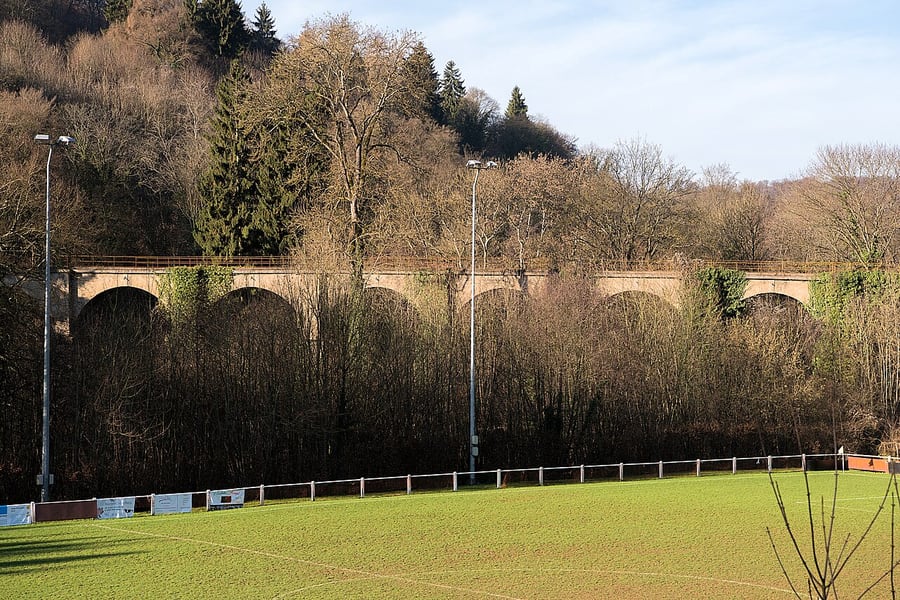
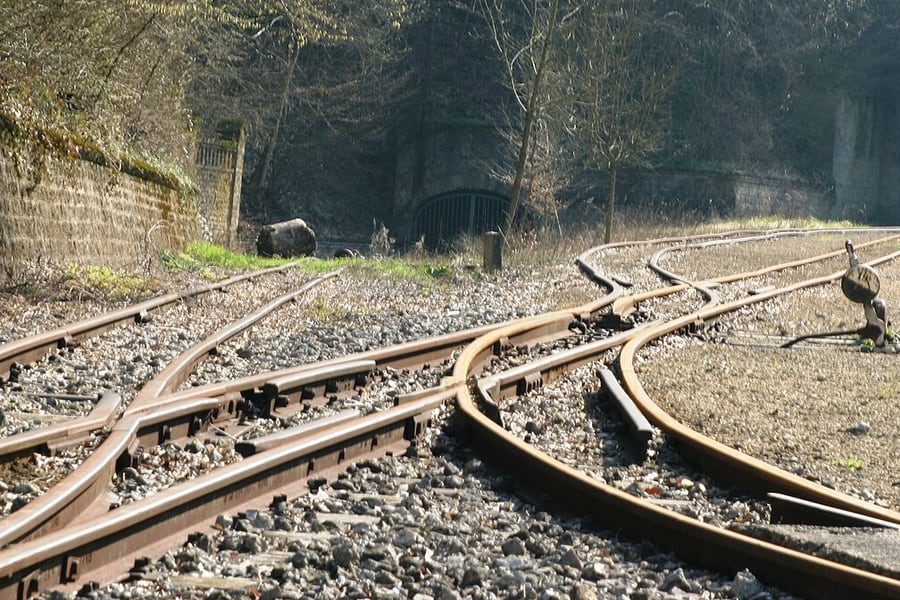
Along the route
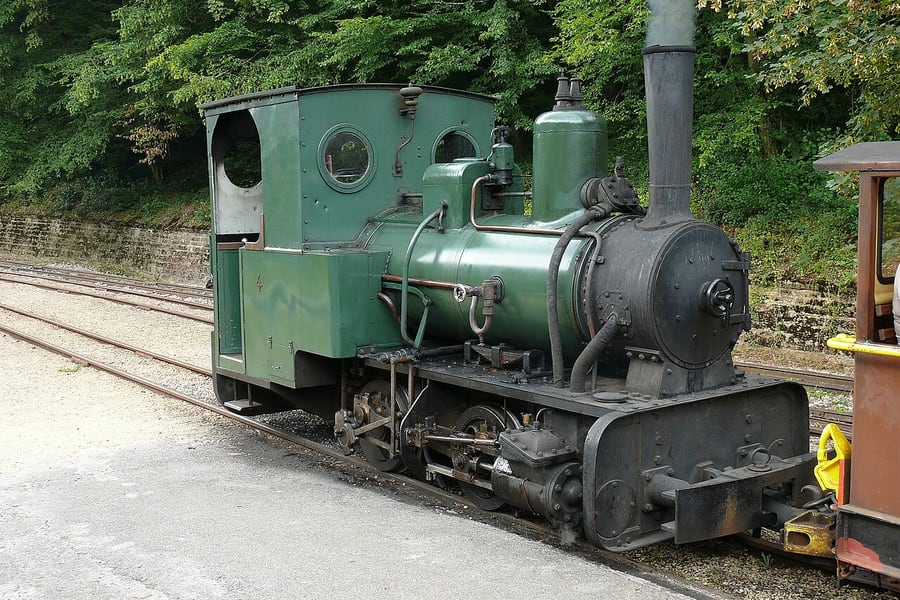 Joachim Lutz / Wikimedia Commons · CC0 · cropped
Steam through the woods to Doihl
The train leaves from its own platform by the Bei der Giedel café and runs through woodland to the Doihl mine yard. The Minett Park lists this leg as steam, behind Krauss No 1 of 1897, built for the mines of this valley; No 4 of 1895, pictured, is its stablemate.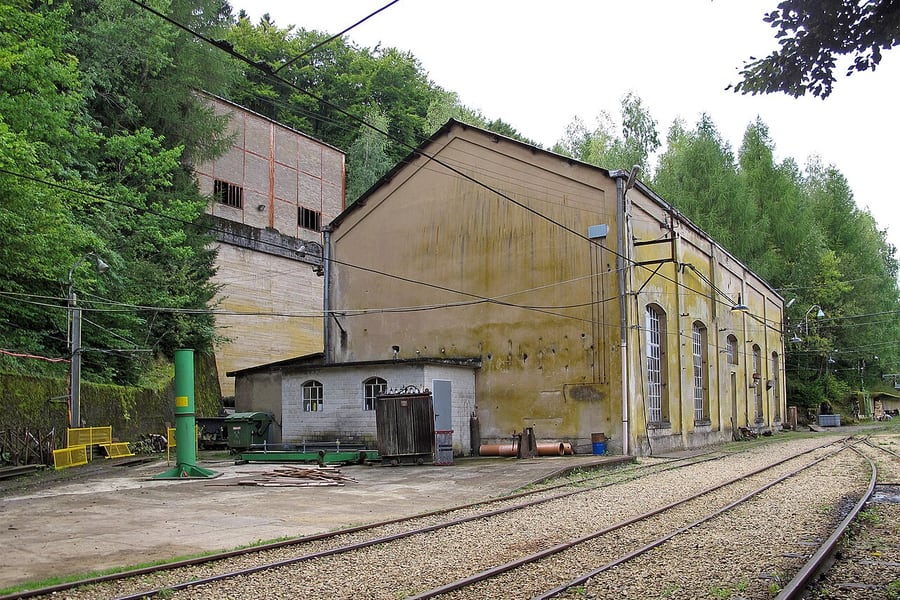 MMFE / Wikimedia Commons · CC BY-SA 3.0 · 2013 · cropped
The Doihl mine yard
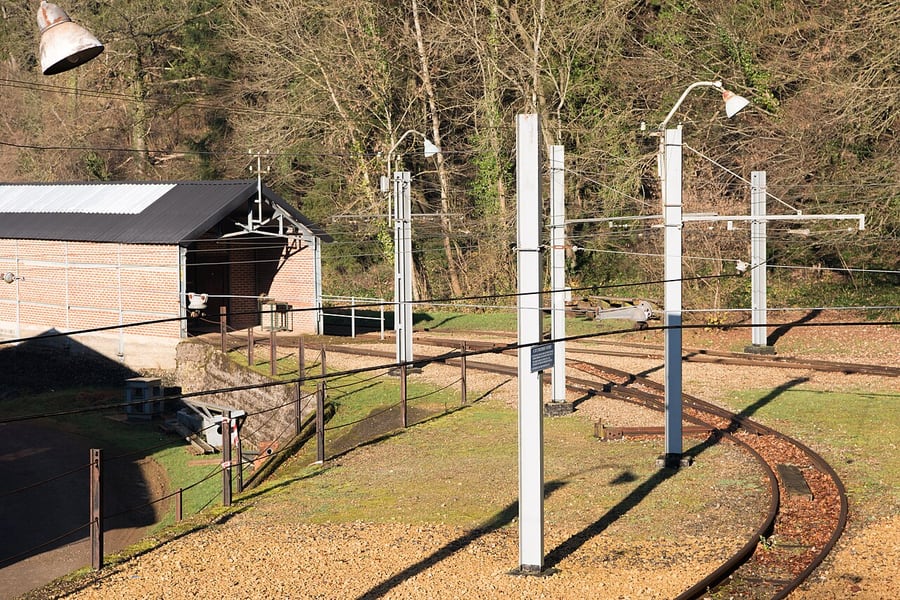
Doihl was the surface yard of the MMR-A company's mine, which closed in 1978: changing rooms, a compressor hall, the station of the ore cableway and the building that housed the ore crusher. The association rebuilt it first, and ran its first trains here in 1991.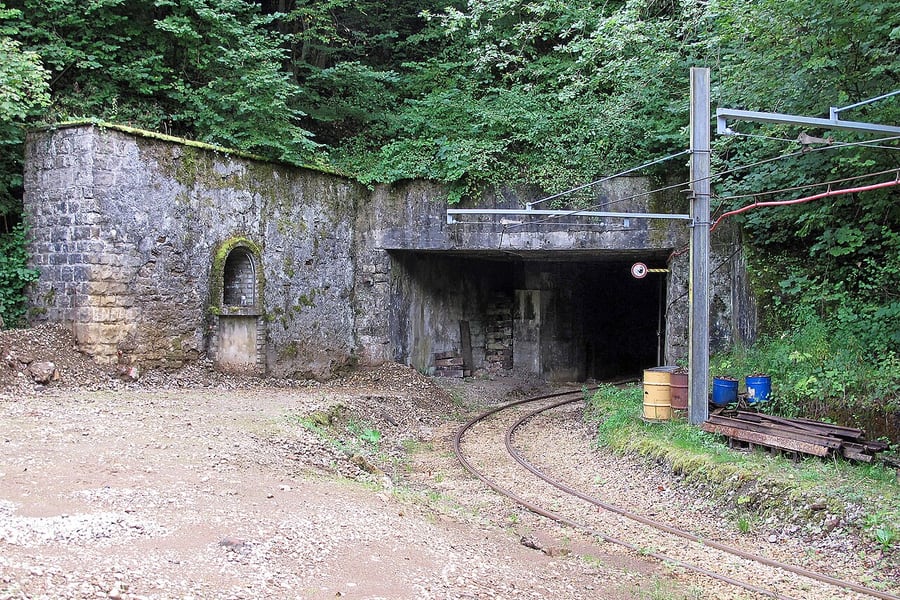 MMFE / Wikimedia Commons · CC BY-SA 3.0 · 2013 · cropped
1,400 metres in the dark
At Doihl the train changes to electric traction and enters the old main haulage gallery, driven through the black seam of the ore bed. Helmets are compulsory, the air stays at about eleven degrees, and the train stops inside for a free visit of the mine.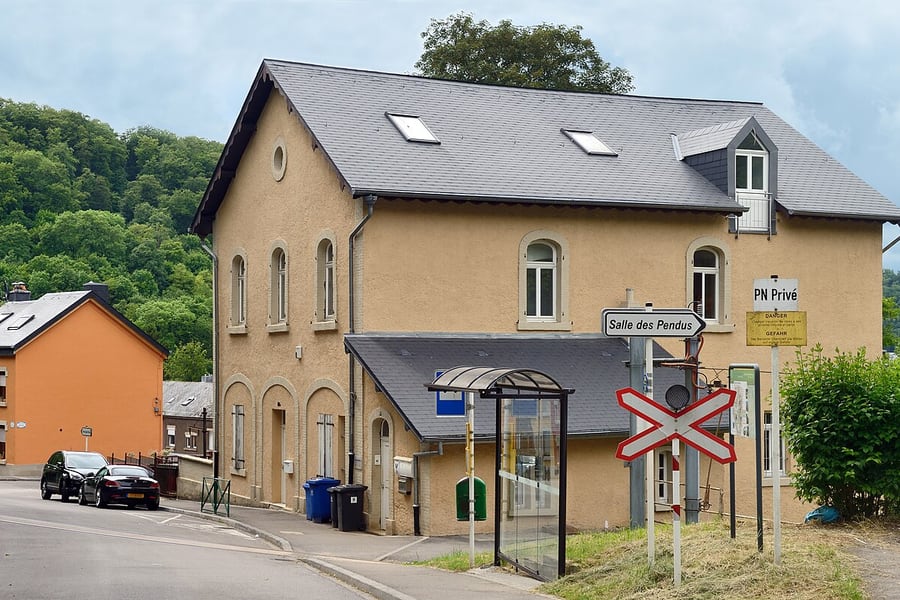 Cayambe / Wikimedia Commons · CC BY-SA 3.0 · 2013 · cropped
Out at Lasauvage
The track leaves the hill in the oldest part of the workings, opened in 1908, and runs into the mine yard at Lasauvage Carreau. A signpost by the level crossing points to the salle des pendus, the miners' changing room; trains go on to the church and to France.A bit of history
Culture & experiences along the way
 GilPe / Wikimedia Commons · CC BY-SA 4.0 · 2025 · cropped
Saint Barbara's Day
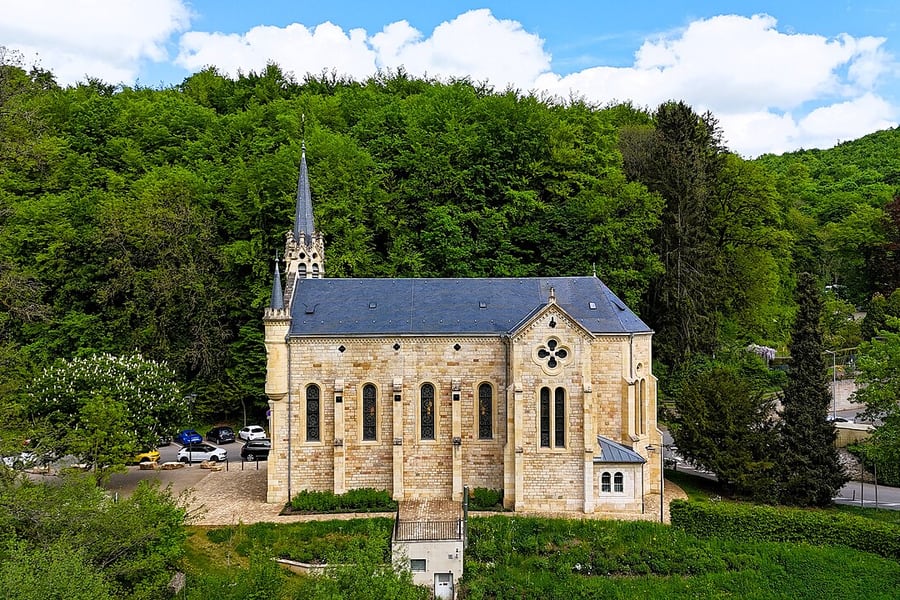
Barbara is the miners' saint, and the neo-Gothic church the ironmaster Count Fernand de Saintignon built in Lasauvage shows her unusually, inside her tower rather than holding it. On her feast day, 4 December, the village walks in procession and hears Mass, and the mine train then carries guests into the Doihl mine for a reception underground.Timetables
The Minièresbunn runs on Sundays and Luxembourg public holidays from 1 May to the end of September — in 2026, 1 May to 27 September, with no trains on 9 May or on 23 June, the National Day. There are three return trips each afternoon. Fond-de-Gras to Lasauvage takes 45 minutes including the stop for the mine visit; the way back takes 25. There is nothing to reserve: tickets are sold at the train.
Times below are from Minièresbunn Doihl's published 2026 timetable, as of November 2026. The 2027 timetable has not yet been published, so check minieresbunn.lu (opens in a new tab) before travelling.
Fond-de-Gras to Lasauvage — with the mine visit
| Fond-de-Gras, Train 1900 station | Fond-de-Gras Giedel | Lasauvage Carreau |
|---|---|---|
| 14:50 | 15:00 | 15:45 |
| — | 16:00 | 16:45 |
| — | 17:00 | 17:45 |
Lasauvage to Fond-de-Gras
| Lasauvage Carreau | Doihl, Train 1900 platform | Fond-de-Gras Giedel |
|---|---|---|
| 16:00 | — | 16:25 |
| 17:00 | — | 17:25 |
| 18:00 | 18:10 | 18:20 |
The last train back stops at Doihl for the Train 1900: passengers for Pétange change there and are in Pétange at 18:43.
From Lasauvage Carreau
| To | Departures | Back | Journey |
|---|---|---|---|
| Saulnes, France | 15:00, 16:00, 17:00, 17:55 | 15:20, 16:20, 17:20, 18:15 | 15 min |
| Lasauvage Église | 15:35, 16:35, 17:35 | 15:45, 16:45, 17:45 | 5 min |
The 18:15 from Saulnes arrives after the last train to Fond-de-Gras has left; to get back to the Train 1900, take the 17:20 at the latest.
The Minett Park's own listing for the mine train also shows an extra 11:05 departure from Fond-de-Gras on summer Sundays and 15 August, and a 15:10 train from Fond-de-Gras into the mine and back on summer Thursdays. The association's timetable does not show them, so confirm with the Minett Park (opens in a new tab) before planning around either.
Getting to Fond-de-Gras
The usual way in is the Train 1900 from Pétange, which is reached free by CFL train from Luxembourg City in 22 minutes. The 14:15 steam train from Pétange reaches Fond-de-Gras at 14:42, in time for the Minièresbunn's 14:50 pick-up at the station.
Tickets
Tickets are sold on the spot just before departure, in cash or by card; there are no reservations, no advance sales and nothing online. The fare is a return and includes the visit of the mine. Children under five ride free, and anyone under 18 must be with an adult. Helmets are handed out on board, and the operator recommends a jacket and closed shoes for the mine.
The Minièresbunn is a volunteer heritage railway, not part of Luxembourg's free public transport, and the Minett Park says it does not accept the Kulturpass. The Train 1900 to Fond-de-Gras is a separate ticket. Fares checked November 2026 against minieresbunn.lu (opens in a new tab).
Book your tickets
Adult return
Fond-de-Gras to Lasauvage and back
A return ticket with the free visit of the mine, bought on the spot before the train leaves.
Book Tickets (opens in a new tab, on minieresbunn.lu)via minieresbunn.luChild return
Ages 5 to 11; under 5 free
The same return ride and mine visit for children, who must be accompanied by an adult underground.
Book Tickets (opens in a new tab, on minieresbunn.lu)via minieresbunn.luSpecial train
Up to 50 people, booked ahead
A private train, from €250 for Lasauvage to Saulnes to €680 for Fond-de-Gras to Saulnes with the mine visit.
Book Tickets (opens in a new tab, on minieresbunn.lu)via minieresbunn.luRail Passes
No rail pass covers the Minièresbunn. It is run by a volunteer association that sells its own €10 return at the train, and an Interrail or Eurail pass is no help on the platform at Fond-de-Gras or on the short run over the border to Saulnes.
Nor is a pass any use getting there. The CFL train to Pétange is already free, since buses, trams and second-class trains inside Luxembourg have been free for everyone since 1 March 2020, and the Train 1900 from Pétange to Fond-de-Gras sells its own tickets too. If Luxembourg is one stop on a longer European trip, carry whatever pass the rest of the trip needs; for this day out, budget for two heritage-railway tickets and nothing else. Checked November 2026 against minieresbunn.lu (opens in a new tab) and the Ministry of Mobility (opens in a new tab).
Places to Visit
The Minièresbunn ends in a village worth an hour of its own. Lasauvage's museums and mine yard are a few minutes' walk from the Carreau stop, and the train to Saulnes leaves from the same platform. The Fond-de-Gras end, with its station, rolling mill and the Titelberg above it, is covered on the Train 1900 page.
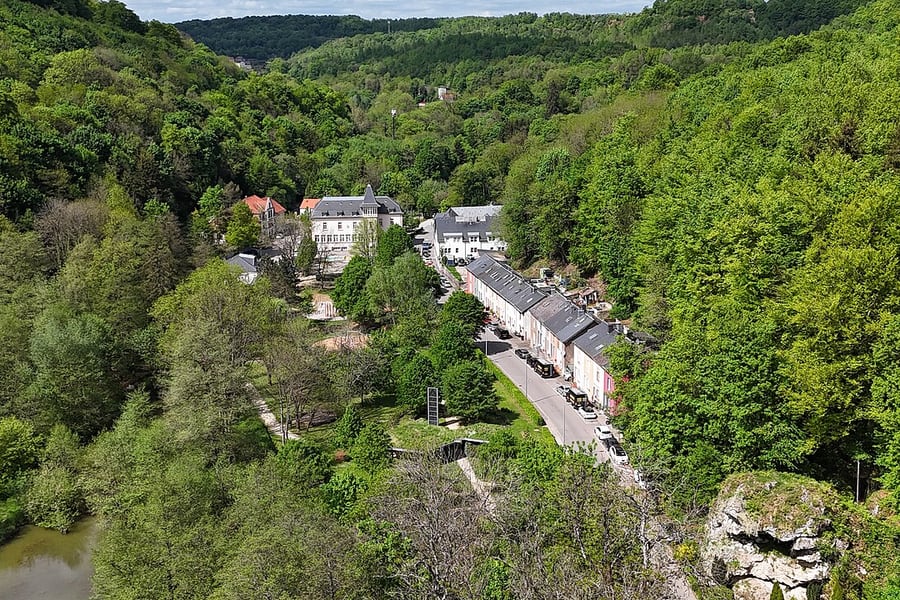 GilPe / Wikimedia Commons · CC BY-SA 4.0 · 2025 · cropped
Lasauvage
A village at the bottom of a narrow wooded valley, where one of Luxembourg's oldest ironworks, a forge, was built around 1625: the valley had ore, wood for charcoal and the Crosnière stream to drive the hammers. From the late nineteenth century until 1978 it was an iron-ore mining village, and its rows of workers' houses, its church and its mine yard still make it a mining village to walk through.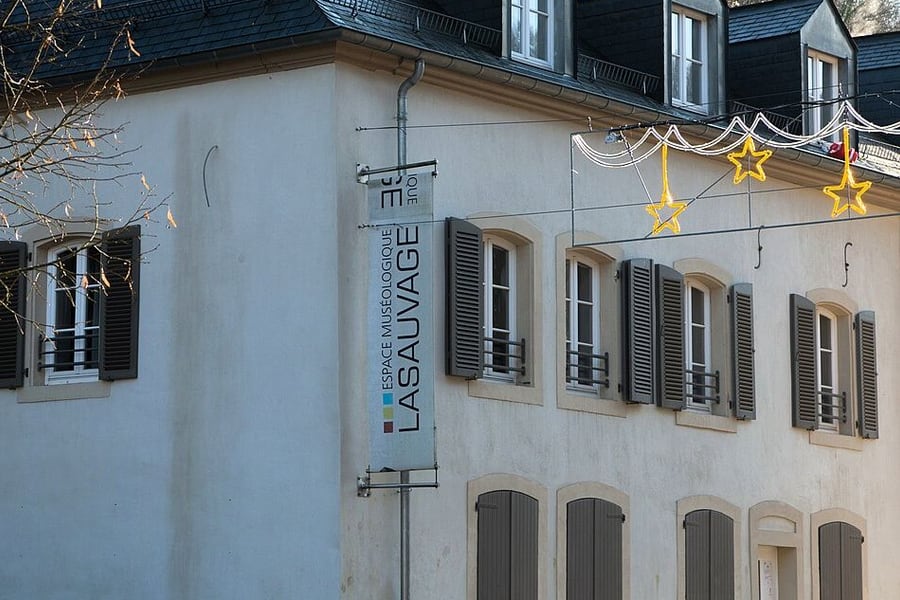 Jwh / Wikimedia Commons · CC BY-SA 3.0 LU · 2015 · cropped
The Espace muséologique and the Musée Eugène Pesch
Two free museums, open on Sunday afternoons in season. The Espace muséologique fills an old priory that belonged to Count de Saintignon with the history of the village and of the young Luxembourgers who hid in a mine near Niederkorn rather than wear Wehrmacht uniform. The Musée Eugène Pesch, in a mine-yard building, shows fossils, minerals and a reconstructed gallery; the salle des pendus is next to it.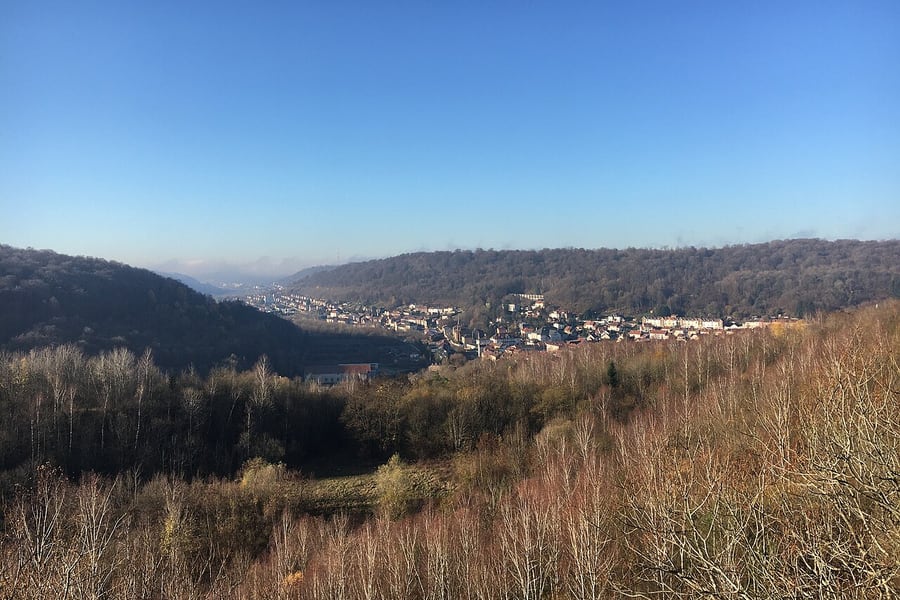 GGir / Wikimedia Commons · CC BY-SA 4.0 · 2020 · cropped
Saulnes, France
Fifteen minutes beyond Lasauvage the train crosses into Meurthe-et-Moselle and stops at Saulnes, a former mining and ironworks town in the valley below. The line follows the route that once carried ore to the steelworks at Longlaville, through the border woods at under 18 km/h. The town has a small museum of photography on its Grand-Rue.Where to Sleep
The Minièresbunn runs only in the afternoon, so most visitors come for the day from Luxembourg City or from Esch-sur-Alzette, combining it with the Train 1900; the Train 1900 page lists two places to stay in Esch.
To sleep at the end of the line, Lasauvage has a self-catering lodge in a converted village house, open and taking bookings in November 2026.
Where to stay
Simpleviu lodge, Lasauvage
A converted historic house in the village
A self-catering lodge for up to seven in four rooms with their own shower rooms, one of them designed for guests with disabilities, a short walk from the mine yard.
Check Availability (opens in a new tab, on simpleviu.com)via simpleviu.comQuestions or corrections
Planning this trip and stuck on something, or spotted a time, fare or detail that has changed? Send us a message about Minièresbunn — Through the Doihl Mine. We read every one, and we update this page when something has changed.