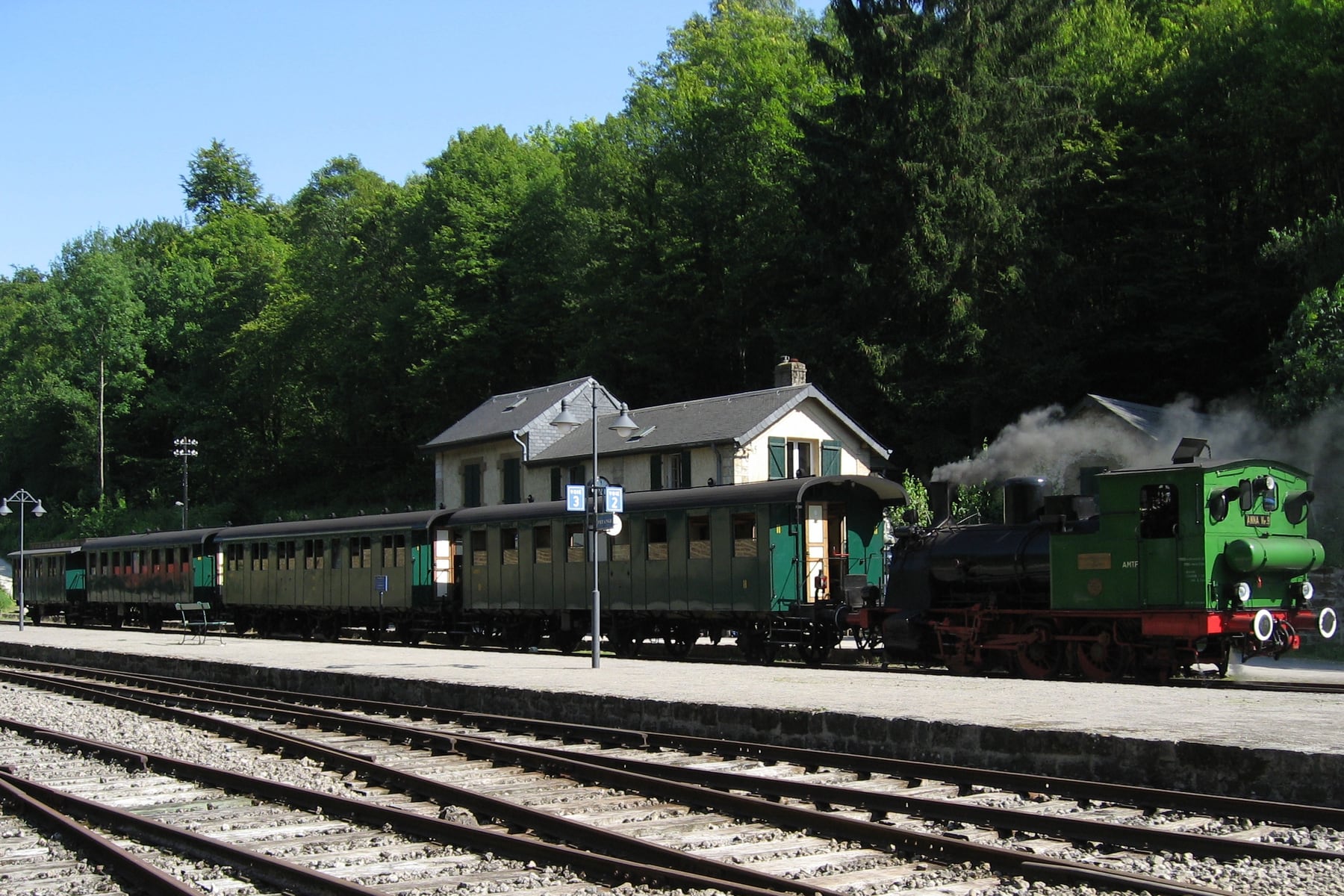
Train 1900 — Pétange to Fond-de-Gras by Steam
Aldebaran / Wikimedia Commons · CC BY-SA 3.0 · 2007 · cropped
- Distance6 km, Pétange to Fond-de-Gras
- DurationAbout 30 min each way; 5 min more to Bois-de-Rodange
- Best seasonSundays and holidays, May to late September · steam and diesel in turn
Introduction
Buses, trams and second-class train seats across Luxembourg have been free since 1 March 2020. On summer Sundays there is one train you still pay for. The Train 1900 leaves its own platform beside the CFL station at Pétange, climbs six kilometres through the woods of the Prënzebierg, and stops in a narrow valley where iron ore was dug for most of a century. Its second-class fare is €13, and it buys an afternoon behind locomotives that worked in the steelworks of Differdange and Esch long before anyone thought of them as museum pieces.
The line was built by the Prince Henri railway company to carry ore, and reached Fond-de-Gras on 20 December 1875. Mining underground there ended in 1955, and a landslide in 1964 stopped the last trains. Volunteers ran their first steam train back up it on 4 August 1973, and the association that runs it still takes its name from its first locomotive, No 8, built by Hanomag in 1900 for the Differdange works.
At the top, Fond-de-Gras is the heart of the Minett Park: a station and engine sheds, a power station, a rolling mill, a grocery and a miners' bistro, preserved in a valley the forest has taken back. Trains run on Sundays and public holidays from May to the end of September, steam and diesel in turn, and every ticket is good for the whole day.
The Journey
The Train 1900 does not start in the CFL station but beside it: a platform of its own on the route de Niederkorn in Pétange, a few minutes' walk from the main line. Pétange was the headquarters of the Prince Henri company, the private railway that built a second network across Luxembourg from 1873, and most of the CFL station and workshop buildings here still date from its time. The Ligne des Minières was one of its lines, laid to reach the ore concessions the state had granted it in the south-west of the country.
Up the Prënzebierg
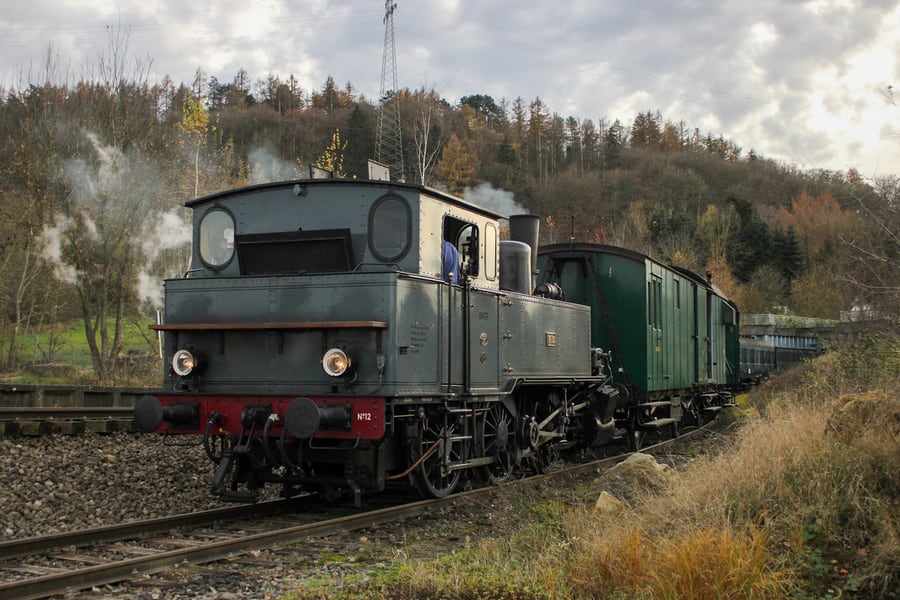
The train leaves on a gradient of 23 per mille — steep for a standard-gauge railway — and climbs along the flank of the Prënzebierg, out of the town and into woodland almost at once. At kilometre 2.4 it stops at Fuussbësch, a halt in the trees with no village attached. This is the stop for the Prënzebierg nature reserve and the Giele Botter, a former opencast mine whose red-brown cliffs of minette ore are now a geological trail. Beyond it the line runs along the hills above Lamadelaine, below the plateau of the Titelberg, where the Treveri had their largest town in the century before the Roman conquest. Six kilometres from Pétange, and about half an hour after leaving it, the train runs into Fond-de-Gras.
Fond-de-Gras and beyond
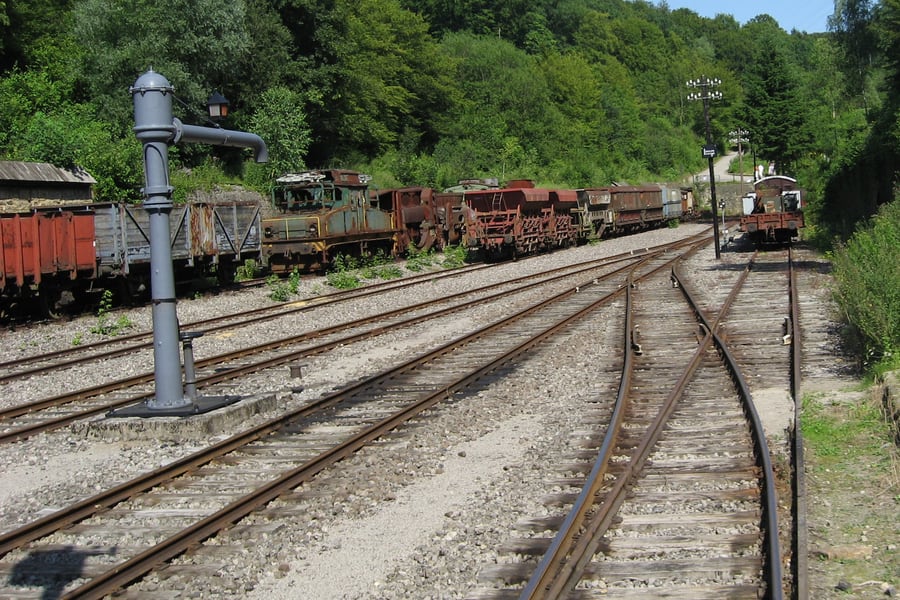
The station sits at the bottom of a wooded valley, with the engine sheds, the association's workshops and a yard of ore wagons around it. The track carries on west for one more stop: a diesel or steam shuttle runs from Fond-de-Gras to Bois-de-Rodange in five minutes, and on some of its return runs calls on request at Doihl, by the old Doihl iron workings. The line originally ran on to the French border, a section opened on 19 April 1879. On some summer days pedal draisines run the same stretch.
Fond-de-Gras is also where the Minièresbunn starts — a separate narrow-gauge mine railway that takes visitors through the old galleries to the village of Lasauvage. It is run by its own association, with its own ticket and its own timetable.
The traction
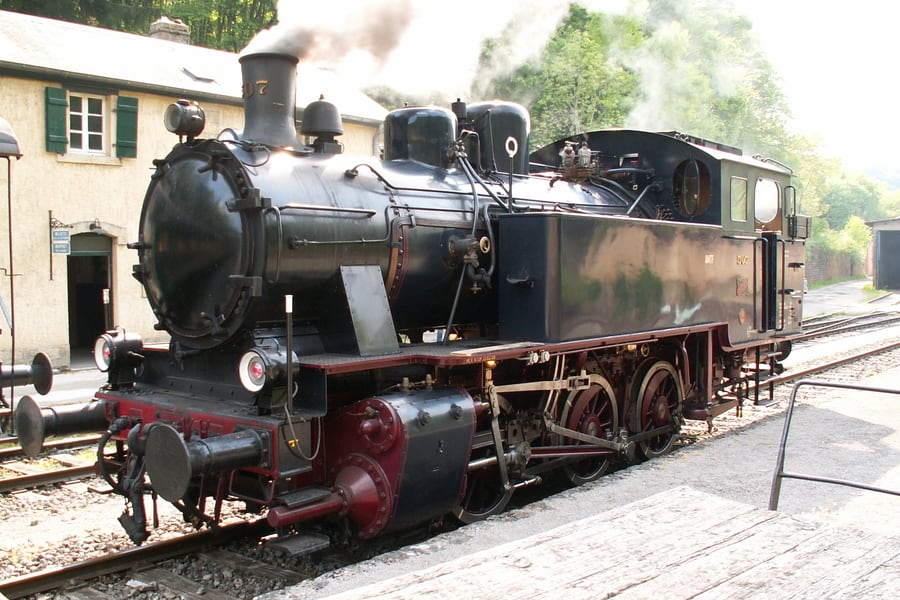
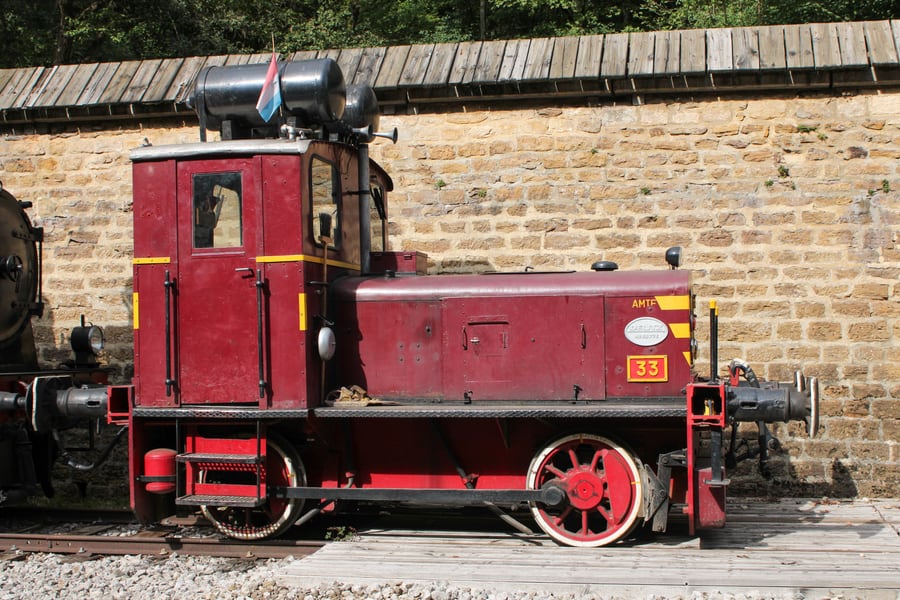
The trains alternate. Steam locomotives work one departure and a diesel the next, and AMTF Train 1900, the volunteer association that runs the line, reserves the right to change which on the day. Most of its steam fleet came from the steelworks the ore line was built to feed. No 12, built by Hanomag in 1903 for ARBED's Differdange works, is a Prussian class T7 and, the association says, the only one of the 464 built that still runs. No 5 was delivered new to ARBED's Esch-Schifflange works by Orenstein & Koppel in 1912 and in 2021 was named after the Hereditary Grand Duchess Stéphanie. The fleet also includes Anna No 9, Energie 507 and a little 1920 Cockerill with a vertical boiler. The coaches are a mixture of the Prince Henri company's own, former CFL stock and Belgian coaches, and the oldest diesel is a 1951 Uerdingen railbus, CFL's Z151, which was the association's first vehicle in 1971.
Along the route
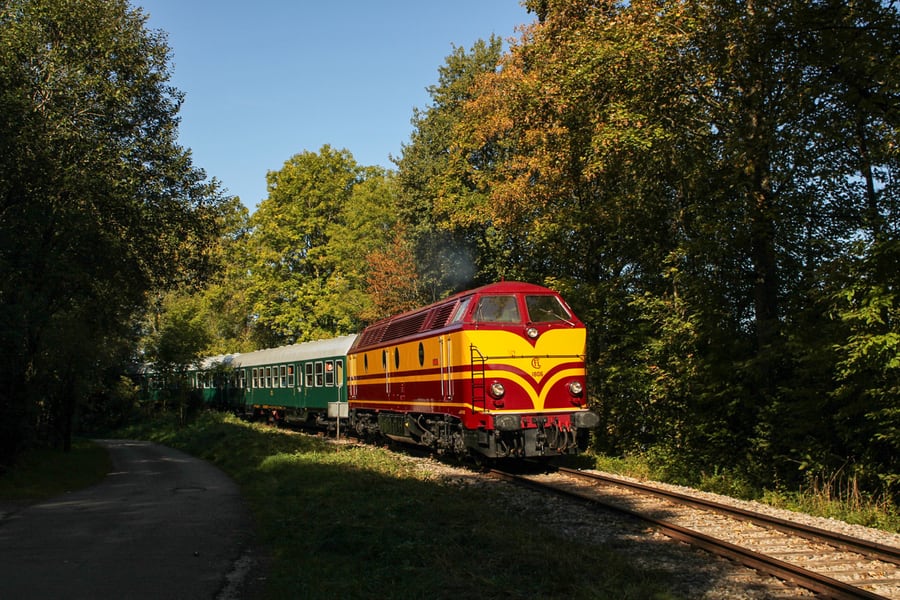 Leonhard Groß / Wikimedia Commons · CC BY-SA 4.0 · 2023 · cropped
Twenty-three per mille
The train leaves Pétange climbing at 23 per mille, steep for a standard-gauge line, and keeps at it along the flank of the Prënzebierg. It was for these grades that the association fitted No 12 with air brakes before returning it to service.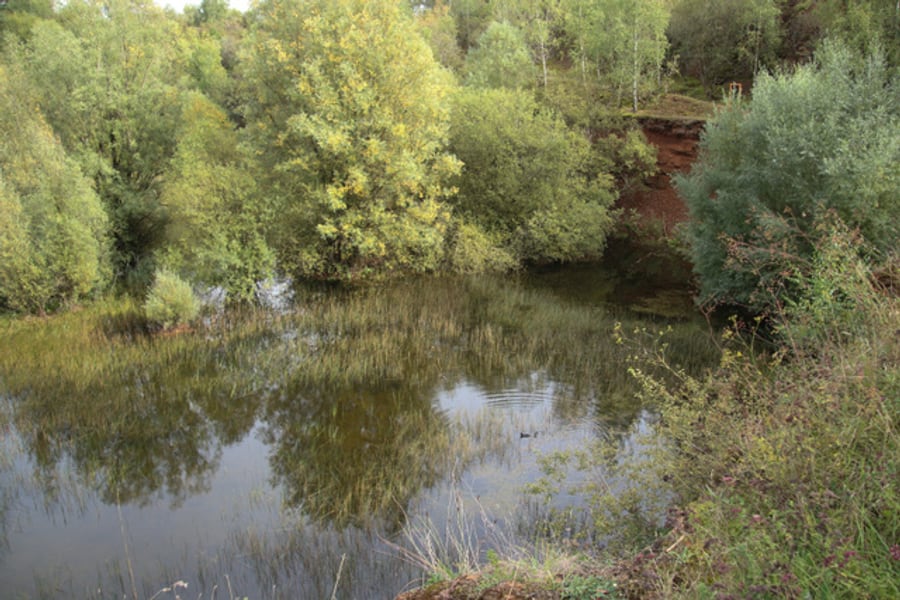 Paul Braun / Wikimedia Commons · CC0 · 2021 · cropped
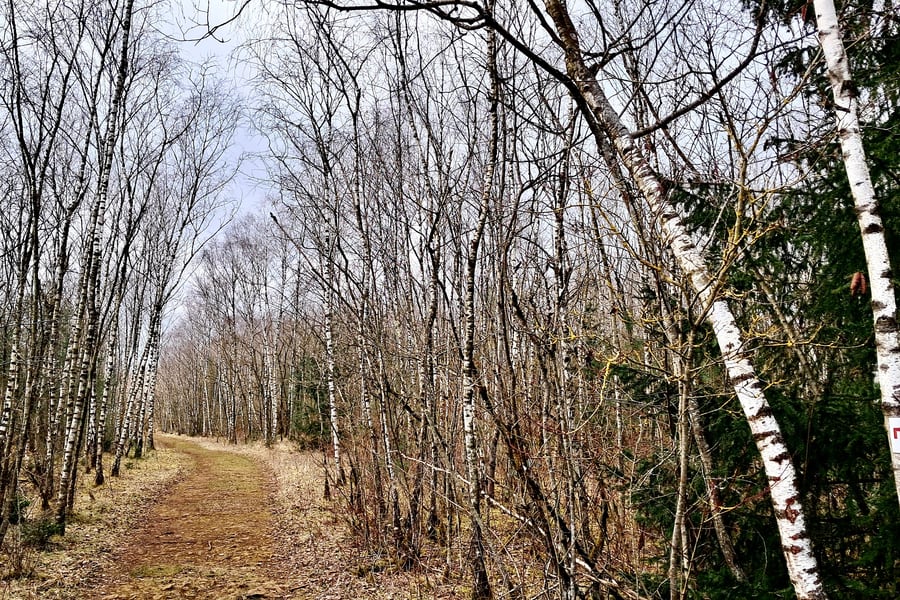
Fuussbësch, a halt in the trees
At kilometre 2.4 the train stops in the woods with no village in sight. This is the stop for the Prënzebierg nature reserve, a former mining landscape now given over to birch woods and ponds, and for the geological trail of the Giele Botter.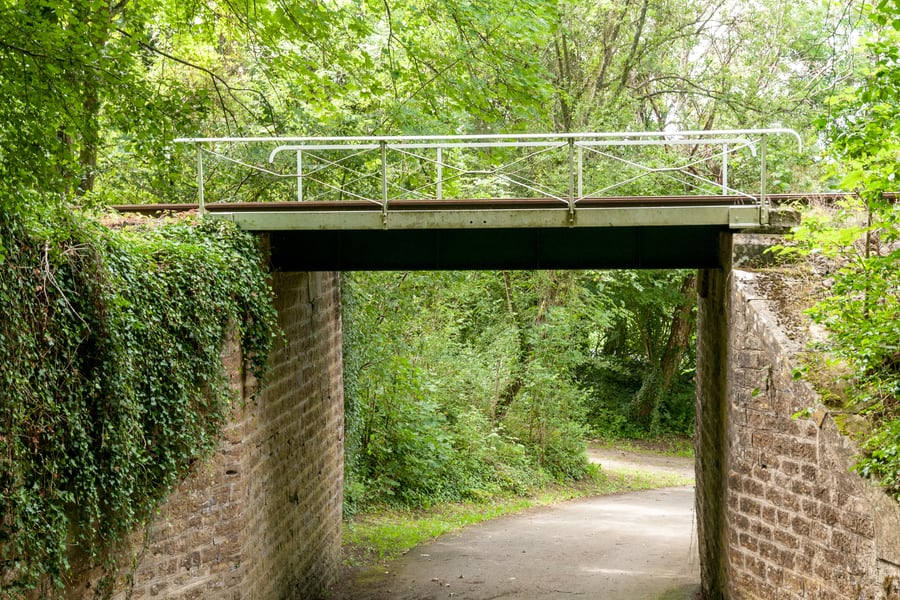 Jwh / Wikimedia Commons · CC BY-SA 3.0 LU · 2017 · cropped
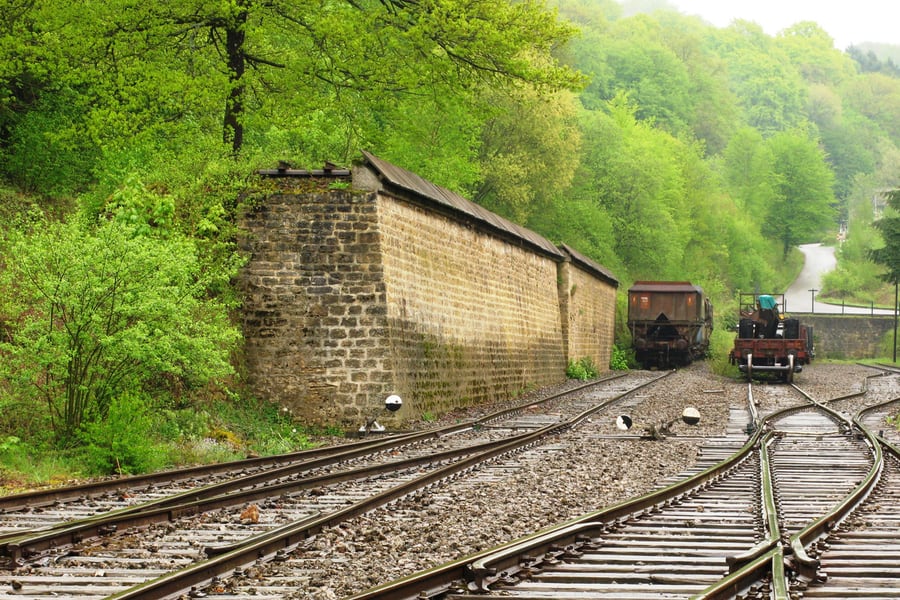
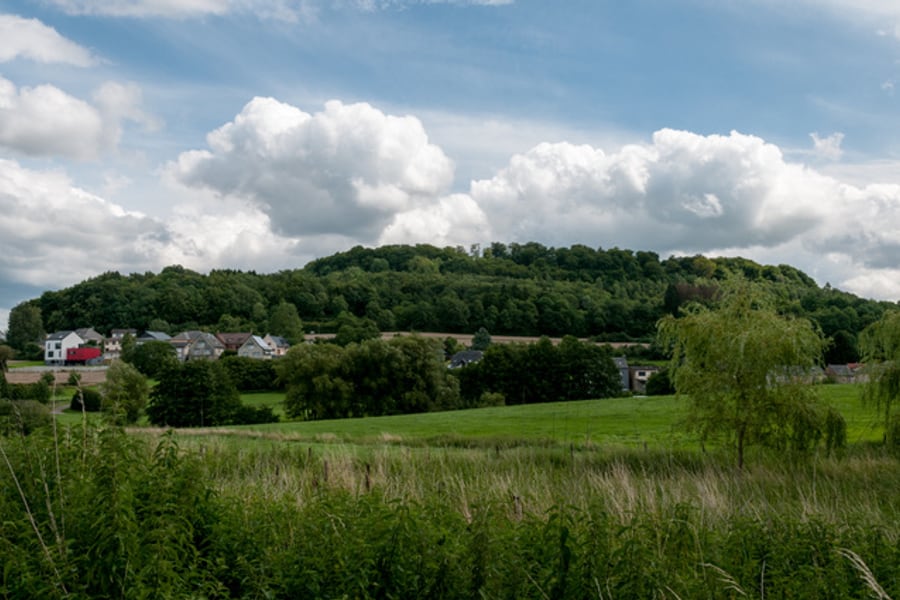
Through the Rodange woods
The line runs through woodland most of the way, and at Rodange it crosses a footpath on a plain girder bridge between stone abutments. Beyond Fond-de-Gras a shuttle carries on for five minutes to Bois-de-Rodange, the last piece of the 1879 extension towards France.A bit of history
Culture & experiences along the way
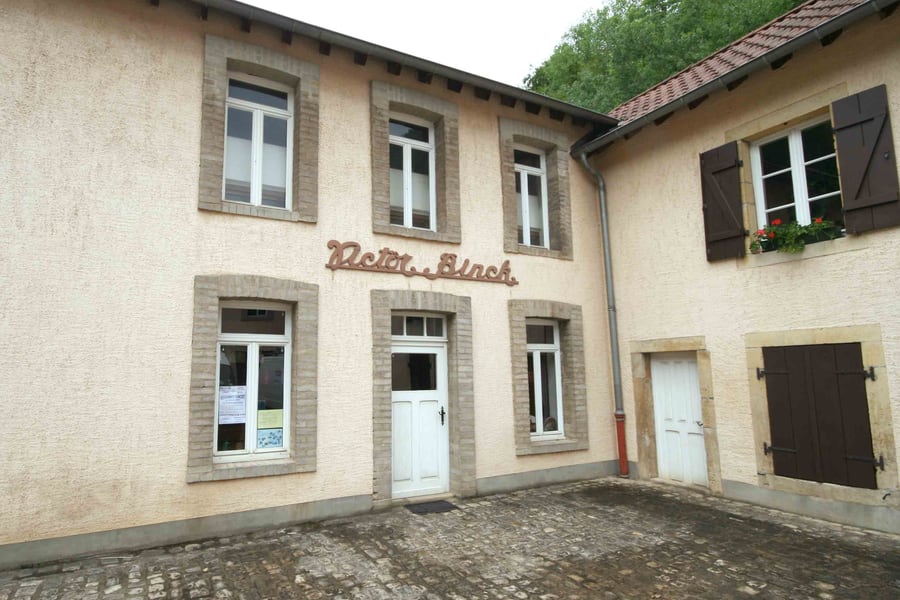 Cornischong / Wikimedia Commons · CC BY-SA 1.0 · 2007 · cropped
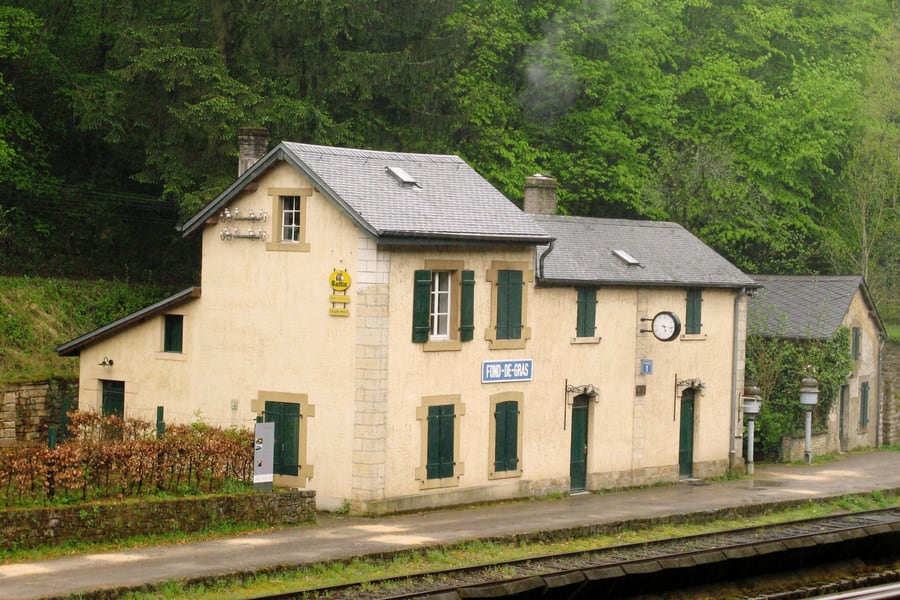
Victor Binck's grocery
Fond-de-Gras was a working hamlet, not just a mine, and the people who lived here needed a shop. Victor Binck's grocery still has his name in painted letters across the front, and with the miners' bistro and an exhibition on life in the valley it is part of what the Minett Park keeps at the end of the line.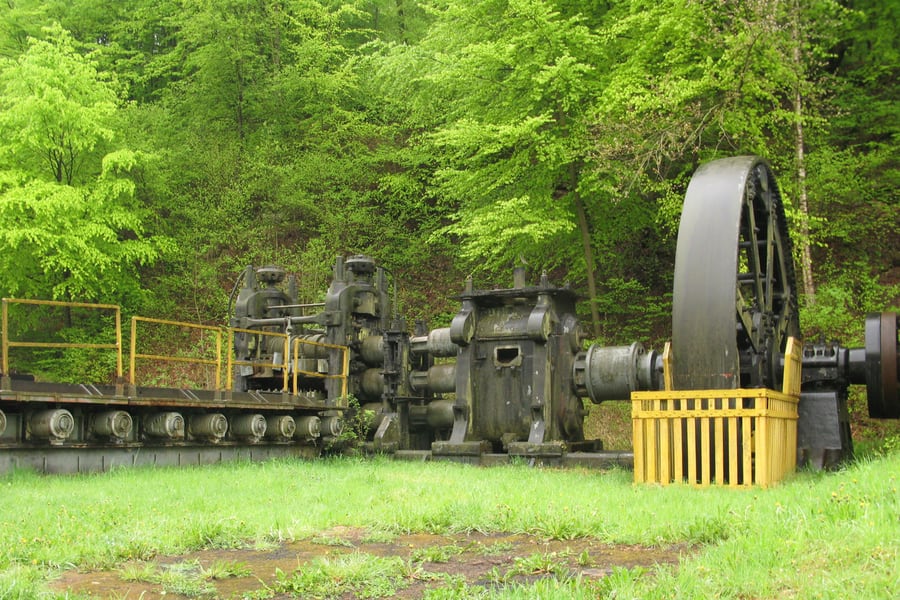 Les Meloures / Wikimedia Commons · CC BY-SA 3.0 LU · 2010 · cropped
A rolling mill in the woods
Ore dug at Fond-de-Gras left as rock and came back to the Minett as steel. The last stage stands at Fond-de-Gras: rolling mill train No 5 from the Esch-Belval works, its great flywheel and roll stands standing among the trees, the machinery that pressed hot steel into rails and beams.Timetables
The Train 1900 runs on Sundays and Luxembourg public holidays from 1 May to the last Sunday of September — in 2026, 1 May to 27 September, with no trains on 9 May or on 23 June, the National Day. Steam and diesel trains alternate through the afternoon, roughly hourly in each direction, and Pétange to Fond-de-Gras takes about half an hour. There is nothing to reserve for fewer than ten people: tickets are sold at the platform.
Times below are from AMTF Train 1900's published 2026 timetable, as of November 2026. The 2027 timetable has not yet been published, so check train1900.lu (opens in a new tab) before travelling.
Pétange to Fond-de-Gras — Sundays and holidays
| Train | Pétange | Fuussbësch | Fond-de-Gras |
|---|---|---|---|
| Diesel | 13:15 | 13:34 | 13:44 |
| Steam | 14:15 | 14:30 | 14:42 |
| Diesel | 15:15 | 15:27 | 15:37 |
| Steam | 16:15 | 16:30 | 16:42 |
| Diesel | 17:15 | 17:27 | 17:37 |
| Steam | 18:15 | 18:33 | 18:45 |
| Diesel | 18:48 | — | 19:06 |
Fond-de-Gras to Pétange — Sundays and holidays
| Train | Fond-de-Gras | Fuussbësch | Pétange |
|---|---|---|---|
| Diesel | 12:45 | 12:59 | 13:09 |
| Steam | 13:20 | 13:34 | 13:45 |
| Diesel | 14:45 | 14:56 | 15:06 |
| Steam | 15:40 | 15:52 | 16:03 |
| Diesel | 16:45 | 16:56 | 17:06 |
| Steam | 17:40 | 17:52 | 18:03 |
| Diesel | 18:20 | 18:33 | 18:43 |
From 19 July to 23 August the Sunday and holiday service starts earlier, with an extra diesel train from Fond-de-Gras at 09:55 (Pétange 10:13) and back from Pétange at 10:30 (Fond-de-Gras 10:48), neither stopping at Fuussbësch.
The shuttle to Bois-de-Rodange
| Train | Fond-de-Gras | Bois-de-Rodange | Doihl (request) | Fond-de-Gras |
|---|---|---|---|---|
| Diesel | 14:20 | 14:25 → 14:30 | — | 14:35 |
| Steam | 15:20 | 15:25 → 15:30 | — | 15:35 |
| Diesel | 16:20 | 16:25 → 16:30 | 16:34 | 16:36 |
| Steam | 17:20 | 17:25 → 17:30 | 17:34 | 17:36 |
| Diesel | 18:00 | 18:05 → 18:10 | 18:14 | 18:16 |
Summer weekday trains and special days
On Thursdays and Saturdays from 23 July to 22 August three diesel trains run each way: Pétange at 10:30, 14:30 and 17:30, arriving at Fond-de-Gras 21 minutes later, and Fond-de-Gras at 10:00, 14:00 and 17:00. The association also runs themed days with their own timetables — in 2026 a diesel open day on 6 September and a steampunk convention on 26 and 27 September — and St Nicholas trains on 21 and 22 November, which sold out. Event timetables are posted on the events page (opens in a new tab).
Getting to Pétange
Pétange is on CFL's line from Luxembourg City to Rodange, and the train there is free. On Sundays direct trains leave Luxembourg at :20 and :50 past the hour and take 22 minutes; trains from Esch-sur-Alzette run through Differdange and take 24. Checked against the national journey planner for a Sunday in November 2026.
Tickets
Tickets are sold on the day at the Train 1900 platform in Pétange and at Fond-de-Gras station; nothing can be booked online, and reservations are taken only for groups of ten or more. A ticket is valid for the whole day, so it covers the return, the shuttle to Bois-de-Rodange and as many breaks in the journey as the timetable allows. Children under five travel free, and dogs ride free in second class.
This is a volunteer heritage railway, not part of Luxembourg's free public transport, and it accepts neither the LuxembourgPass nor any other discount. Themed days are €18 for adults and €13 for children whichever class they sit in. Fares checked November 2026 against train1900.lu (opens in a new tab).
Book your tickets
Second class, all day
Children 5 to 11, €11
A day ticket for adults, good for the return, the Bois-de-Rodange shuttle and any stops on the way.
Book Tickets (opens in a new tab, on train1900.lu)via train1900.luFirst class, all day
Children 5 to 11, €13
The same day ticket in the first-class compartments of the vintage coaches.
Book Tickets (opens in a new tab, on train1900.lu)via train1900.luGroups of ten or more
Second class, booked ahead
Groups of at least ten can reserve second-class seats with 10 per cent off, except on themed days.
Book Tickets (opens in a new tab, on train1900.lu)via train1900.luRail Passes
No rail pass covers the Train 1900, and none is needed to reach it. The heritage train is run by a volunteer association that sells its own tickets at Pétange and Fond-de-Gras, and it says plainly that it accepts neither the LuxembourgPass nor any other reduction. An Interrail or Eurail pass is no help at the platform.
The CFL train that brings you to Pétange is free already: buses, trams and second-class train travel inside Luxembourg have been free since 1 March 2020, for tourists as much as residents. A pass cannot make that cheaper. If Luxembourg is one stop on a longer European trip, carry whatever pass the rest of the trip needs; for this journey, the only ticket worth buying is the €13 one at the platform. Checked November 2026 against train1900.lu (opens in a new tab) and the Ministry of Mobility (opens in a new tab).
Places to Visit
Everything below belongs to the Minett Park, the open-air museum that has grown up around the line since 1985, and all of it is reachable on foot from a Train 1900 stop. A day ticket lets you get off at Fuussbësch for the nature reserve, ride on to Fond-de-Gras, and catch a later train back. The Titelberg is the longest walk, up through the woods from Fond-de-Gras to the plateau.
 Les Meloures / Wikimedia Commons · CC BY-SA 3.0 LU · 2010 · cropped
Fond-de-Gras
For most of a century this valley was one of Luxembourg's most important mining centres; underground extraction ended in 1955. What is left is the core of the Minett Park: the station and engine sheds, the association's hall of restored rolling stock, a power station, a rolling mill, an old grocery and a miners' bistro, all on the supplementary inventory of national monuments. The Minièresbunn mine train leaves from here.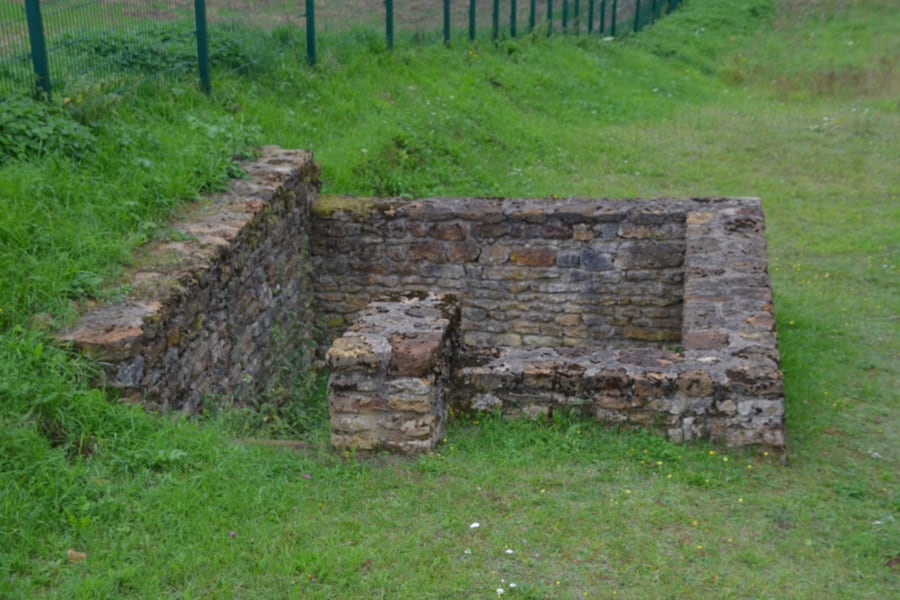 Livius.org / Wikimedia Commons · CC0 · 2017 · cropped
The Titelberg
On the plateau above Fond-de-Gras, about 390 metres up and ringed by steep wooded slopes, the Treveri built their largest town. Covering some 50 hectares inside nine-metre earthen ramparts, it was occupied for around 700 years from about 300 BCE and was probably the tribe's capital in the century before the Roman conquest. Excavation began in earnest in 1968; the masonry foundations visible today date from its last centuries, from the first century BCE into the Roman period.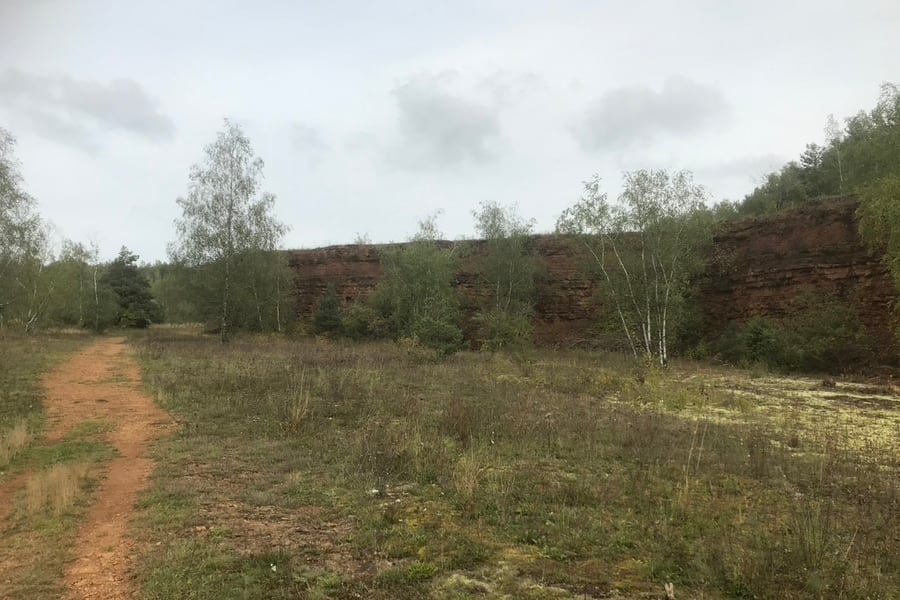 Andrawaag / Wikimedia Commons · CC BY-SA 3.0 · cropped
The Giele Botter and the Prënzebierg
The ore came out of these hills, and the Giele Botter was an opencast mine. Today the workings and the slopes around them make up some 100 hectares of nature reserve, with birch and pine growing back across the old floors and the red faces of the iron-bearing rock left bare. Both marked trails, a discovery trail through the reserve and a geological trail, are named after the Giele Botter, and the Fuussbësch halt is the way in.Where to Sleep
Pétange is a small town and the train runs only in the afternoon, so most visitors come for the day. Luxembourg City is 22 minutes away by a free CFL train, and anyone already staying there needs nothing more. For a bed in the Minett itself, Esch-sur-Alzette, the second city of the country and the capital of the iron country, is 24 minutes from Pétange by train through Differdange.
Both places below are a short walk from Esch-sur-Alzette station, and both were open and taking bookings in November 2026.
Where to stay
Hôtel Acacia
In the centre of Esch-sur-Alzette
A Logis hotel of 21 rooms and suites in the middle of Esch, about five minutes' walk from the station and close to the country's longest pedestrian street.
Check Availability (opens in a new tab, on hotel-acacia.lu)via hotel-acacia.luYouth Hostel Esch-sur-Alzette
Beside Esch-sur-Alzette station
A hostel of 122 beds in 26 rooms a few steps from the station, with its own restaurant, terraces on three floors and beehives on the roof.
Check Availability (opens in a new tab, on youthhostels.lu)via youthhostels.luQuestions or corrections
Planning this trip and stuck on something, or spotted a time, fare or detail that has changed? Send us a message about Train 1900 — Pétange to Fond-de-Gras by Steam. We read every one, and we update this page when something has changed.