Oran to Béchar
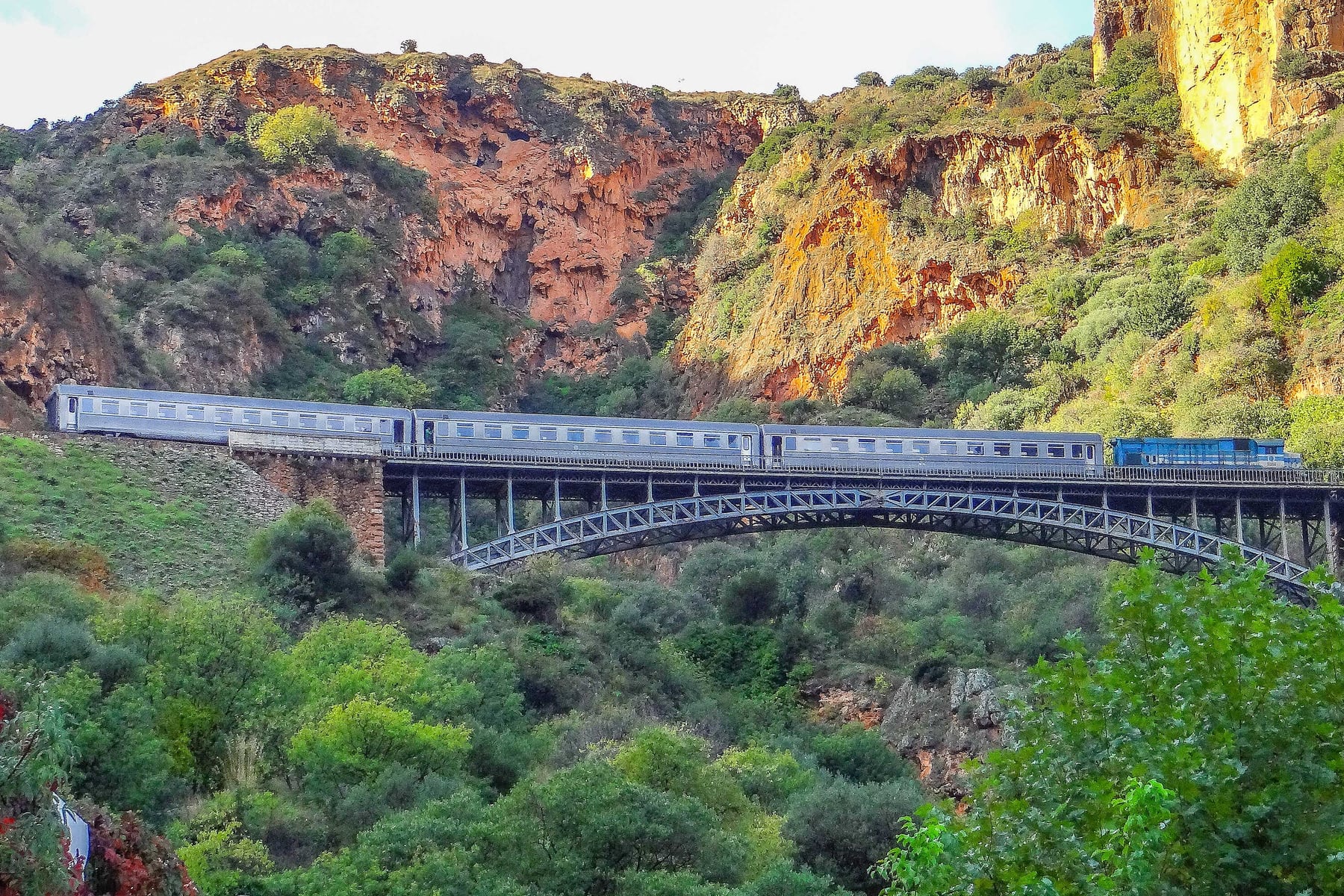
Réda JUNIOR / Wikimedia Commons · CC BY 2.0 · 2018 · cropped
- DistanceAbout 675 km, Oran to Béchar
- Duration9 h 40 southbound, 10 h 10 northbound, overnight
- Best seasonMay to August, when first light reaches the southbound train in the Monts des Ksour · the train runs all year
Introduction
Algeria's railway into the western Sahara leaves the main line at Oued Tlelat, just south-east of Oran, and runs 650 kilometres to Béchar. It crosses all three of the country's north-western relief belts in turn: the Tell Atlas behind the coast, the High Plateaus above 1,000 metres, and the Saharan Atlas, where it reaches its summit at 1,314 metres before dropping to the desert of the Saoura.
The line is old and new at once. Its two ends were built between 1877 and 1906, the southern half as a narrow-gauge line to Colomb-Béchar; the whole route was rebuilt to standard gauge and joined by 115 kilometres of new track, and reopened as one line in July 2010.
One passenger train works it: SNTF's night express, with seats in both classes and couchettes, every night of the year in each direction. It leaves Oran at 22:30 and is in Béchar at 08:10. Most of the climb passes in the dark, but the morning comes up over the oases of the Monts des Ksour, and the train delivers you to the edge of the Sahara in time for breakfast.
The Journey
The train leaves Oran heading east along the main line to Algiers and turns off it at Oued Tlelat, seventeen minutes out. From there it climbs the Tell Atlas up the valley of the Oued Tlelat and over the col of Ouled Ali, at about 500 metres, into the plain of Sidi Bel Abbès, reached at 23:35. This first section, opened in 1877, was the start of a line towards Tlemcen; at Tabia the Tlemcen branch leaves to the west, and the Béchar line goes on south up the Mekerra.
The High Plateaus
The Mekerra brings the railway to Ras El Ma at 1,094 metres and to Redjem Demouche, the old Crampel, at 1,139, the top of the Tell. Here the line turns south-east onto the High Plateaus, and for 115 kilometres to El Biod it runs on track laid in 2010 to join the two old railways, with no station in service along it. It is the fastest part of the journey. At El Biod the line picks up the old narrow-gauge route south and calls at Mécheria at 03:00 and Naâma at 03:42.
The Saharan Atlas
Beyond Mécheria the climb begins again, into the Monts des Ksour, the western end of the Saharan Atlas. The summit, 1,314 metres, is at the old station of Mékalis; from there the line descends through the Faïdjet el Betoum, the pass of the terebinths, between the Djebel Morhad and the Djebel Aïssa, and reaches Aïn Sefra at 04:49. It skirts the mountains east of the town to Moghrar, at 05:33, and leaves the Atlas for good at Béni Ounif, on the Moroccan border, at 06:50.
Into the Saoura
The last stretch runs across open desert with no relief to speak of to Béchar, at 783 metres, reached at 08:10. In midsummer the sun rises over the train in the Monts des Ksour; in winter it is light for the final hour. The railway first reached Colomb-Béchar, as it was then, in April 1906, and passenger trains stopped running in the 1980s; they came back with the rebuilt line in 2010.
The train
The service is a rapide de nuit, a loco-hauled night express of first- and second-class seats and couchettes, which SNTF describes as having cabins as well. SNTF does not say which locomotives work it. The photograph at the top of this page is not this line: it shows the same kind of train, a 060-DM diesel and three stainless-steel coaches, on the El Ourit viaduct on the Tlemcen line, which leaves this one at Tabia. No freely licensed photograph of a train on the Béchar line today exists.
Along the route
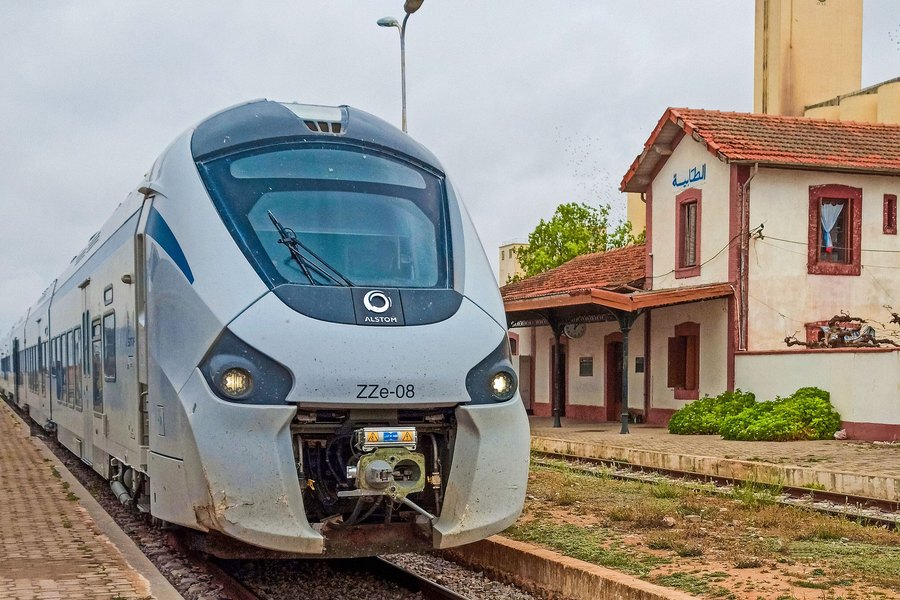
 Sandervalya / Wikimedia Commons · CC BY-SA 3.0 · 2012 · cropped
Up the Mekerra
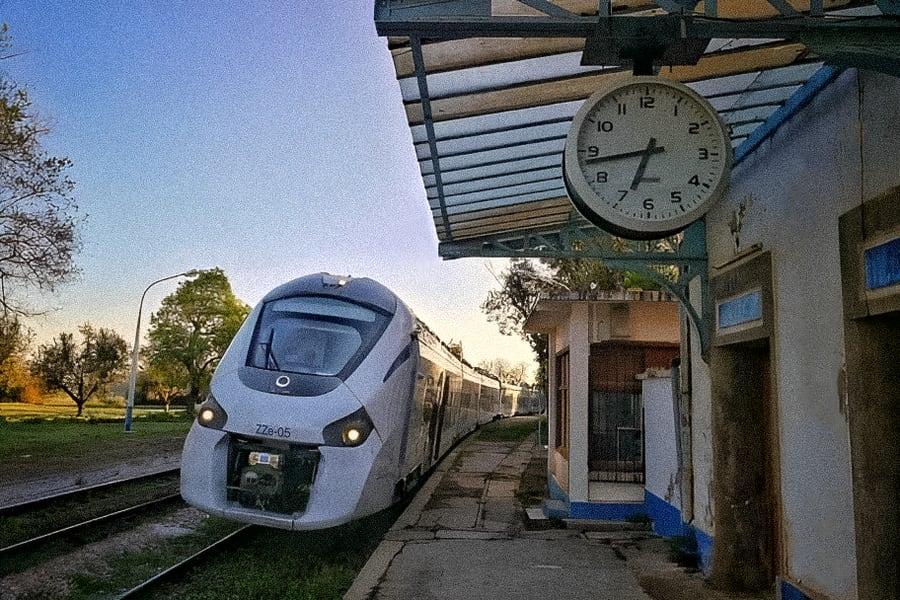
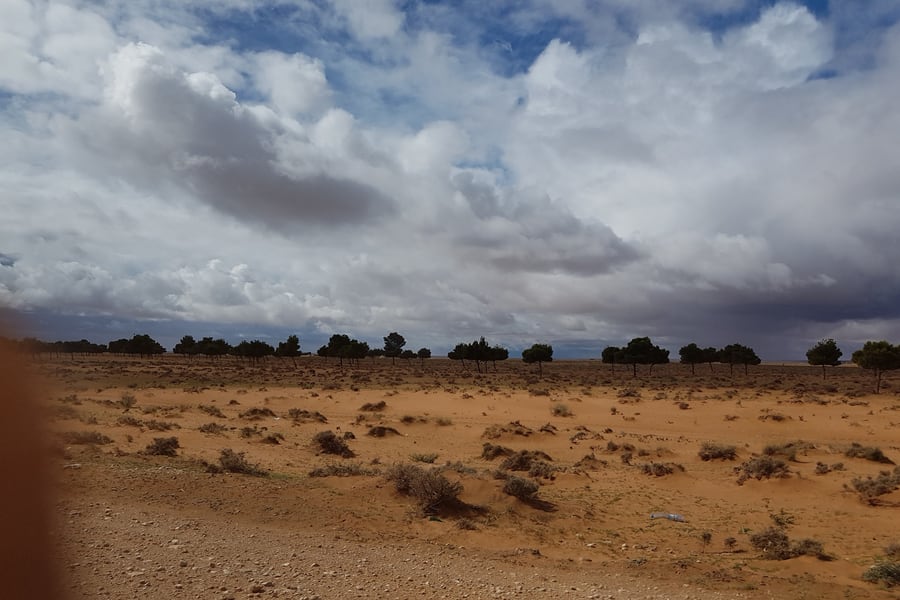
From Oued Tlelat the line climbs the Tell Atlas over the col of Ouled Ali at about 500 metres, then follows the Mekerra for a hundred kilometres past Sidi Bel Abbès to Ras El Ma, at 1,094 metres. Southbound, it is already dark.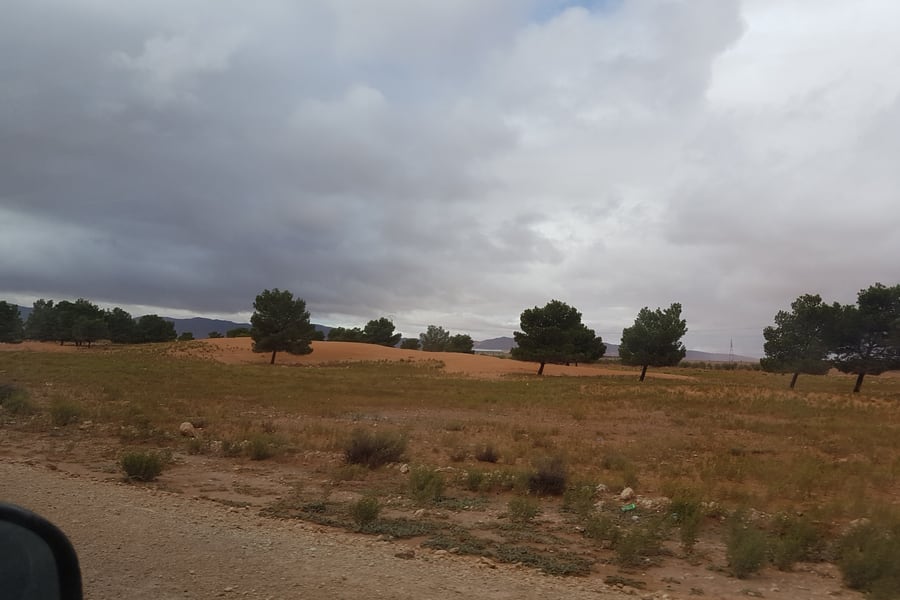 bachounda / Wikimedia Commons · CC BY-SA 4.0 · 2018 · cropped
115 kilometres without a station
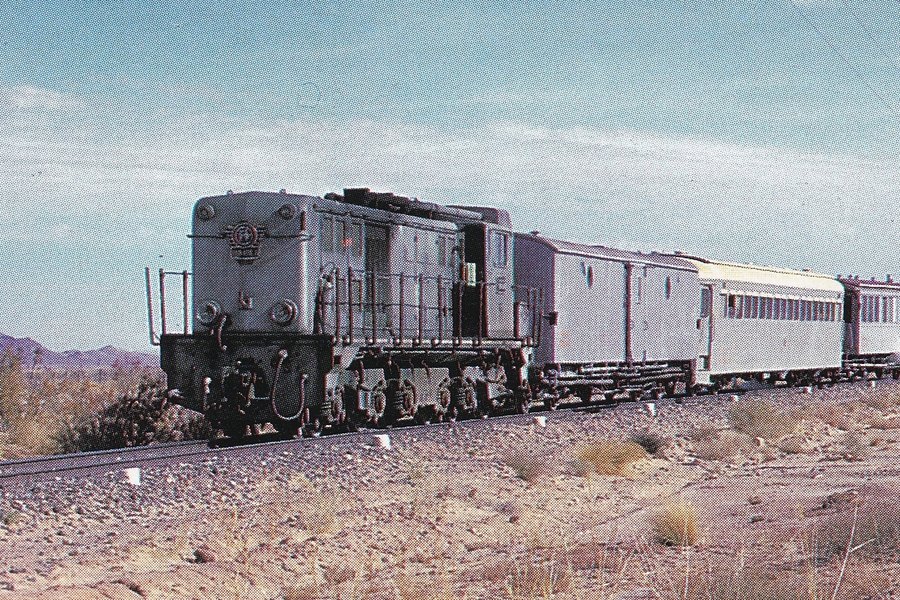
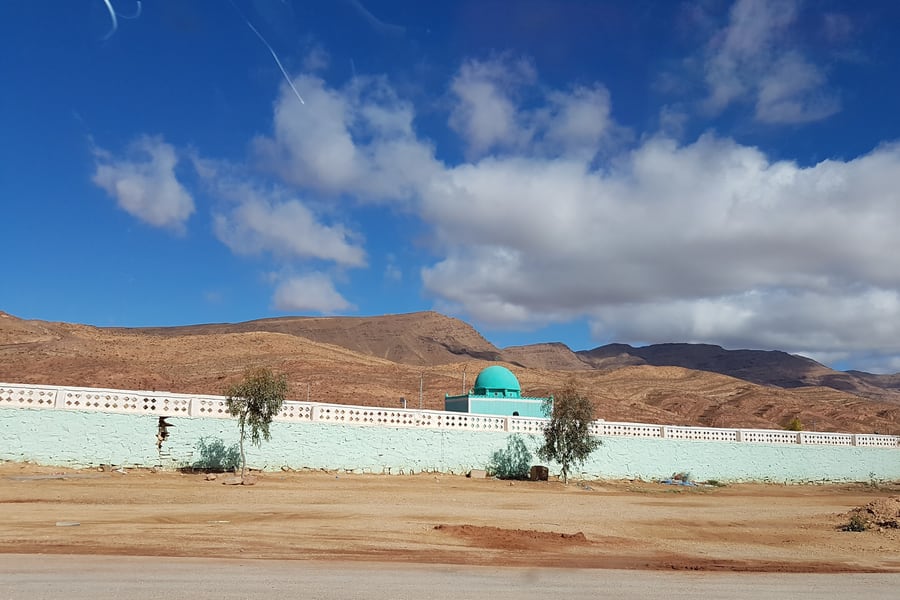
Between Redjem Demouche and El Biod the railway is new, built in 2010 to join two old lines across the High Plateaus, and there is no station in service on it. It is the fastest part of the route, at 90 to 100 km/h.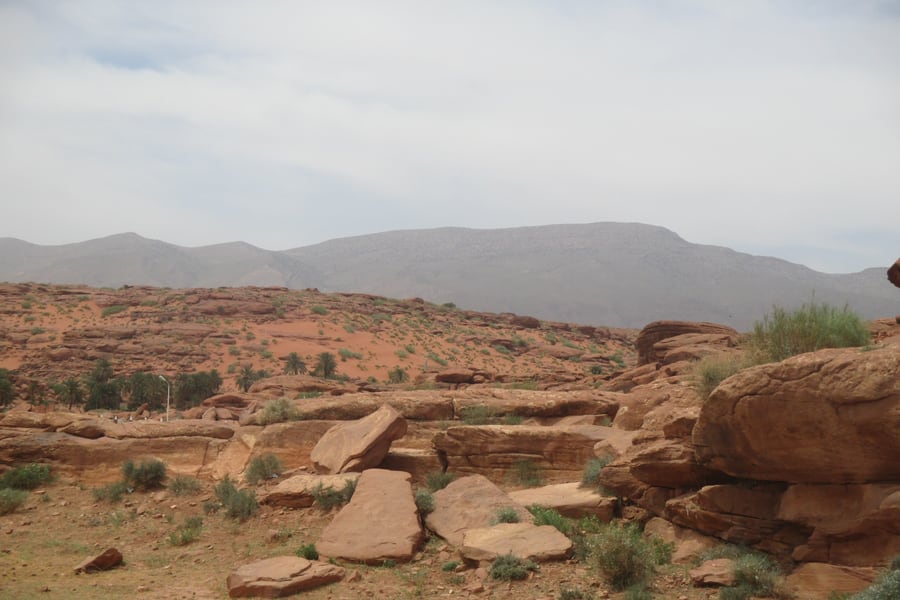 oulad ali abdelrazak / Wikimedia Commons · CC BY-SA 3.0 · 2015 · cropped
Over the Monts des Ksour
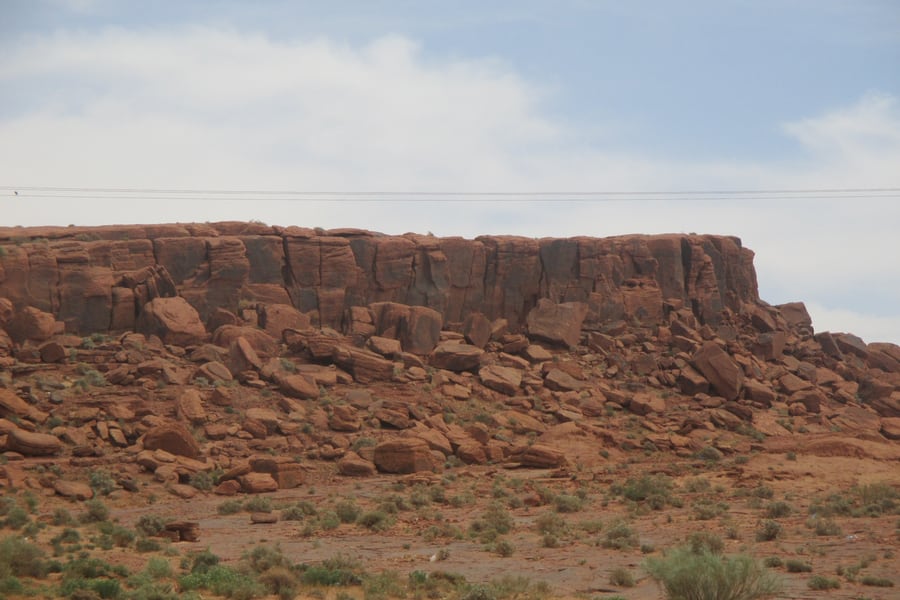
Past Mécheria the line climbs into the Saharan Atlas to its summit, 1,314 metres at the old Mékalis station, then drops through the Faïdjet el Betoum, the pass of the terebinths, between the Djebel Morhad and the Djebel Aïssa to Aïn Sefra.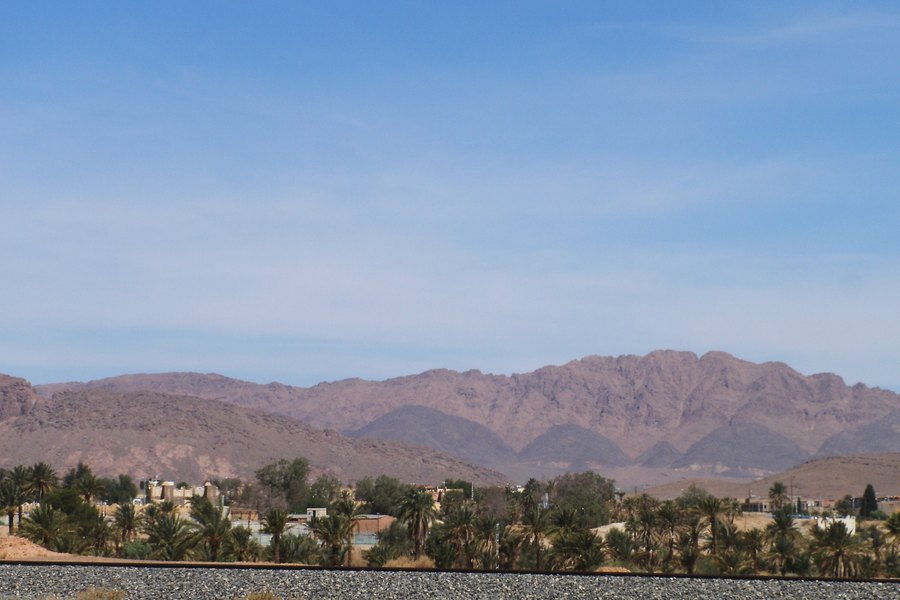 Yelles / Wikimedia Commons · CC BY-SA 3.0 · 2016 · cropped
Béni Ounif
At Béni Ounif, beside the Moroccan border and the palms of Figuig, the line leaves the mountains for the open desert of the Saoura. The train is here at 06:50, and on a summer morning the light is already up.A bit of history
Culture & experiences along the way
 Aminouartistou / Wikimedia Commons · CC BY 3.0 · 2018 · cropped
The rock engravings of Tiout
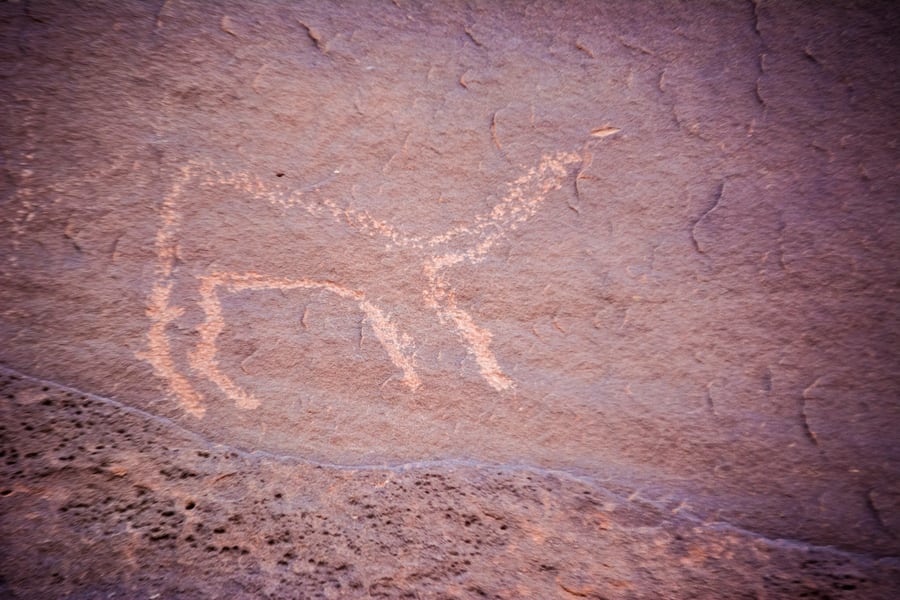
The sandstone around Tiout, ten kilometres east of Aïn Sefra, carries more than 54 prehistoric engravings, and Tiout's were the first in the world to be reported as prehistoric work, in 1847: cattle, lions, wild horses, and on the Smail Laouedj mountain an ostrich, pecked into the rock thousands of years ago.Timetables
One night train runs in each direction, every day of the year.
Oran to Béchar — train B280/281, daily
| Oran | Oued Tlelat | Sidi Bel Abbès | Mécheria | Naâma | Aïn Sefra | Moghrar | Béni Ounif | Béchar |
|---|---|---|---|---|---|---|---|---|
| 22:30 | 22:47 | 23:35 | 03:00 | 03:42 | 04:49 | 05:33 | 06:50 | 08:10 |
Béchar to Oran — train B282, daily: leaves Béchar at 22:00, arrives in Oran at 08:10.
The southbound train takes 9 h 40 and the northbound 10 h 10. The times have moved more than once in the last two years — the train left Oran at 21:00 in late 2024 and at 20:30 a year later — so confirm the hour when you buy.
As of November 2026, from SNTF's own timetable search. SNTF's site is sntf.dz (opens in a new tab); it could not be opened from outside Algeria while this page was written, and these times were read from its search engine through a third-party front end. Check them at the station before travelling.
Tickets
Fares are set by SNTF and quoted in Algerian dinars. Oran to Béchar costs 1,370 in first class and 975 in second for a seat. A couchette costs extra, and SNTF's timetable search does not show the supplement, so ask at the counter.
Buy at the station. SNTF takes reservations online for its main-line trains, but payment there is by Algerian CIB bank card, so for a visitor the counter at Oran is the practical way to buy — a day ahead if you want a couchette, since this is the only train on the line.
Book your tickets
First class
Oran to Béchar · 1,370 dinars
A seat in first class on the night train, before any couchette supplement.
via sntf.dzSecond class
Oran to Béchar · 975 dinars
A seat in second class for the same night across the Saharan Atlas.
via sntf.dzRail Passes
No rail pass covers Algeria. Interrail's One Country Passes stop at Türkiye and the European shore of the Mediterranean, no North African railway is in the network, and SNTF has no pass of its own for visitors, so every journey is an ordinary ticket.
Nothing is lost by that. First class from Oran to Béchar is 1,370 dinars for some 675 kilometres, and no pass could pay for itself.
As of November 2026, from Interrail's own list of One Country Passes.
Places to Visit
The train passes the oases of the Monts des Ksour before dawn, so they are places to come back to by road, or to reach by getting off at Aïn Sefra and taking the next night's train on. Aïn Sefra is the base for all three. They are listed from north to south, in the order the train meets them.
 Mus52 / Wikimedia Commons · CC BY-SA 4.0 · 2016 · cropped
Sidi Bel Abbès
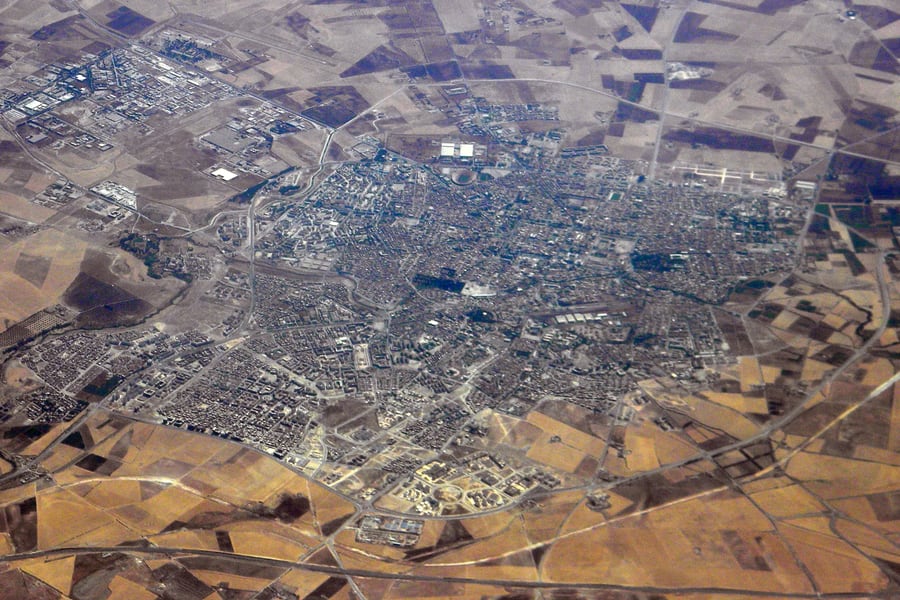
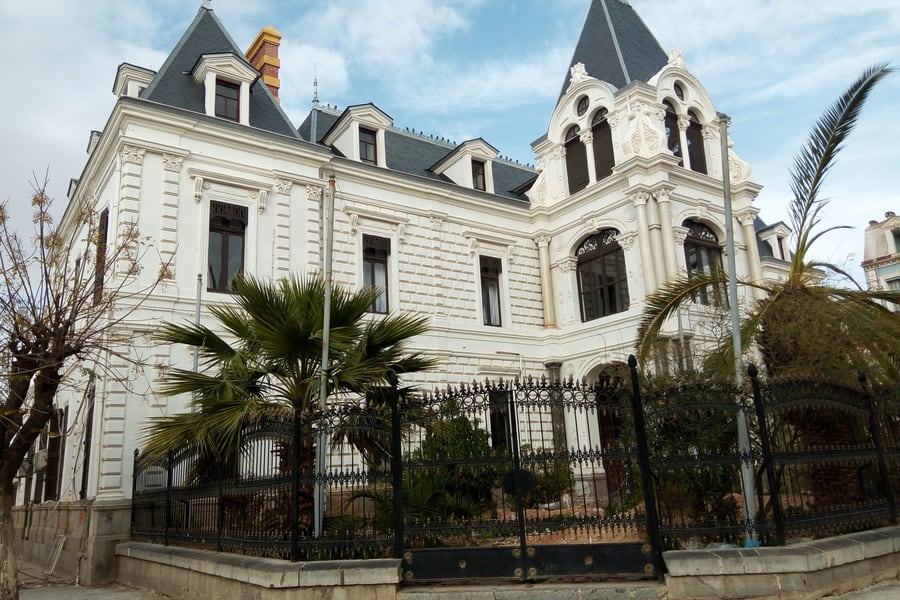
Sidi Bel Abbès grew from a redoubt the French army built in 1843 beside the Mekerra, facing the tomb of the saint it is named after, and became a town by decree on 5 January 1849. It was the home of the Foreign Legion until 1962, and it is laid out on the engineers' chequerboard plan, in a plain about 500 metres up between the Tessala and Daya mountains.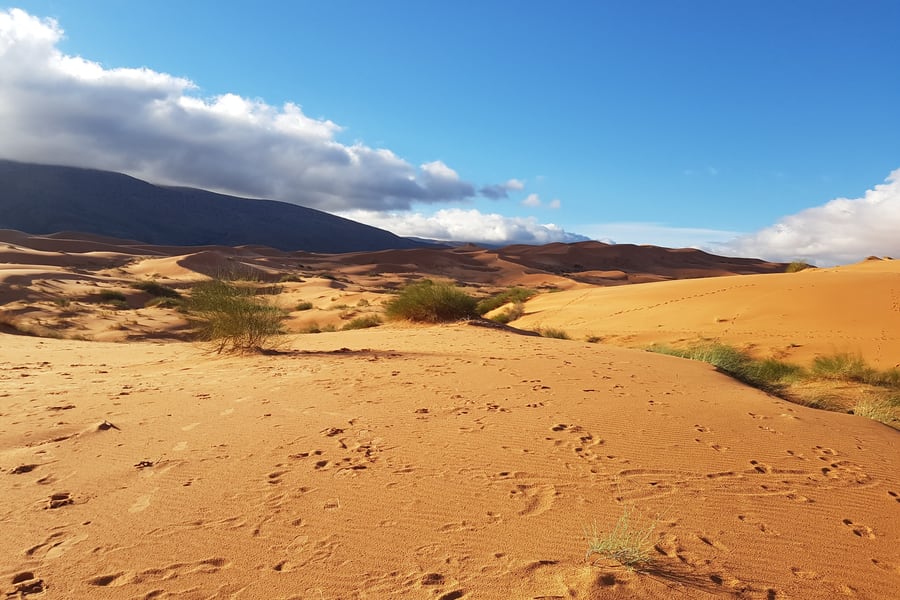 bachounda / Wikimedia Commons · CC BY-SA 4.0 · 2018 · cropped
Aïn Sefra and its dune
Aïn Sefra, "the yellow spring", is an oasis town in the Monts des Ksour at the foot of the Djebel Mekter and of a high dune. The ksar grew around the tomb of Sidi Boudkhil, who died in 1563; the railway arrived in 1887. The writer Isabelle Eberhardt drowned here in a flash flood on 21 October 1904 and is buried in the town.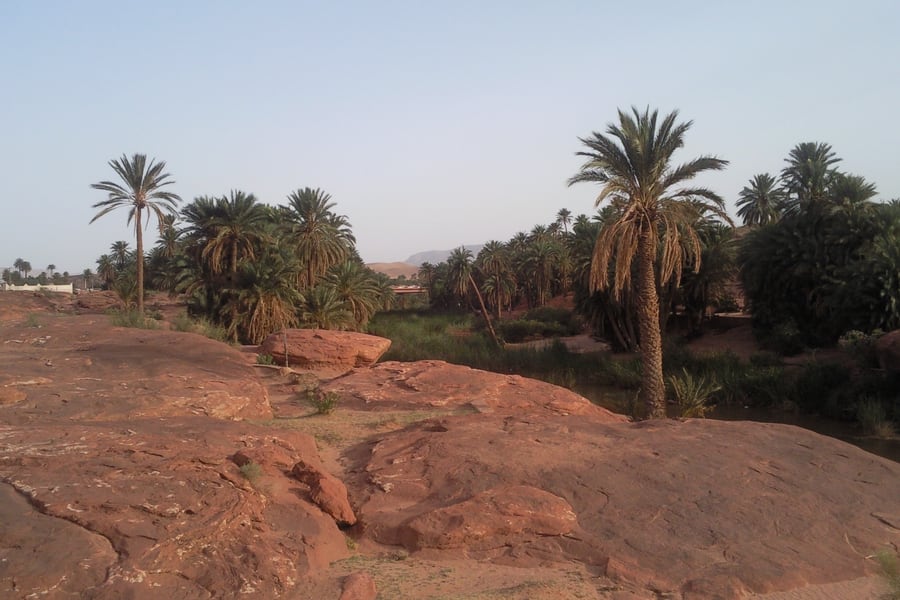 العيد الجزائري / Wikimedia Commons · CC BY-SA 3.0 · 2014 · cropped
Tiout
Ten kilometres east of Aïn Sefra, Tiout is a palm oasis of 220 hectares growing 71 kinds of date, around a ksar about nine centuries old built of stone from the Djebel Aïssa, palm wood and clay. Its mosque has no minaret, and its three gates include Bab Hlel, from which the new moon was watched to announce the month.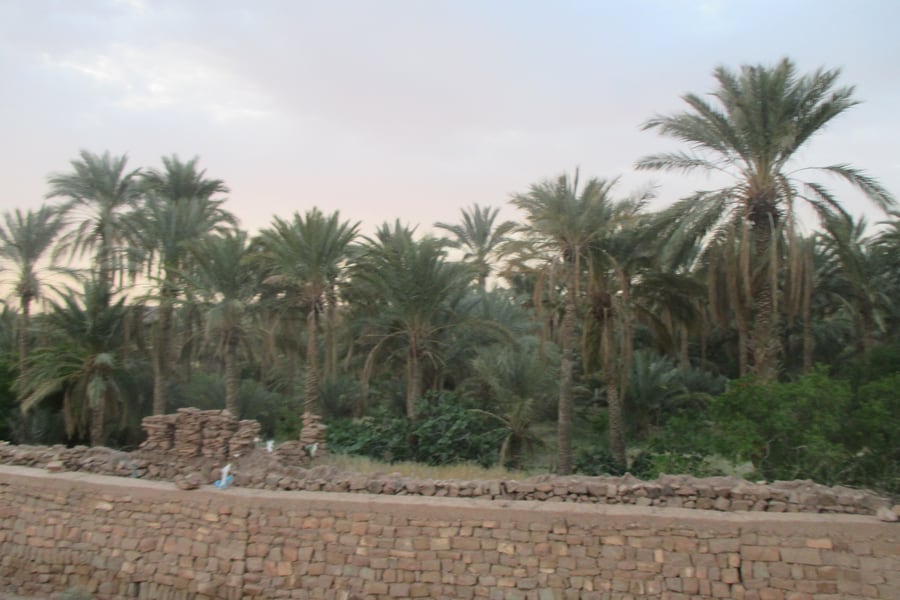 oulad ali abdelrazak / Wikimedia Commons · CC BY-SA 3.0 · 2015 · cropped
Moghrar
Moghrar is two oases in the Monts des Ksour, Moghrar Foukani on the main road and Moghrar Tahtani fifteen kilometres north-east, watered by some sixty wells and two working foggaras. Its palms keep the Feggous and Aghrass dates that have nearly vanished elsewhere, and its ksar was the stronghold of Cheikh Bouamama, who led the resistance of the 1880s.Where to Sleep
The train is the bed: seats in both classes and couchettes, ten hours, every night. Book the couchette at the counter in Oran or Béchar.
At the far end, Béchar is a provincial capital with hotels, but none of them sells rooms through a website of its own; the booking sites list a few. For a night in Oran before or after the train, see the hotels on the Algiers to Oran page.
Practical information
Going on to Tindouf. The Béchar to Tindouf train is a night train too: it leaves Béchar at 19:00, Sunday to Thursday, and reaches Tindouf at 06:20. Arriving from Oran at 08:10 gives you the day in Béchar before it.
Break the journey. A single ticket for 200 kilometres or more stays valid for five days if you have it annotated at the station where you stop, so a day at Aïn Sefra need not cost a second fare. Confirm it at the counter when you buy.
Sand can close the line. In 2022 sandstorms buried the track around Redjem Demouche, Naâma and Mécheria, and there were no trains for more than three months. Check that the train is running before you travel, particularly after a windy spring.
Allow for delays. The timetable is a plan rather than a promise on a long single-track line. Do not build a tight onward connection on an arrival time.
Questions or corrections
Planning this trip and stuck on something, or spotted a time, fare or detail that has changed? Send us a message about Oran to Béchar. We read every one, and we update this page when something has changed.