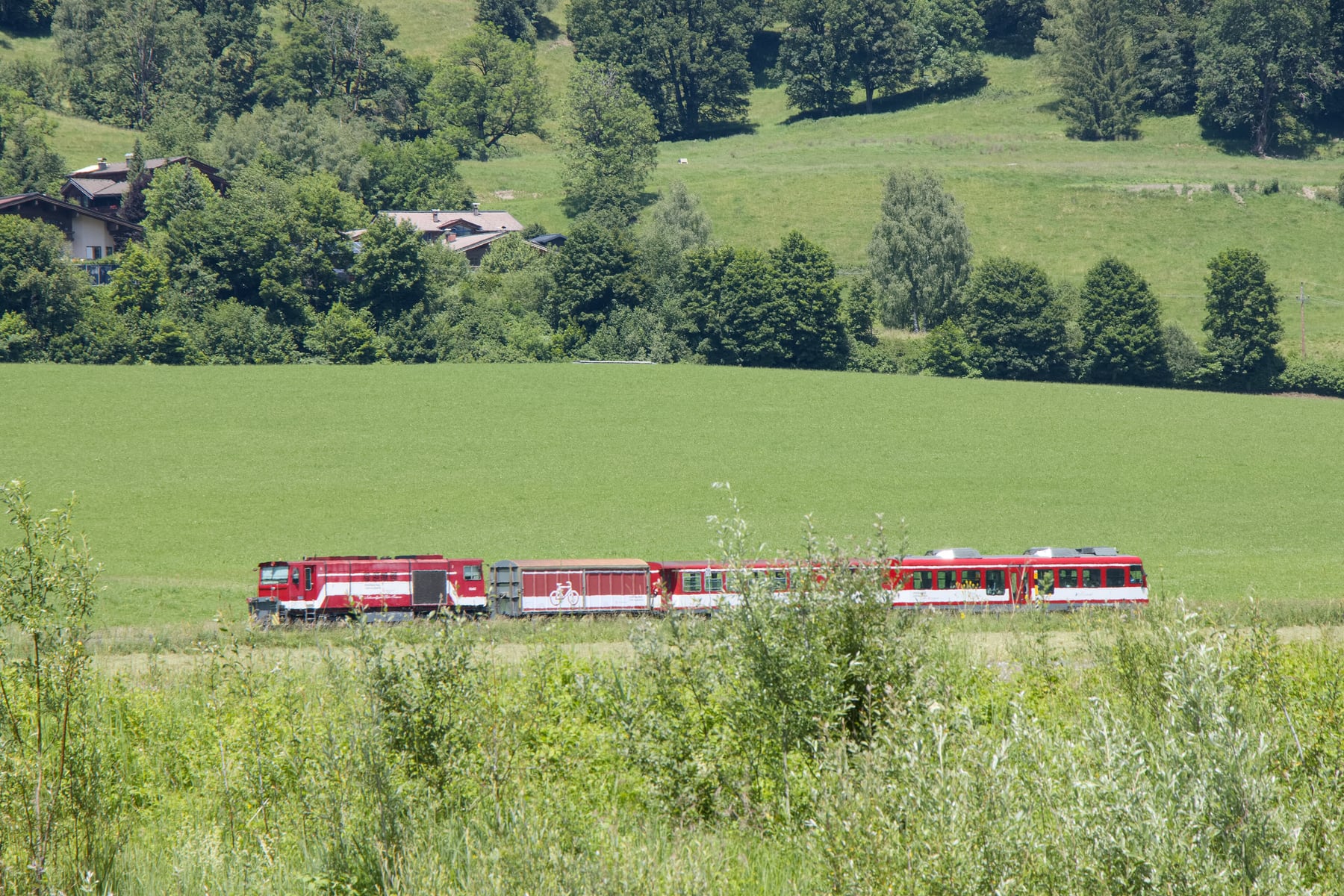
Pinzgauer Lokalbahn
Eweht / Wikimedia Commons · CC BY-SA 4.0
- Distance29 km
- Duration47 minutes
- Best seasonAll year, hourly; steam on summer Thursdays
Introduction
On most railways the timetable decides where the line ends. On the Pinzgauer Lokalbahn, for the last twenty years, the Salzach has. Since the summer of 2005 the end of the line has moved nine times: to Piesendorf, to Mittersill, to Bramberg, to Krimml, to Niedernsill, back to Mittersill, to Krimml again, to Niedernsill once more, and, since 17 June 2024, to Mittersill, where trains stop today.
The line was built for the whole valley. Emperor Franz Joseph signed the concession on 19 May 1896 for a narrow-gauge local railway from Zell am See through Mittersill to Krimml, and it opened on 2 January 1898, on a gauge of 760 millimetres. Timber and farm produce went down the valley; tourists came up it, drawn by the Krimml waterfalls at the head of the valley. A link over the hills to the Zillertal was planned, and never built.
The river was always the risk. It runs beside the track for most of the way, and floods in 1987, 2005, 2014 and 2021 each tore out stretches of the line. After 2005 the Land of Salzburg took the railway over from ÖBB and rebuilt it, in places with its ballast laid in a concrete trough so that the next flood could pass over without washing the track away. In July 2021 the next flood came, and broke the line west of Niedernsill again.
Today the trains run every hour, all year, the 29 kilometres from Zell am See to Mittersill in 47 minutes. Beyond Mittersill a bus covers the last stretch to Krimml; work to bring the rails back as far as Hollersbach is due to begin in 2027. On summer Thursdays a steam train runs too, and in Advent a nostalgic diesel train with a bar car goes to Mittersill for its Advent festival.
The Journey
The Pinzgauer Lokalbahn starts from its own platforms at Zell am See, beside ÖBB's station on the line from Salzburg to Innsbruck. For the first stretch it runs south alongside the main line to Tischlerhäusl, then turns west into the broad valley of the Salzach. The Hohe Tauern rise on the left, with the national park behind them; the gentler grass mountains of the Pinzgau are on the right.
Past Fürth-Kaprun, the station for Kaprun and the Kitzsteinhorn, the line keeps to the northern foot of the valley, swinging round the alluvial fans of Fürth and Piesendorf. From Walchen it runs right on the bank of the straightened Salzach to Uttendorf, the station for the Stubachtal, and stays north of the river for the last miles to Mittersill. All twenty-one stops in between are request halts: press the button, or wait on the platform, and the train stops.
The trains
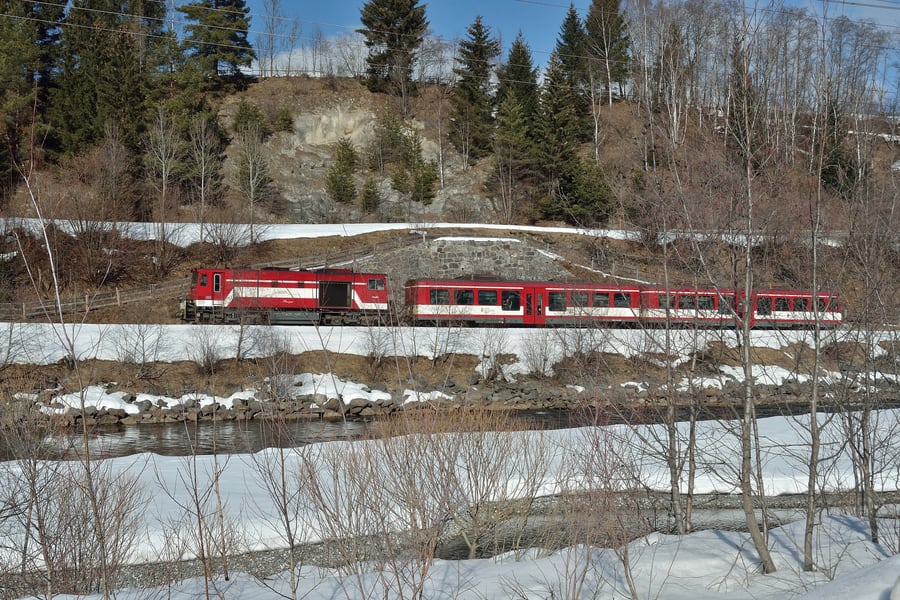
The everyday trains are push-pull sets: a diesel locomotive built between 2004 and 2012, with low-floor coaches and a driving trailer at the other end, and on some workings the older railcars of 1986 and 1991. They run at up to 80 km/h, and in summer a van for bicycles is added. One of the line's older locomotives has been on loan to the Zillertalbahn, another 760-millimetre line, in Tyrol, since 2021. In July 2026 the federal government put money towards electrifying the line and buying electric trains for it.
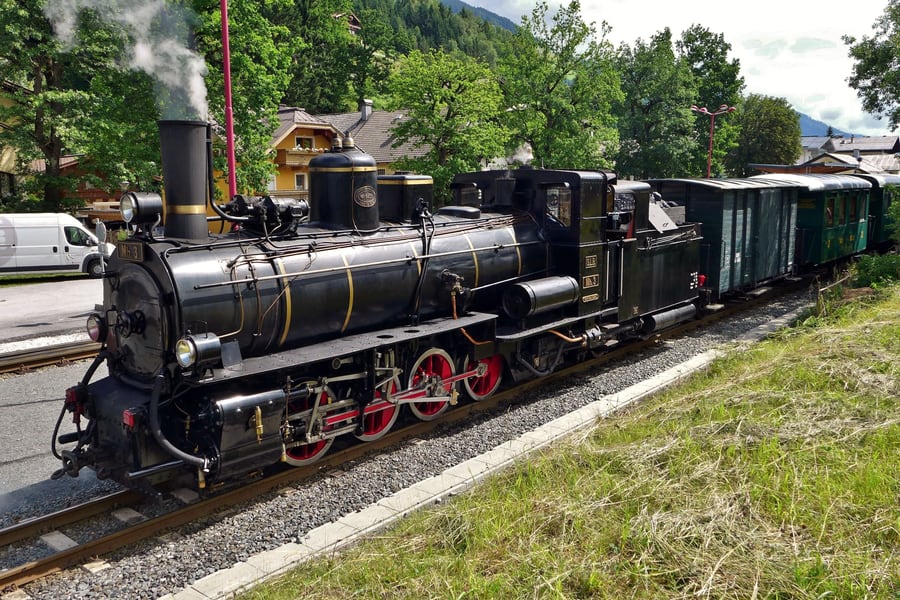
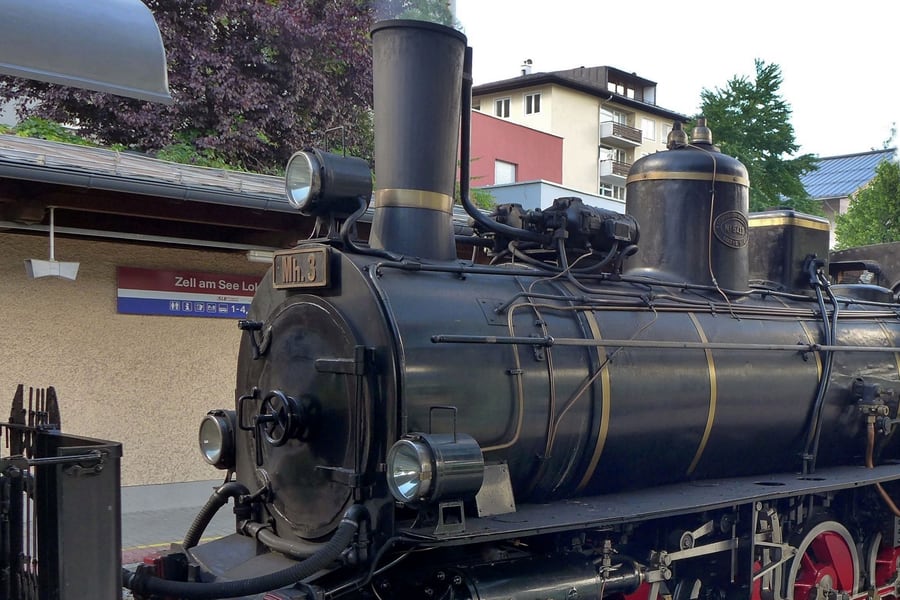
The steam train is a set of historic green coaches behind Mh.3, an engine built in 1906; the nostalgic trains carry a bar car, the Pinzga Schenke. In 2026 the steam train ran from Zell am See to Mittersill every Thursday from 14 May to 3 September, with an extra trip from Mittersill to Niedernsill and back. If the steam engine is out of service, a nostalgic diesel takes its place.
Beyond Mittersill
West of Mittersill the line runs on another 24 kilometres to Krimml, but no train has run there since the summer of 2021. A replacement bus meets the trains at Mittersill and reaches Krimml station in about half an hour, and the waterfalls a few minutes later.
Along the route
 Linie29 / Wikimedia Commons · CC BY-SA 4.0
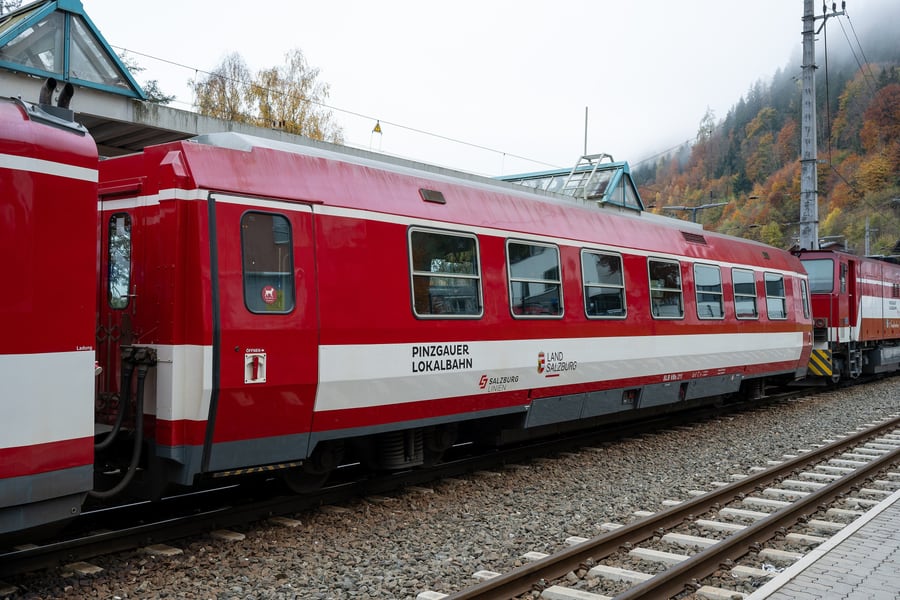
Zell am See
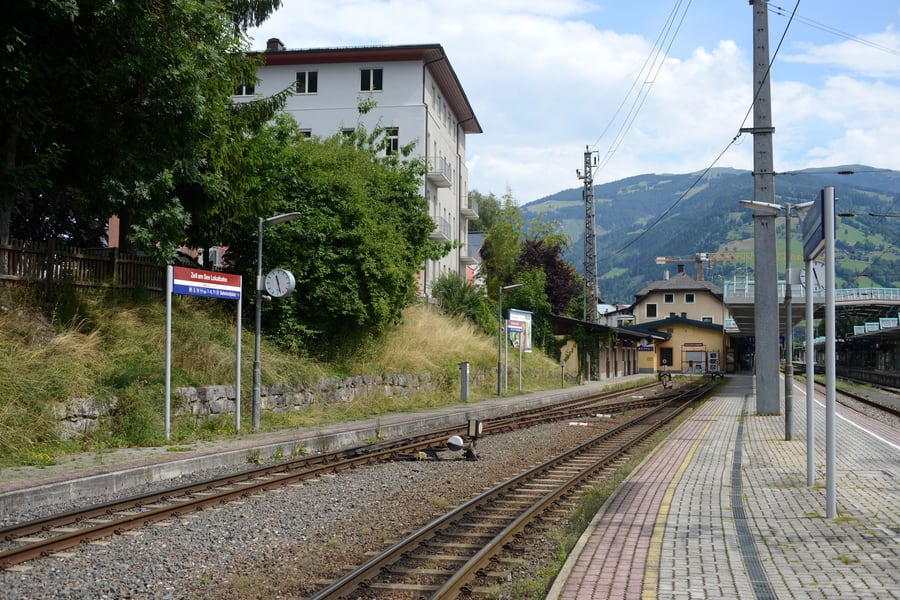
The narrow-gauge platforms stand beside ÖBB's station on the line from Salzburg to Innsbruck. Leaving, the train runs south alongside the main line to Tischlerhäusl, then turns west into the wide valley of the Salzach.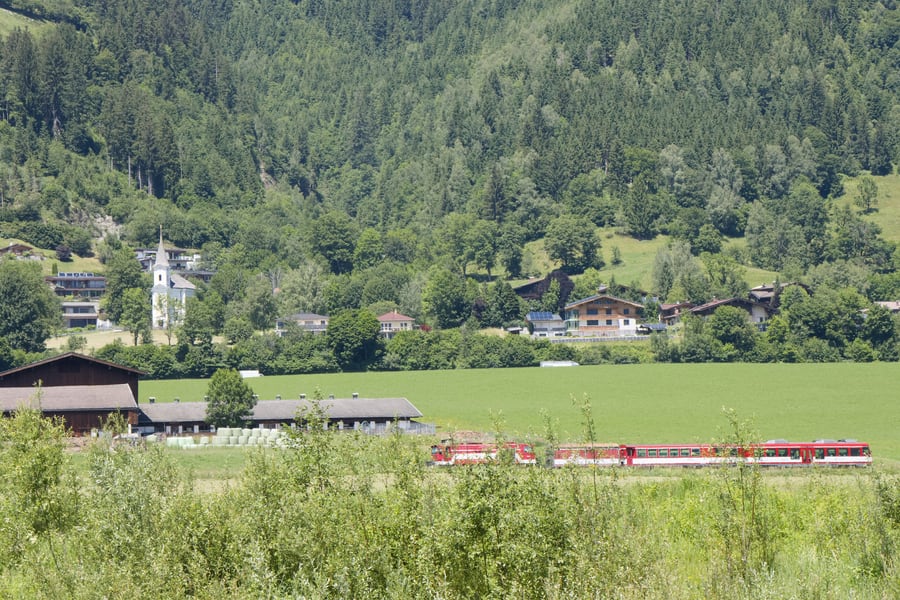 Eweht / Wikimedia Commons · CC BY-SA 4.0
Round Piesendorf
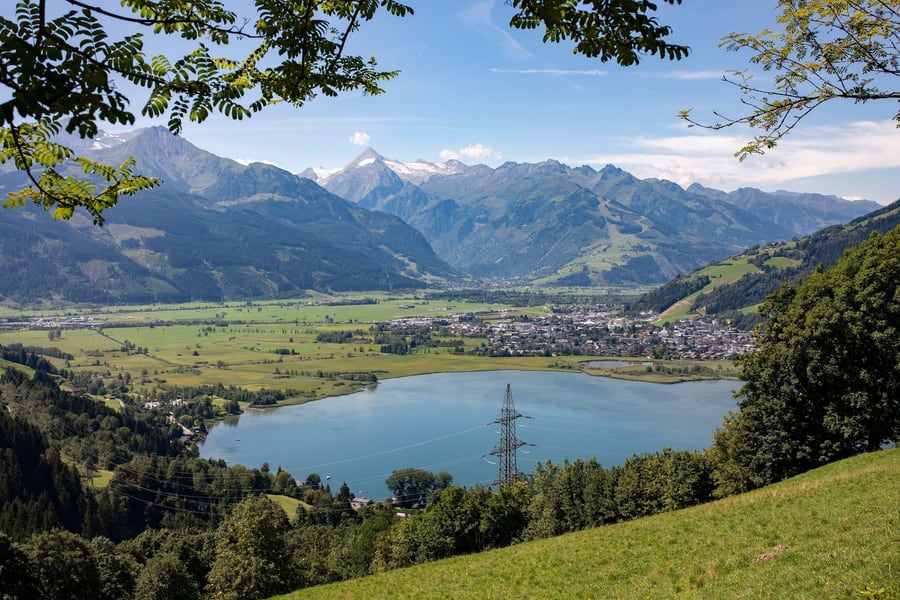
Past Fürth-Kaprun, the station for Kaprun and the Kitzsteinhorn, the line keeps to the northern foot of the valley, curving round the villages on their alluvial fans through meadows and hay barns.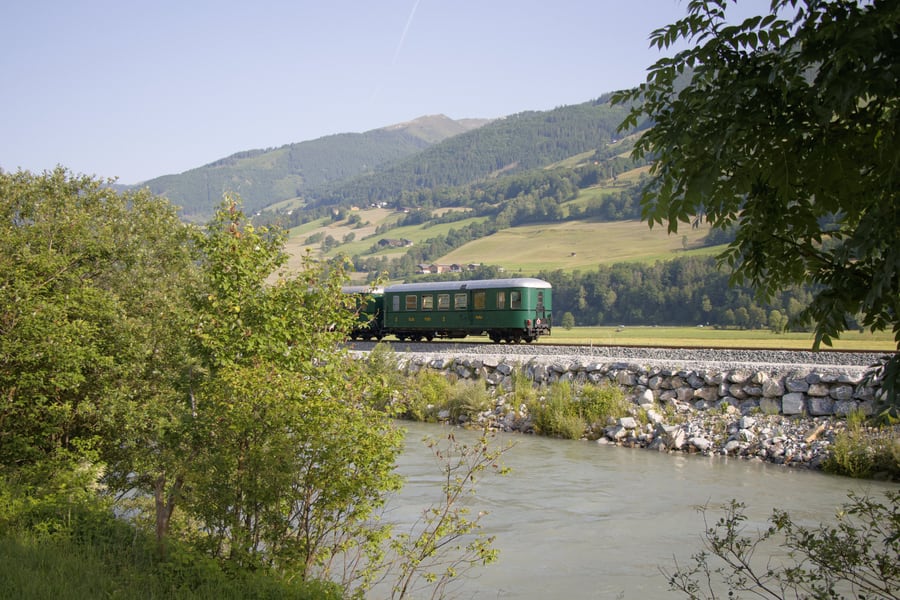 Eweht / Wikimedia Commons · CC BY-SA 4.0
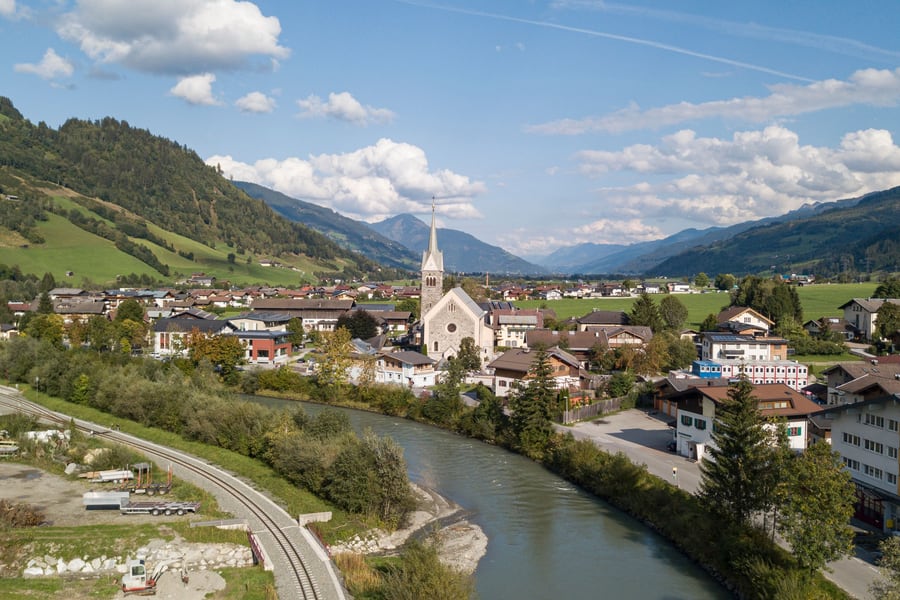
Beside the Salzach
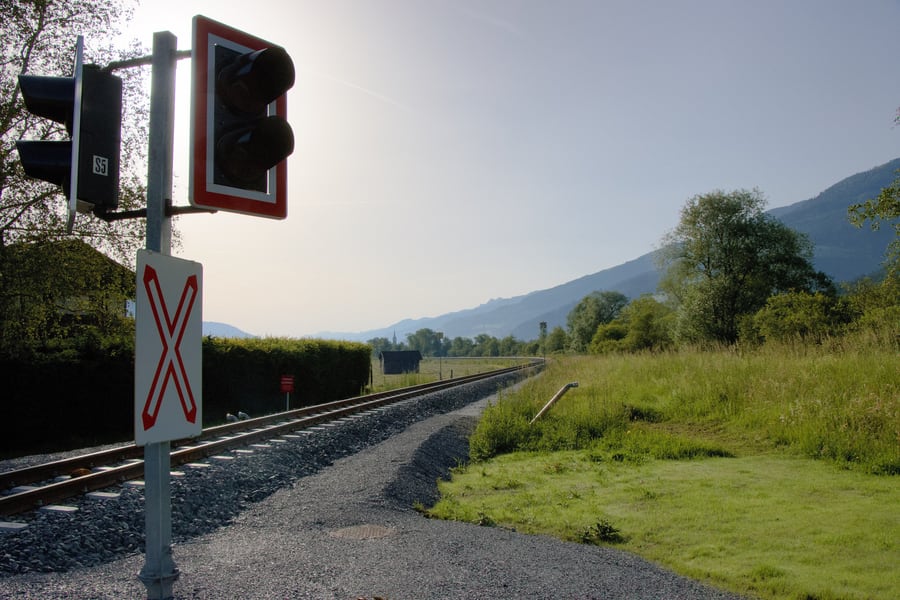
From Walchen to Uttendorf the track runs right on the bank of the straightened river. It is the stretch that shows why the floods matter: in 2005, 2014 and 2021 the water undermined the line along the valley.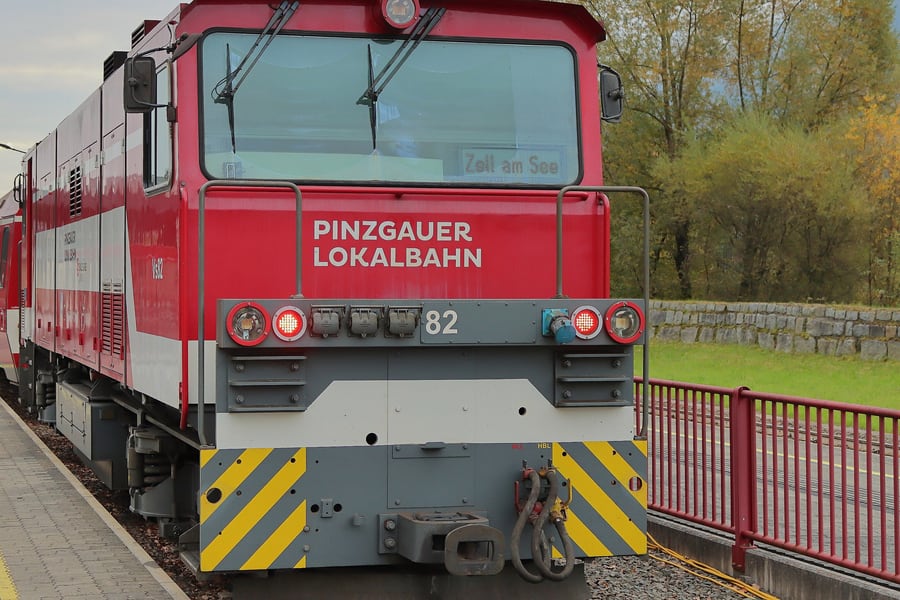 Bahnfreund21 / Wikimedia Commons · CC0 · cropped
Mittersill
The end of the line since June 2024, and the line's customer centre. A replacement bus waits for the trains and runs on to Krimml, the old end of the line, where no train has run since the 2021 flood.A bit of history
Culture & experiences along the way
 Bahnfrend / Wikimedia Commons · CC BY-SA 4.0 · cropped
Sausages from the boiler
On the steam train, the snack is cooked by the engine. The Kesselwurst is a sausage grilled on the boiler of the steam locomotive, which the operator bills as the highlight of the trip for young and old. The summer steam trains run on Thursdays, and seats are limited, so reserve.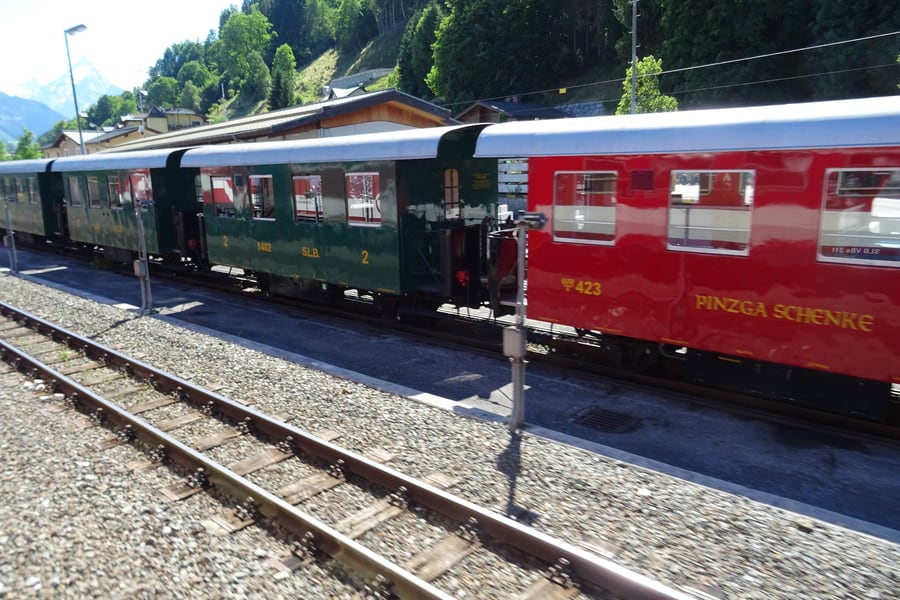 Bybbisch94, Christian Gebhardt / Wikimedia Commons · CC BY-SA 4.0 · cropped
The bar car in Advent
The nostalgic trains carry a bar car, the Pinzga Schenke. On the four Advent Saturdays it serves mulled wine and punch on the way to Mittersill's Advent festival; on 24 December the Christkind rides along with small presents for children, and on New Year's Eve there is live music on board.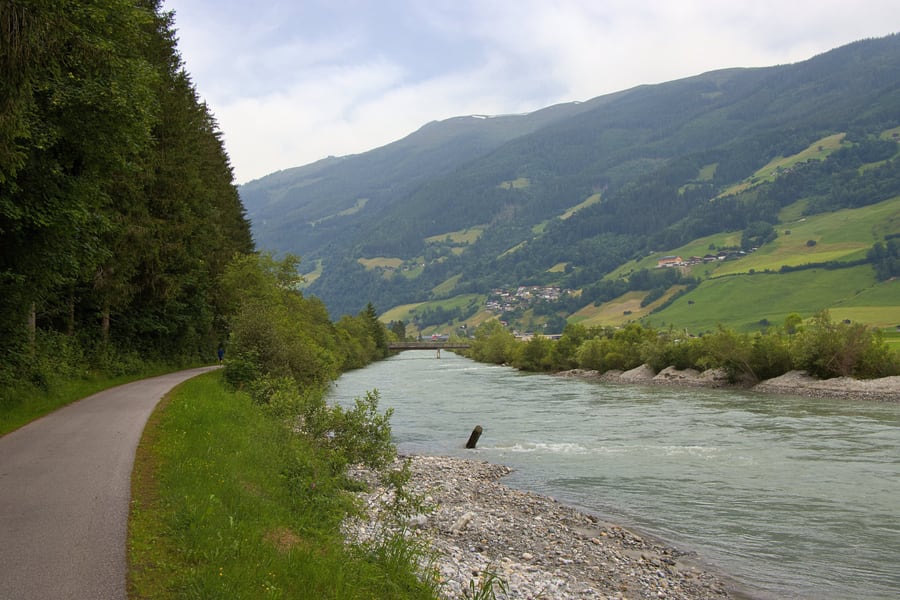 Eweht / Wikimedia Commons · CC BY-SA 4.0
The Tauern cycle path
The Tauernradweg starts at the Krimml waterfalls and follows the Salzach down the Pinzgau, beside the railway, towards Salzburg. From May to September the trains carry bicycles, booked by the afternoon before, so one direction can be ridden and the other taken by train.Timetables
The Pinzgauer Lokalbahn runs every day, all year, roughly every hour, and takes 47 minutes from Zell am See to Mittersill. The timetable valid from 13 December 2026 to 11 December 2027 keeps the same times as 2026. On weekdays extra trains run between Zell am See and Niedernsill, making it every half hour on that stretch.
Zell am See to Mittersill
| Zell am See | Mittersill | Runs |
|---|---|---|
| 05:02 | 05:49 | Daily |
| 06:32 | 07:22 | Daily |
| 08:02, then every hour at :02 until 22:02 | :49 | Daily |
| 16:51 (fast train) | 17:29 | Monday to Friday |
Mittersill to Zell am See
| Mittersill | Zell am See | Runs |
|---|---|---|
| 06:10 | 06:57 | Daily |
| 06:40 | 07:28 | Monday to Friday |
| 06:57 (fast train) | 07:39 | Monday to Friday |
| 07:10, then every hour at :10 until 22:10 | :57 | Daily |
On to Krimml by bus
Replacement buses run from Mittersill to Krimml station in connection with the trains, leaving two minutes after each arrival from 07:23 to 21:51, and reach Krimml station 32 minutes later; most go on to the waterfalls. The buses do not carry bicycles, except two a day by reservation in summer 2027.
The steam train
In 2026 the steam train ran every Thursday from 14 May to 3 September: from Zell am See at 09:20, arriving in Mittersill at 10:23; from Mittersill to Niedernsill at 11:24 and back at 12:11, arriving in Mittersill at 12:36; and from Mittersill at 14:37, arriving in Zell am See at 15:39. It can be boarded at every stop. The 2027 dates had not been published when this page was checked; the operator's nostalgia festival is on 8 May 2027.
Nostalgic trains in winter
A nostalgic diesel train runs from Zell am See at 13:20 to Mittersill, arriving at 14:20, on the four Advent Saturdays of 2026 (28 November and 5, 12 and 19 December, with St Nicholas on board on 5 December), returning from Mittersill at 16:38. On 24 December it returns at 14:39, and on 31 December at 15:38. Reservation is required.
Times as of November 2026, from the Pinzgauer Lokalbahn's timetables (opens in a new tab) for 2026 and 2027 and its nostalgia train programme (opens in a new tab).
Tickets
The everyday trains use the zone fares of the Salzburg transport association: the whole line to Krimml costs €12.80 single, and Mittersill less. Tickets are sold on board without a surcharge, and the conductors can also issue tickets to major ÖBB stations. A bicycle costs €4 each way; from May to September bikes go in the trains marked for them, booked by 14:00 the day before. In the ski season a valid ski pass is a ticket for skiers between the line and the lifts.
The steam train and the nostalgic diesel trains have their own fares, sold by the conductor and at the customer centre in Mittersill; seats are limited, so reserve ahead. A steam return ticket is valid for the journey back on any ordinary train. Many guest cards give 30 % off. Fares as of 2026, read from the operator in November 2026.
Book your tickets
Steam train, Zell am See – Mittersill
€18.90 single · €31.20 return · child €9.40 / €15.60
The steam train's own fare, sold on board and at the Mittersill customer centre; reserve, as seats are limited.
Book Tickets (opens in a new tab, on Pinzgauer Lokalbahn)via Pinzgauer LokalbahnNostalgic train in Advent
€21.80 return · child €10.90 · reservation required
The diesel nostalgia trains to Mittersill and back on Advent Saturdays, Christmas Eve and New Year's Eve.
Book Tickets (opens in a new tab, on Pinzgauer Lokalbahn)via Pinzgauer LokalbahnWeekend ticket
€25 for up to three people · public holidays €18
Unlimited travel between Zell am See and Krimml on a Saturday and Sunday for up to three people together.
Book Tickets (opens in a new tab, on Pinzgauer Lokalbahn)via Pinzgauer LokalbahnRail Passes
Interrail and Eurail do not cover the Pinzgauer Lokalbahn. It is listed by name among the Austrian railways the pass is not valid on, so pass holders need an ordinary ticket from Zell am See. The pass does cover ÖBB's trains to Zell am See.
The KlimaTicket Österreich does cover the everyday trains. Austria's annual all-network ticket is valid on all scheduled public transport, and the line uses the Salzburg transport association's fares. It does not cover the steam train or the nostalgic diesel trains, which fall under the ticket's exclusion of nostalgia and tourist trains.
For this line alone no pass is worth buying. A weekend ticket at €25 lets up to three people travel together as often as they like between Zell am See and Krimml on a Saturday and Sunday, and €18 buys the same on a public holiday.
Checked November 2026 against Interrail's table of railway companies (opens in a new tab), the KlimaTicket Ö conditions (opens in a new tab) and the operator's fares (opens in a new tab).
Places to Visit
The Pinzgau is a long valley of lakeside towns, castles and side valleys climbing into the Hohe Tauern. These places run from the lake at Zell am See to the waterfalls at Krimml, the last of them by the bus that carries on where the trains now stop.
 Wald1siedel / Wikimedia Commons · CC BY-SA 3.0 · cropped
Zell am See
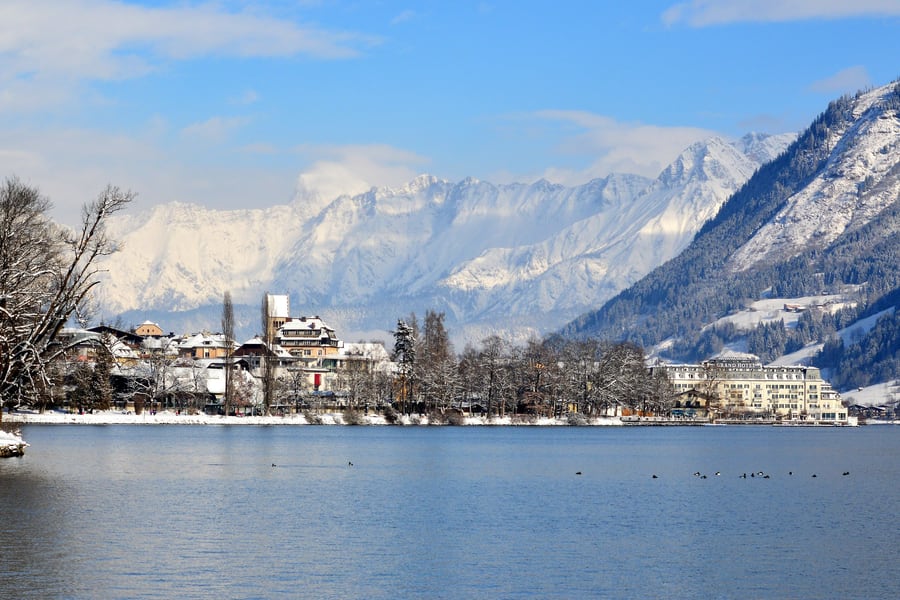
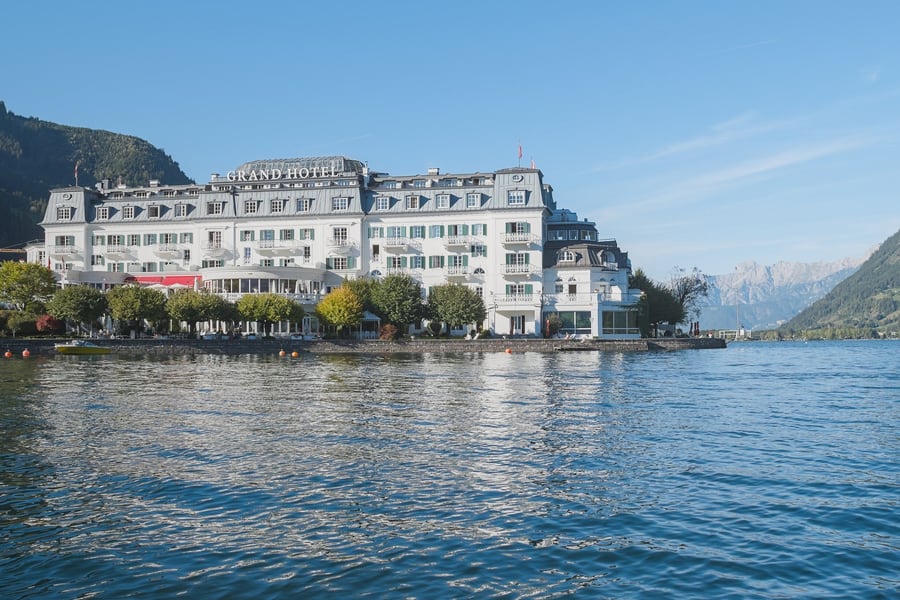
The town sits on a peninsula in the Zeller See, a lake of about 4.7 km² shaped like a peanut. Its landmark is the white Grand Hotel at the tip of the peninsula, built in 1894–96. Empress Elisabeth climbed the Schmittenhöhe above the town in 1885, and its cable car, the first in Salzburg, opened in 1927. In winter the lake freezes, and when the ice holds it is opened for skating.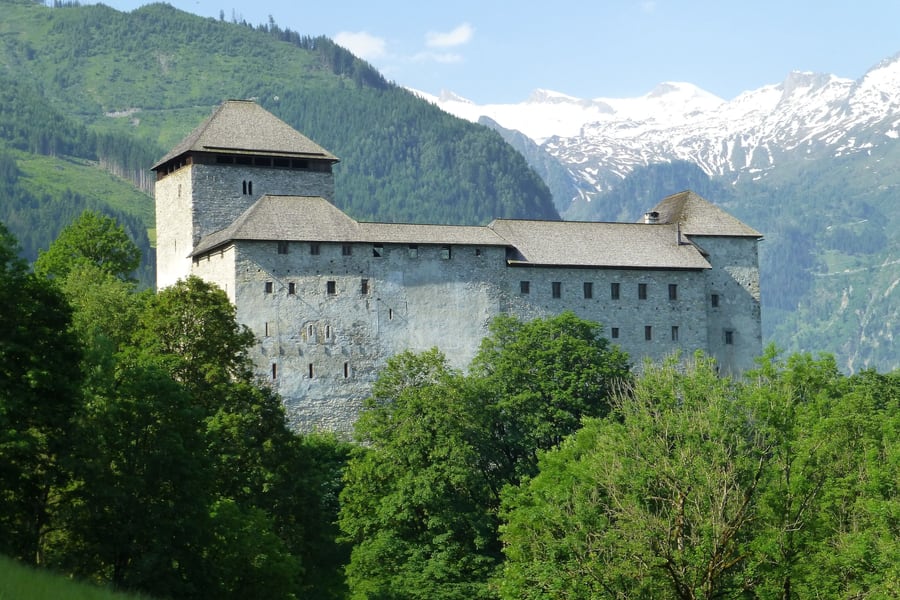 Christina Nöbauer / Wikimedia Commons · CC BY-SA 3.0 AT · cropped
Kaprun castle
The name Kaprun appears in 931 as Chataprunnin, wild water. First recorded as a tower in 1280, the castle was burned in the Salzburg peasants' war of 1526 and rebuilt to its present plan between 1580 and 1600. A society of Kaprun businesses bought it in 1984 and restored it; today its courtyard, with a stand for 450, is a stage for concerts and events.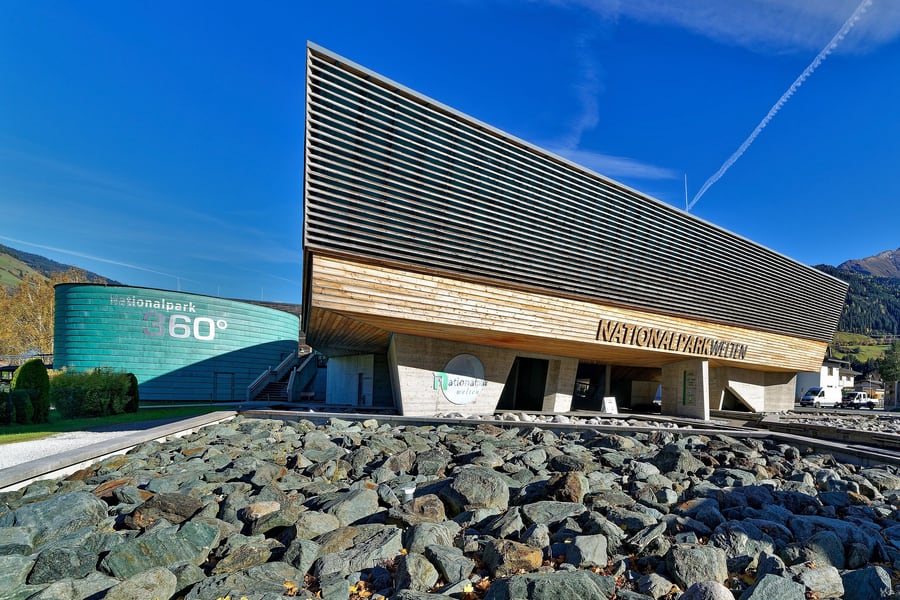 Holger Uwe Schmitt / Wikimedia Commons · CC BY-SA 4.0 · cropped
The Nationalpark Welten
Salzburg's visitor centre for the Hohe Tauern national park opened in Mittersill in 2007. Its exhibition leads through eight natural spaces of a park of more than 1,800 km², with 266 peaks over 3,000 metres and more than 342 glaciers; the building also holds the park's science centre. The operator suggests it as the stop on a steam train day.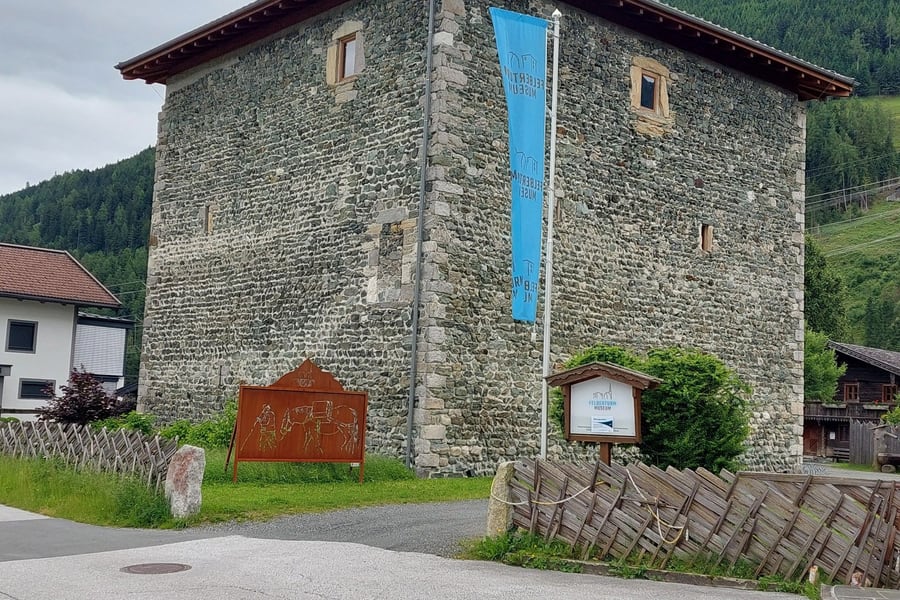 Luckyprof / Wikimedia Commons · CC BY-SA 4.0 · cropped
The Felberturm Museum
A square stone tower, 16 metres a side, built probably in the 12th century for the lords of Felben, later a granary and a roofless ruin until 1964. Since 1969 it has been Mittersill's museum, refitted and reopened in 2021, telling of the mule trains that carried salt and wine over the Tauern and of the town's witch trial.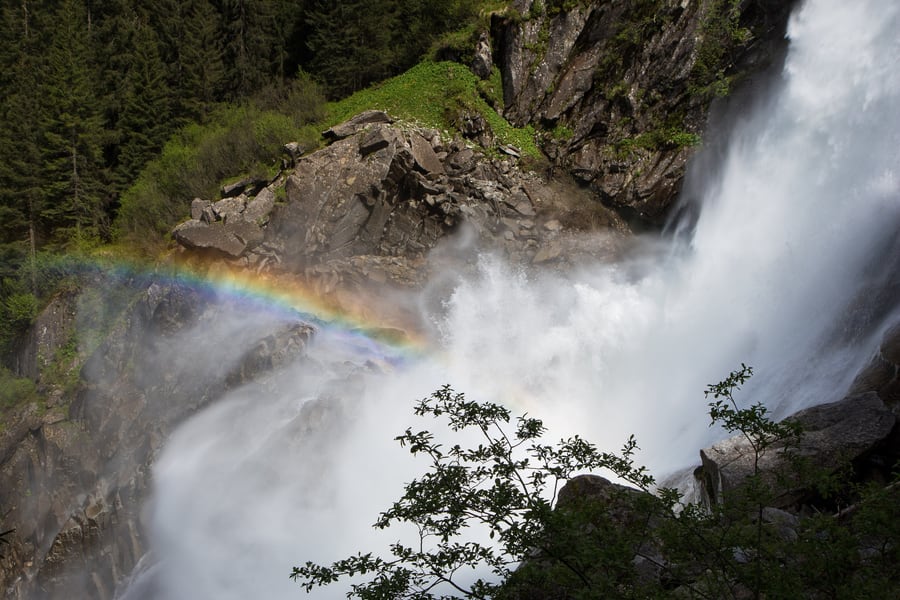 Gido from The Netherlands / Wikimedia Commons · CC BY 2.0
The Krimml waterfalls
At the head of the valley the Krimmler Ache falls 380 metres in three steps, the highest waterfalls in Austria. They were the railway's first great draw for tourists, and in 1967 the Council of Europe's European Diploma for nature conservation ended plans to harness them for power. The glacier-fed falls carry most water in June and July, and the replacement bus from Mittersill has a stop at the falls.Where to Sleep
Zell am See, at the start of the line, has the lake, the main-line station and the widest choice of hotels. Mittersill, at the end of the line today, is the base for the national park centre, the museum in the Felberturm and the bus on to Krimml.
Where to stay
 Fl.schmitt / Wikimedia Commons · CC0 · cropped
Grand Hotel Zell am See
On the lakeshore in Zell am See
Built in 1894–96 at the tip of the Zell peninsula, its white façade can be seen from almost anywhere on the lake.
Check Availability (opens in a new tab, on grandhotel-zellamsee.at)via grandhotel-zellamsee.at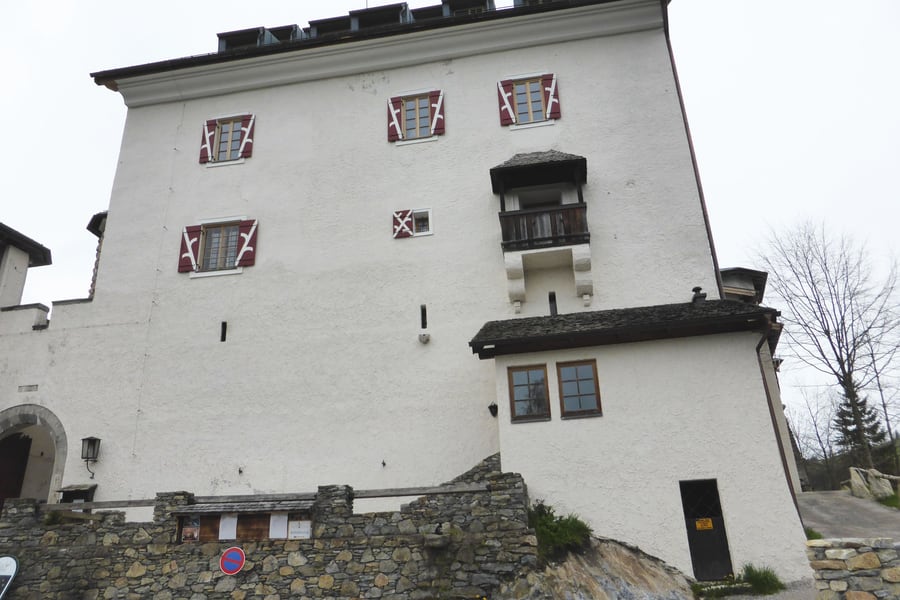 Luckyprof / Wikimedia Commons · CC BY-SA 3.0 AT · cropped
Hotel Schloss Mittersill
A castle above Mittersill
A castle on the road to the Pass Thurn, now a hotel, where a sporting club founded in 1948 drew royalty and film stars in the 1950s.
Check Availability (opens in a new tab, on schloss-mittersill.com)via schloss-mittersill.comQuestions or corrections
Planning this trip and stuck on something, or spotted a time, fare or detail that has changed? Send us a message about Pinzgauer Lokalbahn. We read every one, and we update this page when something has changed.