The Train to Khiva
Adam Harangozó / Wikimedia Commons · CC BY-SA 4.0
- DistanceTashkent–Khiva · about 1,020 km
- Duration7½ hours by the new fast train · about 14 hours overnight
- Best seasonSpring and autumn — the desert is brutally hot in high summer
Introduction
Of all the great Silk Road cities, Khiva was the one you had to earn. Samarkand and Bukhara lie on the fertile road across Central Asia; Khiva lies beyond it, in the oasis of Khorezm, on the far side of the Kyzylkum — the "Red Sand" desert. For centuries that waterless barrier kept it the remotest and most forbidding of the caravan cities, a walled town of slave markets and khans marooned in the sand.
That same isolation is why Khiva survived so perfectly. Inside its ramparts, the Itchan Kala — the walled inner town — is a whole medieval city preserved almost intact: minarets and madrasahs, a fortress-citadel, palaces and mosques, packed into a few hundred metres of mud-brick lanes. It was the first place in all of Uzbekistan to be named a UNESCO World Heritage Site, back in 1990, and to walk through its gates at dusk is to step into a stage set that was never struck.
Reaching it by rail has always been the adventure. For a long time the trains stopped at Urgench, thirty kilometres short, and you finished the journey by road. A direct line and a station finally reached Khiva itself in 2018 — and in May 2026 came something new: the Jaloliddin Manguberdi, a gleaming high-speed train named for the last shah of Khorezm, running straight from Tashkent to Khiva for the first time in history.
So there are now two ways to make the crossing: the fast new train that does it in an afternoon, or the classic overnight sleeper that rumbles out across the desert through the night, the way generations of travellers have done it. This is the story of both — and of the extraordinary walled city waiting at the end of the line.
The Journey
However you travel, the journey west from Tashkent is a long one — well over a thousand kilometres — and it is the desert that gives it its character.
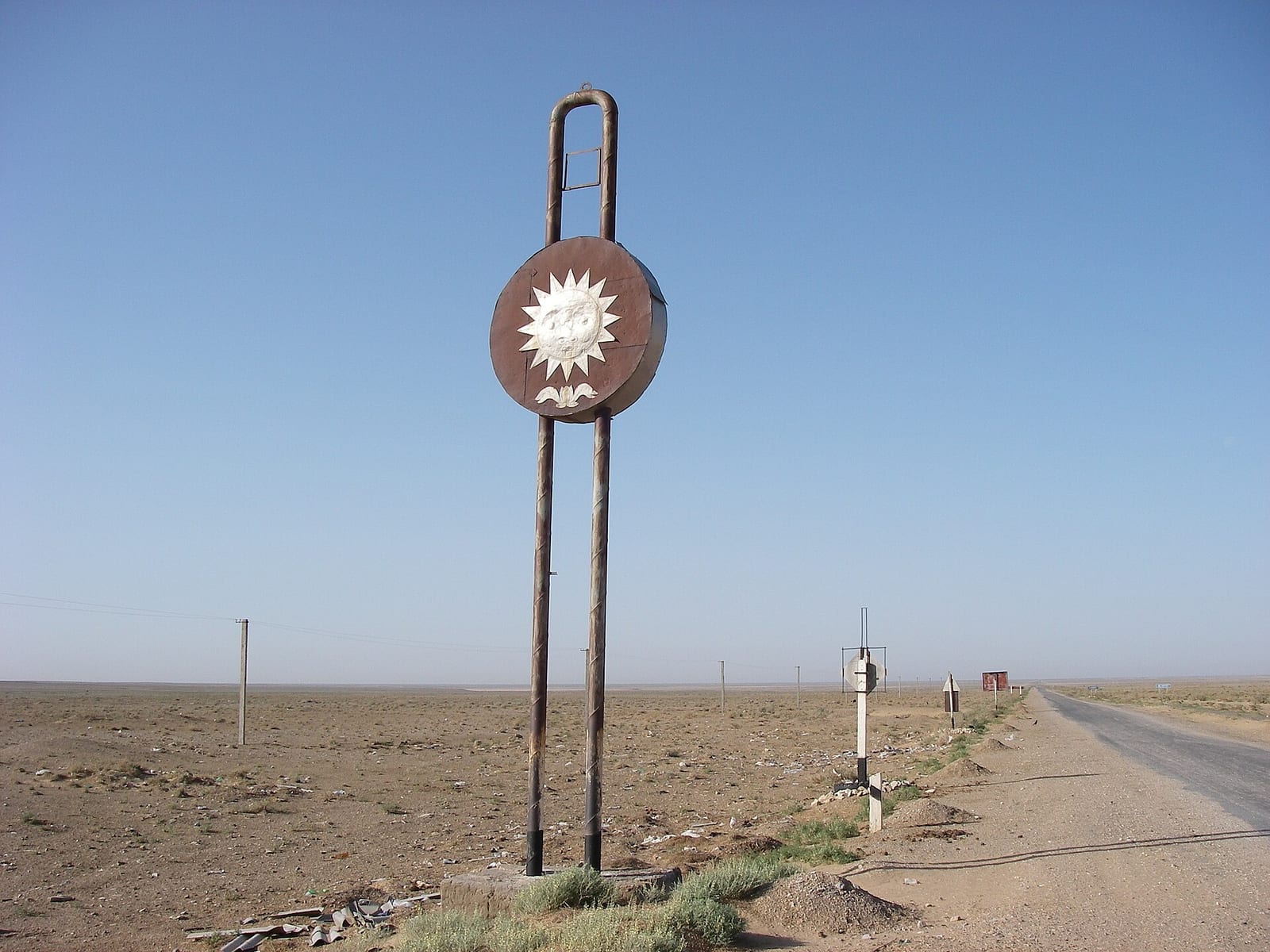
The first half of the run follows the Silk Road proper, through Samarkand and Bukhara, across irrigated cotton country. Beyond Bukhara the cultivation thins and then vanishes, and the train strikes out across the Kyzylkum: hour upon hour of flat, tawny emptiness, broken only by the odd well, a herd of sheep, a distant line of low hills shimmering in the heat. This is the crossing that once took caravans weeks, and even from an air-conditioned carriage its scale is humbling.
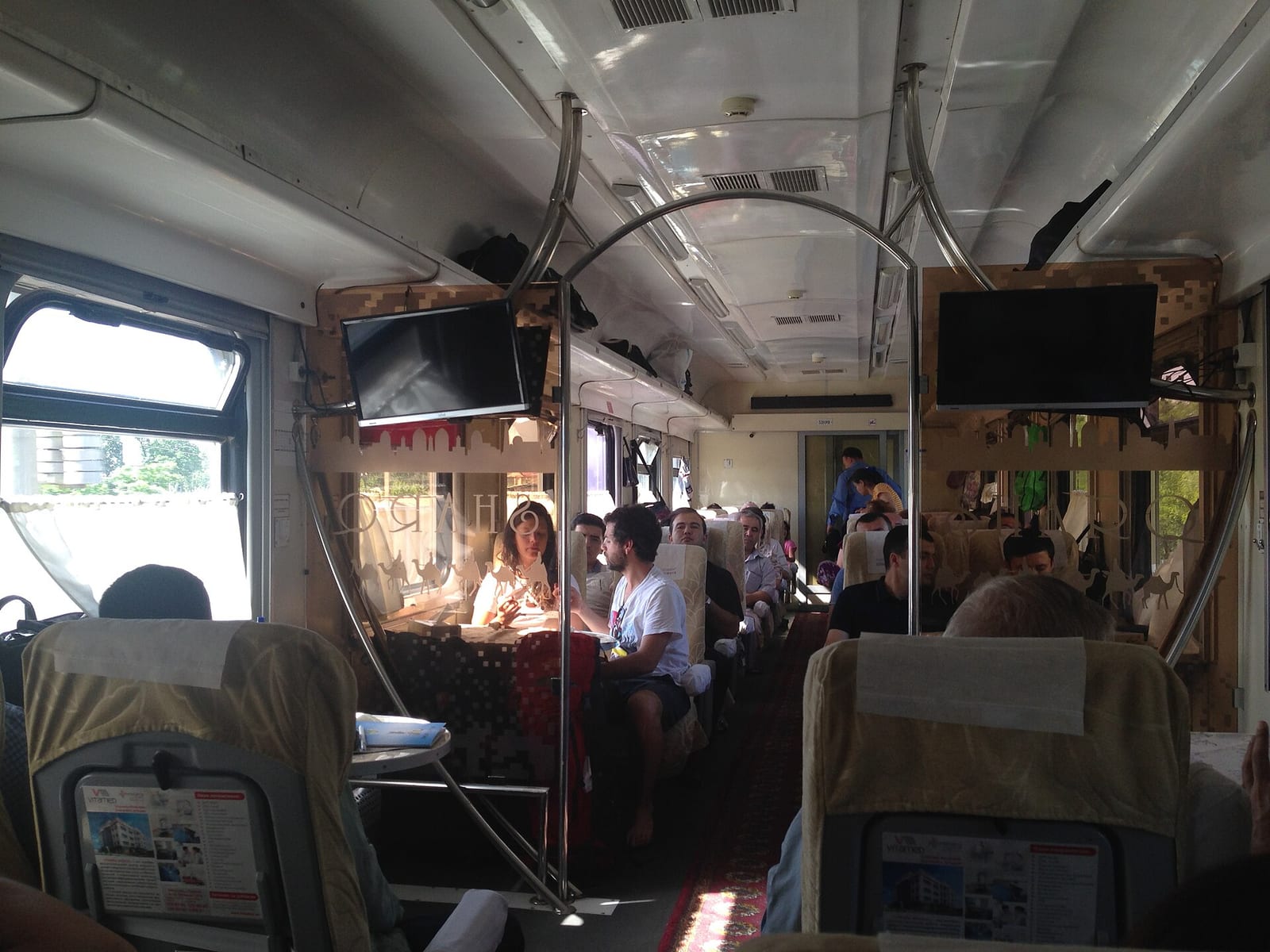
On the overnight sleeper, most of the desert passes in darkness. You board in the evening, make up your berth in a kupe compartment as the light fails, and settle into the timeless rhythm of a night train — the attendant's tea, the rocking of the coach, the murmur of fellow passengers. You wake as the train swings north into the green oasis of Khorezm and rolls toward journey's end around fourteen hours after setting out.
The new Jaloliddin Manguberdi does the same run in daylight and in less than eight hours, calling at Samarkand, Bukhara and Urgench before reaching Khiva. Named for Khorezm's last medieval shah, it is a modern South Korean-built high-speed train, and it makes the once-epic desert crossing feel almost brisk.
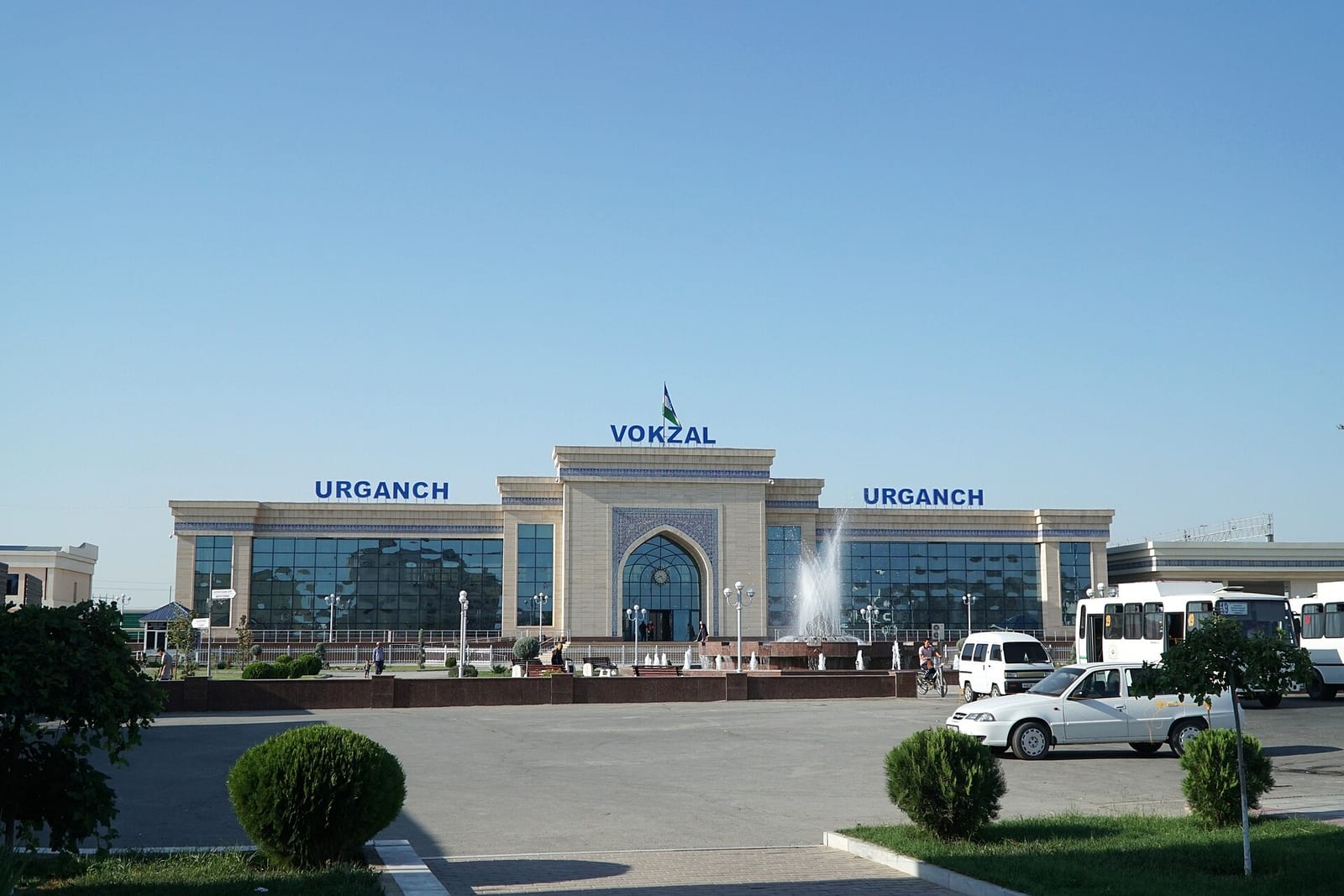
A word on where you arrive: the fast train runs right into Khiva's own station, a short hop from the walls. But many overnight services still terminate at Urgench, and from there it is a thirty-kilometre taxi or trolleybus ride south to the old city. Check your ticket — then step out, and let the walled town do the rest.
Along the route
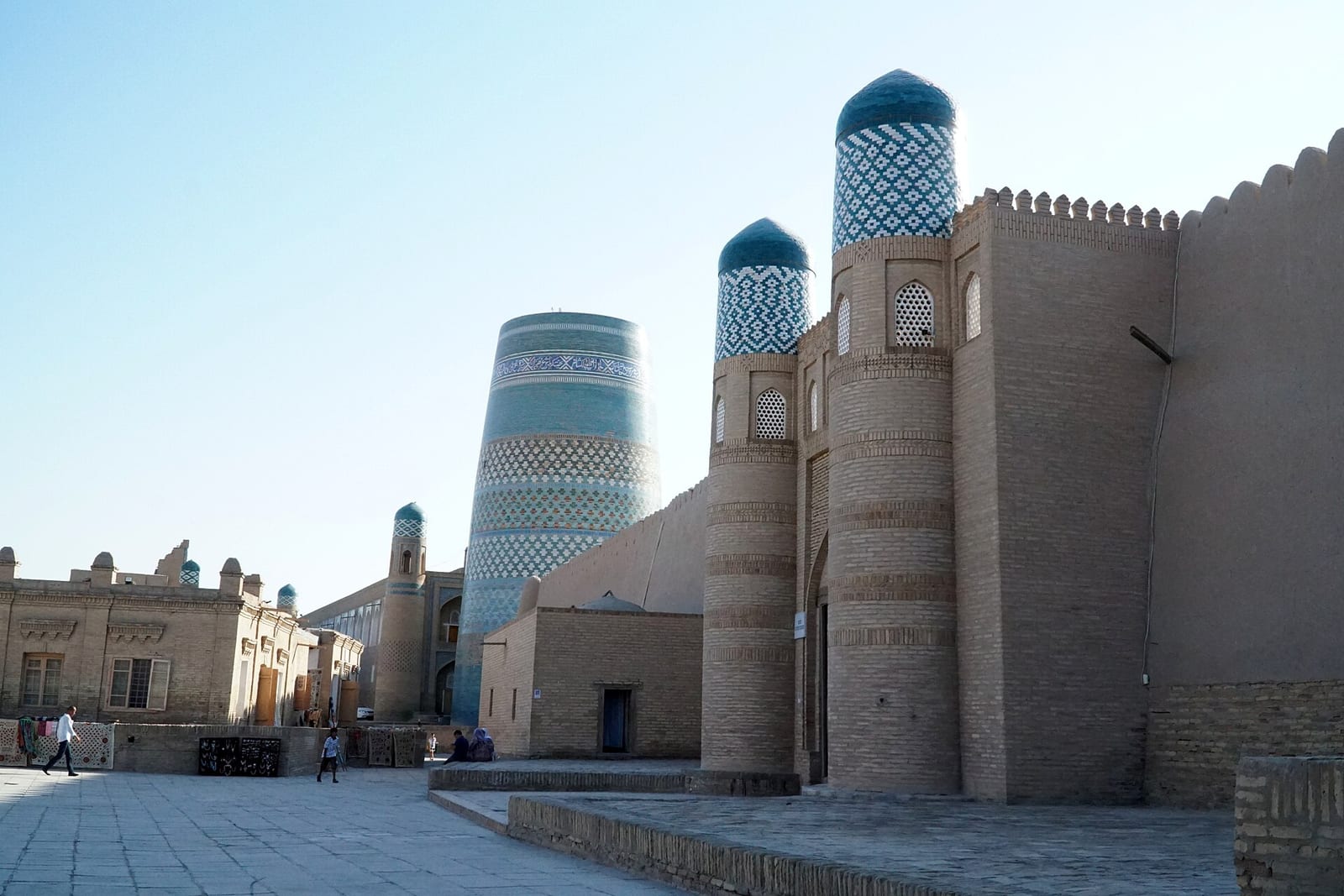
Bgag / Wikimedia Commons · CC0The hardest Silk Road city to reach
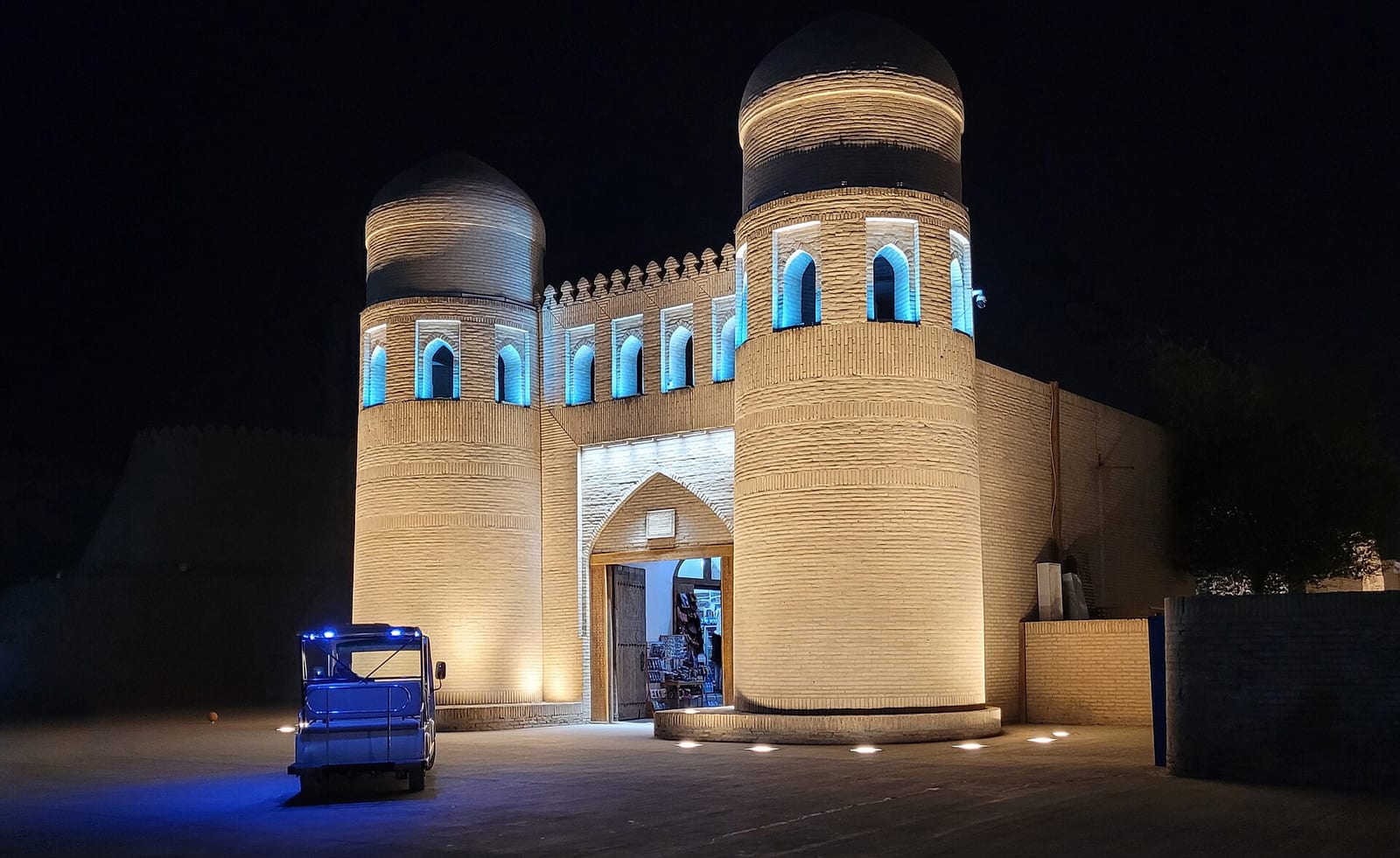
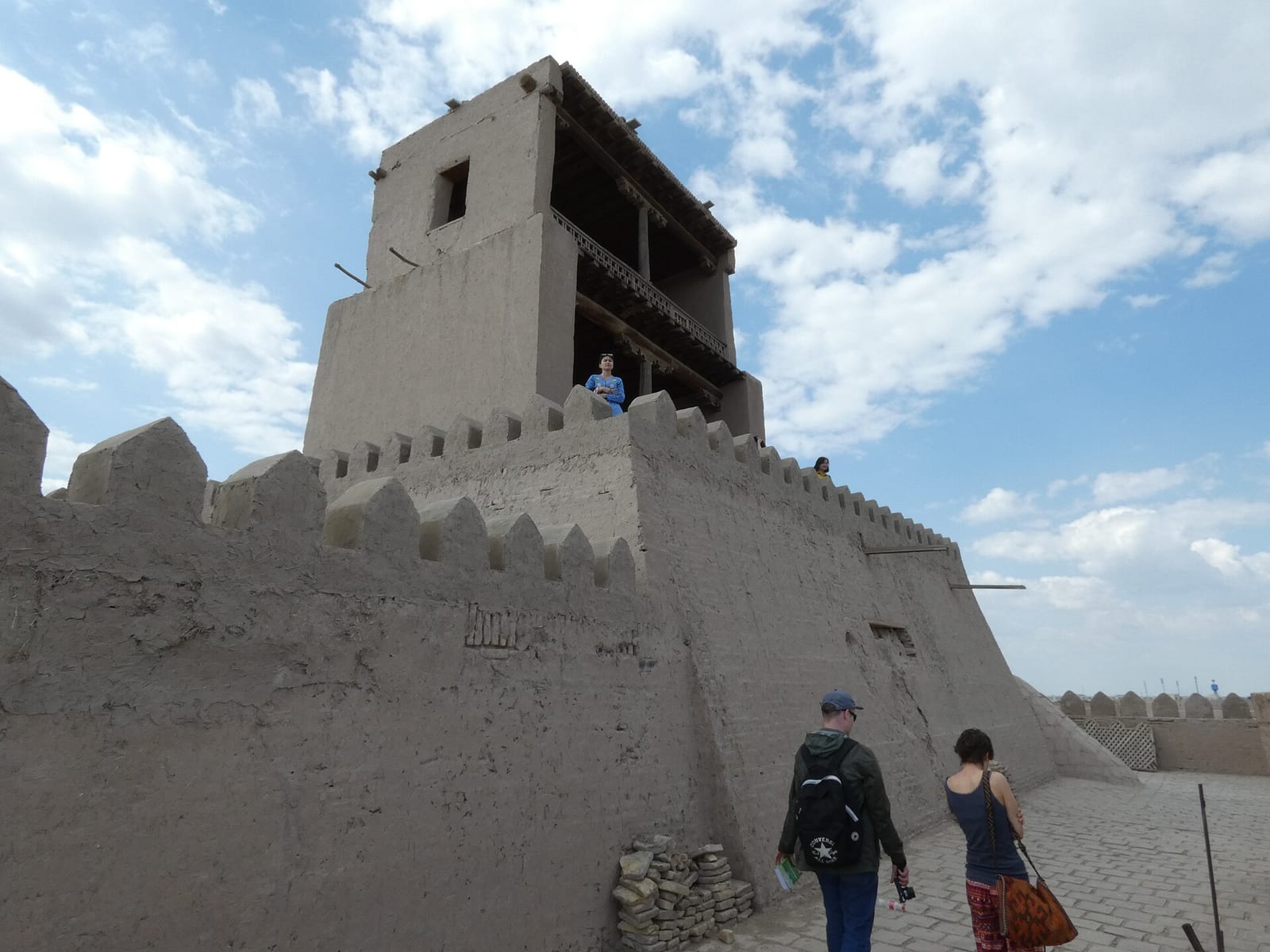
Samarkand and Bukhara sit on the fertile road; Khiva sits beyond it, across the waterless Kyzylkum. That isolation is why it survived so completely: a whole walled town preserved almost intact within ramparts up to ten metres high, UNESCO-listed in 1990.Adam Harangozó / Wikimedia Commons · CC BY-SA 4.0A brand-new high-speed train
For most of history you could not reach Khiva by rail at all; even recently trains stopped thirty kilometres short. That changed in May 2026 with the Jaloliddin Manguberdi, running straight from Tashkent to Khiva in about seven and a half hours, three times a week.Davide Mauro / Wikimedia Commons · CC BY-SA 4.0The overnight sleeper
The romantic way remains the night train. You board as the desert cools, take a berth in a four-person kupe, share tea with your neighbours, and wake as the train rolls into Khorezm at dawn — fourteen hours, and a proper Silk Road crossing.A bit of history
Culture & experiences along the way
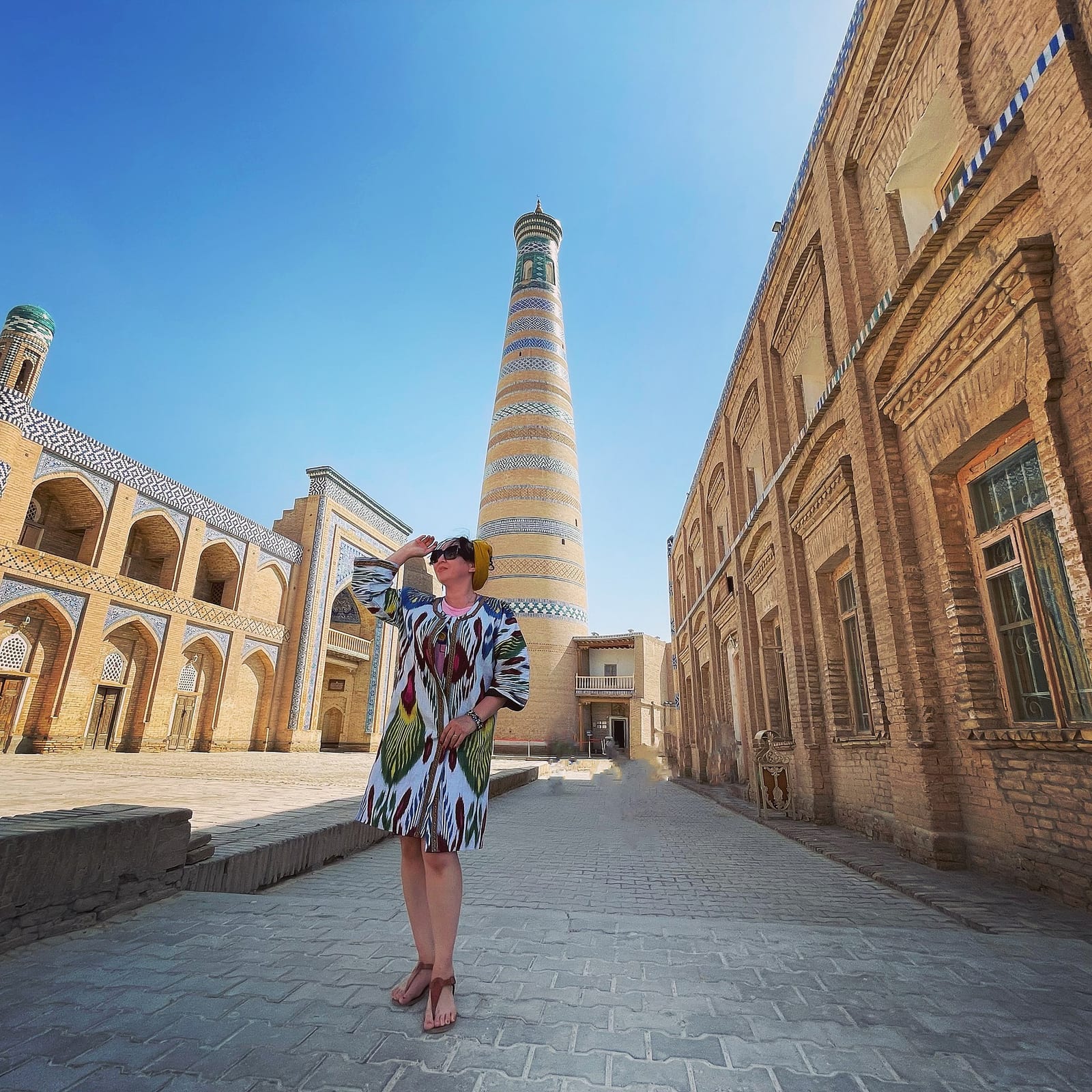
Akka005 / Wikimedia Commons · CC BY-SA 4.0Wander the Itchan Kala at dawn and dusk
Khiva's walled town is small enough to explore on foot and best in the low light, when the crowds have gone and the mud walls glow gold. Climb a minaret for the rooftop panorama, lose yourself among the madrasahs and the Tosh-Hovli palace, and stand beneath the turquoise Kalta Minor — the fat, unfinished minaret that has become the symbol of the city.Bgag / Wikimedia Commons · CC0See the forest of wooden columns
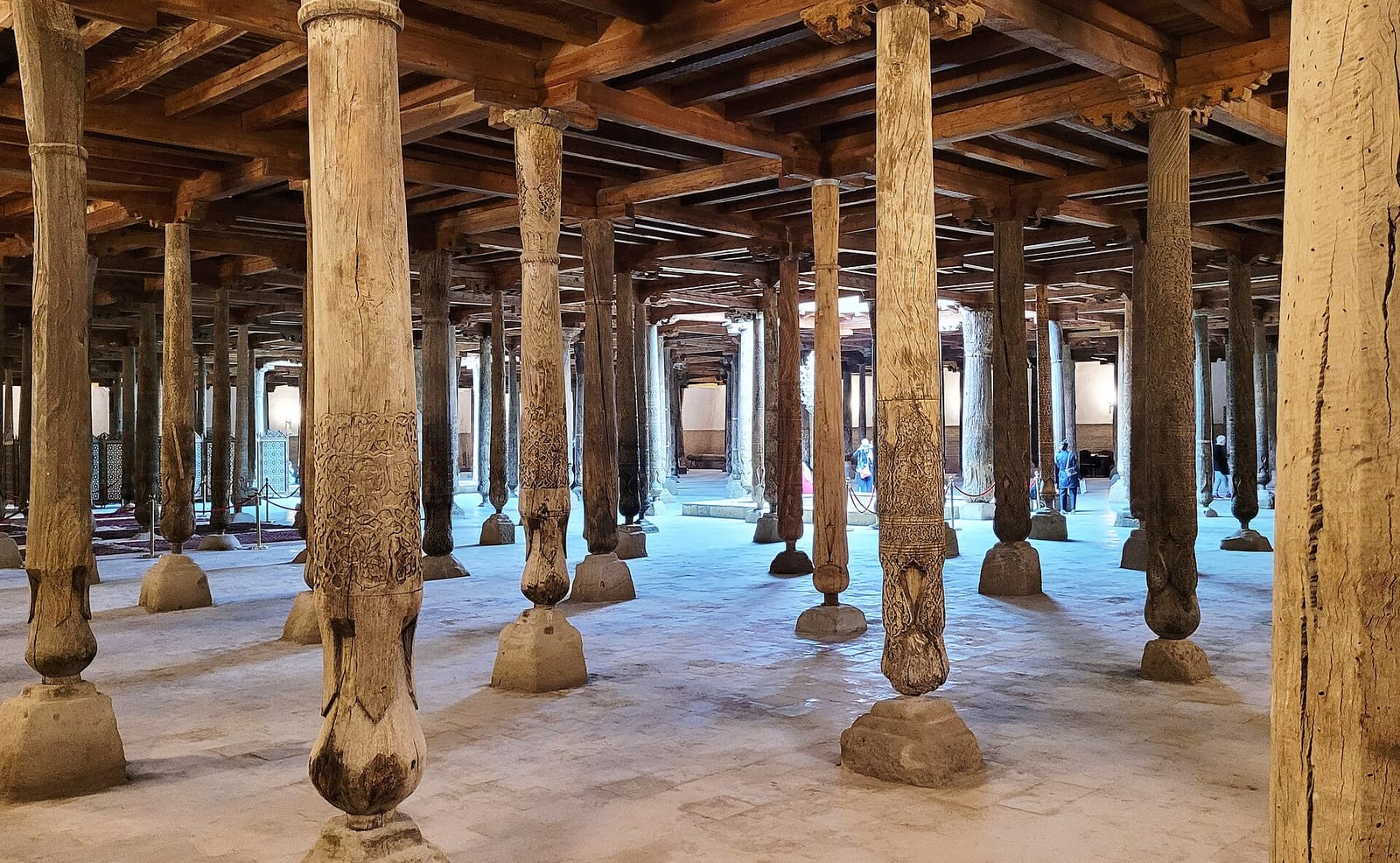
Do not miss the Juma Mosque, utterly unlike any other in Uzbekistan: no dome, no grand portal, just a dim, cool hall held up by a forest of over two hundred carved wooden columns, a handful of them more than a thousand years old, each pillar different. It is one of the most atmospheric interiors on the whole Silk Road.Adam Harangozó / Wikimedia Commons · CC BY-SA 4.0Know which station you arrive at
Check your ticket: the new fast train runs right into Khiva's own station, but many overnight services still terminate at Urgench, about thirty kilometres away, from where a shared taxi or the old trolleybus completes the trip. Either way it is straightforward — but worth knowing before you arrive bleary-eyed at dawn.Timetables
There are two very different trains to Khiva, and choosing between them shapes the whole trip.
The fast train — Jaloliddin Manguberdi. Launched in May 2026, this high-speed service runs three times a week in each direction. As of the 2026 timetable (checked July 2026):
| Direction | Departs | Arrives | Days |
|---|---|---|---|
| Tashkent → Khiva | 07:00 | 14:31 | Tue, Thu, Sat |
| Khiva → Tashkent | 07:20 | 14:51 | Wed, Fri, Sun |
It calls at Samarkand, Bukhara and Urgench on the way, covering the 1,022 km in about 7½ hours.
The overnight sleeper. The classic option runs more frequently and takes roughly 14 hours, typically leaving in the early evening and arriving the next morning. Exact departures vary by day and season, so confirm on the operator's site — and check whether your particular train runs all the way to Khiva or terminates at Urgench.
Good to know:
- The fast train is scarce — book early. With only three departures a week, the Jaloliddin Manguberdi sells out well ahead in spring and autumn. If your dates are fixed, reserve as soon as booking opens.
- Sleeper classes. The overnight train offers SV (two-berth), kupe (four-berth compartments) and open platskart. Kupe is the usual choice for foreign travellers; SV for more privacy.
- Which station? Confirm whether you arrive at Khiva or Urgench (about 30 km away, linked by shared taxi and trolleybus).
- Avoid high summer. The Kyzylkum is punishing in July and August; spring and autumn are far kinder for both the ride and for exploring Khiva on foot.
Times as of the 2026 timetable and subject to change, especially for the new fast service. Always confirm current departures with the operator before you travel (see the Tickets section below).
Tickets
Tickets for both the fast and the overnight trains to Khiva are sold by Uzbekistan Railways (Oʻzbekiston Temir Yoʻllari), online and at every city station. Booking ahead is essential on this route: the new Jaloliddin Manguberdi high-speed train runs only three times a week and sells out early, while the overnight sleepers fill up fast in peak season too.
Decide first which service suits you. The fast train gets you there in an afternoon and runs into Khiva's own station — ideal if your dates line up with its Tuesday, Thursday or Saturday departures. The overnight sleeper is cheaper, runs more often, saves you a night's hotel, and is an experience in itself; on it you will choose between SV, kupe and platskart classes.
Have your passport ready — it is needed both to book and to board — and, when you reserve, note whether your train terminates at Khiva or at Urgench, thirty kilometres away, so you can arrange the short onward transfer if required. Fares across the board are very reasonable by international standards, even for the high-speed service.
Book your tickets
Tashkent – Khiva
The fast train & the overnight sleeper
Book through Uzbekistan Railways online or at any station. The new high-speed Jaloliddin Manguberdi runs Tashkent–Khiva three times a week in about 7½ hours; the classic overnight sleeper runs more often, taking around 14 hours. Berths and seats are reserved — book well ahead, as both fill fast.
Book Tickets (opens in a new tab, on Uzbekistan Railways)via Uzbekistan RailwaysTimetable & sleeper classes
Plan your crossing to Khorezm
Check current departures, which trains run all the way to Khiva station (rather than Urgench), and the choice of platskart, kupe and SV sleeper classes on the Uzbekistan Railways booking site before you travel.
Book Tickets (opens in a new tab, on Uzbekistan Railways)via Uzbekistan RailwaysRail Passes
No rail pass covers this journey. Interrail and Eurail are European schemes, and Uzbekistan is not among the 33 countries in Interrail's list of covered railway companies. Uzbekistan Railways sells each journey, fast train or sleeper, as a reserved ticket, online or at the station.
Checked October 2026 against Interrail's list of railway companies (opens in a new tab).
Places to Visit
Khiva rewards the long journey to reach it. Almost everything worth seeing is packed inside the Itchan Kala, the walled inner town — small enough to cross on foot in fifteen minutes, dense enough to fill two full days.
The four you will have seen on the way in
The emblem of the city is the Kalta Minor, the "short minaret": a fat, glorious drum of turquoise and green tilework, meant to be the tallest in the Islamic world and left as a stump when the khan who commissioned it died. For height, climb the tapering Islam Khoja Minaret instead, the tallest in Khiva. Do not miss the Juma Mosque, a dim hall held up by a forest of over two hundred carved wooden columns, some of them more than a thousand years old and utterly unlike the domed mosques elsewhere in Uzbekistan. And the Kunya Ark, the khans' fortress-citadel, encloses the throne court and the watchtower that gives the best view over the roofs.
Beyond the walls
The wider oasis of Khorezm was a great civilisation in its own right, and its ruined desert fortresses are the reason to give Khiva a third day rather than a second. Khiva also makes a natural first or last stop on a full Silk Road circuit — pair it with Bukhara and Samarkand, which the Afrosiyob now links to Tashkent in a morning.
 Bernard Gagnon / Wikimedia Commons · CC0 · cropped
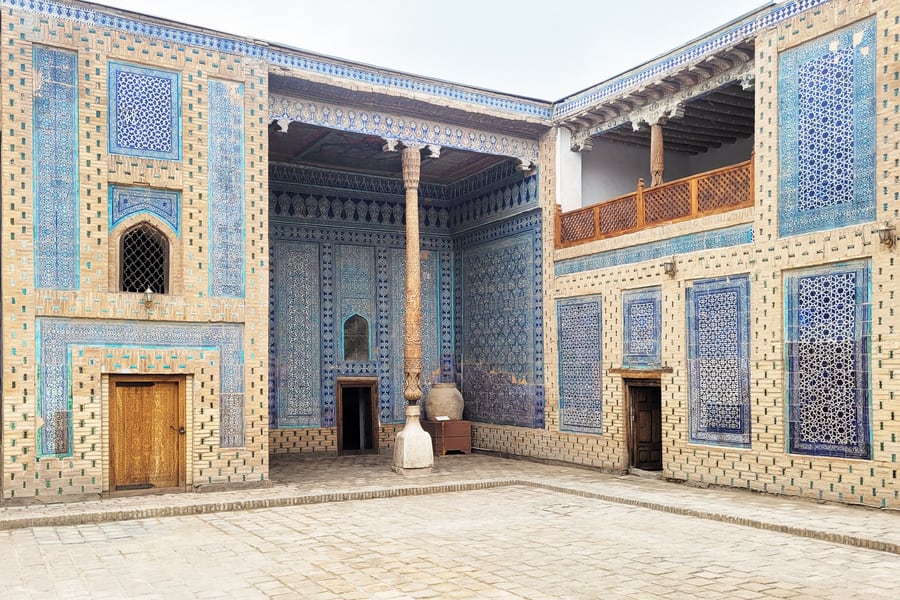
The Tosh-Hovli palace
Allakuli Khan built it between 1832 and 1841, and it holds the most sumptuous interior in Khiva: more than 150 rooms off nine courtyards, blue majolica from floor to ceiling, carved wooden columns on stone bases, and ceilings raised deliberately high to catch whatever breeze the desert offers. The harem courtyard, pictured, is the best of the nine. After the mud-brick monotone of the lanes outside, the colour is a genuine shock.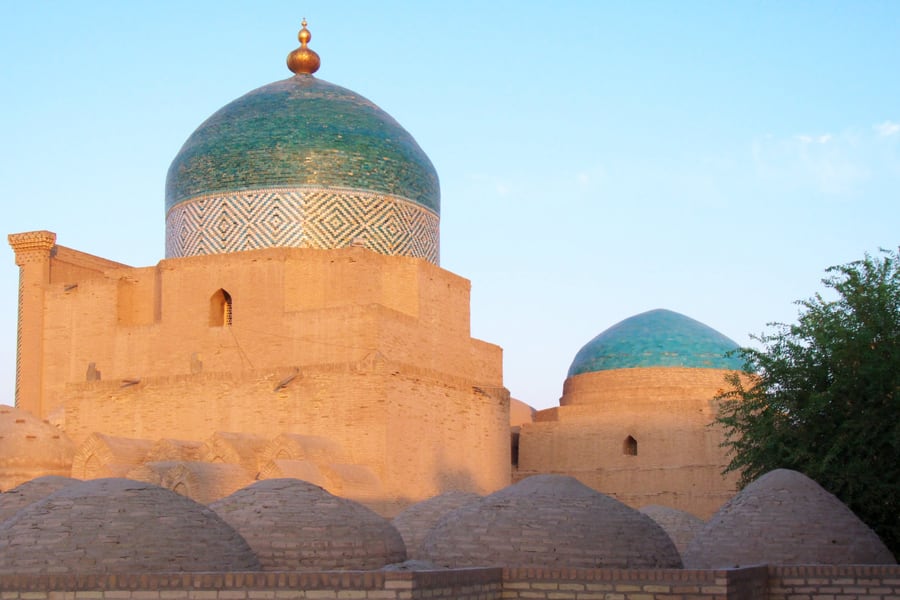 Fulvio Spada / Wikimedia Commons · CC BY-SA 2.0 · cropped
The Pahlavon Mahmud mausoleum
A furrier by trade, a poet and philosopher by inclination, and a wrestler famous enough that the legends about him reached India. He died around 1322 and was buried in his own workshop; a mausoleum went up over the grave in 1701 and the town kept building around it, so what stands now — the turquoise dome, the tiled halls, the khans buried alongside him — is largely nineteenth-century work over a fourteenth-century grave. It is still a working shrine, so dress and behave accordingly.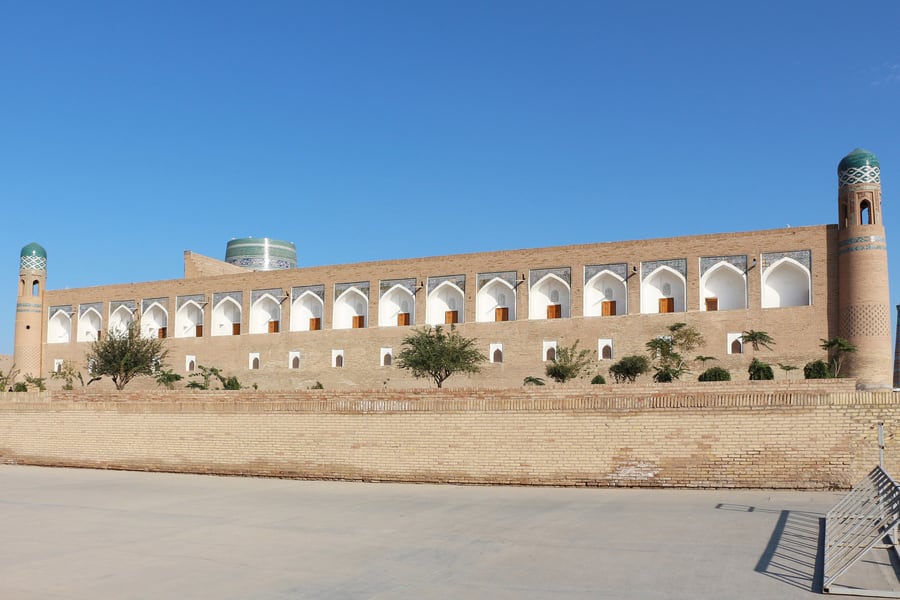 Bernard Gagnon / Wikimedia Commons · CC0 · cropped
The Muhammad Amin Khan Madrasah
The building the Kalta Minor was meant to stand beside: 1851–54, ordered by Muhammad Amin Khan, and the largest madrasah in Central Asia — a long two-storey arcade of student cells wrapped around a courtyard, right inside the west gate. It is now the Orient Star hotel, which means the cells are bedrooms and you can sleep in one. Whether that is charming or faintly absurd is a matter of taste; the arcade itself is magnificent.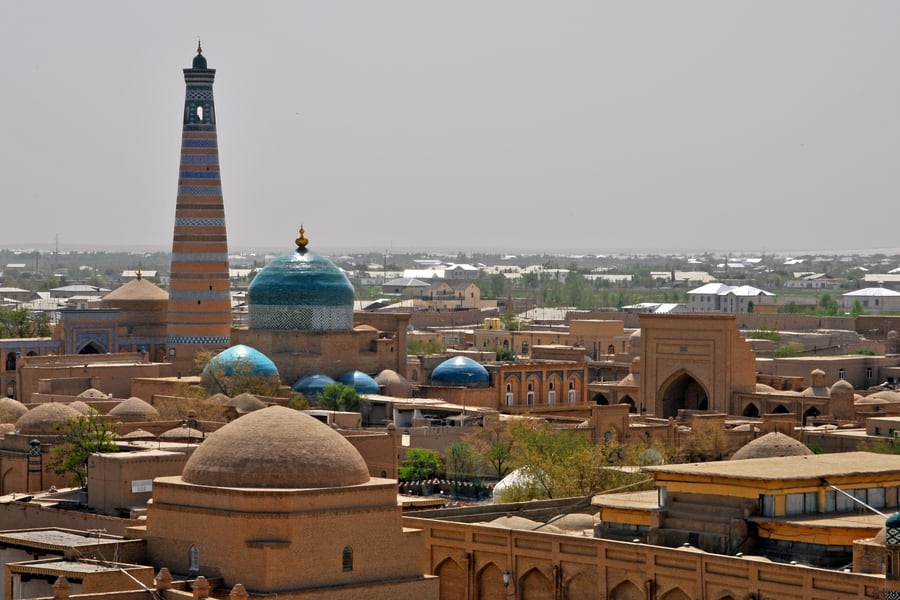 LBM1948 / Wikimedia Commons · CC BY-SA 4.0 · cropped
The rooftops
More than fifty monuments and some 250 old houses are packed inside the Itchan Kala, nearly all of them eighteenth- and nineteenth-century, and the only way to make sense of the plan is to get above it. Climb the Islam Khoja minaret or the Kunya Ark's watchtower late in the afternoon: flat brick roofs, domes, minarets, and then the wall, and then the modern town beginning immediately on the other side of it.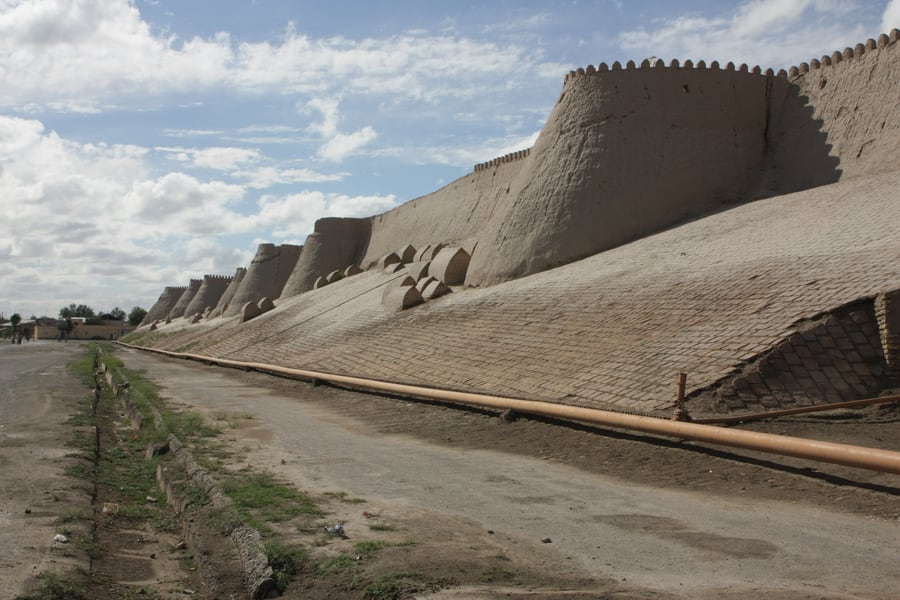 Davide Mauro / Wikimedia Commons · CC BY-SA 4.0 · cropped
The Itchan Kala walls
The rampart stands 8 to 10 m high and 5 to 6 m thick, rammed earth faced with mud brick, and walking the outside of it is the cheapest hour in Khiva — no ticket, no crowds, and the scale of the thing far clearer from below than from within. The Itchan Kala went onto the World Heritage list in 1990, three years before Bukhara and eleven before Samarkand: the first site inscribed anywhere in Uzbekistan.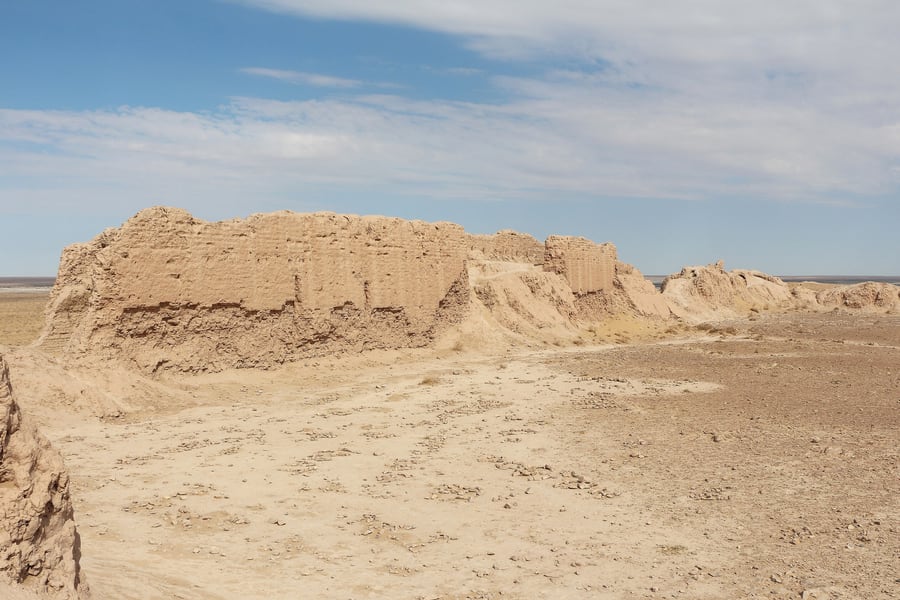 Bernard Gagnon / Wikimedia Commons · CC0 · cropped
Ayaz-Kala
Out beyond the Amu Darya, north-east of Urgench, in a district still called Ellikqala — "fifty fortresses" — the mud walls of ancient Khorezm stand up out of the sand with nothing else in sight. Ayaz-Kala is three of them at once, and they are not contemporaries: the hilltop fort dates from about the end of the 4th century BC, the lower one from the 6th to 8th century AD. Day trips run from Khiva. Take water, and go early.Where to Sleep
The magic of Khiva is to sleep inside the walls. A cluster of small guesthouses and boutique hotels occupies restored old houses and former madrasahs within the Itchan Kala itself, many with tiled courtyards, carved balconies and rooftops that look out over the minarets. Staying inside the walls means you have the old town to yourself in the early morning and late evening, once the day-trippers have gone and the mud walls turn gold — the finest hours to be there.
If the inner-town guesthouses are full, or you want more modern comforts, there are larger hotels just outside the gates in the newer part of Khiva, only a short walk from the walls. And because many overnight trains arrive at Urgench, some travellers spend a night there too; it is an ordinary provincial city, well supplied with practical hotels, thirty kilometres from Khiva.
Khiva is compact and welcoming, and prices are gentle. Rooms inside the Itchan Kala are limited, though, so book ahead in spring and autumn, when the walled city is at its busiest and its loveliest. Wherever you stay, try to give Khiva at least one full night — arriving and leaving by daylight would mean missing the best of it entirely.
Questions or corrections
Planning this trip and stuck on something, or spotted a time, fare or detail that has changed? Send us a message about The Train to Khiva. We read every one, and we update this page when something has changed.