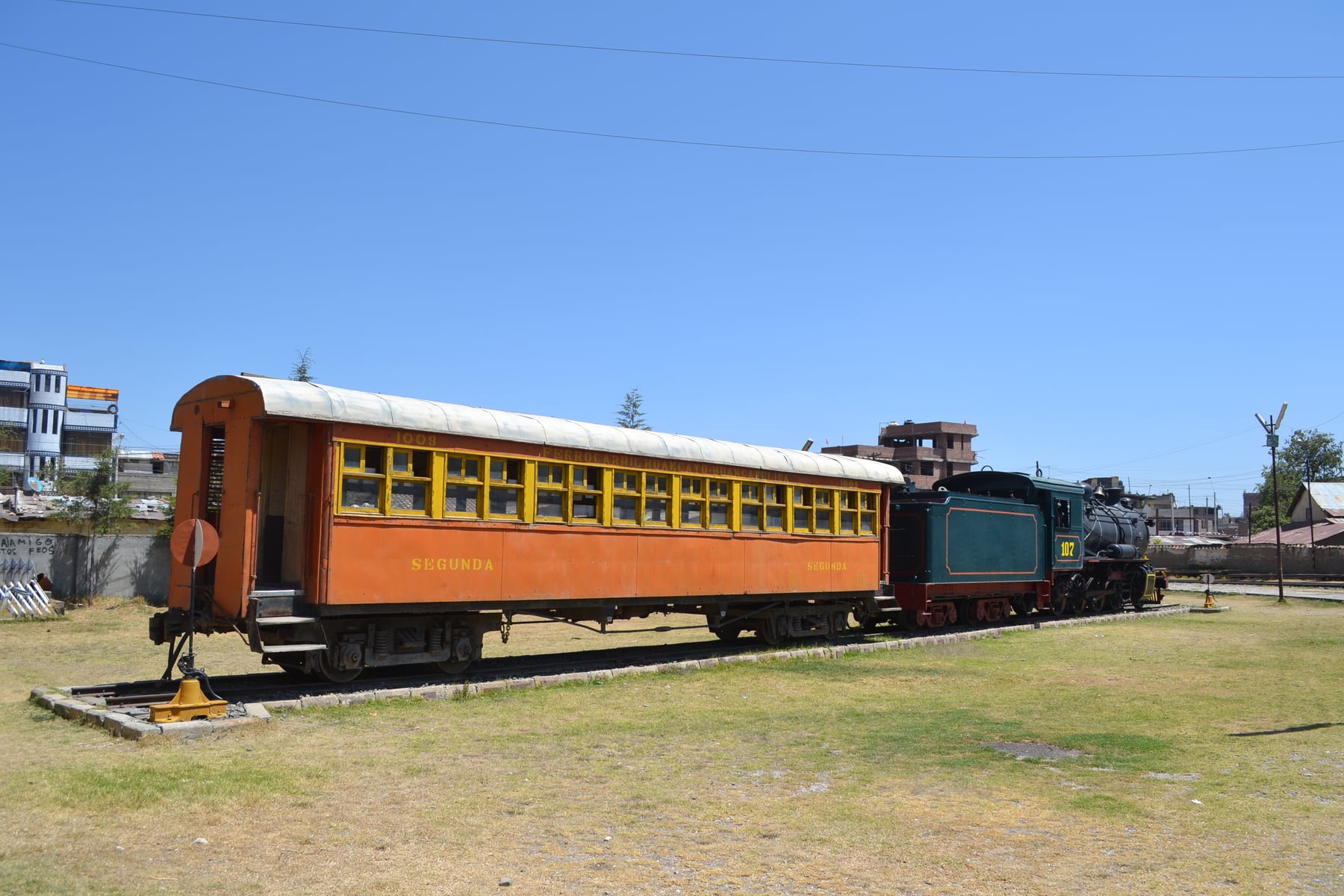
The Tren Macho to Cuenca
Martinarauzo / Wikimedia Commons · CC BY-SA 4.0
- DistanceChilca–Cuenca · 57 km of a 128.7 km line
- DurationAbout 2 hours each way
- Best seasonMondays · Fridays planned
Introduction
In Huancayo they call it the Tren Macho, the "male train", and the joke explains itself: it leaves when it wants and arrives when it can. It is the railway south from Huancayo to Huancavelica, 128.7 km through the central Andes, begun under a law of 1907 and opened on 24 October 1926. If you came up from Lima on the Ferrocarril Central Andino, this is where the rails carry on.
For most of its life it was a lifeline more than an attraction. Some of the villages it serves sit on the far bank of the Mantaro, where the train is the only way out, and it still carries their produce to market alongside teachers, nurses and the odd traveller. In October 2025 it stopped altogether. On its centenary, a year later, Peru's Ministry of Transport brought it back: from Monday 26 October 2026 a single railcar runs free of charge from Chilca station in Huancayo to Cuenca, 57 km down the line, in about two hours.
That is the catch, and the charm. The train runs once a week, on Mondays, with Fridays promised but not yet dated, and it stops well short of Huancavelica. Ride it the way the valley does: queue for a ticket at half past five, ride out with the market loads, and come back the same afternoon.
The Journey
The day starts in the dark at Chilca, the railway's own station on the south side of Huancayo. The ticket counter opens at half past five, the tickets are free, and the railcar's 80 seats go to whoever is there first. At 06:30 it pulls out.
It is not a long train. Since the restart in October 2026 the whole service has been one diesel railcar, an autovagón: the line's railcars are Kinki Sharyo units. The locomotive and coaches meant to strengthen it on busy days were still under repair when it reopened. Inside, the passengers are the people the line was built for: villagers going home or to market with their loads, teachers and health workers heading for posts down the valley, and very few visitors.
Down the Mantaro
The first few kilometres cross the farmland of the Mantaro valley's southern edge. The line bridges the little Chanchas river in Huancán and calls at Viques, the first stop after Chilca. There are eleven stops in all, two stations and nine halts, and the train waits between one and four minutes at each.
Beyond Huarisca and Parco the railway runs alongside the Mantaro itself. This is the part of the line the trains exist for. Some of the communities along it lie on the far side of the river, where the train is the only transport there is; the ministry reckons it saves them half an hour over the road even when there is one, because there are no changes and no waits.
After Manuel Tellería, the line's other station, and the halt at Pilchaca, the railcar reaches Cuenca, in the department of Huancavelica, at about 08:30. For now this is the end. The line goes on another 70-odd kilometres, through Izcuchaca and its colonial bridge, up the Ichu valley to Huancavelica at 3,676 metres, but that section is still waiting for maintenance and rehabilitation. A concession signed for the whole railway plans to rebuild it, with new track, two locomotives, rolling stock, and work on its 38 tunnels and 15 bridges.
At 13:00 the railcar sets off back, and it is in Chilca around 15:00. That leaves the morning in Cuenca, or the chance to ride only part of the way and get off where the river looks best.
This is an old railway. It was authorised in 1907, stalled in 1910, restarted by the state in 1918 and opened in 1926, built to the narrow 3 ft gauge, and it was only rebuilt to standard gauge between 2006 and 2010, when it became one with the Central Railway to Lima. Its nickname comes from the years before that, when it seldom kept time. It still runs at its own pace, once a week, and anyone with an ID document can ride it free.
Along the route
 Nils Öberg / Wikimedia Commons · CC BY-SA 3.0 · cropped
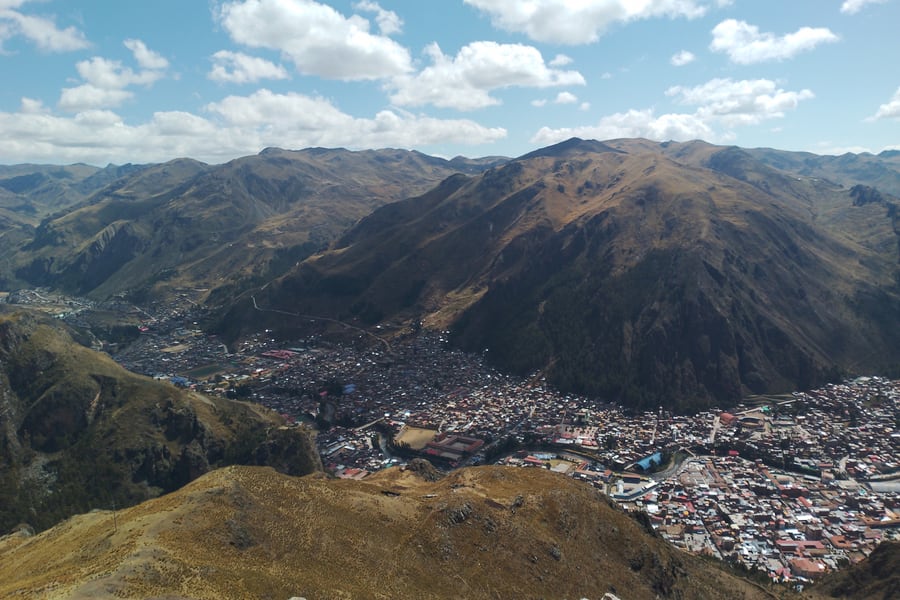
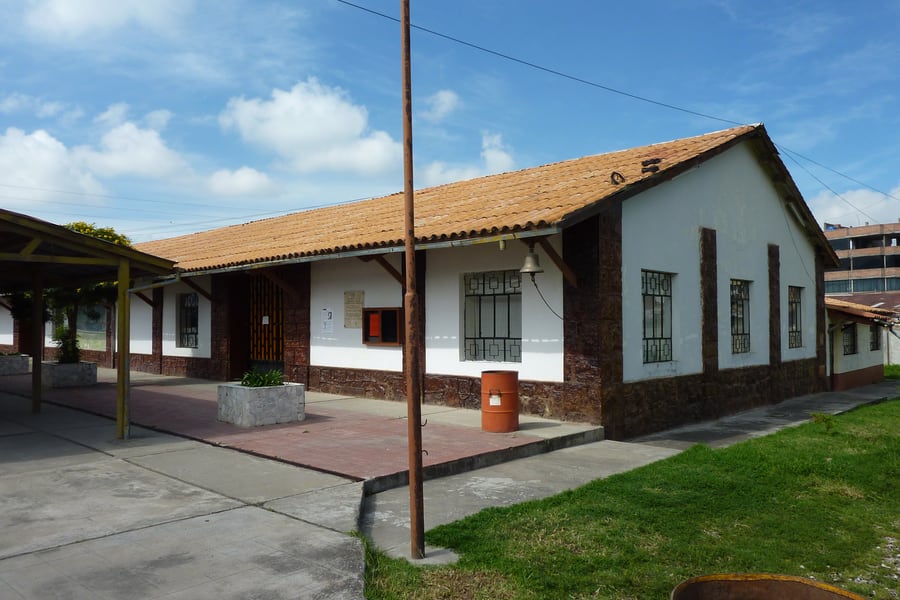
Chilca, at five-thirty
The train leaves from Chilca station, on the south side of Huancayo, at 06:30. Tickets are free but must be collected in person: the counter opens at 05:30 and the railcar fills in order of arrival.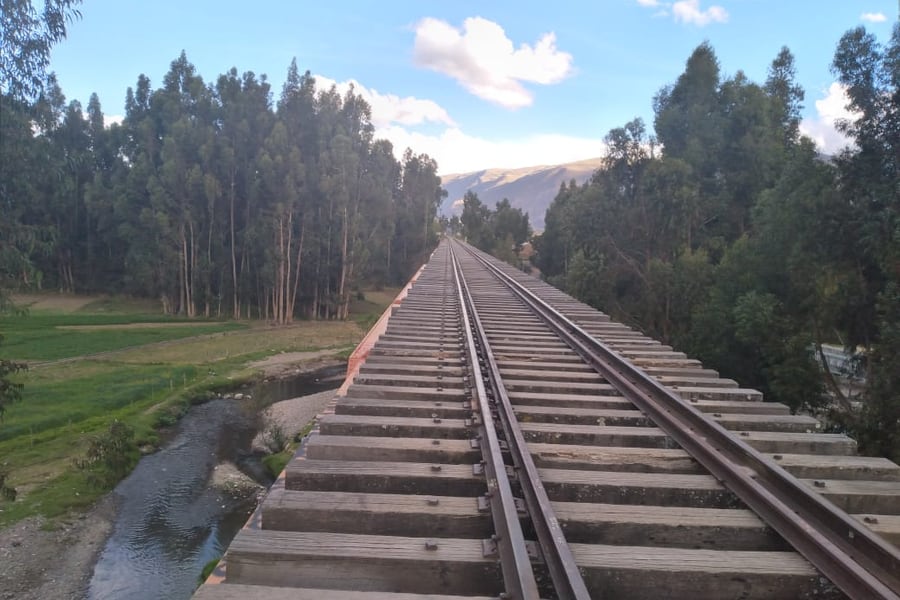 Nataly gamarra medina / Wikimedia Commons · CC BY-SA 4.0 · cropped
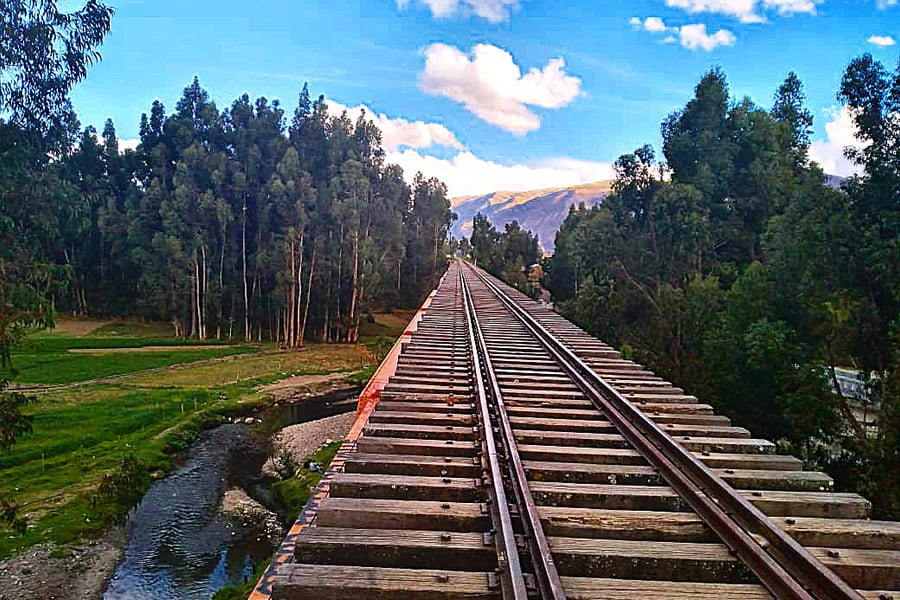
Over the Chanchas
Within minutes of leaving Chilca the line crosses the little Chanchas river on a low bridge in Huancán, then runs south past Viques and Huarisca towards the Mantaro.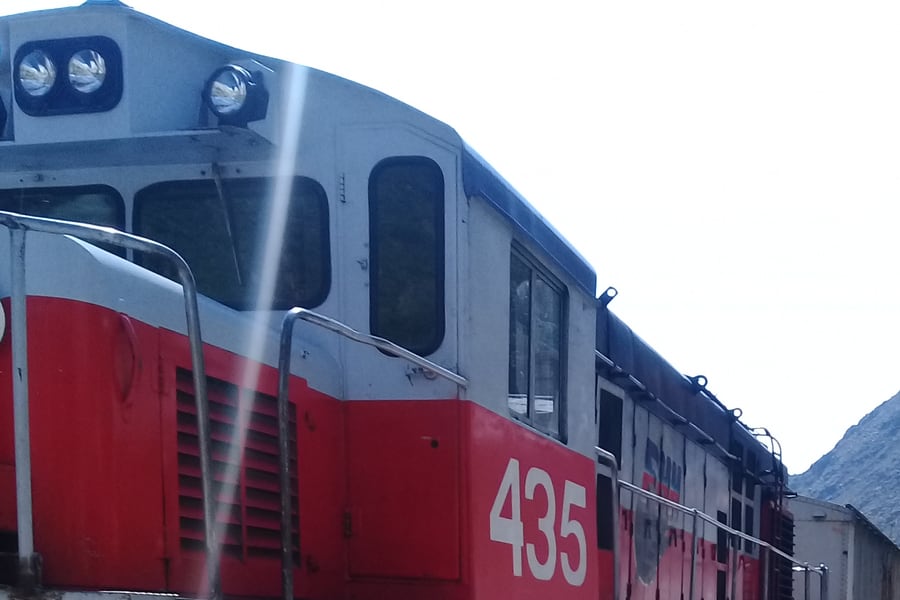 Lanazca / Wikimedia Commons · CC BY-SA 4.0 · cropped
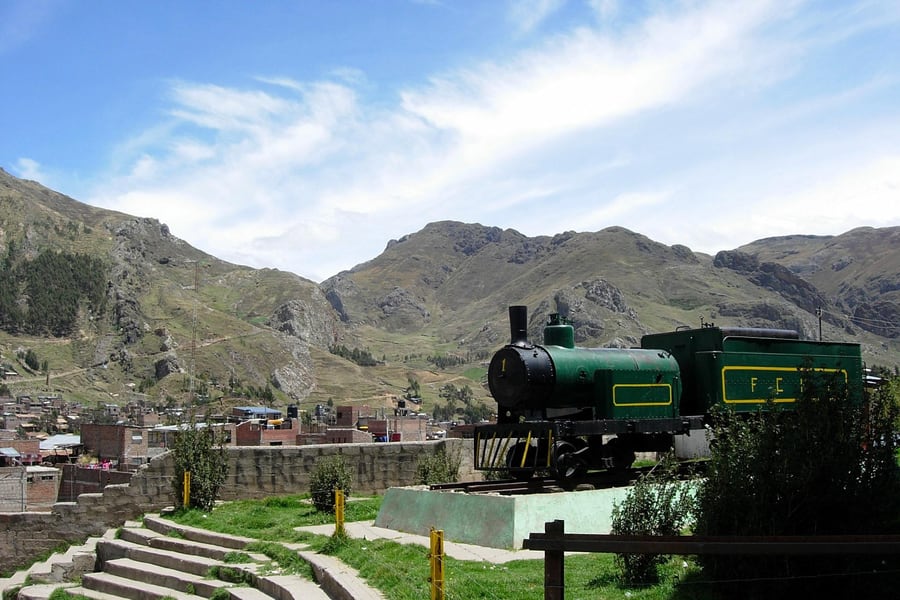
The line beyond Cuenca
The rails go on past Cuenca to Izcuchaca and Huancavelica, but only 57 of the line's 128.7 km reopened in October 2026. Locomotive 435 stood at Izcuchaca in 2017, when trains still ran through.A bit of history
Culture & experiences along the way
 H.dav.are / Wikimedia Commons · CC BY-SA 4.0 · cropped
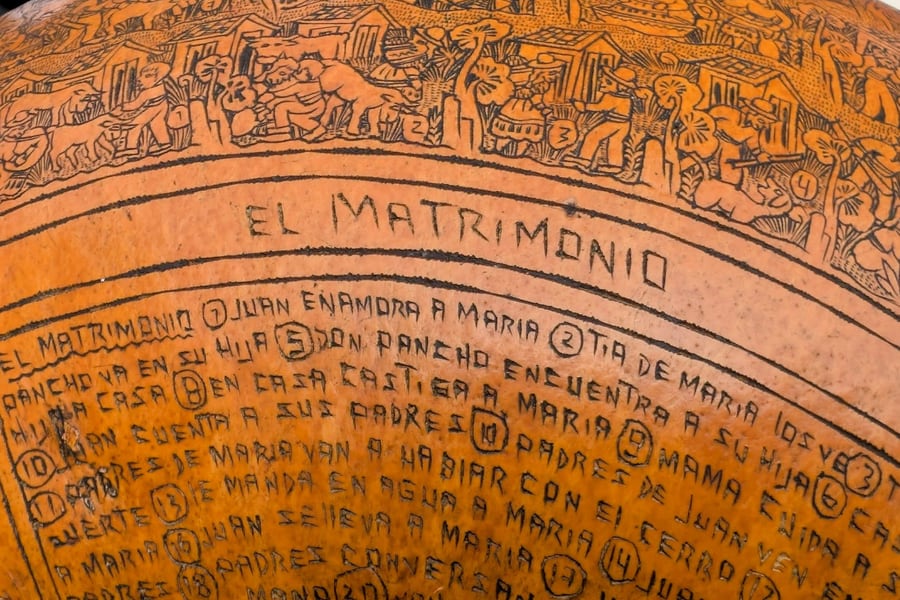
Gourds carved in the valley
Mate burilado is the Mantaro valley's craft: a dried gourd engraved with a burin, often with whole scenes of village life. Cochas Chico and Cochas Grande, near Huancayo, are the biggest producers, and a carver can spend two or three days on a single piece.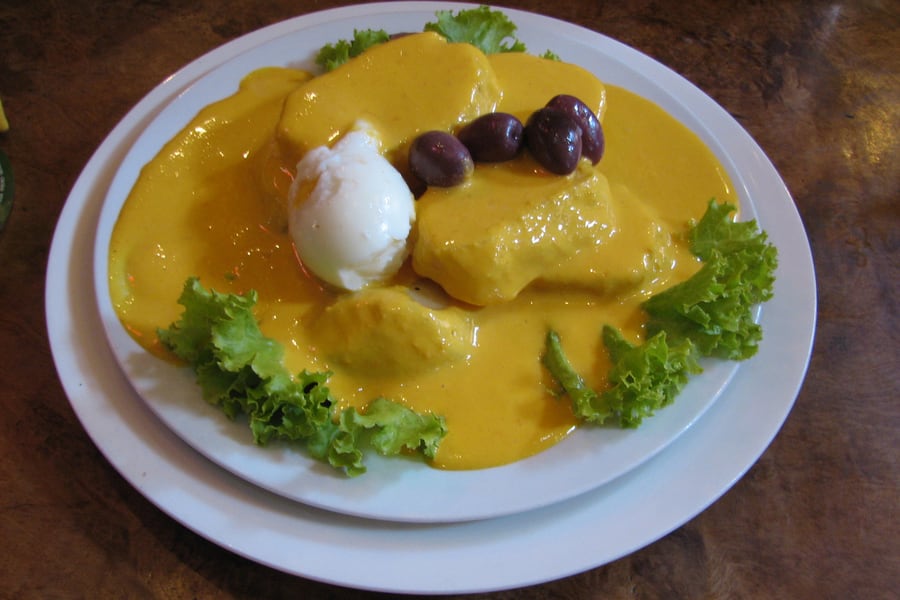 AgainErick / Wikimedia Commons · CC BY-SA 3.0 · cropped
Potatoes "a la huancaína"
Boiled potatoes under a sauce of fresh cheese and ají amarillo, with egg and black olives. The best-known story of papa a la huancaína puts it on the Central Railway: women from Huancayo cooked it for the men building the line, or sold it to its passengers.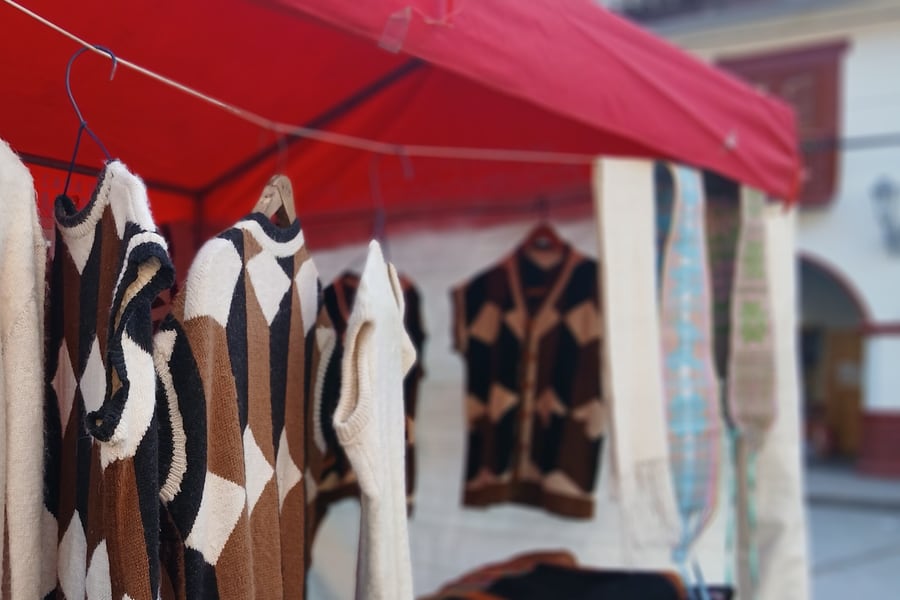 Dalphard mar / Wikimedia Commons · CC BY-SA 4.0 · cropped
Huancavelica's knitwear
Stalls on Huancavelica's Plaza de Armas sell the region's own knitting and weaving: jumpers and waistcoats in cream, brown and black, worked in bold diamond patterns. It is the place to buy something warm at 3,676 metres.Timetables
The Tren Macho runs once a week, on Mondays, out from Huancayo in the morning and back the same afternoon. The Ministry of Transport plans to add a Friday service; it had not given a start date by late November 2026.
| Monday | Chilca (Huancayo) | Cuenca |
|---|---|---|
| Outbound | 06:30 | about 08:30 |
| Return | about 15:00 | 13:00 |
Stops: Chilca, Viques, Paccha, Chanca, Retama, Ingahuasi, Huarisca, Parco, Manuel Tellería, Pilchaca and Cuenca. The train calls at each for one to four minutes.
Good to know:
- One railcar, about 80 seats. There is no reservation: tickets are handed out at the station or halt on the day, in order of arrival, and the counter at Chilca opens at 05:30.
- The train does not reach Huancavelica. Since 26 October 2026 it runs only the 57 km from Chilca to Cuenca; Izcuchaca and Huancavelica are reached by road.
- The service has stopped before. It was suspended from October 2025 to October 2026, and the timetable has changed several times since 2023. Check the ministry's notices before you travel.
Departures and days as of November 2026, from the Ministry of Transport and Communications (MTC (opens in a new tab)) and the local press. The arrival times are the ministry's from 2025.
Tickets
The Tren Macho is free. There is nothing to book and nothing to buy: you collect a ticket in person at Chilca or at the halt where you board, showing a DNI if you are Peruvian or a passport if you are not, and the seats go in order of arrival until the railcar is full.
The ministry calls the free service a first stage, and Huancavelica's governor has proposed a reduced tarifa social for when fares return. No fare had been set as of November 2026.
Book your tickets
Free ticket, Chilca–Cuenca
Mondays, collected in person
The fare is nothing: collect a ticket at Chilca or at any halt with your DNI or passport, and the seats go in order of arrival until the railcar is full.
Book Tickets (opens in a new tab, on Ministerio de Transportes y Comunicaciones (MTC))via Ministerio de Transportes y Comunicaciones (MTC)Rail Passes
No rail pass covers the Tren Macho, and none is needed: the ride is free.
Checked November 2026.
Places to Visit
The train itself covers only the first half of the line, so the places below split in two. Torre Torre and Wariwillka are on Huancayo's doorstep and easy to fit around a Monday ride. Izcuchaca, Huancavelica and the Santa Bárbara mine lie beyond Cuenca, where the trains stop for now, and are reached by road.
Huancavelica is worth the extra effort. It was a mining town before it was anything else: the mercury dug from the hill above it refined the silver of Potosí, and until the nineteenth century it was the only major source of mercury in the Americas.
 Huallallo / Wikimedia Commons · CC BY-SA 4.0 · cropped
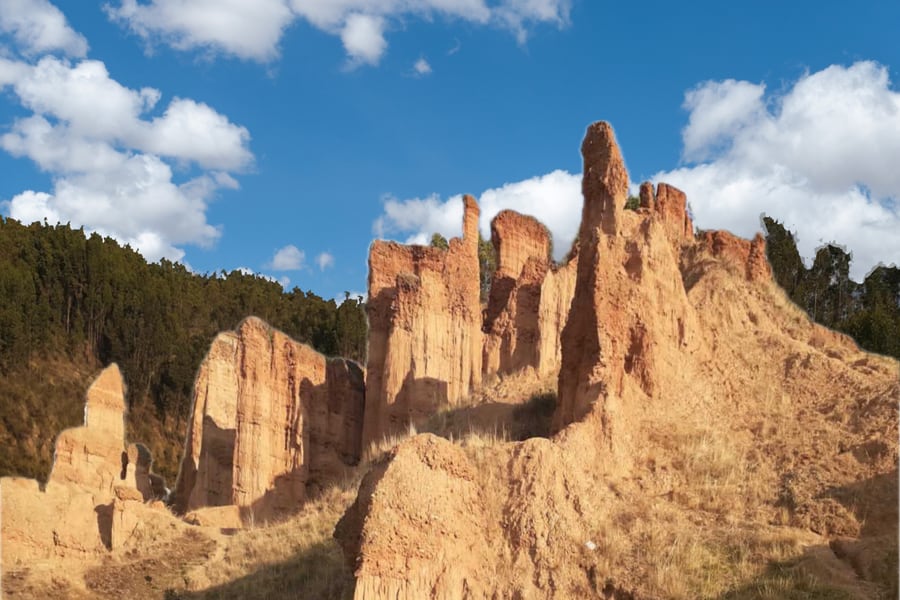
Torre Torre
About 1.5 km from Huancayo, a ravine of clay towers carved by the rain, some of them more than 30 metres high: the Andes' own fairy chimneys. Erosion is still reshaping them, so the view changes from one rainy season to the next. It makes an easy half-day before or after the train.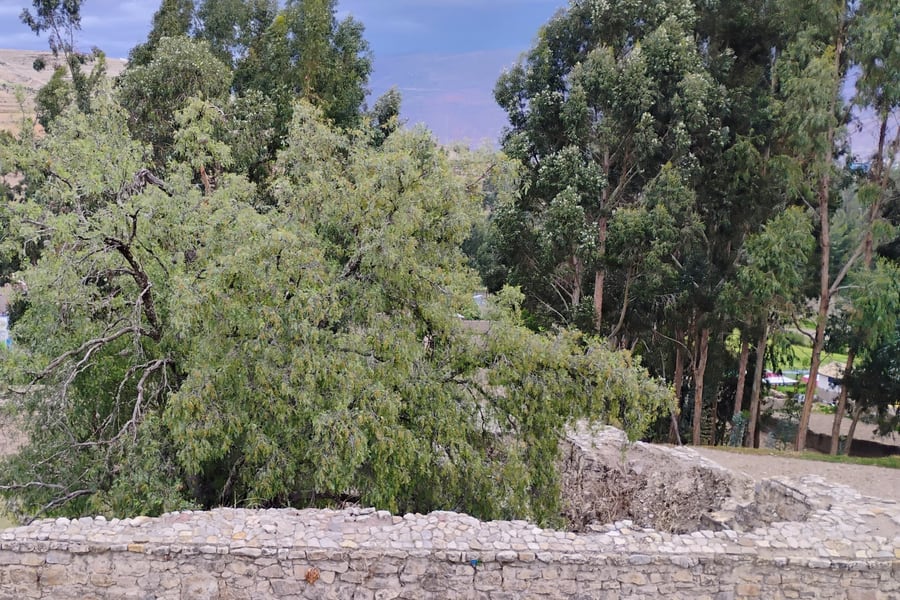 Carlo Brescia / Wikimedia Commons · CC BY-SA 4.0 · cropped
Wariwillka
A pre-Hispanic sanctuary at Huari in Huancán, about 6 km south of Huancayo and close to the line. Built under Wari rule, it was later held to be the spring from which the first Huanca couple came. Pedro Cieza de León described it in the 1540s, and its two great molle trees, said to be a male and a female god, are reckoned to be older than 470 years.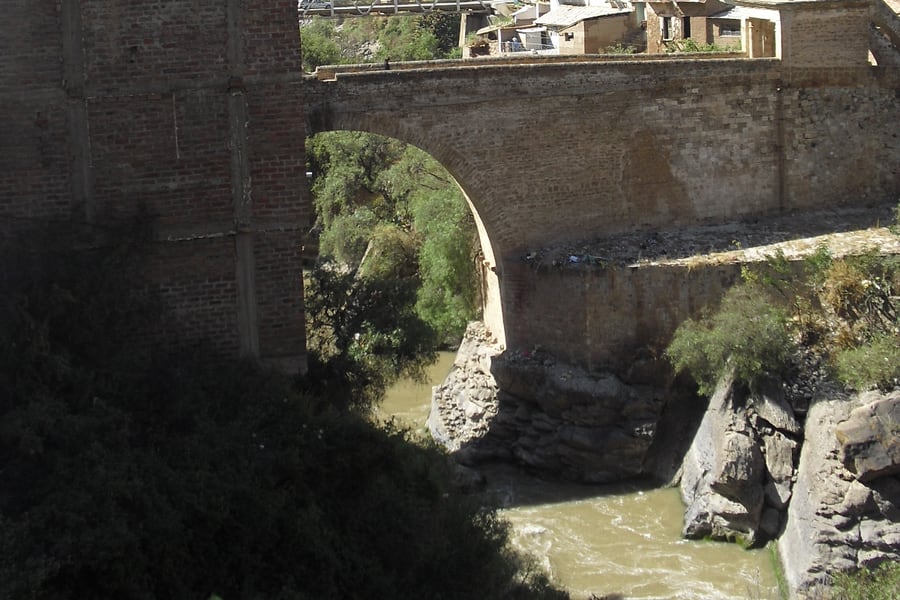 °Zucesor2013° / Wikimedia Commons · CC BY-SA 3.0 · cropped
Izcuchaca
A small town at about 2,900 m in a deep gorge, 78 km north of Huancavelica, with hot springs and a bridge built by the Spanish. The French traveller Charles Wiener crossed it in 1876. The railway runs through, but since October 2026 the trains stop short of it, at Cuenca; it is reached by road.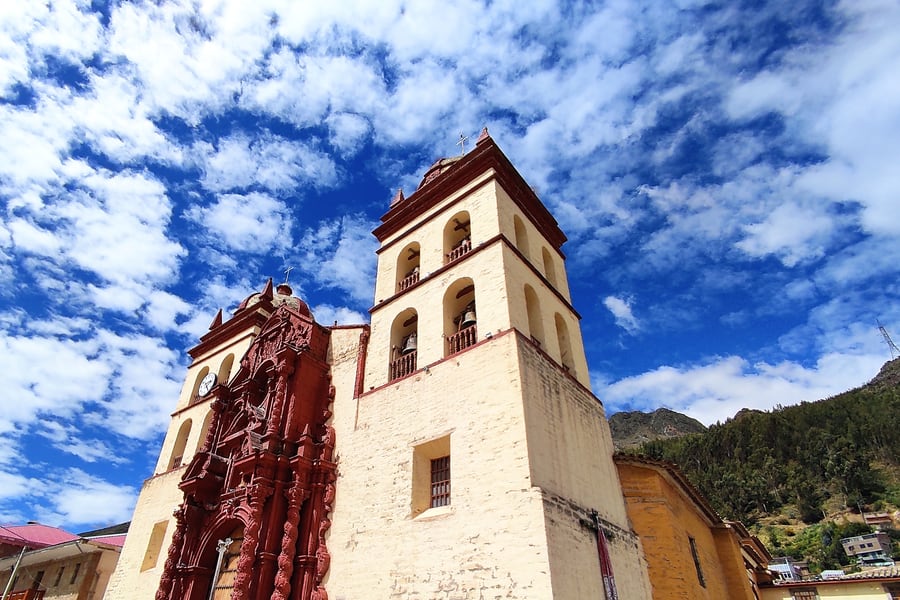 Jaimruiz / Wikimedia Commons · CC BY-SA 4.0 · cropped
Huancavelica cathedral
The church of San Antonio on Huancavelica's Plaza de Armas was finished in July 1608. After the earthquake of January 1687 it gained a baroque portal of red stone and new belfries, the contrast Wiener found "pleasing" in 1876. The city stands at 3,676 m, at the end of the line.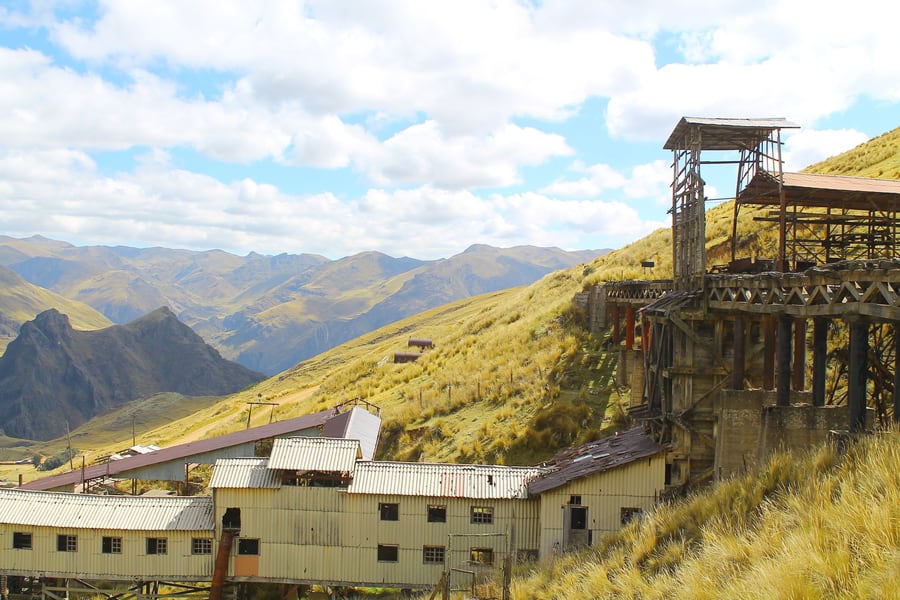 Aimarcito / Wikimedia Commons · CC BY-SA 4.0
Santa Bárbara
Above Huancavelica, between 3,700 and 4,200 m, the mine whose mercury refined the silver of Potosí. It was the only major mercury mine in the Americas until California's in the nineteenth century, worked by forced mita labour in which thousands died. Its buildings are now heritage, about an hour from the city.Where to Sleep
You sleep in Huancayo. The train leaves Chilca at 06:30, after a queue for tickets that starts at 05:30, so stay the night before somewhere close to the centre or to Chilca, not out in the valley. It is also the place to rest after the climb from Lima: the city stands at about 3,256 metres.
The same railcar brings you back to Chilca in the afternoon, so most riders need only the one base. If you go on to Huancavelica, which the train does not reach at present, stay in the city itself and plan for the altitude, which at 3,676 metres is higher again.
Questions or corrections
Planning this trip and stuck on something, or spotted a time, fare or detail that has changed? Send us a message about The Tren Macho to Cuenca. We read every one, and we update this page when something has changed.