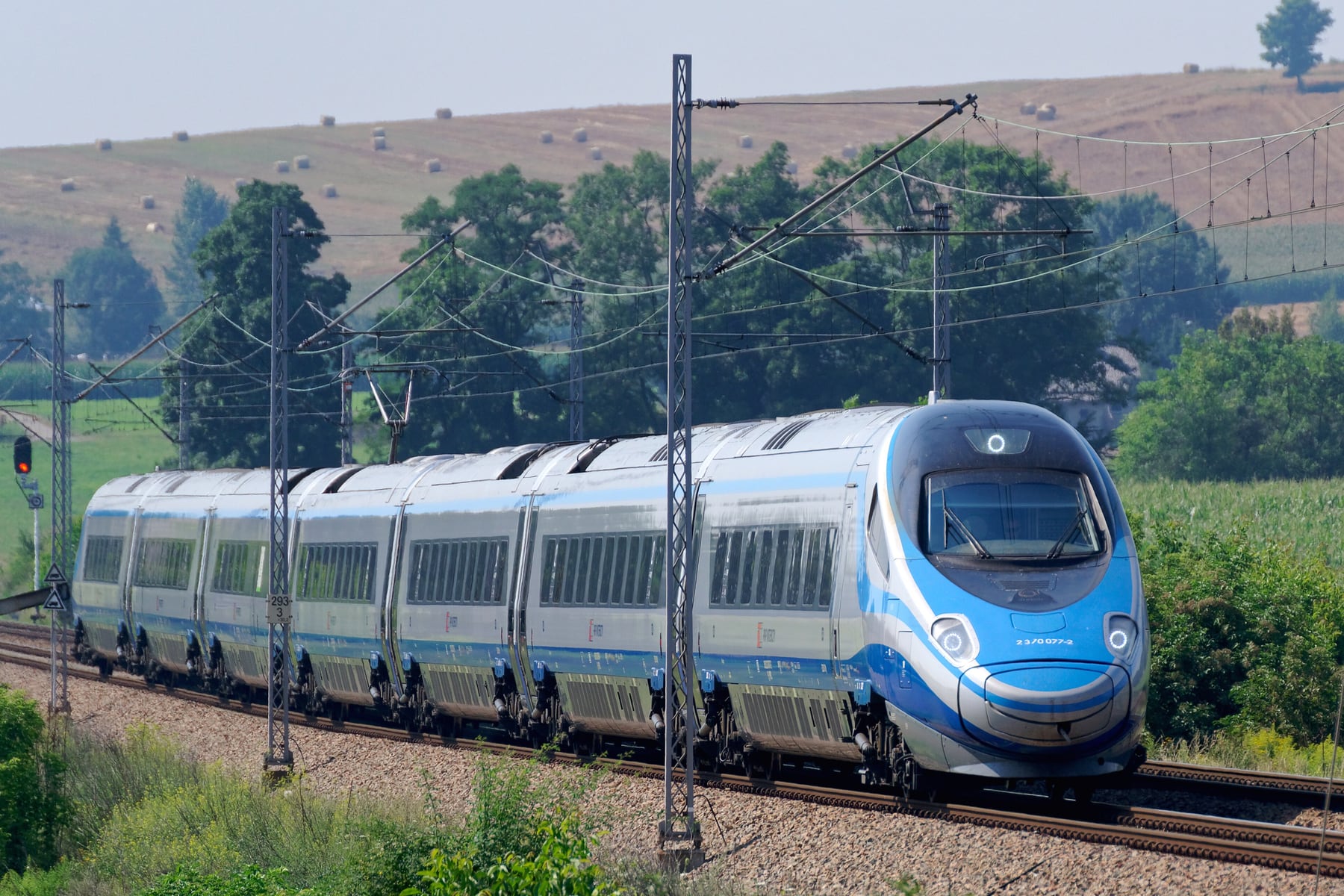
The Central Trunk Line
Jakub Hałun / Wikimedia Commons · CC BY-SA 4.0 · cropped
- Distance224 km Grodzisk Mazowiecki to Zawiercie · double track
- Duration2 h 24 to 2 h 39 by Pendolino, Warsaw to Kraków
- Best seasonAll year
Introduction
The fastest trains from Warsaw to Kraków spend most of the journey on the Centralna Magistrala Kolejowa, the Central Trunk Line: 224 kilometres of double track laid across central Poland in the 1970s. Its curves have a radius of 4,000 metres and its tracks are set wide apart, because it was designed from the start for passenger trains at up to 250 km/h.
No timetabled train has run at that speed yet. For its first years the line carried mostly coal. An Italian Pendolino on trial touched 250.1 km/h here in 1994, and PKP Intercity's own Pendolinos, delivered ready for 250, reached 293 km/h on test in 2013. In service they were cleared for 200 from December 2014, on part of the line.
Today they are held to 160 km/h over nearly all of it, while the old signalling is switched off and its replacement installed. Poland plans to go straight to 250 with the timetable of December 2027, 56 years after the line was designed.
The Journey
Trains leave Warszawa Centralna from platforms below the street and run west through Warszawa Zachodnia on the old Warsaw–Vienna railway, whose first section reached Grodzisk in 1845. The Central Trunk Line begins at Grodzisk Mazowiecki. It keeps to the north side of the old line as far as Jaktorów, climbs over it and turns south, and from there the fastest trains have no stop until Kraków.
The long run south
What follows is about two hours of fields and pine woods. The line crosses the Pilica between Szeligi and Idzikowice and carries on past Opoczno and Włoszczowa on long, gentle curves, with most roads taken over or under it on bridges. A window seat shows the geometry better than any speedometer. There are only eleven stations in 224 kilometres, and the fastest trains call at none of them.
Three of the eleven handle passengers: Opoczno Południe, Włoszczowa Północ and Zawiercie at the far end. The first two were added decades after the line opened, cut into a railway planned without them.
Why it was built
The plan was freight. Coal from Upper Silesia was to go north to the Baltic ports on a new double track, and the line was meant to continue beyond Warsaw to Gdańsk. The economic crisis of the 1970s stopped it at Grodzisk. Line number 5 in the national register is still reserved for the northern half, which was never built. In 1980 the line carried 73 freight trains a day and four passenger trains.
Passengers came later: two express pairs from June 1984, the Górnik and the Krakus, at 140 km/h, the fastest scheduled running Poland had seen. Four years on the same trains reached 160.
The last hour
Kraków trains leave the trunk line at Psary, follow a short link through Starzyny to Kozłów, and join the older line south. That section, opened through to Kraków only in 1934, runs by Miechów and across the rolling farmland around Słomniki, and comes into Kraków Główny from the north.
The train
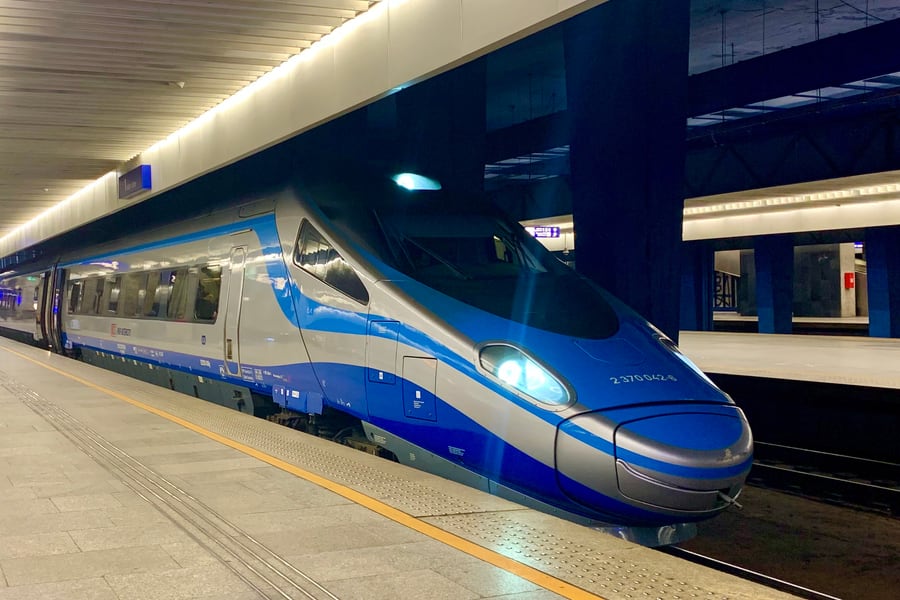
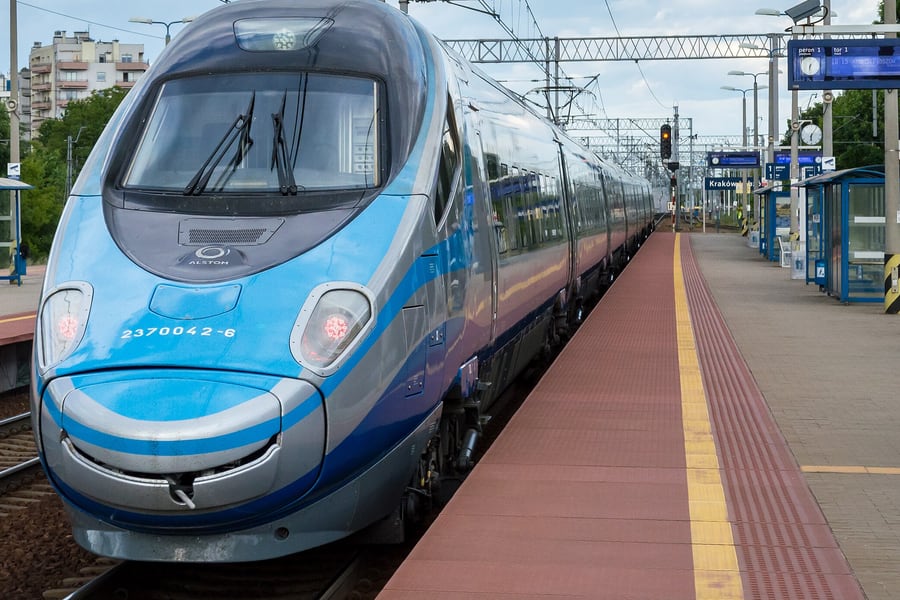
Class ED250 is an Alstom New Pendolino of seven cars, built at Savigliano in Italy for PKP Intercity. Twenty were delivered and they carry the Express Intercity Premium brand. They do not tilt, the tender having dropped that requirement. The fleet took its first passengers on 14 December 2014, and in 2015 the Supreme Audit Office called the purchase economically unjustified, because the track and power supply were not ready for what the trains could do.
A Pendolino reached 253 km/h on the line on the night of 17 to 18 August 2026, testing the digital radio network the new signalling depends on. The infrastructure ministry told parliament in June 2026 that the limit will go straight to 250 km/h on about 180 kilometres of line, without first going back to 200, and that the forecast for Warsaw to Kraków at that speed is 1 hour 56.
Along the route
 MOs810 / Wikimedia Commons · CC BY-SA 4.0 · cropped
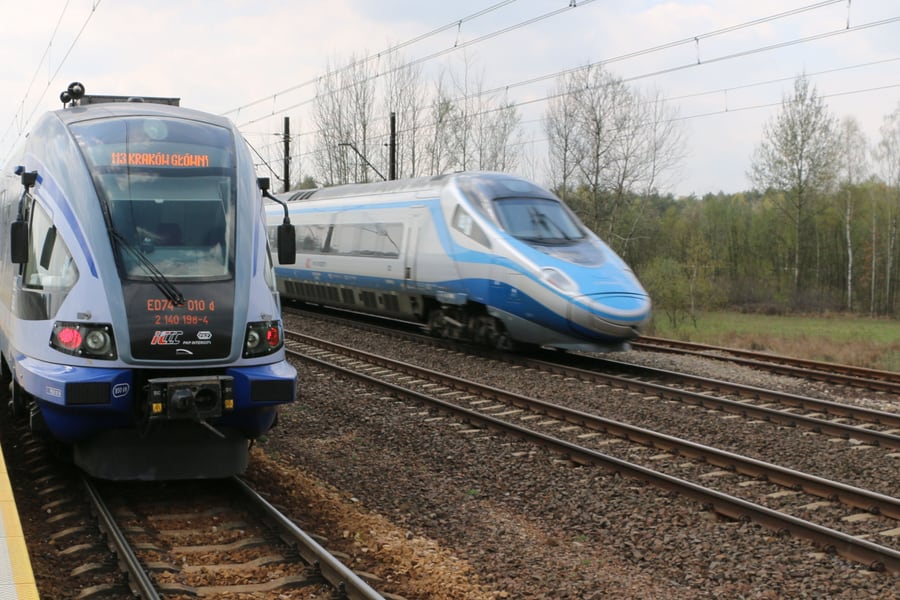
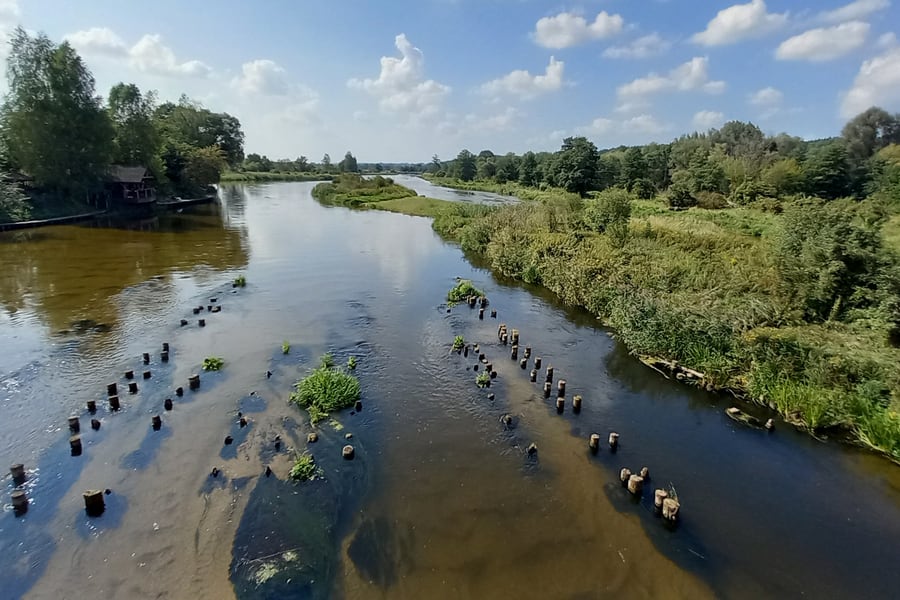
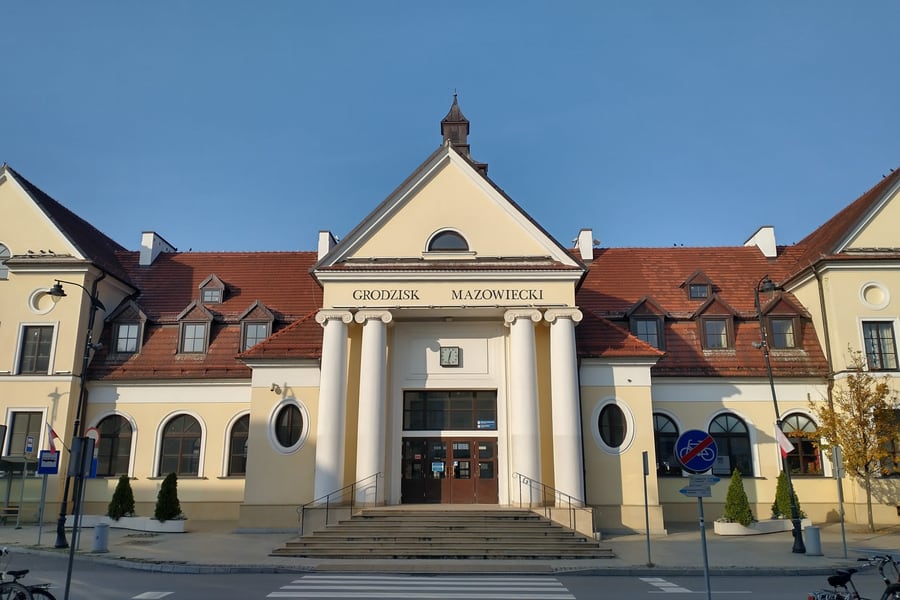
Grodzisk Mazowiecki
The Central Trunk Line begins here, beside the Warsaw–Vienna railway of the 1840s. It runs alongside the old line as far as Jaktorów, then rises over it and turns south for 224 kilometres.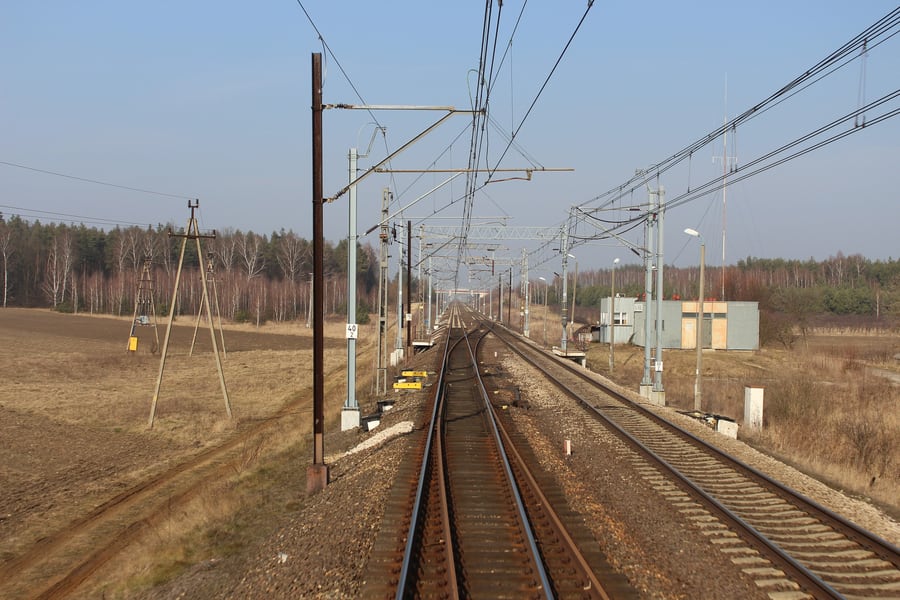 Filipbb / Wikimedia Commons · CC BY-SA 3.0 · cropped
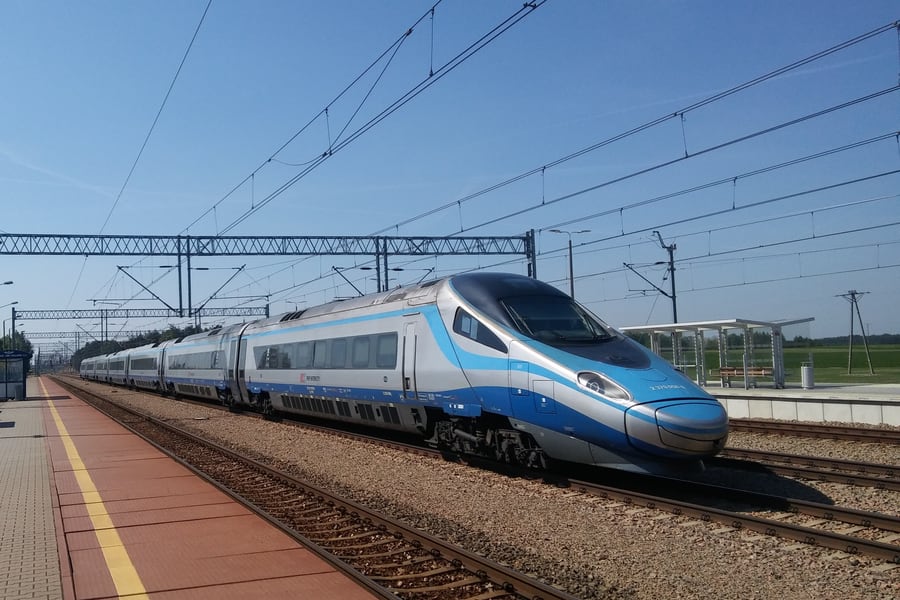
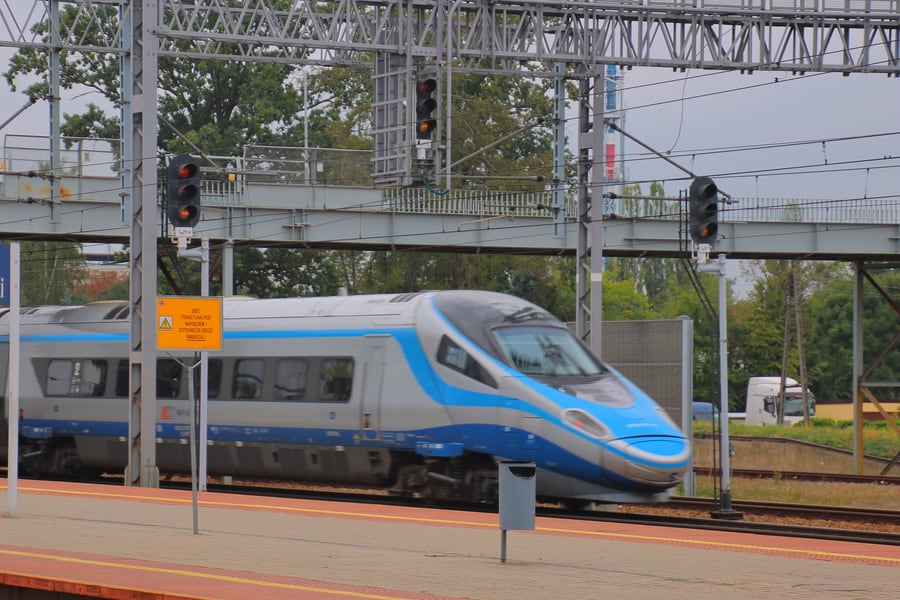
Biała Rawska
On 11 May 1994 an Italian Pendolino on trial reached 250.1 km/h near this block post, about 40 kilometres down the line. That stood as Central Europe's railway speed record until 2013, and it is still the speed the line waits to run at in service.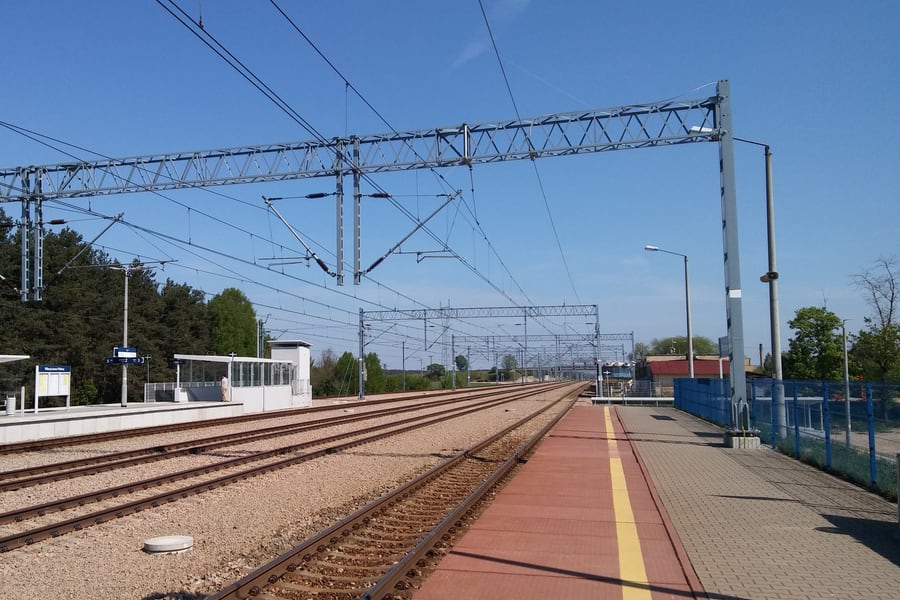 Megatron7667 / Wikimedia Commons · CC BY-SA 4.0 · cropped
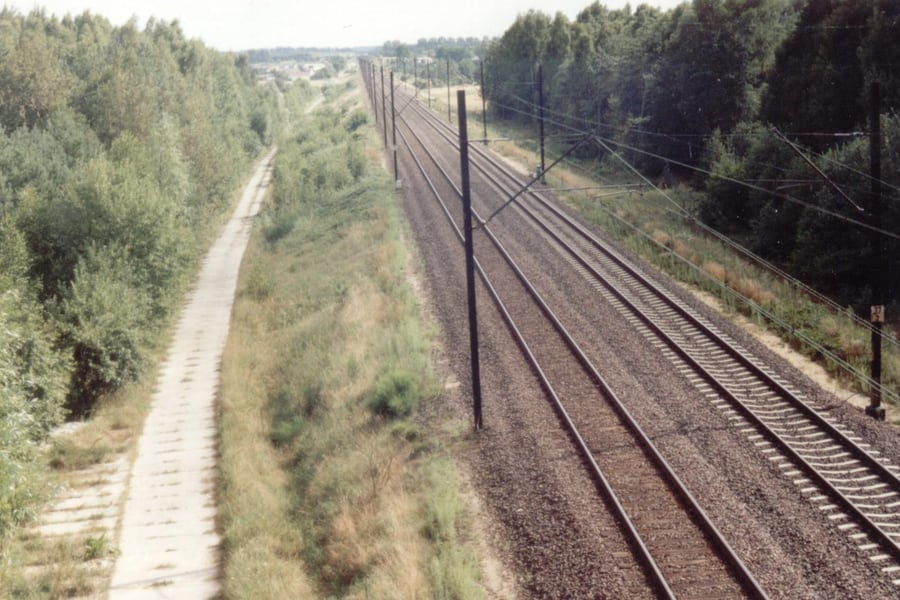
Włoszczowa Północ
Expresses used to run straight through. In October 2006, a month before local elections, the first one stopped at a new platform for which minister Przemysław Gosiewski had pushed, and the town of 11,000 made him an honorary citizen. Trains still call here.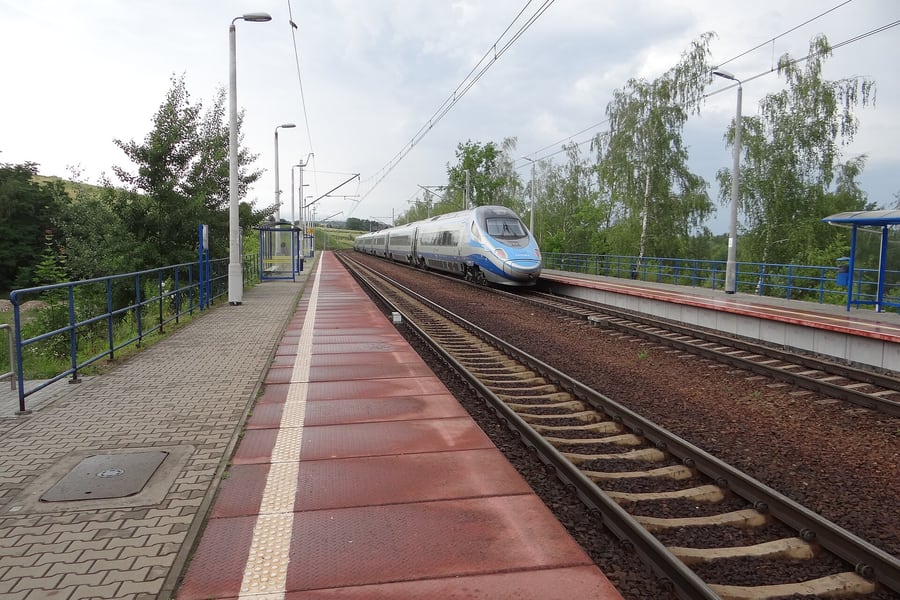 Zbigniew.czernik / Wikimedia Commons · CC BY 3.0 · cropped
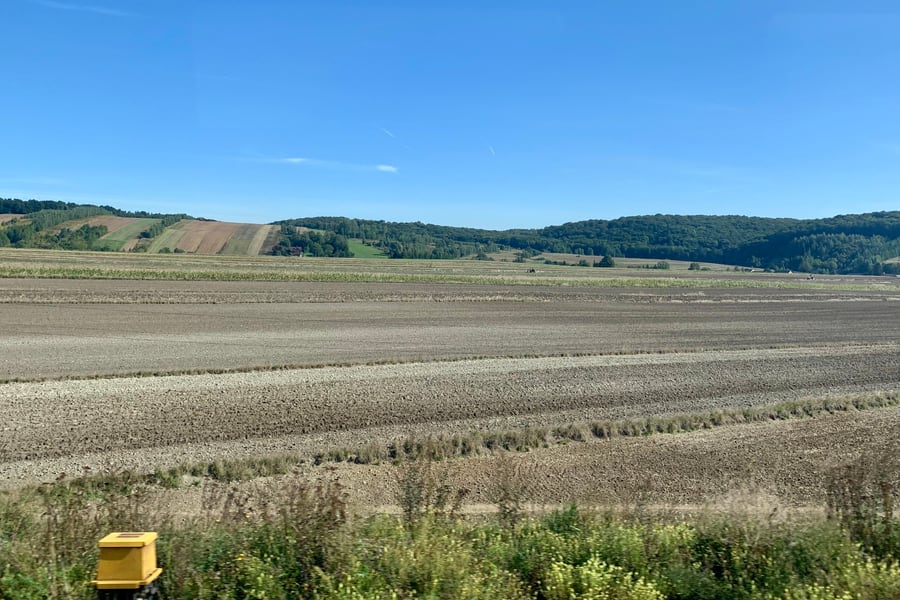
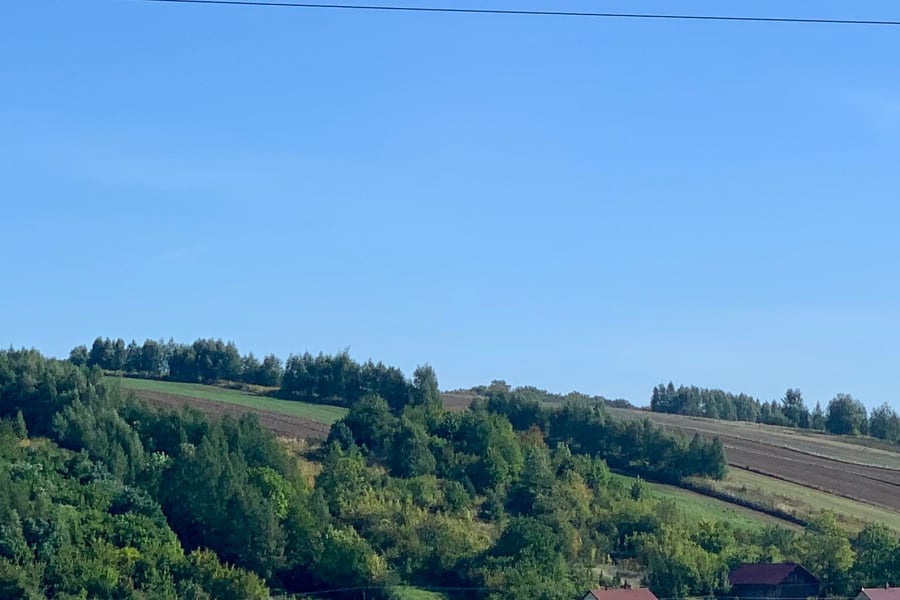
Słomniki
South of Kozłów the trains are on the older line to Kraków, finished in 1934 to give the city a direct route to Warsaw. Around Słomniki it crosses rolling farmland, the last open country before the suburbs.A bit of history
Culture & experiences along the way
 Chris Brown / Wikimedia Commons · CC BY 2.0 · cropped
An obwarzanek from a street cart
Kraków's braided bread ring is boiled, then baked with salt, sesame or poppy seeds, and it has a crunchy golden crust over a chewy crumb. Traditionally sold from street carts, the obwarzanek krakowski holds a protected geographical indication and is the snack to buy on the way out of Kraków Główny.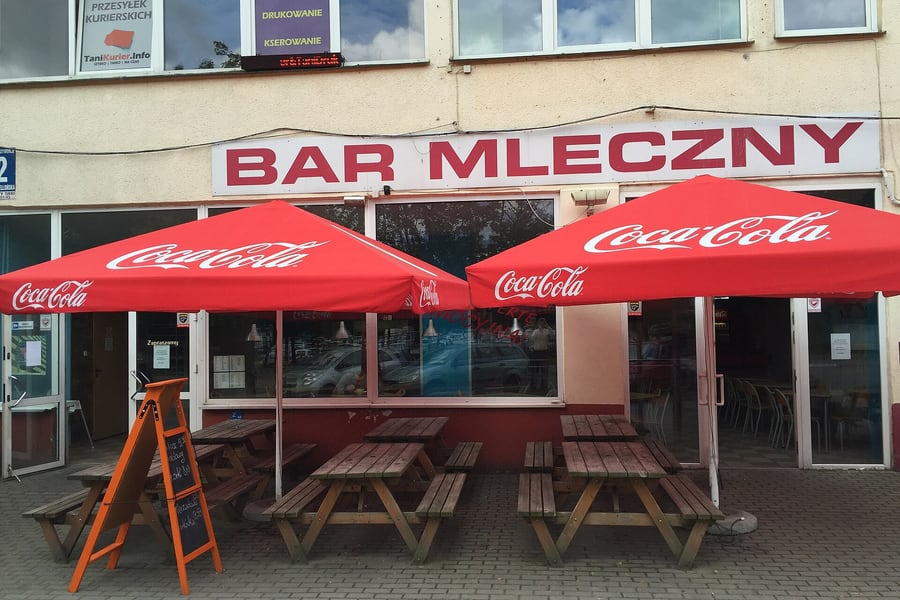 Christopher Ziemnowicz / Wikimedia Commons · CC BY-SA 4.0 · cropped
A plate at a milk bar
The first bar mleczny opened on Nowy Świat in Warsaw in 1896, and Poland's milk bars are still state-supported cafeterias serving low-priced traditional food. Dairy dishes came first and still lead the menu: milk soup, and leniwe, the "lazy dumplings" of curd cheese and flour.Timetables
PKP Intercity runs the expresses. Pendolino trains (category EIP) take between 2 hours 24 and 2 hours 39 from Warsaw to Kraków, most of them leaving at or near 40 minutes past the hour, and the journey back is much the same. Trains run all year.
Warsaw to Kraków
| Warszawa Centralna | Train | Kraków Główny | Time |
|---|---|---|---|
| 05:52 | IC 1312 Malinowski | 08:40 | 2 h 48 |
| 06:40 | EIP 1302 | 09:04 | 2 h 24 |
| 07:40 | EIC 1350 Tatry | 10:11 | 2 h 31 |
| 08:40 | EIP 5300 | 11:10 | 2 h 30 |
| 09:40 | EIC 5350 Kaszub | 12:11 | 2 h 31 |
| 10:44 | EIP 1304 | 13:13 | 2 h 29 |
| 11:40 | EIP 8300 | 14:15 | 2 h 35 |
| 13:48 | EIP 5302 | 16:27 | 2 h 39 |
| 14:40 | EIP 5352 | 17:09 | 2 h 29 |
| 15:40 | EIP 1306 | 18:12 | 2 h 32 |
| 16:40 | EIP 5304 | 19:13 | 2 h 33 |
| 17:40 | EIP 5306 | 20:08 | 2 h 28 |
| 18:40 | EIP 5308 | 21:07 | 2 h 27 |
| 19:40 | EIP 1308 | 22:13 | 2 h 33 |
| 20:40 | EIP 5310 | 23:06 | 2 h 26 |
Kraków to Warsaw
| Kraków Główny | Train | Warszawa Centralna | Time |
|---|---|---|---|
| 06:53 | EIP 3108 | 09:21 | 2 h 28 |
| 07:56 | EIP 3508 | 10:20 | 2 h 24 |
| 08:40 | EIP 3106 | 11:12 | 2 h 32 |
| 09:44 | EIP 3506 | 12:20 | 2 h 36 |
| 10:51 | EIP 3552 | 13:20 | 2 h 29 |
| 11:52 | EIP 3504 | 14:20 | 2 h 28 |
| 13:43 | EIP 3800 | 16:20 | 2 h 37 |
| 14:47 | EIP 3104 | 17:20 | 2 h 33 |
| 15:49 | EIC 3550 Kaszub | 18:20 | 2 h 31 |
| 16:47 | EIP 3502 | 19:20 | 2 h 33 |
| 17:49 | EIC 3150 Tatry | 20:20 | 2 h 31 |
| 18:39 | EIP 3102 | 21:21 | 2 h 42 |
| 19:49 | EIP 3100 | 22:20 | 2 h 31 |
The Pendolinos and the Tatry run without a stop between Warszawa Zachodnia and Kraków. IC 1312 calls at Opoczno Południe, Włoszczowa Północ and Miechów. Trains timed well over three hours go another way, such as IC 1320 Karłowicz, which runs by Kielce and takes 3 hours 52. Check the dates of any one train before travelling, as some do not run every day.
The times shown are for Tuesday 10 November 2026. A new timetable begins on 13 December 2026, and PKP Intercity's own station lists run only to 12 December. Times will change when the line is cleared for higher speeds.
As of November 2026, from PKP Intercity's (opens in a new tab) station lists and the official PKP PLK timetable data shown by EuroPodróże.
Tickets
Tickets for PKP Intercity's expresses are bought on its own site or app, and every single comes with a reserved seat. Fares change with the train and with how early you book: on 10 November 2026 the cheapest Pendolino seats between Warsaw and Kraków ranged from 87 zł to 188 zł, with the first and last trains of the day the cheapest.
The slower IC and TLK trains cost far less, from about 28 zł, but check that the one you pick takes the Central Trunk Line. Fares as of November 2026.
Book your tickets
Pendolino (EIP)
87 zł to 188 zł on 10 November 2026
Seats are reserved on every Pendolino, and the fare rises as the train fills.
Book Tickets (opens in a new tab, on PKP Intercity)via PKP IntercityExpress Intercity (EIC)
From 113 zł · the Tatry and Kaszub
Expresses timed within a few minutes of the Pendolino, usually at a lower fare.
Book Tickets (opens in a new tab, on PKP Intercity)via PKP IntercityIntercity (IC)
From 28 zł · IC 1312 Malinowski
The early IC calls at Opoczno Południe, Włoszczowa Północ and Miechów on the way to Kraków.
Book Tickets (opens in a new tab, on PKP Intercity)via PKP IntercityRail Passes
Interrail and Eurail passes are valid on PKP Intercity's EIP, EIC, IC and TLK trains, on a Global Pass or a Poland Pass. On a Pendolino a seat reservation is compulsory and costs 43 zł: buy it before boarding, because without one a pass holder is treated as having no valid ticket. On EIC and most other IC and TLK trains a reservation is optional at 3 zł, and worth having, because a passenger with a reserved seat can claim yours.
For this trip alone a pass is not worth buying: an early Pendolino single, from 87 zł, costs only 44 zł more than the compulsory reservation alone. A pass pays only when Warsaw and Kraków are two stops on a longer journey through Poland.
Checked November 2026 against PKP Intercity's Interrail guide (opens in a new tab) of March 2026.
Places to Visit
Warsaw and Kraków are the reasons to take this train, and both reward more than a day. For Kraków's old centre and Wawel, see the Kraków to Zakopane page; the cards here cover what it leaves out.
 Rhododendrites / Wikimedia Commons · CC BY-SA 4.0 · cropped
Warsaw Old Town
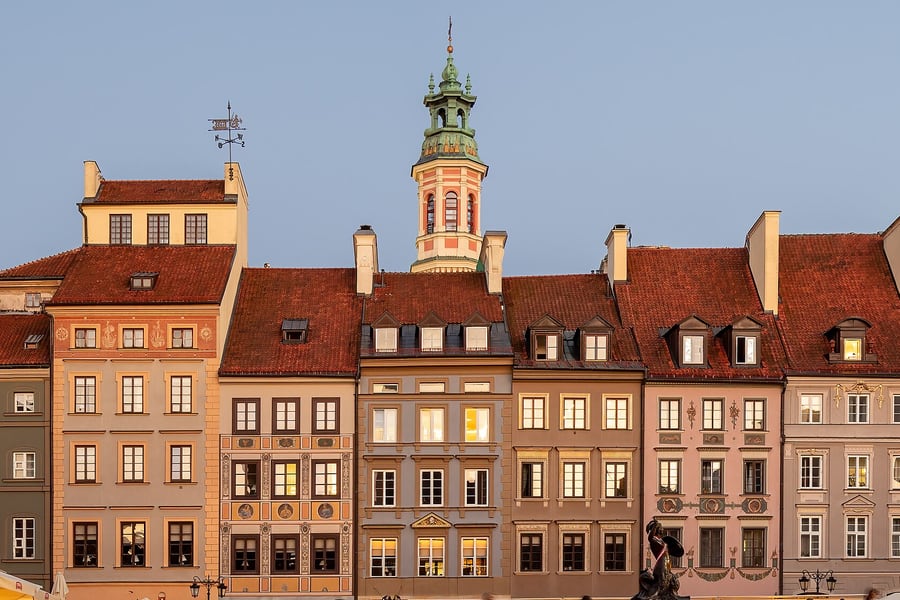
Founded in the thirteenth century and largely destroyed by Nazi Germany during the war, the Old Town was rebuilt from the rubble over the following decades. UNESCO listed it in 1980 as the first attempt anywhere to resurrect an entire historic city centre. The four sides of the Market Square are named after four notable Poles who once lived there.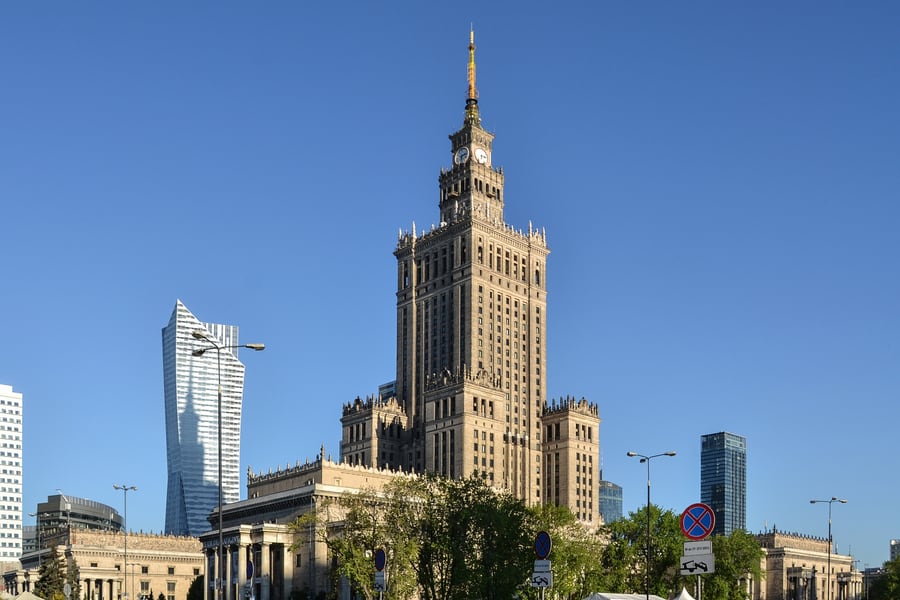 Pudelek / Wikimedia Commons · CC BY-SA 4.0 · cropped
Palace of Culture and Science
Designed by the Soviet architect Lev Rudnev and finished in 1955, this 237-metre tower stands a short walk from Warszawa Centralna. It opened in Joseph Stalin's name, which was later removed, and it now houses theatres, museums, a cinema and a concert hall. Warsaw has given it nicknames ever since, among them "the syringe" and "Stalin's rocket".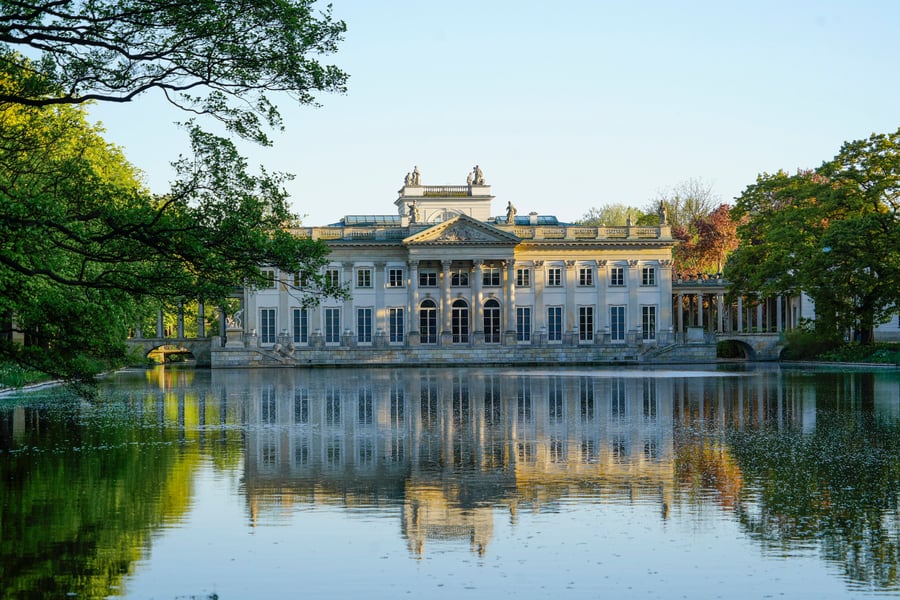 Krzysztof Popławski / Wikimedia Commons · CC BY 4.0 · cropped
Łazienki Park
Warsaw's largest park covers 76 hectares in the middle of the city. A Baroque bathing pavilion gave the place its name, and from 1764 King Stanisław II August remodelled the gardens around it. The Palace on the Isle stands in the lake, and peafowl and red squirrels live among the park's 9,500 trees.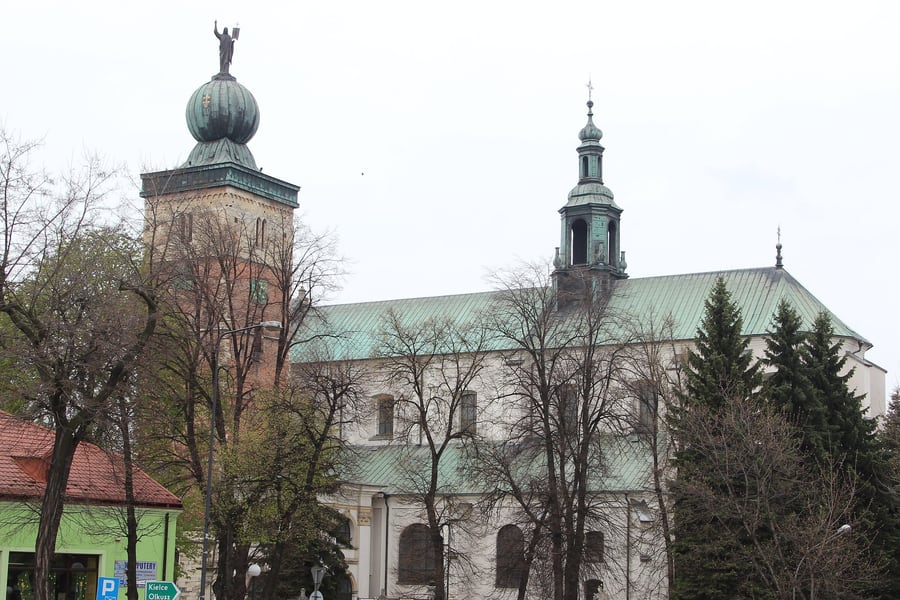 Pnapora / Wikimedia Commons · CC BY-SA 3.0 · cropped
The Basilica at Miechów
Monks of the Order of the Holy Sepulchre came here in 1163 and brought the cult of the Holy Sepulchre to Poland. Their basilica has a Tomb of Christ chapel added in 1525, which drew pilgrims from across the country, and the Museum of Miechów Land is in the monastery next door. IC trains stop at Miechów station.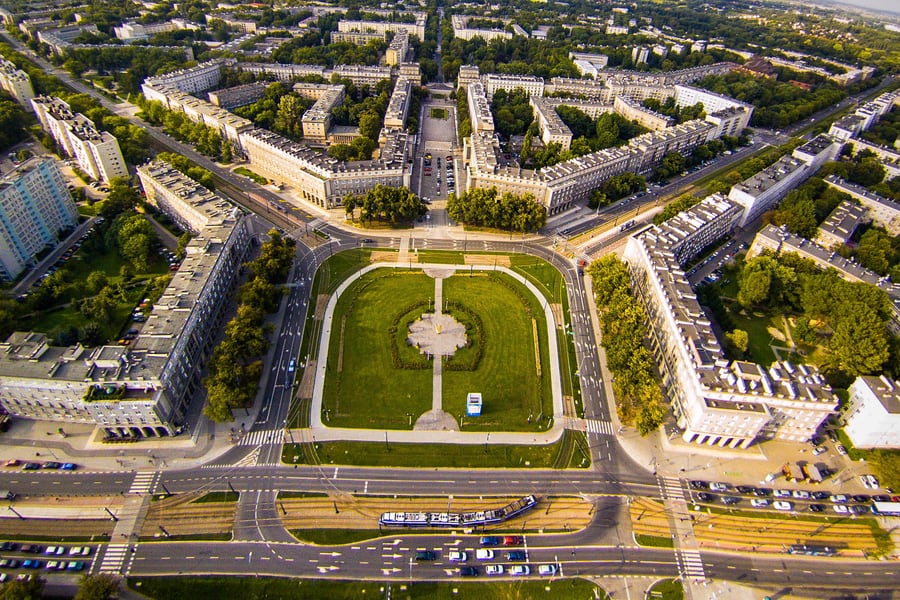 TomRollauer / Wikimedia Commons · CC BY-SA 4.0 · cropped
Nowa Huta
Begun in 1949 as a separate city built around a colossal steelworks, this is one of the largest planned socialist-realist districts ever laid out. Avenues fan out from Plac Centralny in a pattern that shows from the air, and the Lenin Steelworks, opened in 1954, grew into Poland's largest steel mill. It is now a district of Kraków.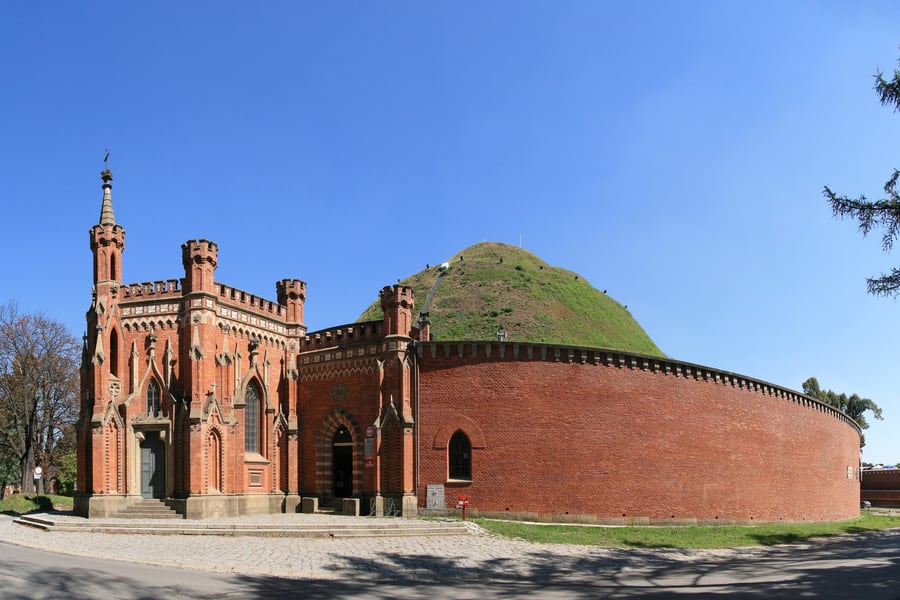 Ludvig14 / Wikimedia Commons · CC BY-SA 3.0 · cropped
Kościuszko Mound
Raised by volunteers between 1820 and 1823, this 34-metre earth mound commemorates Tadeusz Kościuszko and holds soil from the battlefields where he fought. A spiral path climbs to a wide view of the Vistula and the city, and Austria later wrapped the base in a brick citadel. It also gave Australia's highest mountain its name.Where to Sleep
Both of these are within walking distance of the station at their end of the line.
Where to stay
Polonia Palace Hotel
Warsaw, Aleje Jerozolimskie
Open since 1913, with 206 rooms, on Aleje Jerozolimskie within walking distance of Warszawa Centralna.
Check Availability (opens in a new tab, on poloniapalace.com)via poloniapalace.comHotel Polonia
Kraków, ulica Basztowa
On Basztowa street at the edge of the Old Town, a short walk from Kraków Główny station.
Check Availability (opens in a new tab, on hotel-polonia.com.pl)via hotel-polonia.com.plQuestions or corrections
Planning this trip and stuck on something, or spotted a time, fare or detail that has changed? Send us a message about The Central Trunk Line. We read every one, and we update this page when something has changed.