Comboio Histórico do Vouga
Nelso Silva / Wikimedia Commons · CC BY-SA 2.0
- DistanceAveiro–Macinhata do Vouga · metre gauge
- DurationAbout 6¼ hours (13:45–20:07)
- Best seasonSaturdays in July & August
Introduction
Portugal used to have a network of narrow-gauge railways — little metre-gauge lines threading up the valleys of the north, into places the main line was never going to reach. Almost all of them are gone.
The Linha do Vouga is what's left. CP puts it without ceremony: it is "the only narrow-gauge railway in operation in Portugal". One line, a metre between the rails, running inland from Aveiro through pine and eucalyptus and small towns — and on nine Saturdays each summer, it carries the Comboio Histórico do Vouga, five wooden carriages from the early years of the twentieth century.
Two things to be straight about before you book.
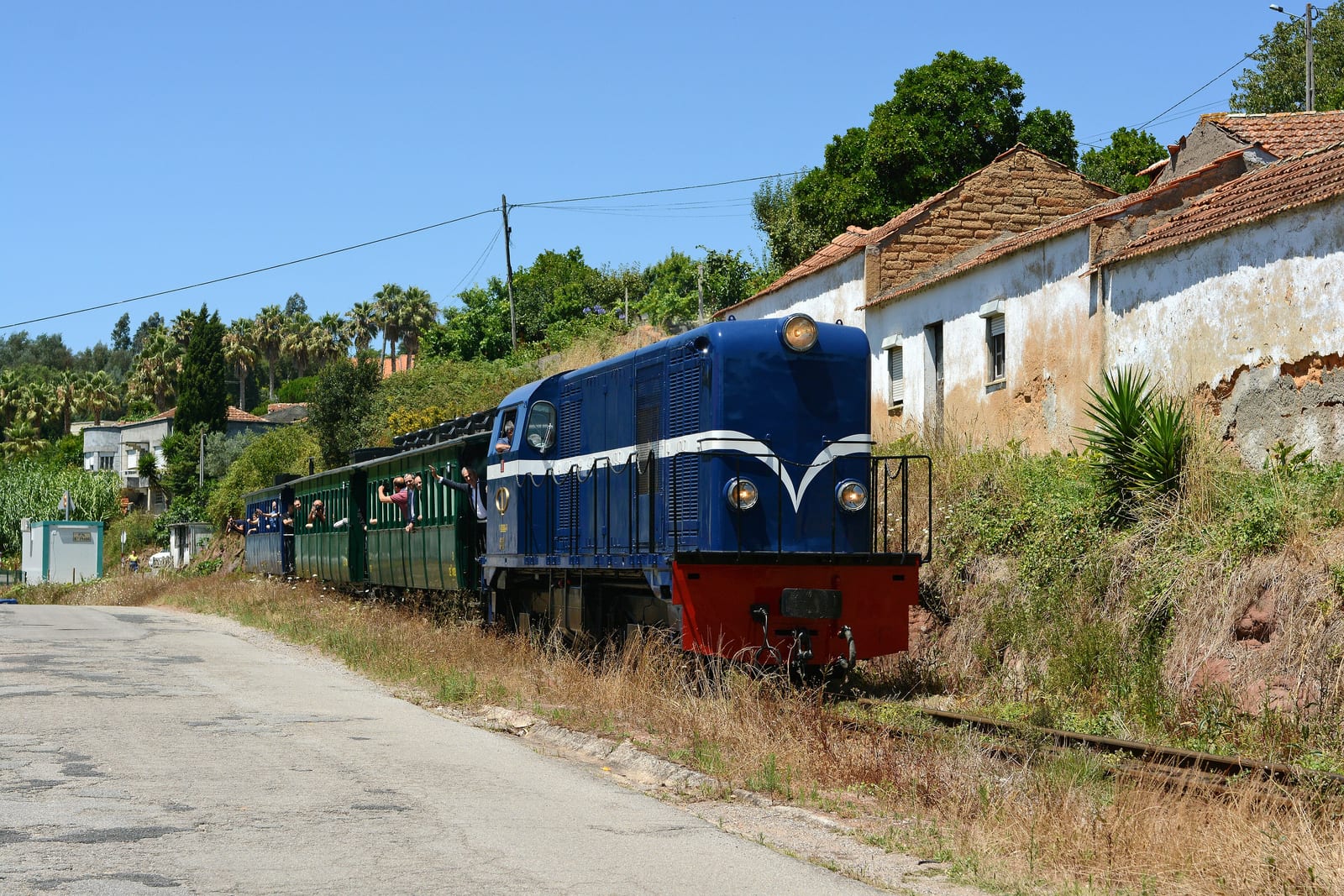
It is not a steam train. The historic carriages are hauled by a CP 9000-series diesel — a handsome old machine in blue and red, in service since 1975, and absolutely not a Henschel with a chimney. CP says so plainly on the ticket page and almost every write-up ignores it. There has been a separate steam edition on this line, but CP's page for it now returns a 404, so don't come expecting smoke. Come for the carriages and the gauge.
And the line is broken. The Vouga was built in pieces — the first stretch, Espinho to Oliveira de Azeméis, opened on 21 December 1908, more followed on 8 September 1911, and the rest was done by 1913. It ran from Espinho all the way to Aveiro. It doesn't now. Since 2013 there has been no passenger service through the middle, between Oliveira de Azeméis and Sernada do Vouga, because the track was left to rot. What survives is two disconnected halves: a northern one out of Espinho, and the southern one out of Aveiro that the historic train uses. Renovation has been going on, and a reopening has been promised more than once. Believe it when a train does it.
So this is not a story about a triumphant heritage operation. It is a story about the last narrow-gauge line in a country that used to be full of them, half-severed, kept going by CP and by a stubborn local campaign, with a museum of dead steam engines at the far end.
Which is exactly why you should ride it. Aveiro to Macinhata do Vouga, an afternoon, a guided tour round the museum, an hour in Águeda under the umbrellas on the way home. It costs less than a good lunch. And when this one goes, that's the lot.
The Journey
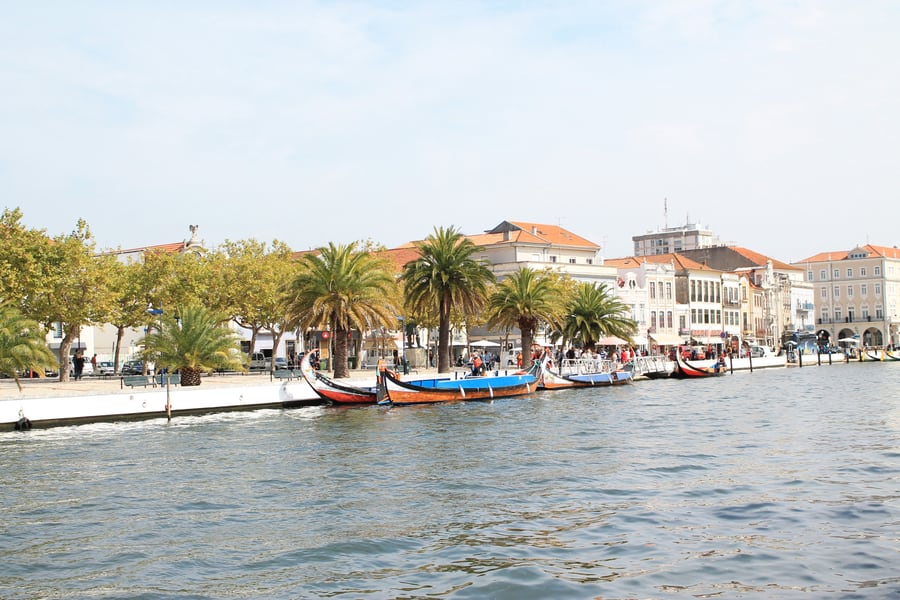
Aveiro is a good place to start anything. It is a canal town on a lagoon, full of moliceiro boats and art nouveau frontages, and its main station is a busy stop on the Lisbon–Porto main line — fast, electric, thoroughly modern Portugal.
And then, off to one side, there is the narrow-gauge platform, and the metre-gauge track, and a train that looks like it has come from another century. Because it has.
Departure is 13:45. Five wooden carriages from the early 1900s, behind a CP 9000-series diesel in blue and red — the loco is itself a piece of history, working since 1975, and it makes a proper old-fashioned racket about the job. The carriages are narrow. That's the gauge: a metre between the rails instead of the broad Iberian gauge the rest of Portugal runs on, which means everything is scaled down, tighter, closer. You sit nearer your neighbour and nearer the window.
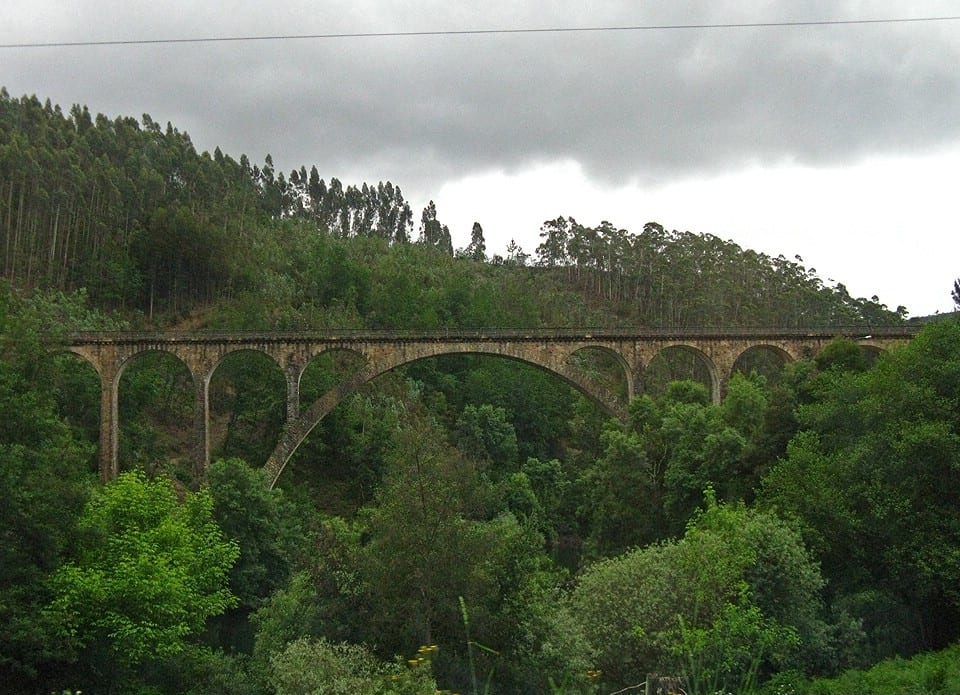
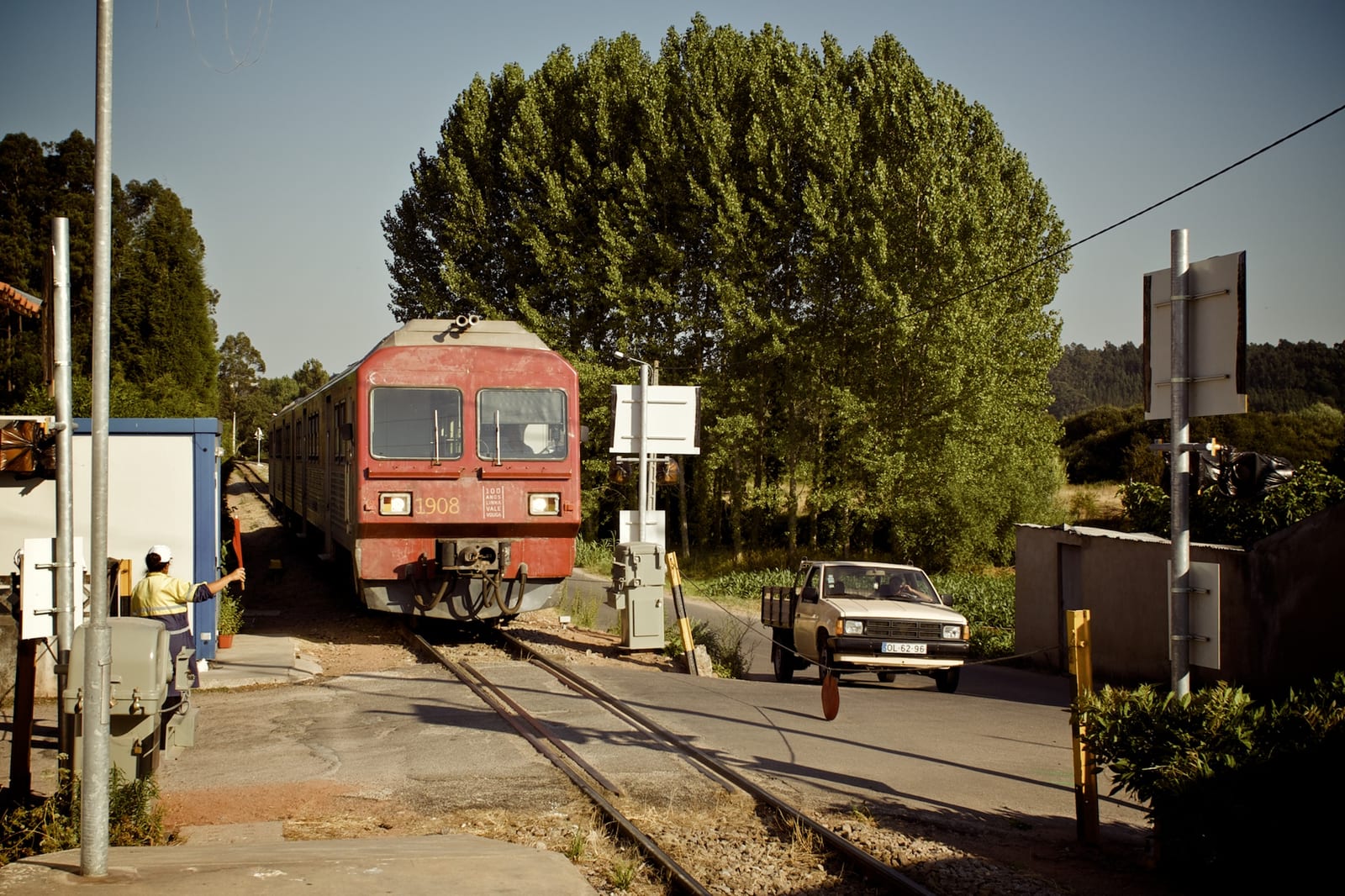
The line goes inland, and Portugal changes as it does. The lagoon flats give way to pine and eucalyptus, small fields, red-tiled houses, a level crossing where somebody waits on a scooter. The train works and rolls and takes its curves slowly, and the countryside becomes legible in the way it only does from a train in no particular hurry. It crosses the Vouga and its valleys on stone viaducts. None of it is dramatic and all of it is lovely, and it is roughly what a Portuguese branch line has felt like for a hundred years, because that is precisely what this is.
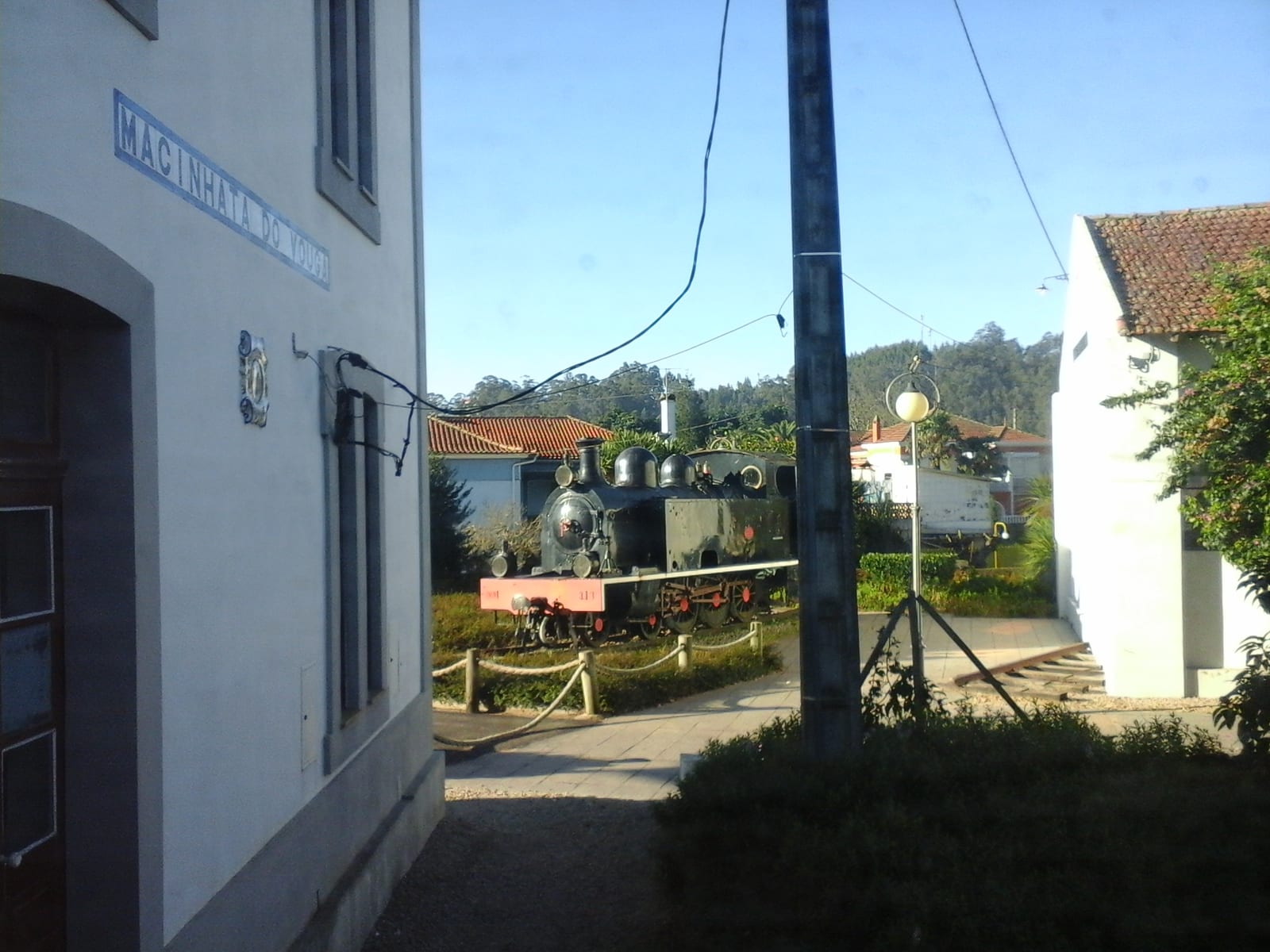
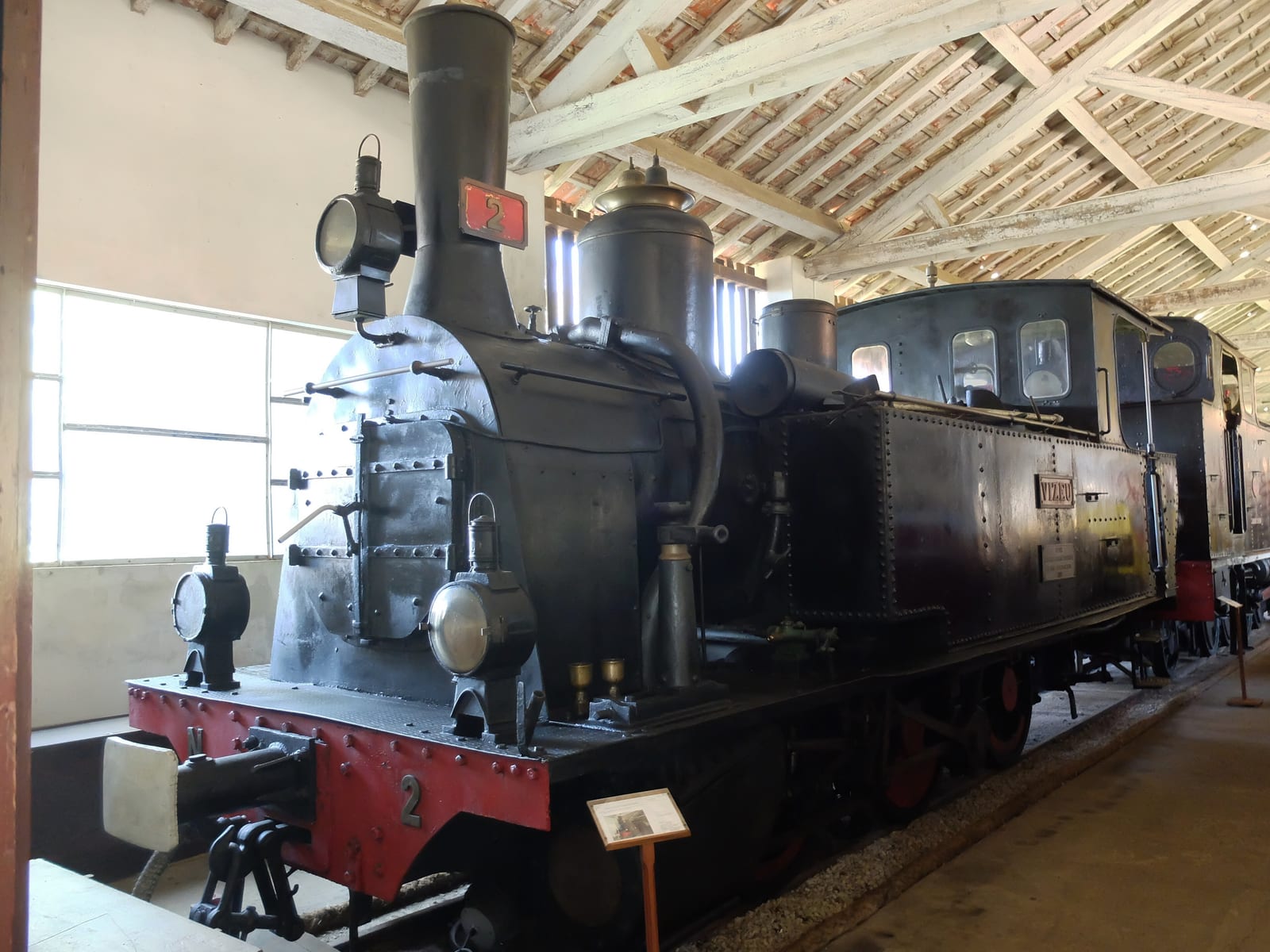
Macinhata do Vouga at 14:59. There is a steam locomotive standing outside the station, which tells you what's here: the Museu Ferroviário de Macinhata do Vouga, a railway museum in a shed, and a guided tour of it is part of your ticket. Inside are the narrow-gauge steam engines that used to work this line and its vanished sisters — black, oiled, enormous in a small building, and completely still. It is the most honest thing about the day. This is where Portugal's narrow gauge went.
The train back leaves at 16:38 and stops at Águeda, where you get time in the town. If you are here in July or August — and you are, because that's when this train runs — the streets are roofed with thousands of coloured umbrellas, an installation Águeda invented in 2011 and the world has been copying ever since. It is silly and joyful and it is directly above your head.
Back in Aveiro at 20:07. Six and a quarter hours, one museum, one umbrella-covered town, and a ride on the last metre of narrow gauge Portugal has left.
Along the route
Nelso Silva / Wikimedia Commons · CC BY-SA 2.0The last metre gauge in Portugal
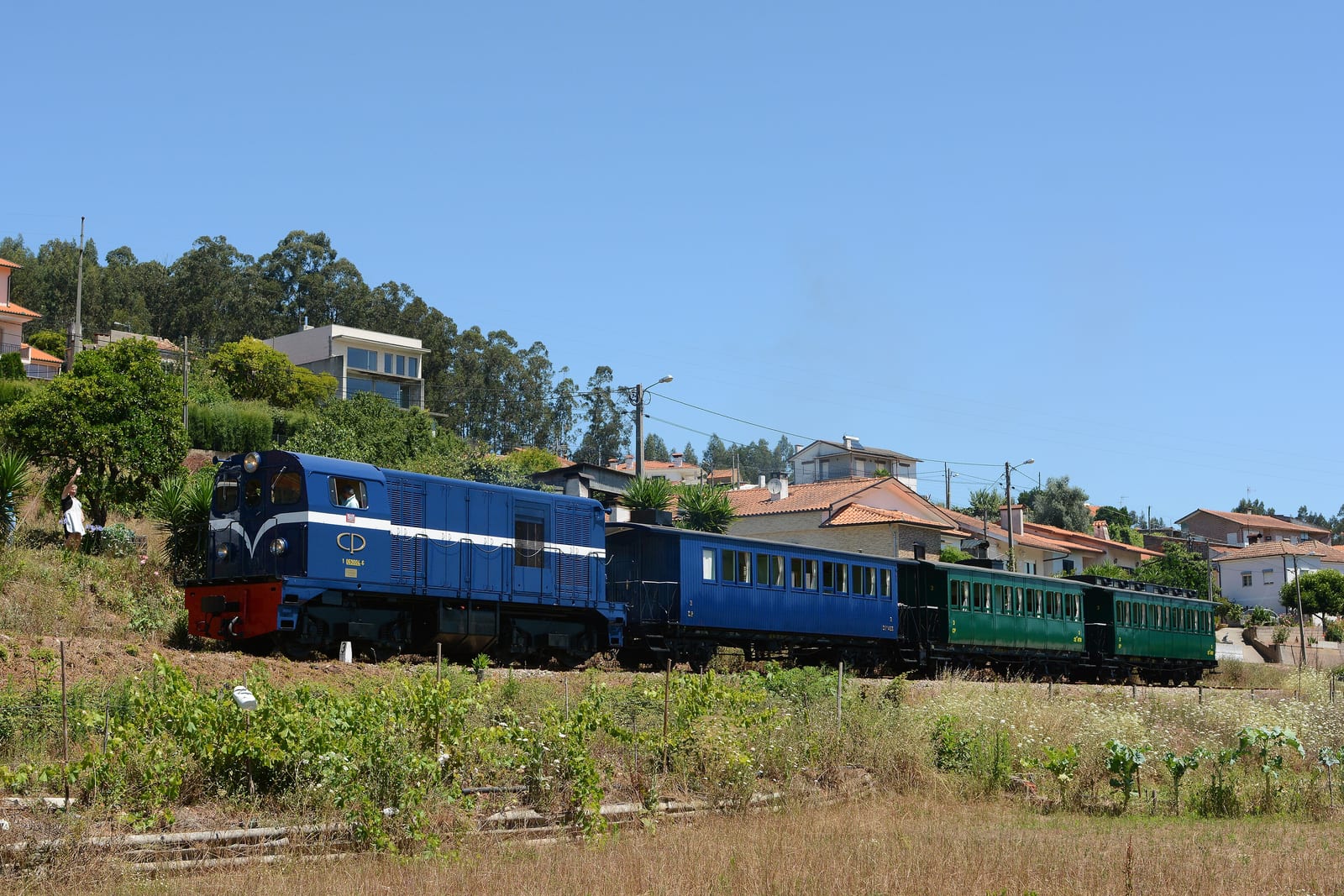
Portugal once had a real network of narrow-gauge lines. This is what's left — CP calls it plainly "the only narrow-gauge railway in operation in Portugal". Everything else went, and the Vouguinha somehow didn't.Nelso Silva / Wikimedia Commons · CC BY-SA 2.0Carriages older than the Republic
Five wooden carriages from the early years of the 20th century — the line's first section opened on 21 December 1908, and stock of roughly that vintage is still what you sit in. Not replicas. The actual thing, still earning.Manfred Kopka / Wikimedia Commons · CC BY-SA 4.0The museum at Macinhata
The far end of the trip is a railway museum in a shed — narrow-gauge steam locomotives, preserved and lined up, including the engines that once worked this very line. The guided tour is part of the ticket.A bit of history
Culture & experiences along the way
Nuno Morão / Wikimedia Commons · CC BY-SA 2.0Águeda and the umbrellas
The return calls at Águeda with time in the historic centre — and the timing is not an accident. The Umbrella Sky Project canopies several of its streets with thousands of open umbrellas from 1 July to 30 September. The idea was born here in 2012 and has been copied worldwide; the train runs in exactly that season.Antero Pires / Wikimedia Commons · CC BY-SA 2.0A metre between the rails
You feel it. The carriages are narrow, the curves are tight, and the whole train works and rolls through the pine and eucalyptus at a pace that makes the countryside legible in a way a modern train never does.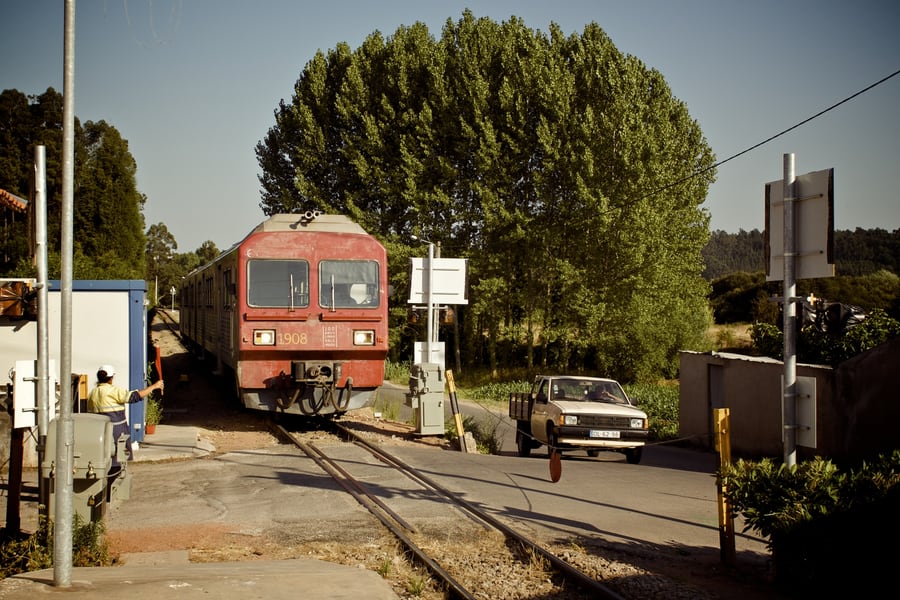 Nuno Morão / Wikimedia Commons · CC BY-SA 2.0 · cropped
Ride it on an ordinary Saturday instead
The historic train runs nine days a year. The line runs all year — Série 9630 railcars out of Aveiro, on the same metre gauge, through the same country, for the price of a coffee. Less occasion, more railway.Timetables
The historic train runs nine Saturdays a year, in July and August. The line underneath it runs all year.
How the day runs:
| Time | What happens |
|---|---|
| 13:45 | Depart Aveiro — five early-1900s carriages, CP 9000-series diesel |
| 14:59 | Arrive Macinhata do Vouga |
| Afternoon | Guided tour of the Macinhata do Vouga Railway Museum |
| 16:38 | Depart Macinhata |
| Late afternoon | Águeda — time in the historic centre |
| 20:07 | Back in Aveiro — about 6¼ hours |
Good to know:
- It is diesel-hauled. Worth saying twice: the carriages are historic, the locomotive is a 1970s diesel. A steam edition has run on this line in the past, but it is not the advertised programme and CP's page for it has gone. Don't turn up expecting a chimney.
- Nine dates, and that's it. Saturdays across July and August. CP publishes them each year — confirm yours.
- Tickets are locked to the day and route. CP's terms are explicit: they cannot be exchanged and are not refundable. Get the date right first time.
- You cannot ride the whole Linha do Vouga. The middle of the line, Oliveira de Azeméis to Sernada do Vouga, has carried no passengers since 2013. The northern half out of Espinho and the southern half out of Aveiro are effectively two separate railways.
- Go in July or August and you get the umbrellas. Águeda's Umbrella Sky is up across exactly the season this train runs, and the stop is long enough to walk under it.
- Or just take the ordinary train. A Série 9630 railcar leaves Aveiro up the same metre gauge most days of the year for a couple of euros. You lose the wooden carriages and the museum tour; you keep the line.
Tickets
Tickets come from CP – Comboios de Portugal, online or at the station, and this is one of the cheapest days out in Portuguese railway heritage — the museum tour is included. There are two ways onto the metre gauge: the historic train itself, Aveiro to Macinhata do Vouga and back in early-1900s wooden carriages on nine Saturdays across July and August; and the ordinary Vouga regional, a Série 9630 railcar up the same line most days of the year for the price of a coffee.
⚠️ CP is unusually blunt that the historic train's tickets are non-refundable, non-exchangeable and valid only for the day and route issued, so be sure of the date — nine dates a year, five carriages, and Aveiro is busy in summer. Renovation work on the Vouga also puts buses on at short notice; the historic section is the reliable part.
Book your tickets
Comboio Histórico do Vouga
Saturdays in July & August
The historic train itself — Aveiro to Macinhata do Vouga and back in early-1900s carriages, with a guided tour of the railway museum and time in Águeda on the return. Nine Saturdays a year. Tickets are valid only for the day and route issued, and are not refundable.
Book Tickets (opens in a new tab, on CP – Comboios de Portugal)via CP – Comboios de PortugalVouga line regional
The everyday metre-gauge train
The ordinary service — a Série 9630 railcar out of Aveiro up the same narrow-gauge line, any day of the year, for a couple of euros. No museum and no occasion, but it is the same railway, and it is the one the locals actually need.
Book Tickets (opens in a new tab, on CP – Comboios de Portugal)via CP – Comboios de PortugalRail Passes
No rail pass covers the historic train. Interrail's table of railway companies names the Comboio Histórico do Vouga among the trains excluded in Portugal. Tickets come from CP.
A pass does cover the ordinary Vouga train. CP's regional trains are included in Portugal, and need no reservation, so a pass holder can ride the same metre gauge on the everyday railcar.
Checked October 2026 against interrail.com (opens in a new tab) and Interrail's Portugal page (opens in a new tab).
Places to Visit
This is a corner of Portugal most visitors skip on the way between Porto and Coimbra, which is their loss. The lagoon at one end and a shed full of narrow-gauge steam at the other are only the bookends; the towns in between are the reason to give the trip a couple of days rather than one.
Porto is an hour away on the main line and the obvious pairing. From there you can pick up the Douro line, or the Presidential Train if you have €750 and a free Saturday.
 John Samuel / Wikimedia Commons · CC BY-SA 4.0 · cropped
Aveiro
The train starts in a town built on water. Aveiro sits on the Ria de Aveiro, a shallow coastal lagoon, and its canals are worked by moliceiros — high-prowed, brightly painted boats that once dredged moliço seaweed for fertiliser and now carry passengers instead. Salt was the other trade, and a few pans still work. Eat ovos moles, the egg-yolk sweet sold in small painted barrels, which holds its own protected designation.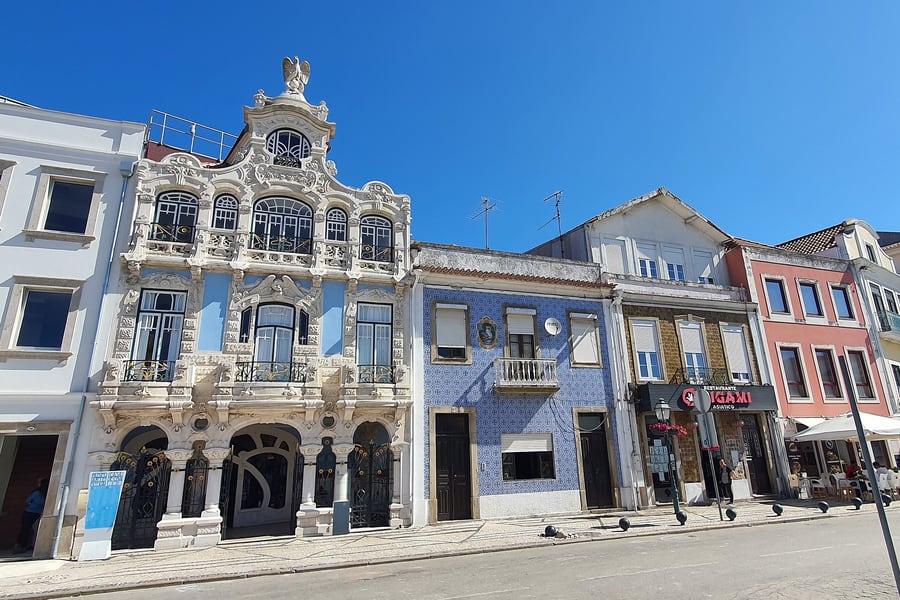 Hugo Ferreira / Wikimedia Commons · CC BY-SA 4.0 · cropped
Aveiro's Arte Nova
Aveiro has one of Europe's densest runs of art nouveau, and there is a reason for it: families who had made money in Brazil came home in the early 1900s and built. The city is one of only twenty in the Réseau Art Nouveau Network. The Museu de Arte Nova occupies the best of them on the canal front — walk the water's edge and you can read the whole style off a single row of facades.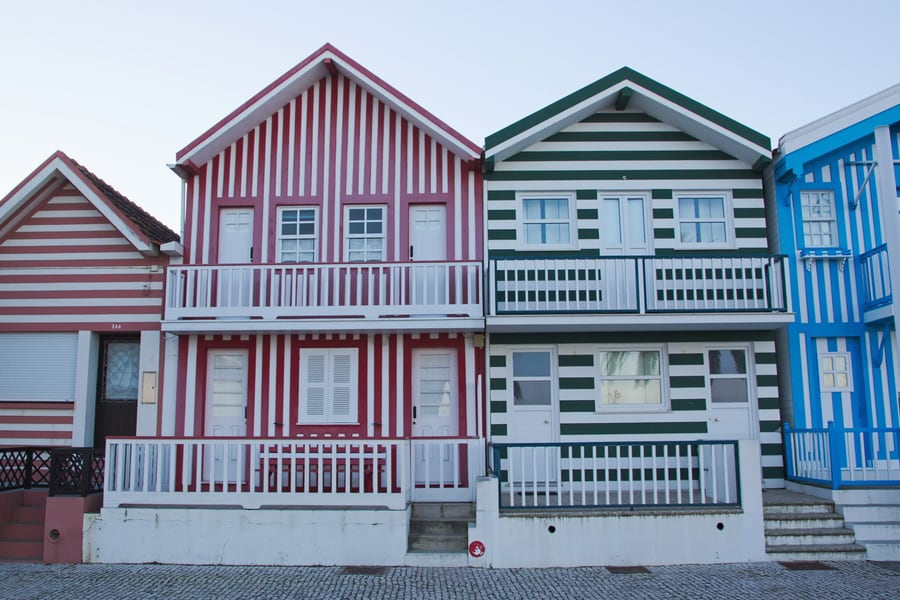 Xosema / Wikimedia Commons · CC BY-SA 4.0 · cropped
Costa Nova
A short hop from Aveiro, and the picture everyone comes for: the palheiros, a line of houses painted in bold stripes facing the lagoon. They began as something far less photogenic — stores for fishing tackle and sheds for salting sardines — and were only later converted into seaside homes. They have been the emblem of the beach ever since.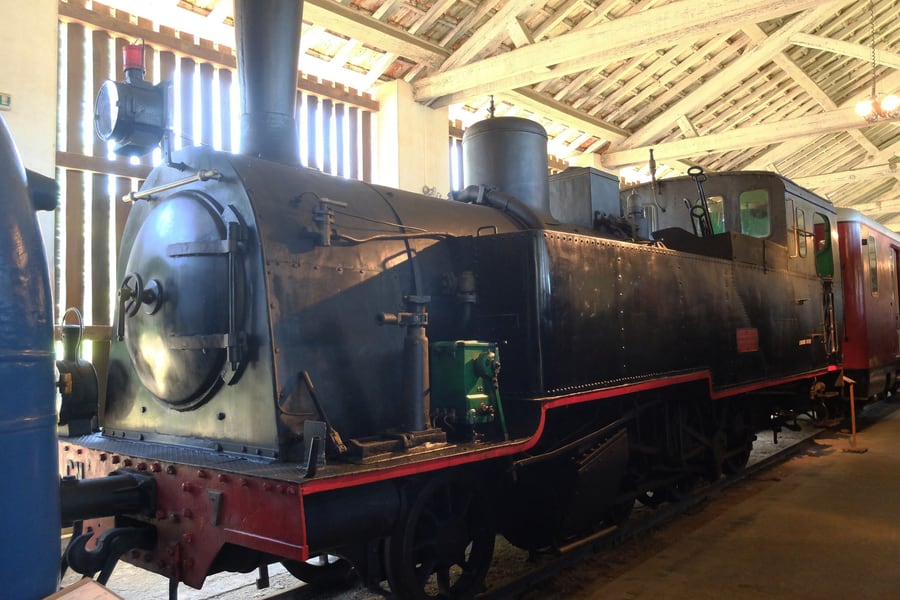 Manfred Kopka / Wikimedia Commons · CC BY-SA 4.0 · cropped
Macinhata do Vouga
The far end of the run, and the reason the ticket is worth it. The Museu Ferroviário at Macinhata keeps Portugal's narrow-gauge steam under one roof — the engines that worked this line and the wider network it belonged to, preserved where they ran. The guided tour is included in the fare, and it is the one point in the day where you get properly off the train and into a building. Carla Valongo / Wikimedia Commons · CC BY-SA 4.0 · cropped
Águeda
The homeward train calls at Águeda with time in the centre, and the timing is deliberate: the Umbrella Sky Project roofs several streets with thousands of open umbrellas from 1 July to 30 September, exactly the season the historic train runs. Just out of town the Pateira de Fermentelos spreads across the boundary with Aveiro and Oliveira do Bairro — one of the largest natural lagoons on the peninsula, fed by the Cértima, Ramsar-listed and thick with birds.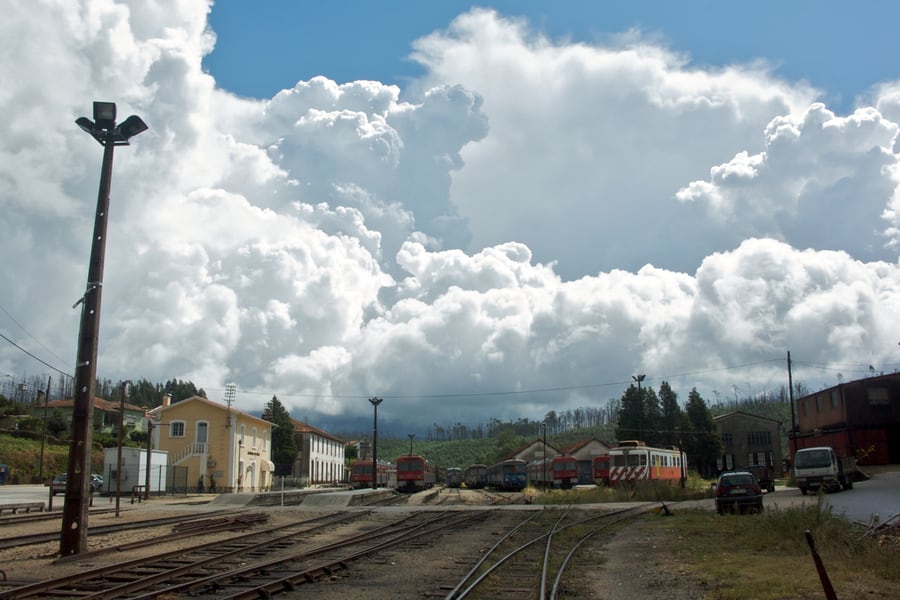 Nuno Morão / Wikimedia Commons · CC BY-SA 2.0 · cropped
Sernada do Vouga
The junction where the Aveiro branch meets the line down from Espinho — and the place the Vouga's decline is most visible. A handsome old station, a wide yard of sidings, and far more track than anything running today needs. Trains from Aveiro terminate here. Northwards the rails continue, but no passenger service has used them since 2013.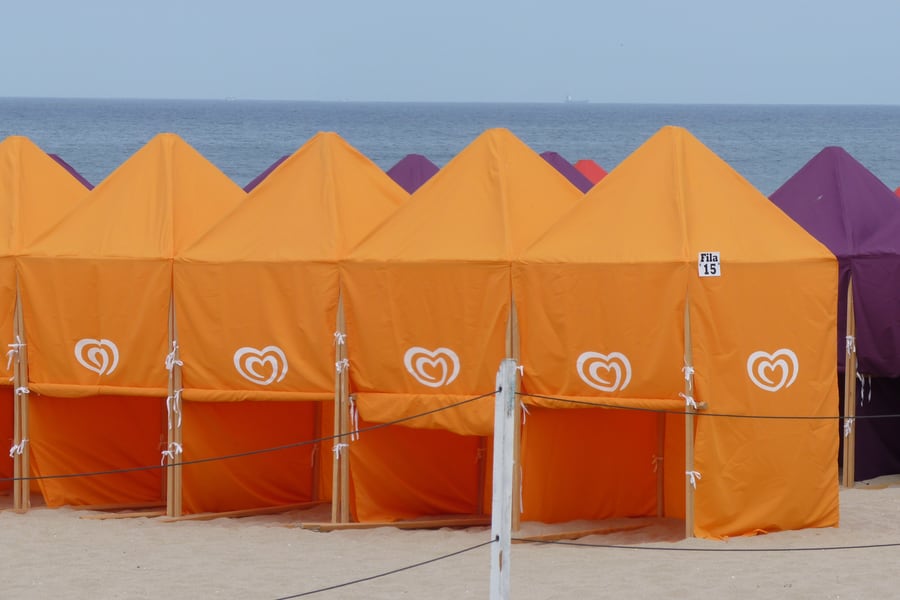 Romain.D.C / Wikimedia Commons · CC BY 3.0 · cropped
Espinho
Up on the coast at the northern, disconnected end of the Vouga — an Atlantic beach town whose sand is ranked in numbered rows of striped tents. It matters here because the other half of the metre gauge starts from Espinho and runs inland to Oliveira de Azeméis. You cannot reach it by train from Aveiro: the middle of the line has carried no passengers since 2013, so the two halves are separate railways now.Where to Sleep
Aveiro is the base. The train leaves and returns there the same day, and there is nothing to book along the line.
Aveiro is a university town on a lagoon and it has beds to match: mid-range hotels around the centre and the canals, guesthouses in the old town, and a decent hostel scene serving the students and the summer traffic. It is cheaper than Porto and far more relaxed, and everything is walkable — including the station, which matters less here than usual given the civilised 13:45 departure.
Two thoughts on where to put yourself:
- In the centre, by the canals, if you want the town: the moliceiros, the art nouveau frontages, and a short walk to dinner and to the ovos moles.
- Out at Costa Nova or Barra, if you want the beach and the striped houses. Ten or fifteen minutes by bus or car, quieter, and lovely in the evening — but you're commuting to the train.
If you'd rather use somewhere bigger as your base, Porto is about an hour away on the main line and you could plausibly do this as a day trip from there. It works, and you'd be missing the point slightly: Aveiro is the reason to be in this bit of Portugal, and the Vouga is its railway.
Águeda itself has places to stay, and in July — with the umbrellas up and the AgitÁgueda festival on — staying the night there rather than riding home is a real option, if a slightly perverse one when you've bought a return ticket on a train that only runs nine days a year.
Questions or corrections
Planning this trip and stuck on something, or spotted a time, fare or detail that has changed? Send us a message about Comboio Histórico do Vouga. We read every one, and we update this page when something has changed.