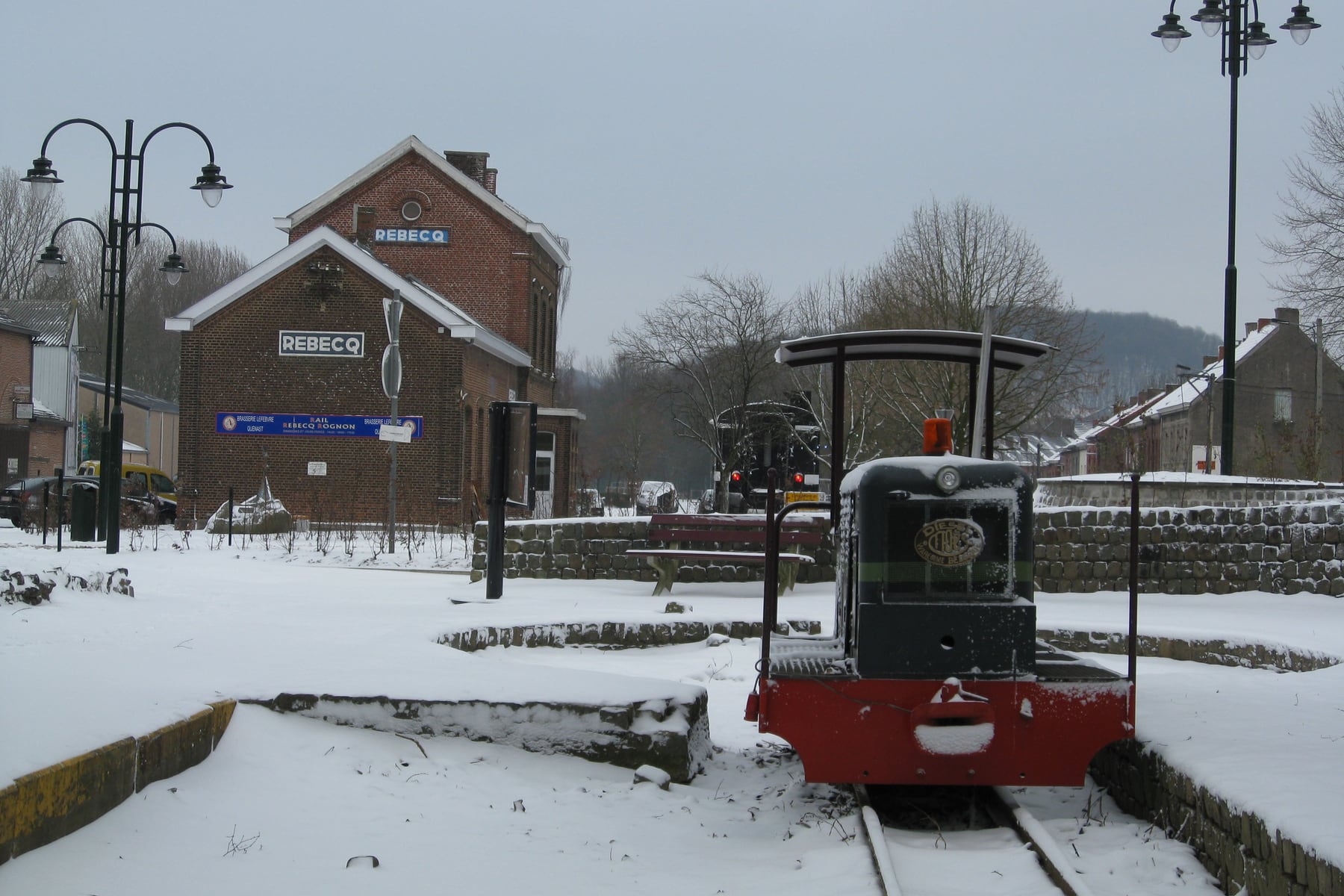
Rail Rebecq Rognon
Olivier Duwé / Wikimedia Commons · CC BY-SA 4.0 · cropped
- DistanceAbout 4 km, 600 mm gauge
- Duration1 h 40 round trip
- Best seasonApril–September · Sundays and public holidays
Introduction
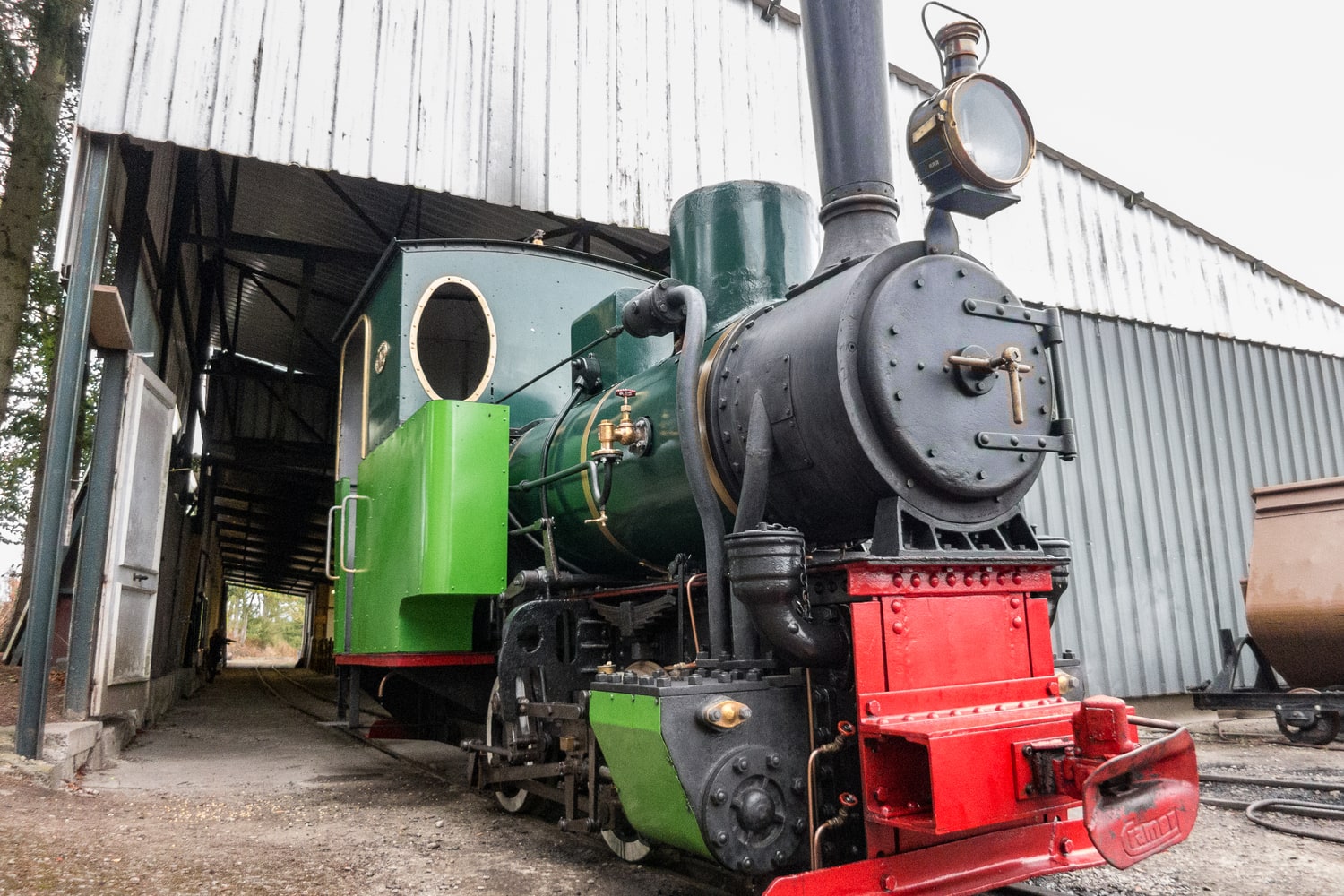
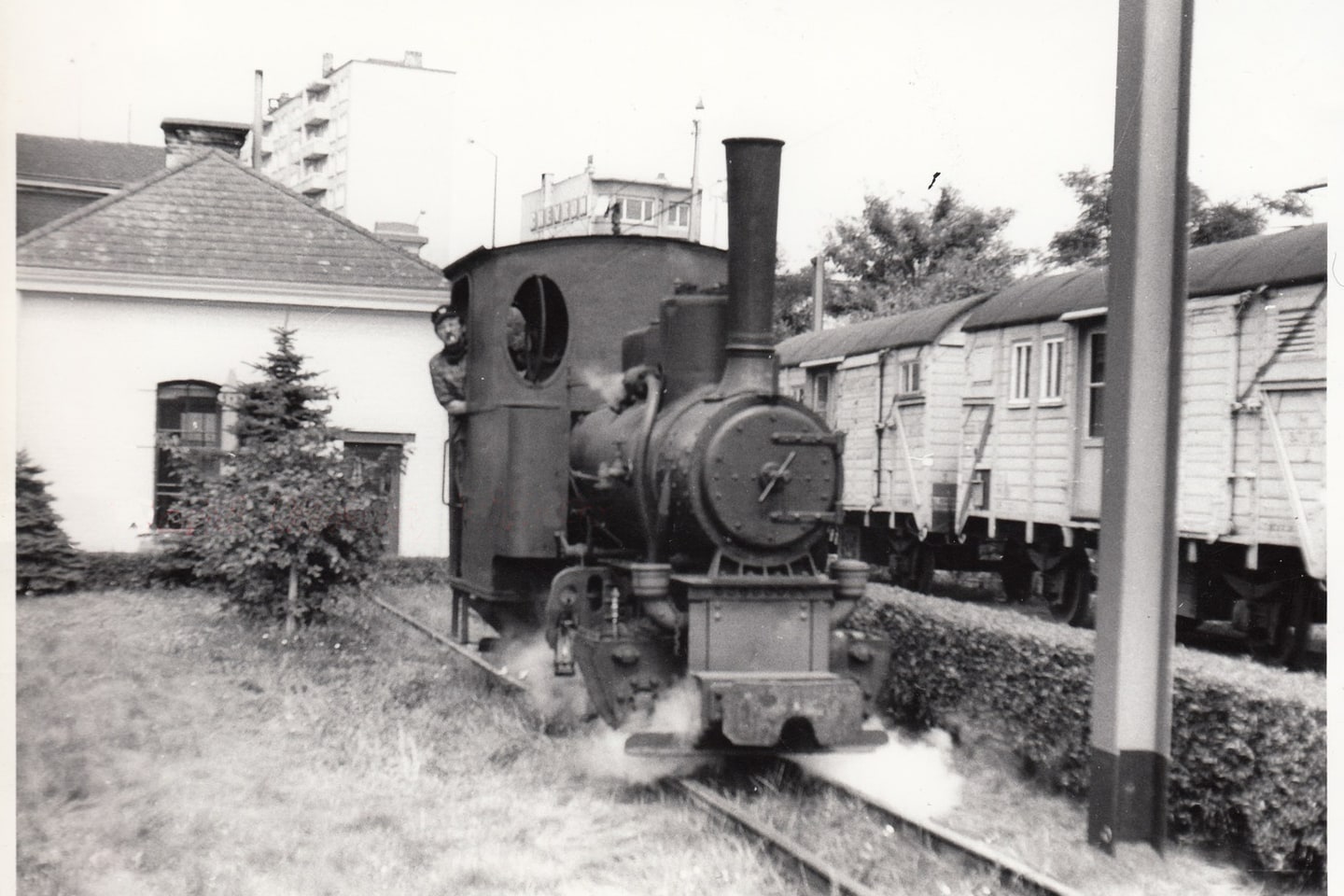
There is a page on this railway's own website that most heritage operators would never write. It sits under Locomotives, above the descriptions of the engines, and it says this: getting a steam locomotive ready takes about three hours to reach working temperature and pressure, and it needs volunteers trained and certified to do it — and the roster does not always contain someone who is both qualified and free. So trips run either diesel or steam, and the association publishes a calendar saying which is which.
That is not a footnote. It is the whole shape of a visit to Rebecq. On the 2026 calendar, steam and diesel alternate Sunday by Sunday for almost the entire season, and the fare moves with them: €6 for an adult behind the diesel, €10 behind the steam. The date you choose decides what pulls you, what it costs, and what the afternoon sounds like. Most heritage railways let you find that out on arrival. This one tells you in advance, and explains why.
Sixty centimetres on a main-line trackbed
The railway itself is a small, strange, entirely likeable thing. It is 600 millimetres wide — Decauville gauge, the width of trench tramways, brickworks and beet fields — and it runs about four kilometres along the Senne between the old station at Rebecq and the vanished one at Rognon, in Walloon Brabant, half an hour from Brussels.
What it runs on is the point. This was line 115, a proper standard-gauge State railway from Braine-l'Alleud through Tubize to Rognon, opened to Rebecq on 15 November 1879. Its passenger trains were withdrawn on 1 October 1961, the last goods trains two years later, and the rails came up in 1964. The formation stayed. In 1972 an association was founded to put something back on it, and in the spring of 1977 the first train ran. So you travel along an embankment, over five-arch brick viaducts and under road bridges built for full-size trains, on track a third of their width — an arrangement that looks like a mistake and is in fact the reason any of it survives.
For the last 800 metres or so the line leaves 115 altogether and finishes along the trackbed of line 123, the Enghien–Braine-le-Comte railway, which was lifted after 1988. The two meet at a spot called the Bloc U: the actual junction signal box of the two railways, bought as a house in 1973 by the man who started all this, and now the depot, the workshop and the bar where the train stops for half an hour on the way back.
Not a vicinal, and the joke is in the rails
Belgium's other preserved country railways are metre-gauge vicinal tramways — the industrial one at Thuin, the rural one at Érezée. Rebecq is not one of them. It is narrower, it was never a public service, and it was laid by volunteers on ground the national railway had abandoned.
Except that the vicinal is here anyway, underfoot. The association's own history records that the track was built with second-hand tram rails recovered from the vicinal line from Brussels to Leerbeek. So the ride is a 600-millimetre train, on vicinal steel, on a standard-gauge main-line formation, between two closed State stations. Four Belgian railways in one embankment, and only one of them still moves.
The Journey
The train does not start at the station. It starts across the road from it.
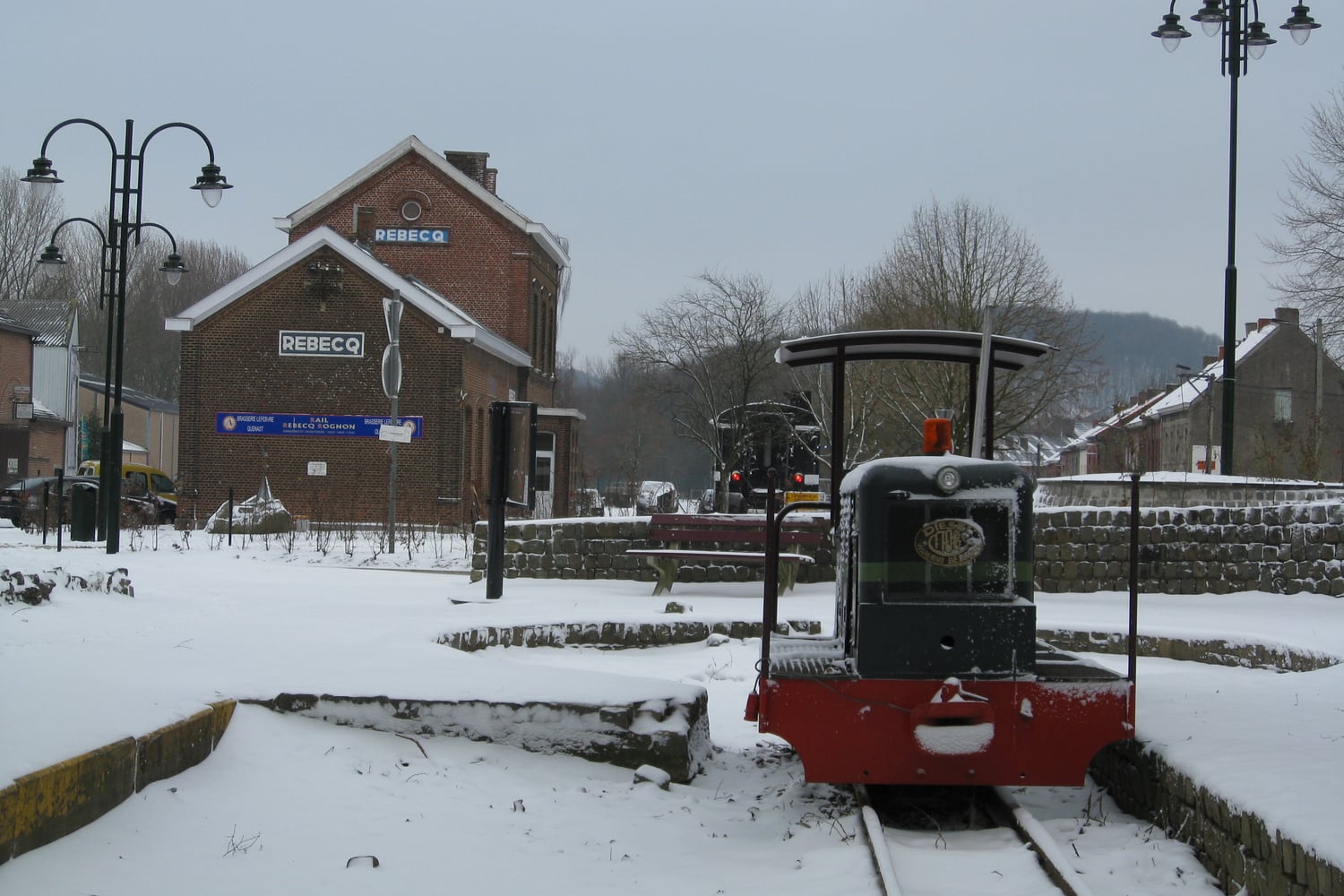
Rebecq's station building is still there — dark red brick, no render, a low wing with three wide doors and two narrower windows, a late version of the Belgian State Railways' 1873 standard plan, the same design that was built at Quenast and Braine-le-Château. The association uses it to receive passengers. But a busy road runs directly in front of it, and laying track across the rue du Pont would have meant closing that road for days at the association's own expense. So the platform sits on the far side of the level crossing, with one track alongside it and a stub behind for running the engine round. Opposite the old platform, a first-class M2 carriage of 1958–60 has been parked as a restaurant.
Out along the Senne
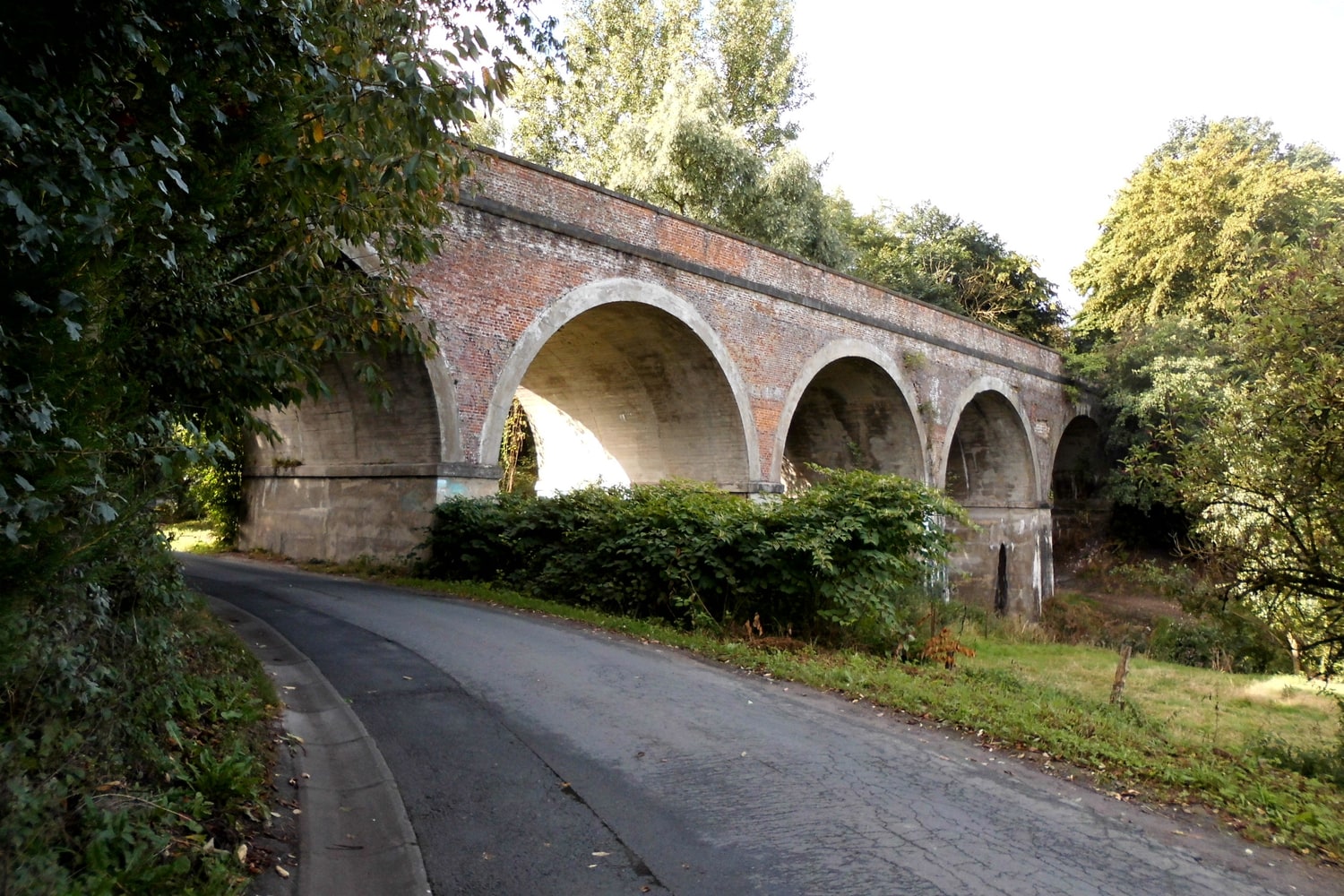
From the platform the line runs west, and almost immediately begins collecting engineering built for much heavier trains. There are two level crossings, at the Marais à Scaille and at the Pierreux. Then the Pont de Cabecq, where a road passes underneath. Then the first of the two five-arch brick bridges over the Senne that everybody here calls the Cinq Ponts. Then the line passes under the Pont de l'Anglais — named, according to the association, for a road that led to a farm where an English airman shot down over Rebecq during the war took shelter.
This is the Vallée des Oiseaux, a wooded stretch of the Senne valley between the two villages. The Senne here is a modest river with a large reputation: it rises at Naast, near Soignies, runs about a hundred kilometres to join the Dyle, and on the way passes under Brussels, where it was vaulted over in the 1860s and has been out of sight ever since. At Rebecq it is above ground, shallow and clear, and the train crosses it twice.
Bloc U
Halfway along, the line reaches the Bloc U — a name, not a place. It was the signal cabin that controlled the junction where line 115 met line 123, and in 1973 the founder of this railway bought it as a house, one year after buying his first locomotive and four years before there was any track to run it on. Buying a junction box and then building a railway up to it is the wrong order to do things in, and it is precisely how this line came about.
It is now the depot. There are sheds, a workshop, sidings full of small industrial machines in various states of repair, and a bar with benches and tables. Regular trains pass straight through on the outward run; on the way back they stop here for at least half an hour, which is what turns a four-kilometre ride into a hundred-minute afternoon. Wandering into a working narrow-gauge shed is not usually something a ticket buys you.
Rognon, and what used to be there
The terminus is at Rognon, and it is worth knowing what you are standing on, because there is nothing left to tell you.
Rognon had the first railway station in this commune, opened on 5 January 1867 on the private Ghent–Braine-le-Comte line, financed by the ironmaster Ernest Boucquéau to feed his works at La Louvière. Until 1882 it was called Rebecq-Rognon, because Rebecq itself had no station. When line 115 arrived from Tubize in 1879, Rognon became a junction — and an awkward one: the new line joined facing Braine-le-Comte rather than Enghien, which produced a long loop running parallel to the main Brussels–Mons railway and obliged trains heading the other way to reverse. A direct connecting curve was discussed by the State Railways' board in the 1910s, in case traffic ever justified it. It never did, and the curve was never built.
The station buildings were demolished in 1968. The halt hung on for ordinary stopping trains on line 123 until 29 May 1988, after which the double track was promptly dismantled. What survives today is a platform, a run-round loop, and a children's playground. The locomotive uncouples, runs to the other end, and everybody who wants to gets off and watches, which on a 600-millimetre railway is a thing you can follow from three metres away.
The railway next door that never closed
One more thing about this valley, because it explains why the little train exists at all.
Line 115 was not closed everywhere. Between Clabecq and Quenast it is still worked today — freight only, no passengers — and its sole purpose is to take stone out of the Quenast quarry, a 140-hectare pit in the same commune as Rebecq, cut into volcanic rock that solidified 435 million years ago. Sagrex, part of Heidelberg Materials, takes about 1.8 million tonnes of porphyry a year out of it, and among the products it lists are two grades of railway ballast, including ballast for high-speed lines.
So the geography is this. Two and a half kilometres up the valley, standard-gauge trains still run, loading the stone that goes under Belgium's railways. The rails between there and Rebecq were lifted in 1964 and never came back. And on the far side of that gap, a volunteer association runs sixty-centimetre trains over the same abandoned formation, on ballast of its own.
Along the route
bDom / Wikimedia Commons · CC BY 2.0 · croppedThe three-hour problem, published
The association explains on its own site what most heritage railways leave you to discover on the platform: preparing a steam trip takes about three hours, and the volunteers certified to do it are not free every Sunday. So trips run either diesel or steam, and the calendar says which.Olivier Duwé / Wikimedia Commons · CC BY-SA 4.0 · croppedA signal box bought before there was a railway
In 1972 Erik Goegebeur answered a newspaper advertisement for a steam locomotive on a dare. In 1973 he bought the Bloc U signal cabin as a house; the track came later and the first train ran in 1977. The cabin is now the depot, the workshop and the bar.Spotter2 / Wikimedia Commons · CC BY-SA 4.0 · croppedVicinal rails under a Decauville train
This is 600-millimetre Decauville gauge, not the metre gauge of the preserved tramways — but the track was laid with second-hand vicinal tram rails recovered from the line to Leerbeek. A Decauville train on vicinal steel, on a standard-gauge main-line formation.A bit of history
Culture & experiences along the way
 David Edgar / Wikimedia Commons · CC BY 2.5 · cropped
Lambic, in the valley it comes from
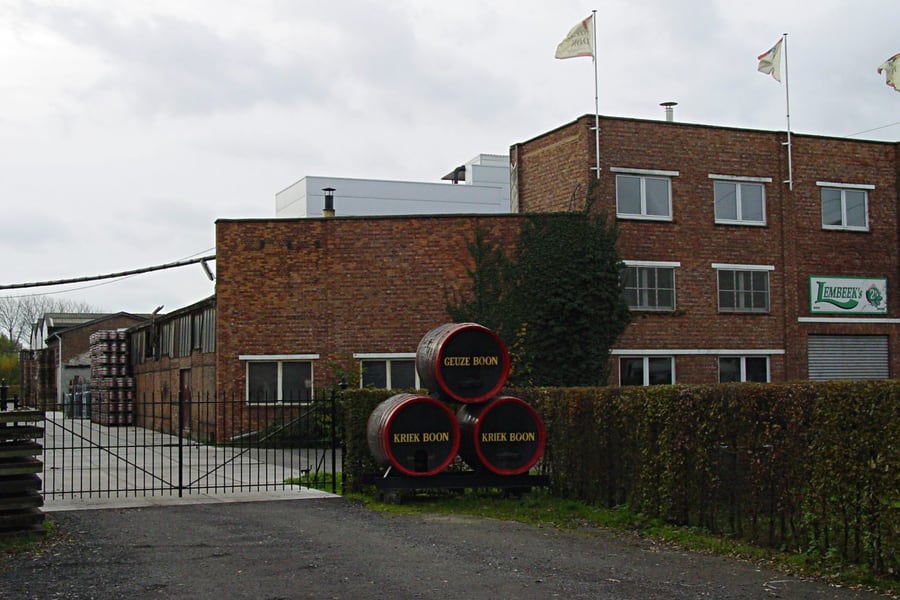
This is the Senne valley, and lambic is the beer that only works here: no pitched yeast at all, just wort left open to the night air in a coolship and whatever settles in it. Boon at Lembeek — the village that gave the beer its name — blends old and young lambic into geuze and ages it in wood.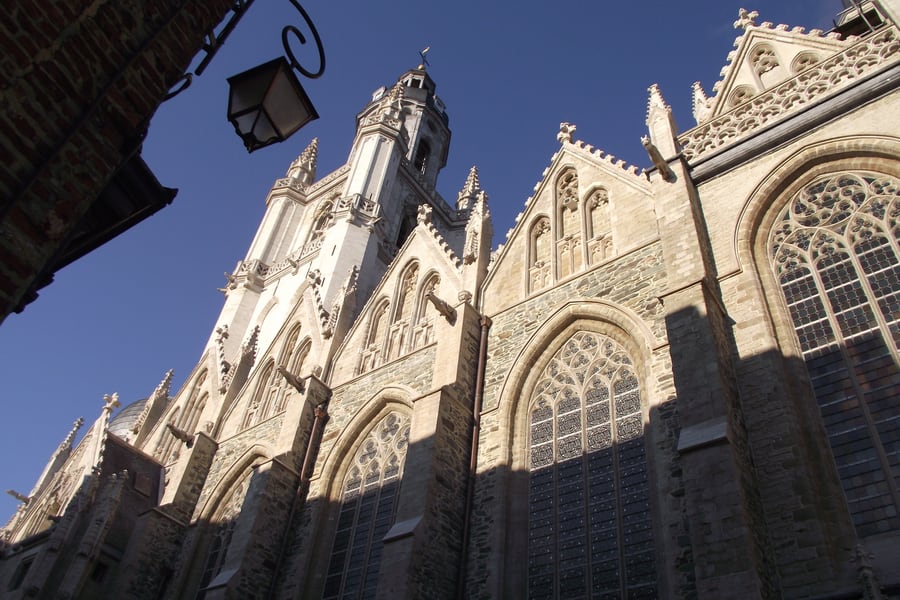 Parsifall / Wikimedia Commons · CC BY-SA 3.0 · cropped
The Black Madonna of Halle
Halle's basilica has drawn pilgrims since the fourteenth century to a 95-centimetre black Virgin installed in 1267. The legend says she caught the besiegers' cannonballs in her lap; the cannonballs are on show inside, which settles the matter as far as Halle is concerned.Timetables
The season runs from Sunday 19 April to Sunday 27 September 2026, on Sundays and public holidays only. Everything below was read from the association's own 2026 planning sheet and its news page on 13 August 2026.
Departures
| Trains leave Rebecq at | 14:00 and 16:00 |
| Possible extra departure | 17:30, but only if at least ten adult passengers want it |
| Round trip | about 1 h 40 |
| Of which | at least 30 minutes standing at the Bloc U depot on the way back |
The outward run passes Bloc U without stopping and goes through to Rognon, where the locomotive uncouples and runs round while passengers get out on the platform. The stop at the depot comes on the return. So a 14:00 departure is back at Rebecq at roughly 15:40, and a 16:00 departure at roughly 17:40.
Steam or diesel, and how to tell which
This is the fact that matters most, and the association publishes it as a colour-coded grid rather than burying it. Steam and diesel alternate almost every Sunday, and the fare changes with the traction — €6 adult behind the diesel, €10 behind the steam.
| Month | Steam days | Diesel days |
|---|---|---|
| April | — | Sun 19 (season opens), Sun 26 |
| May | Sun 3, Sun 17, Sun 31 | Fri 1, Sun 10, Thu 14 (Ascension), Sun 24 (Pentecost), Mon 25 |
| June | Sun 14, Sun 28 | Sun 7, Sun 21 |
| July | Sun 12, Sun 26 | Sun 5, Sun 19, Tue 21 (National Day) |
| August | Sun 9, Sun 23 | Sun 2, Sat 15 (Assumption), Sun 16, Sun 30 |
| September | Sun 6, Sun 20 | Sun 13, Sun 27 (season closes) |
Two things to notice. Saturday 15 August is the only Saturday of the year the train runs — it is a public holiday, and the association treats holidays as Sundays. And the two opening Sundays in April are both diesel; the alternation only settles in from 3 May.
If you are reading this after the middle of August 2026, the dates still to come are Sun 16 August (diesel), Sun 23 August (steam), Sun 30 August (diesel), Sun 6 September (steam), Sun 13 September (diesel), Sun 20 September (steam) and Sun 27 September (diesel).
⚠️ Third-party listings for this railway still quote three steam departures at 14:30, 16:00 and 17:30 plus diesel trains on Saturdays in July, August and September. That was a previous arrangement. The association's own 2026 sheet gives 14:00 and 16:00, Sundays and holidays, with the 17:30 conditional on numbers.
Why the calendar exists
The association explains it on its locomotives page, and the explanation is unusually frank. Preparing a steam trip takes about three hours to reach the right temperature and pressure, and it has to be done by volunteers trained and certified for the job. The team on any given day does not always include someone who is both qualified and available. Rather than promise steam and cancel it, the railway publishes which Sundays it can guarantee.
Getting there without a car
Rebecq is one of the easiest heritage railways in Belgium to reach on public transport, and the association's own access page sets out the route: an SNCB train to Tubize, on line 96 (Brussels–Mons/La Louvière), then TEC bus 116, which stops directly in front of Rebecq station.
The Sunday numbers, sampled from the operators' own data on 13 August 2026:
- Brussels-Midi to Tubize — twice an hour even on a Sunday: an IC at :26 taking 19 minutes, and a stopping S train at :03 taking 26 minutes. Coming back, the IC leaves Tubize at :15 and the S at :33.
- TEC bus 116, Tubize station to Rebecq station — 18 minutes, every two hours: 06:58, 08:58, 10:58, 12:58, 14:58, 16:58, 18:58, 20:58 from Tubize.
- Back, Rebecq station to Tubize — 07:44, 09:44, 11:44, 13:44, 15:44, 17:44, 19:44.
- TEC runs its Sunday timetable on public holidays, which is what makes Saturday 15 August work: the Saturday service is withdrawn that day and the Sunday one runs in its place.
The interchange at Tubize is 13 minutes in each direction, which is comfortable.
The four-minute problem
Set the return side of that bus timetable against the train times and they very nearly miss each other.
The 14:00 train is back at Rebecq around 15:40. The bus leaves at 15:44. The 16:00 train is back around 17:40; the bus leaves at 17:44. Four minutes, both times — and if you miss it, the next one is two hours later.
The stop really is at the station, so four minutes is not impossible. But a volunteer railway running a hundred-minute round trip behind a steam engine is not a clock-face operation, and betting a two-hour wait on it is a poor trade. The gap is the better thing to build the day around:
- The most comfortable shape is the 12:58 bus from Tubize, arriving Rebecq 13:16; the 14:00 train; back at about 15:40; then time at the station, the village or the mills; and the 17:44 bus, reaching Tubize at 18:02 for the 18:15 IC into Brussels-Midi at 18:34. From Brussels that is about fifty minutes each way and a genuinely unhurried afternoon.
- On the 16:00 train the realistic bus is the 19:44 rather than the 17:44, with the hour at Bloc U and Rognon that the ride gives you anyway.
- Either way the last bus back is 19:44, so there is no late option.
By road it is the E429 (Halle–Lille), exit 24; the station is signposted from the motorway exit, and the address is Rue du Pont 82, 1430 Rebecq.
The calendar, fares and access pages are all on the association's own site, which now lives at rebecq.be/le-petit-train (opens in a new tab) — the old rail-rebecq-rognon.eu address redirects there.
Tickets
There is no booking system, no online sale and no seat reservation. You turn up at the old station, buy a ticket in the building, and cross the road to the platform. The fare depends on what is pulling the train: €6 for an adult behind the diesel, €10 behind the steam, with children of 7 to 12 and reduced-mobility passengers at €5 and €8, and under-sevens free. Every fare is for the return trip, which is the only trip on offer. The difference between a €6 afternoon and a €10 one is entirely a matter of which Sunday you pick.
The ticket covers the round trip of about an hour and forty minutes, the half-hour stop in the depot yard at Bloc U, and time on the platform at Rognon while the locomotive runs round. One of the five carriages is built for reduced-mobility passengers, but the train is made up from what is serviceable that day, so telephone ahead if you need it.
Book your tickets
Behind the diesel
€6 adult · €5 child 7–12 · under-7s free
The ordinary running Sunday, return to Rognon with the depot stop included.
Book Tickets (opens in a new tab, on rebecq.be)via rebecq.beBehind the steam
€10 adult · €8 child 7–12 · under-7s free
The same trip on the dates the calendar marks for steam, and worth checking first.
Book Tickets (opens in a new tab, on rebecq.be)via rebecq.beThe whole train to yourselves
€200 diesel · €400 steam · up to 60 people
April to September, by arrangement — it buys the timing, not a saving.
Book Tickets (opens in a new tab, on rebecq.be)via rebecq.beRail Passes
No rail pass is valid on this railway, and none is worth buying to reach it. That is an unusually clear answer, and the reason is simple: the whole journey from Brussels is under an hour, on an ordinary suburban fare.
On the little train: nothing applies
Rail Rebecq Rognon is a volunteer association running its own 600-millimetre line on a trackbed the national railway gave up in the 1960s. It is not part of the network and never was. Interrail, Eurail and every SNCB product are invalid on it. There is no pass-holder discount and no combined ticket. The €6 diesel and €10 steam fares are the fares, and the only concession is the €1 a head taken off for parties of twenty or more.
On the train to Tubize: valid, but pointless
Tubize is an ordinary station on line 96, the Brussels–Mons main line, so any pass covers it and no reservation is needed. But the ride from Brussels-Midi is nineteen minutes on the IC. Spending an Interrail travel day on a nineteen-minute suburban hop, to a station that is a dead end for the day rather than a point on a route, is a poor use of it; an ordinary ticket is the cheaper answer.
SNCB's own range, read from its site on 13 August 2026, is banded by age — Child under 12, Youth under 26, Adult 26–64, Senior 65+ — with Train+ on top for cheaper off-peak and weekend travel, season tickets in Standard, Unlimited, Flex and Student versions, and two group products: a mini-group from 4 to 14 people and a group from 15.
That mini-group threshold is worth noticing next to the railway's own. Four people travelling together get the cheaper deal on SNCB and pay full price at Rebecq, where the discount does not begin until twenty.
The bus is the bit no rail product covers
The last eighteen minutes are TEC bus 116 from Tubize station, and TEC is a separate operator with its own fares. No SNCB ticket, no season ticket and no Interrail or Eurail pass includes it; you buy a TEC ticket for that leg, on the bus or through TEC's own app.
It is a small sum against a day out, but it is worth knowing it exists — and worth knowing that the bus is two-hourly on Sundays, which matters far more to the shape of your afternoon than any pass ever will. The timetable section sets out the four-minute connection back and why to ignore it.
Places to Visit
Rebecq is a small commune of four villages — Rebecq itself, Quenast, Bierghes and Wisbecq — strung along the Senne where it comes down out of Hainaut into Walloon Brabant. The railway occupies one afternoon of it. Everything below is within the commune or a short bus ride of it, and all of it is walkable from the station except the quarry.
One warning, and it is the same shape as the timetable
The Grand Moulin d'Arenberg and the Musée du Porphyre inside it open free to individual visitors every Saturday in July and August, 13:30 to 16:00. The train runs on Sundays. On the day you come for the railway, the museum of the stone is shut, and vice versa — which is worth knowing before you plan a single visit that tries to do both.
Outside those Saturdays the mill is open to groups by reservation, so a party can arrange it for a Sunday. For an individual visitor the choice is between two separate visits and Saturday 15 August — the one holiday Saturday of the year on which the train runs.
The Senne, above ground
The river the train follows is the same Senne that runs under Brussels. It rises at Naast, near Soignies, and travels about a hundred kilometres to join the Dyle; the stretch through the capital was vaulted over in the 1860s and has been invisible ever since. Here it is open, shallow and full of mills — it enters the commune at the Moulin d'Hou near Rognon, winds through the wooded Vallée des Oiseaux that the railway crosses twice, drops over the falls at the Arenberg mills in the middle of Rebecq, and carries on towards Quenast and Tubize. Following it on foot between Rebecq and Rognon is the obvious thing to do with the time between trains.
 Jean-Pol GRANDMONT / Wikimedia Commons · CC BY 2.5 · cropped
The Arenberg mills, and the porphyry museum
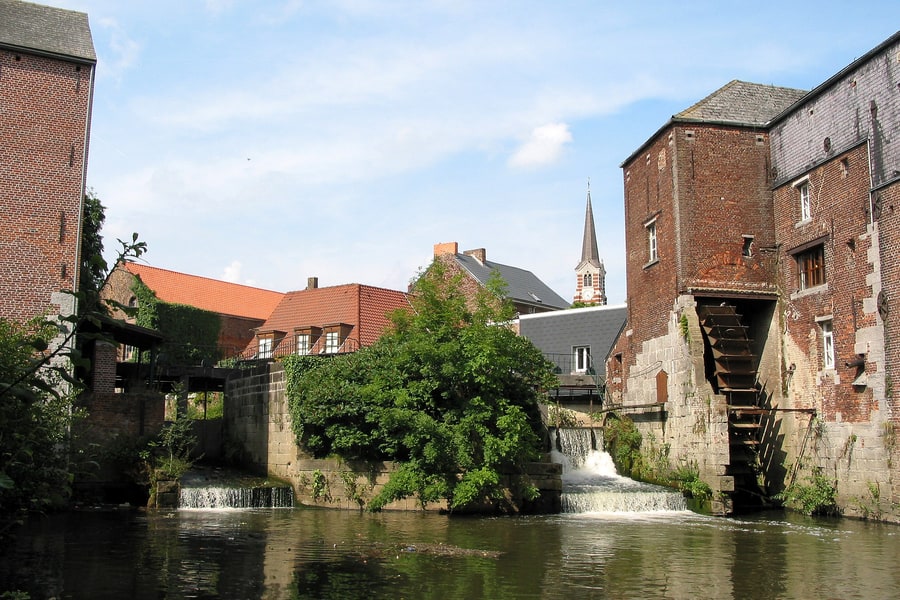
A parchment of 1441 already mentions a mill grinding grain here. By 1860 the great mill drove two 7.5-metre paddle wheels; later an artificial-silk works replaced its stones, leaving the chimney that still stands. It ground animal feed until 1964, and the commune bought both mills in 1973. The great one now holds the Musée du Porphyre; the little one's machinery still turns on the Senne. ⚠️ Free entry is Saturdays in July and August, 13:30–16:00 — not the day the train runs.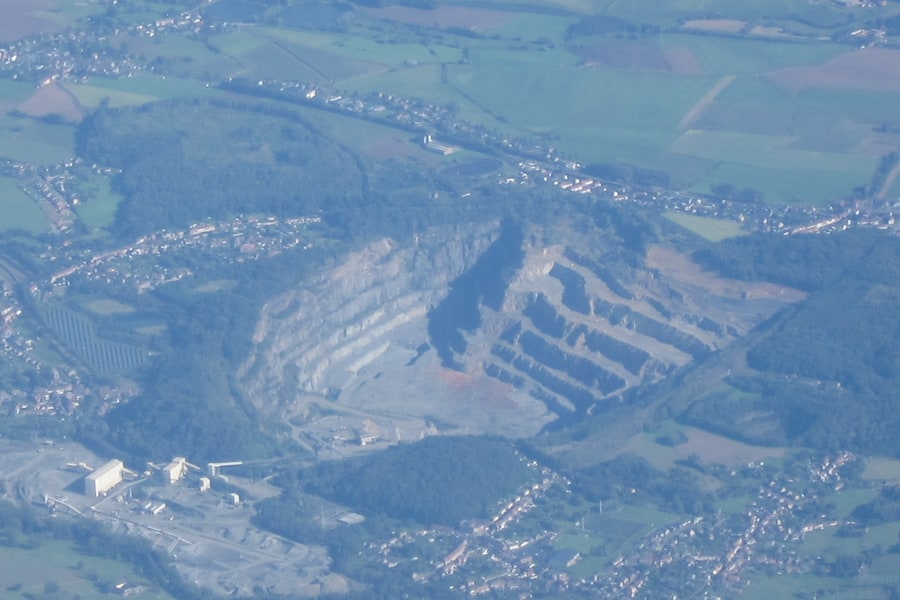 Olivier Cleynen / Wikimedia Commons · CC BY 4.0 · cropped
The quarry that keeps the real railway open
Two and a half kilometres up the valley at Quenast, in the same commune, is a pit 140 hectares across, cut into volcanic rock that solidified 435 million years ago. Sagrex, part of Heidelberg Materials, takes about 1.8 million tonnes of porphyry a year out of it, and among the products it lists is railway ballast. This is why line 115 still exists at all: Clabecq to Quenast is worked to this day, freight only, to carry the stone away. The rails on to Rebecq came up in 1964.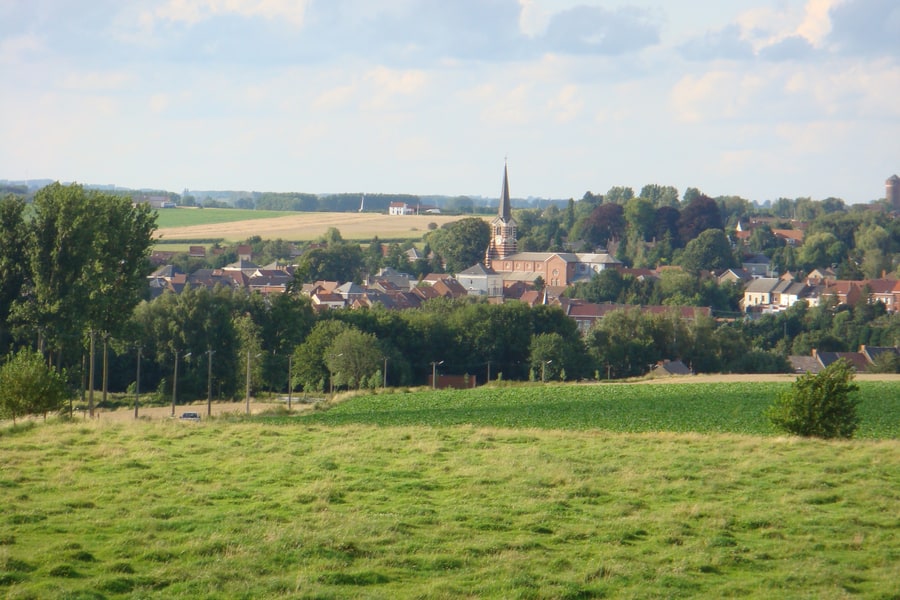 Lechatindigo / Wikimedia Commons · CC BY-SA 4.0 · cropped
Rebecq village
The village sits above its own river, and the landmark you see from the fields is the neo-Romanesque church of Saint-Géry, finished in 1867 to a design by the architect Coulon, its tower reaching 56 metres — conspicuously larger than anything nearby. Round the Grand-Place the house fronts are largely listed, with the old town hall at the top of the square. It is ten minutes uphill from the station: a good way to spend the gap between the train and the bus.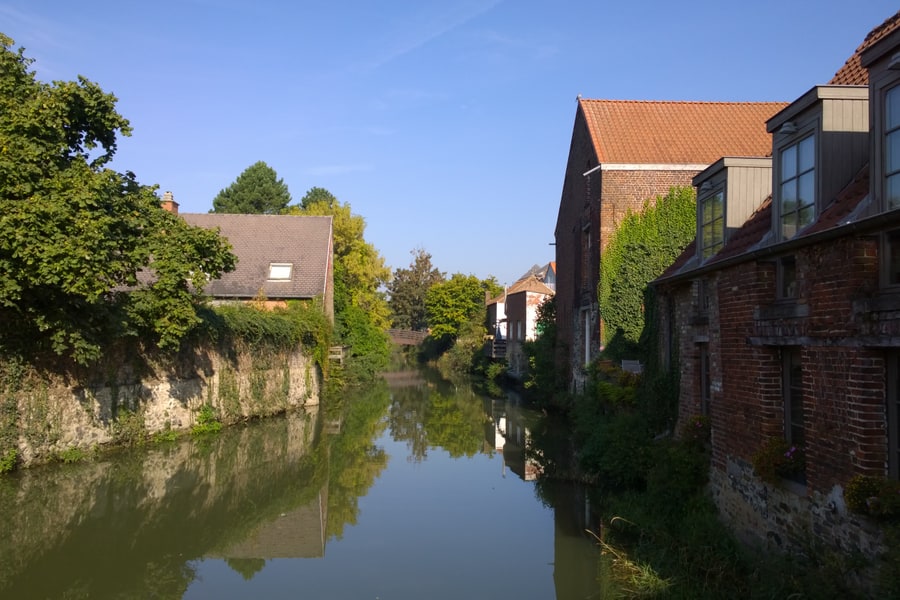 Olivier Duwé / Wikimedia Commons · CC BY-SA 4.0 · cropped
The Senne, in the open
The river the train follows is the same Senne that runs beneath Brussels, vaulted over in the 1860s and invisible there ever since. It rises at Naast near Soignies and runs about a hundred kilometres to the Dyle. Here it is in the open and full of mills: it enters the commune near Rognon, winds through the wooded Vallée des Oiseaux that the railway crosses twice on five-arch bridges, drops over the falls at the Arenberg mills, and carries on towards Quenast.Where to Sleep
The honest answer for most visitors is that you do not need to sleep here at all. Rebecq is about fifty minutes from Brussels-Midi door to door on a Sunday, and the train runs for a single afternoon — this is a day out, not a base.
If you do want to stay, there are two sensible choices, and they are different propositions.
Au Cœur du Spinois is in the commune itself, at Bierghes, a converted farmhouse run as a small family hotel with a restaurant, about twenty kilometres from Brussels. Its rooms are named after field crops — Colza, Lavande, Lin — which tells you the register. It is the local option, and the one that lets you walk out into the same countryside the railway runs through.
Le Vieux Cèdre is at Enghien, fifteen minutes further west, and it has a railway logic of its own: Enghien is the town at the other end of line 123, the railway whose trackbed carries the last stretch of the little train into Rognon. The hotel has stood in the middle of Enghien Park since 1958, its restaurant is Lebanese, and Enghien has its own SNCB station — so it works for a car-free weekend in a way that most country hotels do not.
As on every page here, the cards below carry no price, no star rating and no review score — we have verified none of those. What we can vouch for is that both hotels' own websites were opened and read on 13 August 2026: both are trading, both take direct bookings, and both describe themselves in the words used above.
Where to stay
Au Cœur du Spinois
A farmhouse hotel in the commune itself
A converted farmhouse at Bierghes, one of Rebecq's four villages, run as a small family hotel with a restaurant and about twenty kilometres from Brussels. Its rooms are named after field crops — Colza, Lavande, Lin — and three of them take dogs. It is the local option, and the one that puts you in the same countryside the railway runs through.
Check Availability (opens in a new tab, on aucoeurduspinois.be)via aucoeurduspinois.be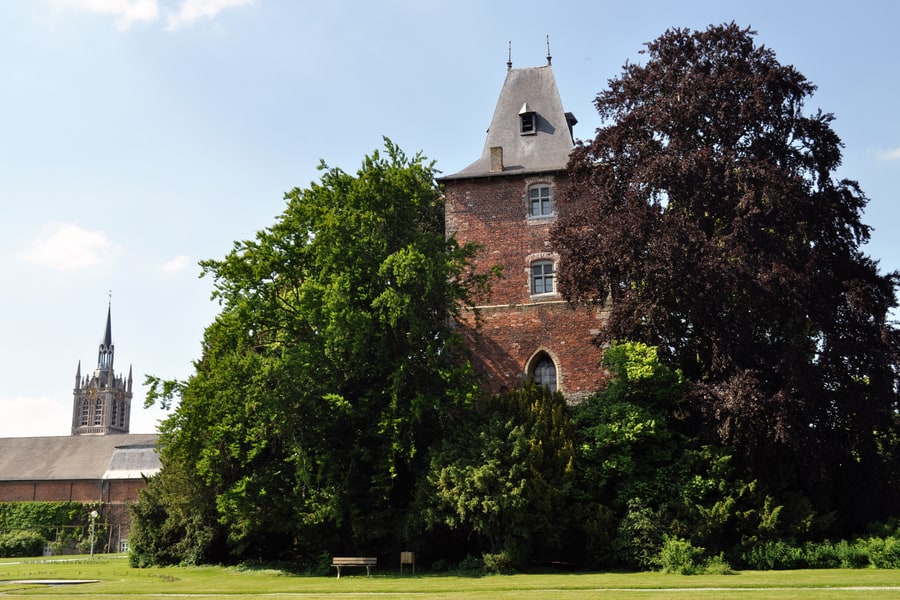 Olivier Duwé / Wikimedia Commons · CC BY-SA 3.0 · cropped — the castle chapel tower in Enghien Park, the hotel's setting rather than the hotel
Le Vieux Cèdre
In Enghien Park, at the far end of line 123
An establishment in Enghien since 1958, standing in the middle of Enghien Park, with a Lebanese restaurant and a glazed veranda. It has a railway logic to it: Enghien is the town at the other end of line 123, whose trackbed carries the last stretch of the little train into Rognon — and Enghien has its own SNCB station, which makes it workable without a car.
Check Availability (opens in a new tab, on levieuxcedre.be)via levieuxcedre.beQuestions or corrections
Planning this trip and stuck on something, or spotted a time, fare or detail that has changed? Send us a message about Rail Rebecq Rognon. We read every one, and we update this page when something has changed.