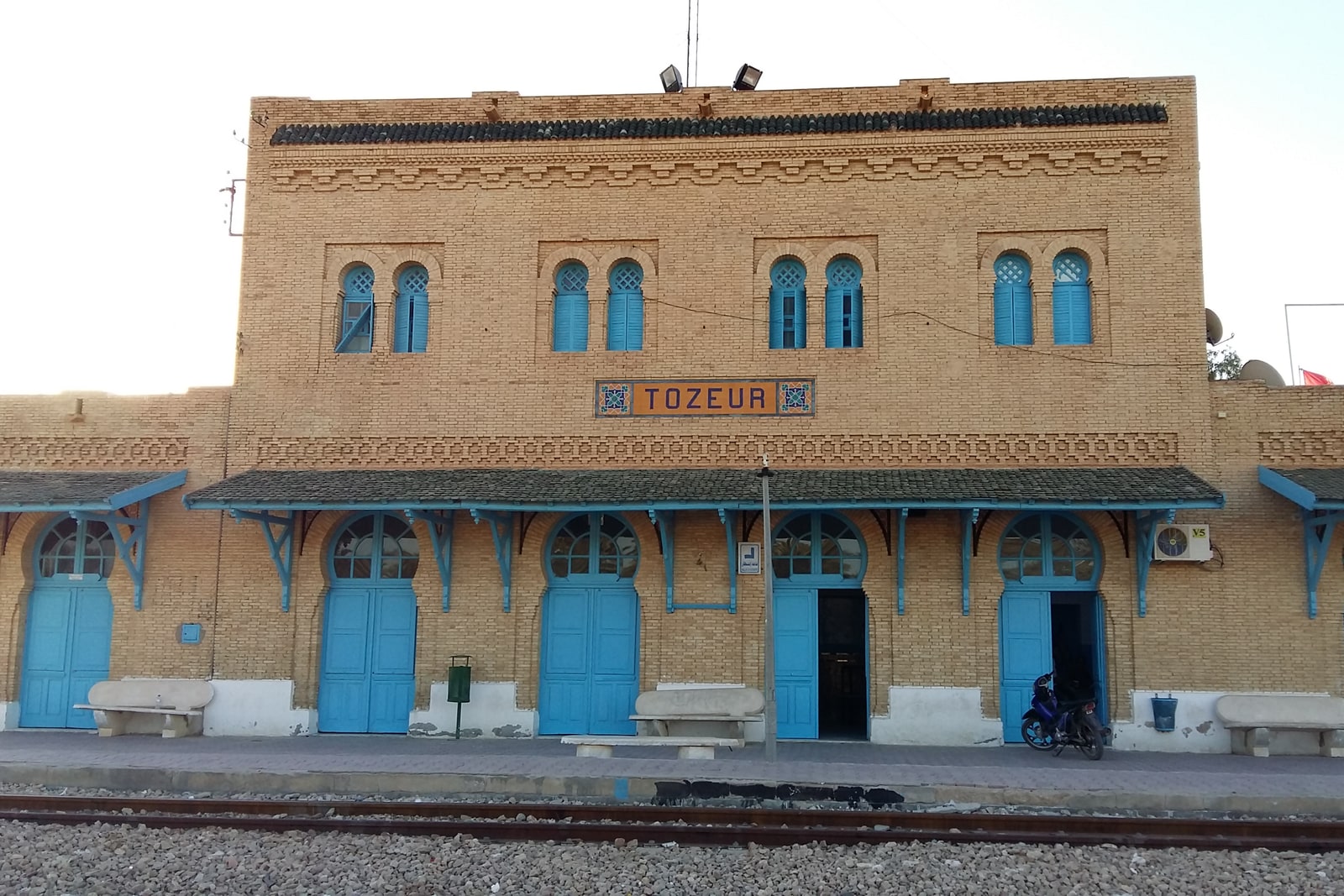
Tunis to Tozeur
Touzrimounir / Wikimedia Commons · CC BY-SA 4.0
- DistanceTunis Ville–Tozeur · about 470 km
- Duration11 hours 5 minutes southbound · 10 hours 31 minutes northbound
- Best seasonOctober–April · the south is punishing from June to September
Introduction
At twenty-five past seven in the morning, one train a day leaves Tunis and does not stop being interesting for eleven hours.
It starts on the Mediterranean, in a capital city of avenues and cafés. It runs down the Cap Bon coast through orange groves, calls at Sousse and its fortified medina, and at around twenty past eleven pulls into a small station in a modest agricultural town where the third largest Roman amphitheatre in the world stands a few minutes' walk from the platform. It reaches Sfax, the port, at half past twelve and stands there for nearly half an hour. Then it turns inland.
What follows is the part nobody expects. The olive groves thin out, the land goes brown and then stony, the towns get further apart, and the train works west across the steppe through Maknassy and Sened into the phosphate country around Gafsa and Métlaoui — bare hills, washing plants, sidings full of ore wagons. And then, at half past six in the evening, it arrives at Tozeur, in the middle of a palm grove on the edge of the Sahara.
One departure a day, each way. Eleven hours down, ten and a half back.
Two countries, two gauges
Tunisia's railway is really two railways that meet in the middle, and the reason is in the ground.
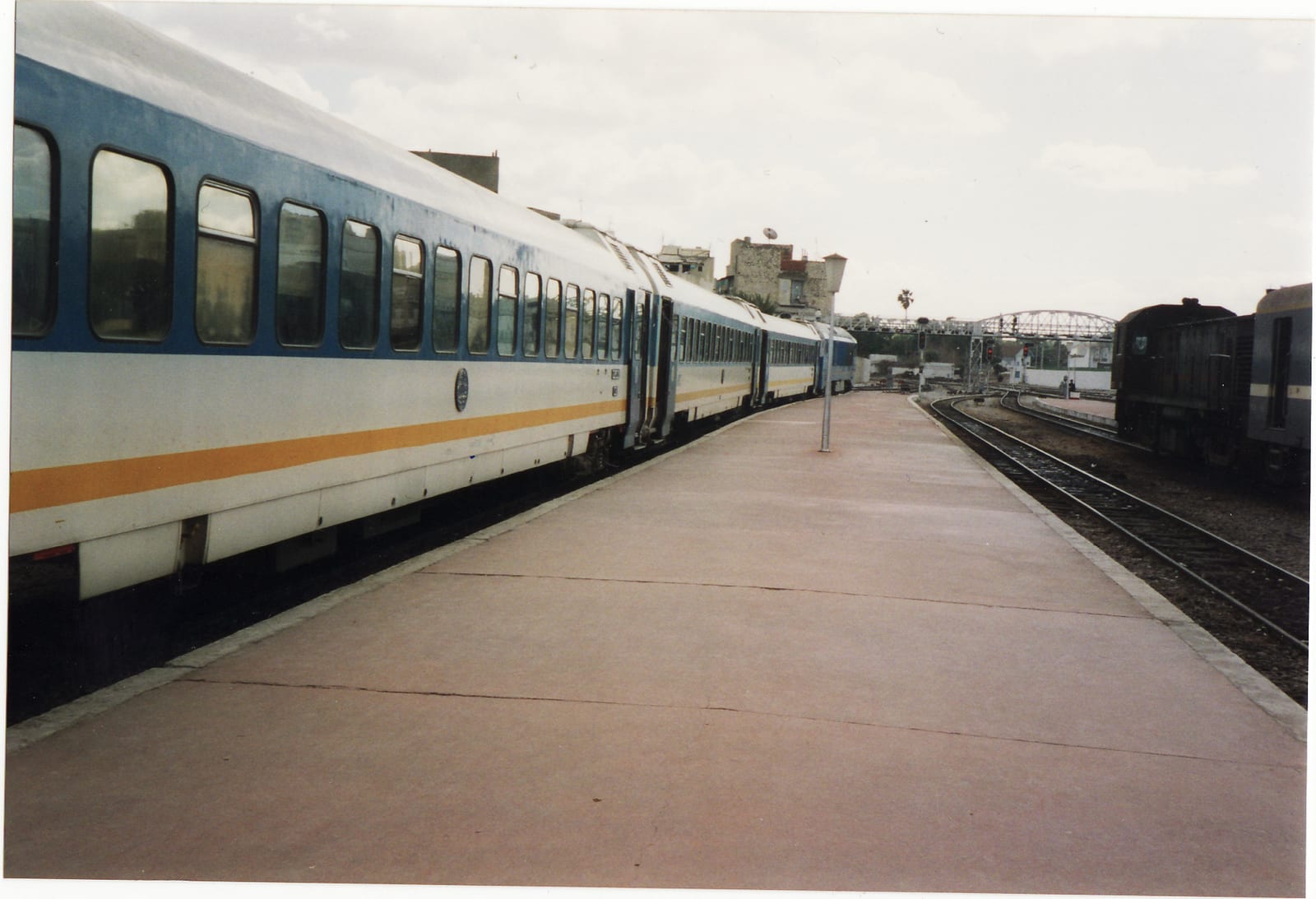
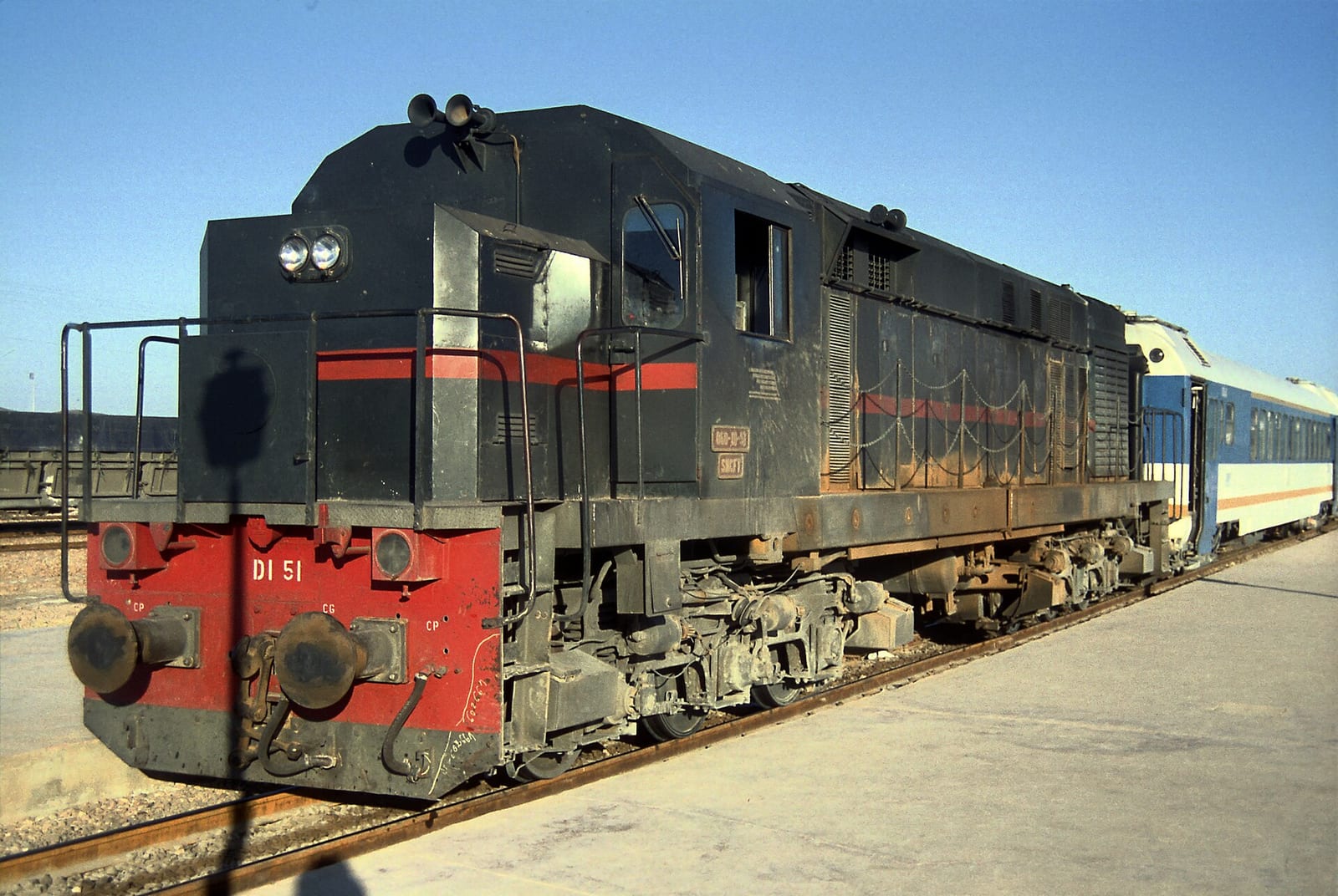
The north — 471 kilometres of it — is standard gauge, built to European dimensions for a settled agricultural country. The south — 1,688 kilometres, more than three times as much — is metre gauge, built narrow and cheap for one purpose: getting minerals to the sea. SNCFT, founded on 27 December 1956, ten months after independence, inherited the lot: 2,153 kilometres over 23 lines and 200 stations.
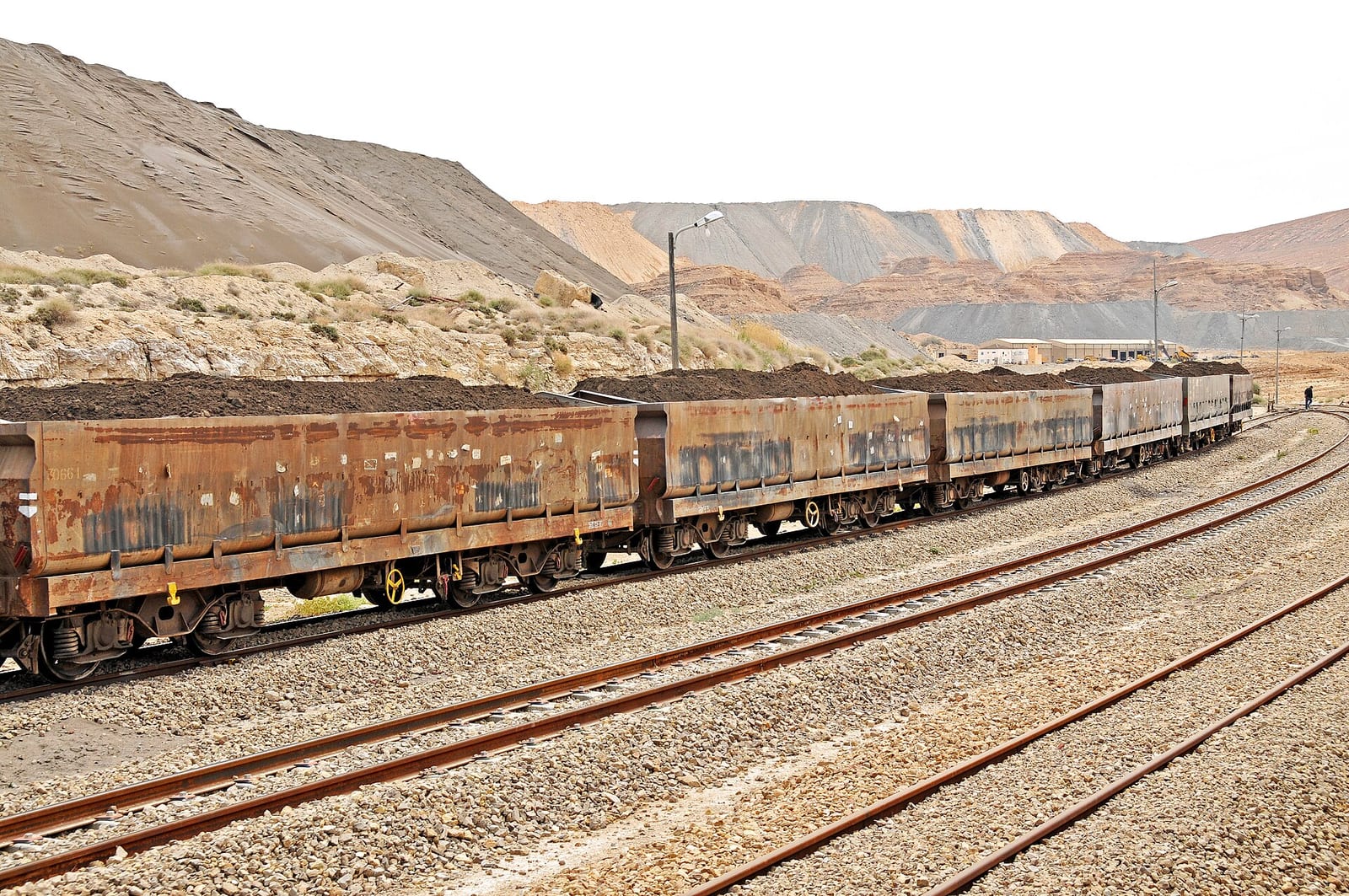
It still runs on rock. Around eleven million tonnes of freight a year, and about three quarters of it is phosphate, coming down from the Gafsa mines to the chemical plants on the Gulf of Gabès. Passenger trains on this route are guests on a mineral railway, which is why there is one of them a day and why so much of the line looks industrial rather than scenic.
Why it exists at all
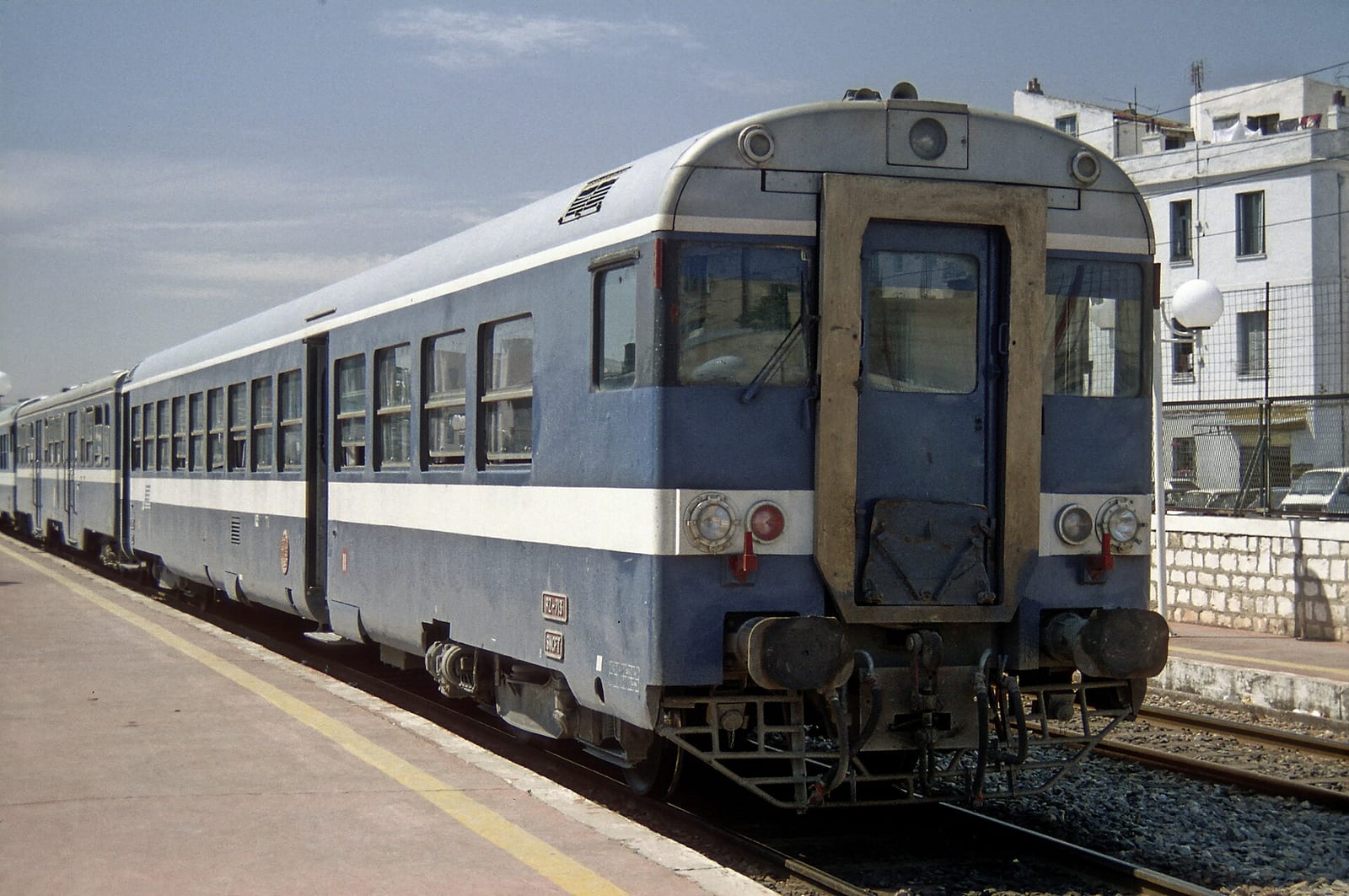
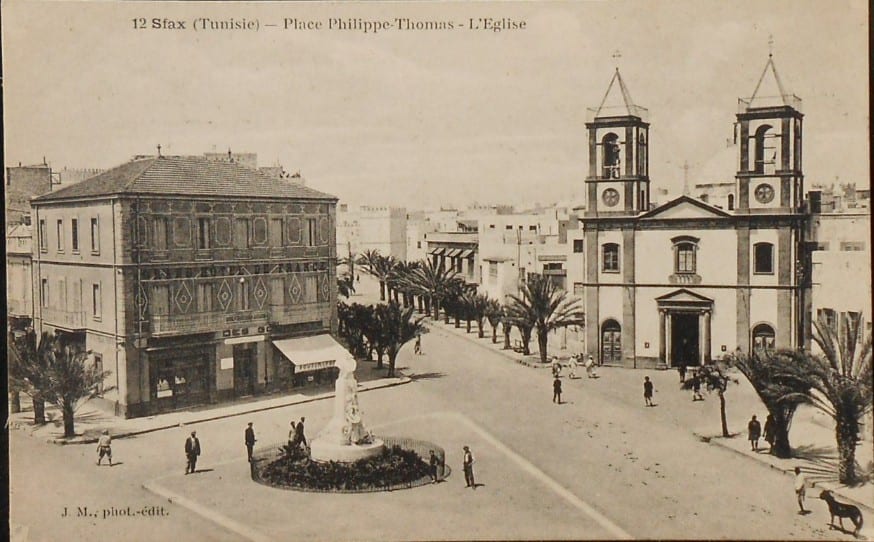
Because of a man looking at rocks. In 1885 a French amateur geologist named Philippe Thomas identified vast beds of calcium phosphate in the hills near Métlaoui. Twelve years later the Compagnie des phosphates et des chemins de fer de Gafsa was granted the deposits on one condition — that it link them by railway to the port of Sfax. Mines opened at Métlaoui in 1899, Redeyef in 1903, Moulares in 1904, and the map of southern Tunisia was redrawn around them. The company ran its own railways for seventy years, until the concession expired on 1 January 1967 and SNCFT took them over.
The passenger train you ride to the desert is running on that bargain.
What kind of journey this is
Be clear about it: this is not a luxury train, a panoramic train or a tourist train. It is an ordinary long-distance service with first and second class, no restaurant car, and windows that get dusty. It is slow — an average of a little over forty kilometres an hour — and it stops at places you have never heard of.
But it crosses a whole country, from a Mediterranean capital to a Saharan oasis, in one sitting, for very little money. It puts you down beside a Roman colosseum at lunchtime. And at the far end it connects, at Métlaoui, with the branch that runs into the Selja Gorge — which is the other reason to be on this train at all.
The Journey
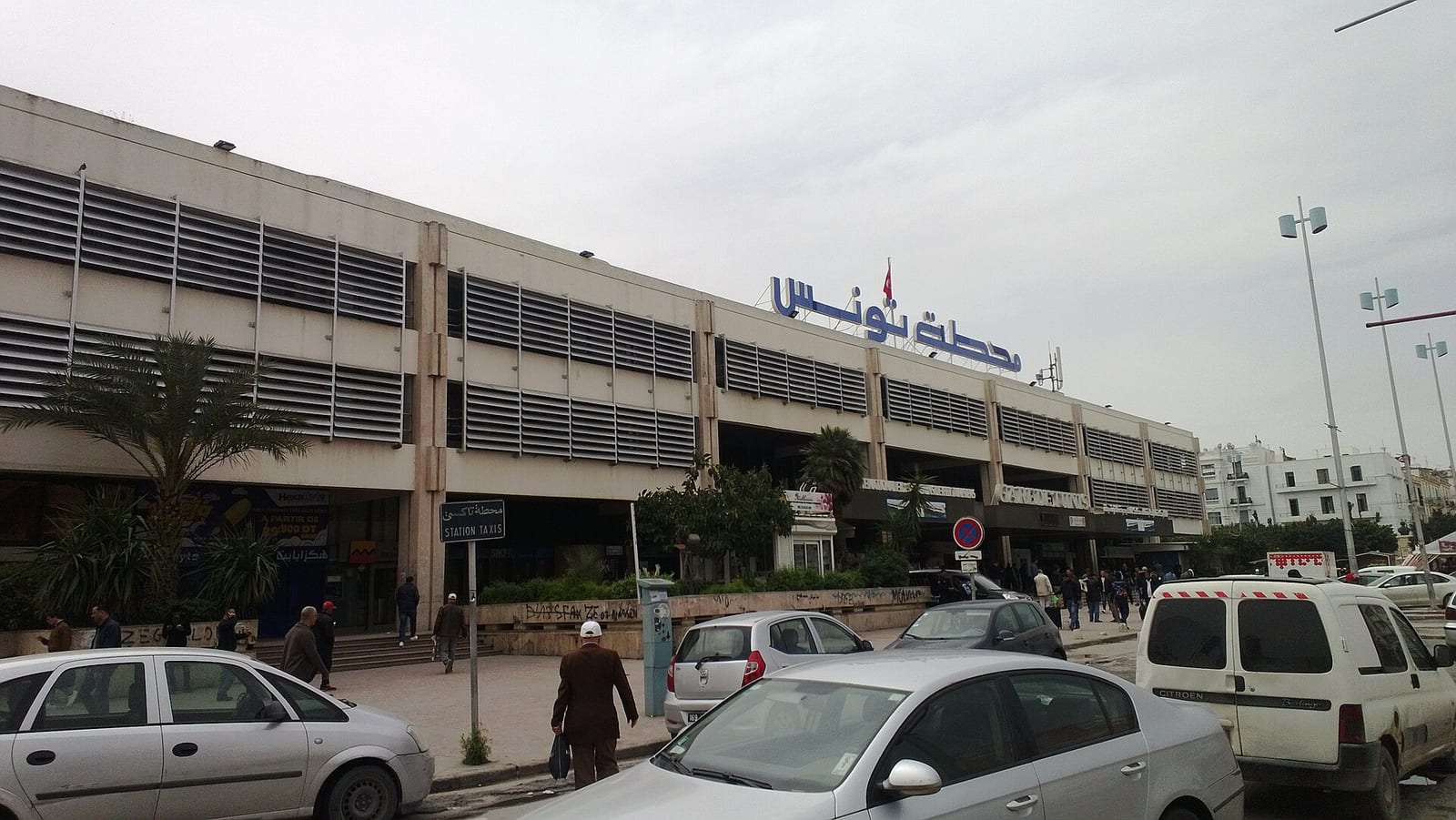
The train leaves from Tunis Ville, the national railway's terminus at Place de Barcelone. It is worth saying plainly, because visitors get it wrong: this is not the same station as Tunis Marine, at the far end of the Avenue Habib Bourguiba, which is where the suburban line to Carthage starts. The two are fifteen minutes apart on foot.
Out along the coast
The first two and a half hours are the easy part. The line runs south through the Tunis suburbs, past Hammam Lif under its mountain at five to eight, and out into the Cap Bon — citrus country, market gardens, low white villages. Grombalia at 08:19, Bir Bou Regba at 08:38 where the branch goes off to Nabeul and Hammamet, then Bouficha and Enfidha as the land opens out into olives.
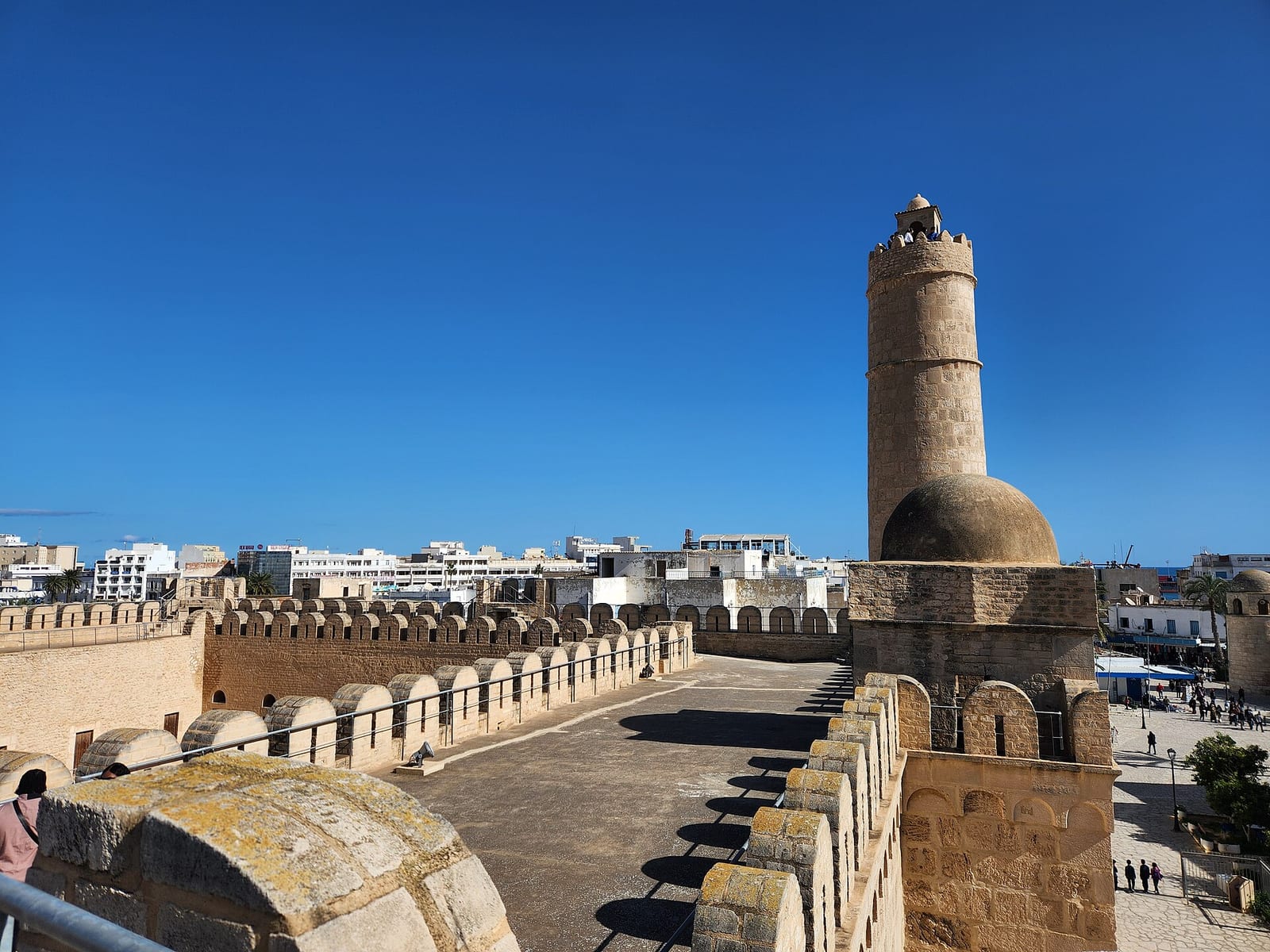
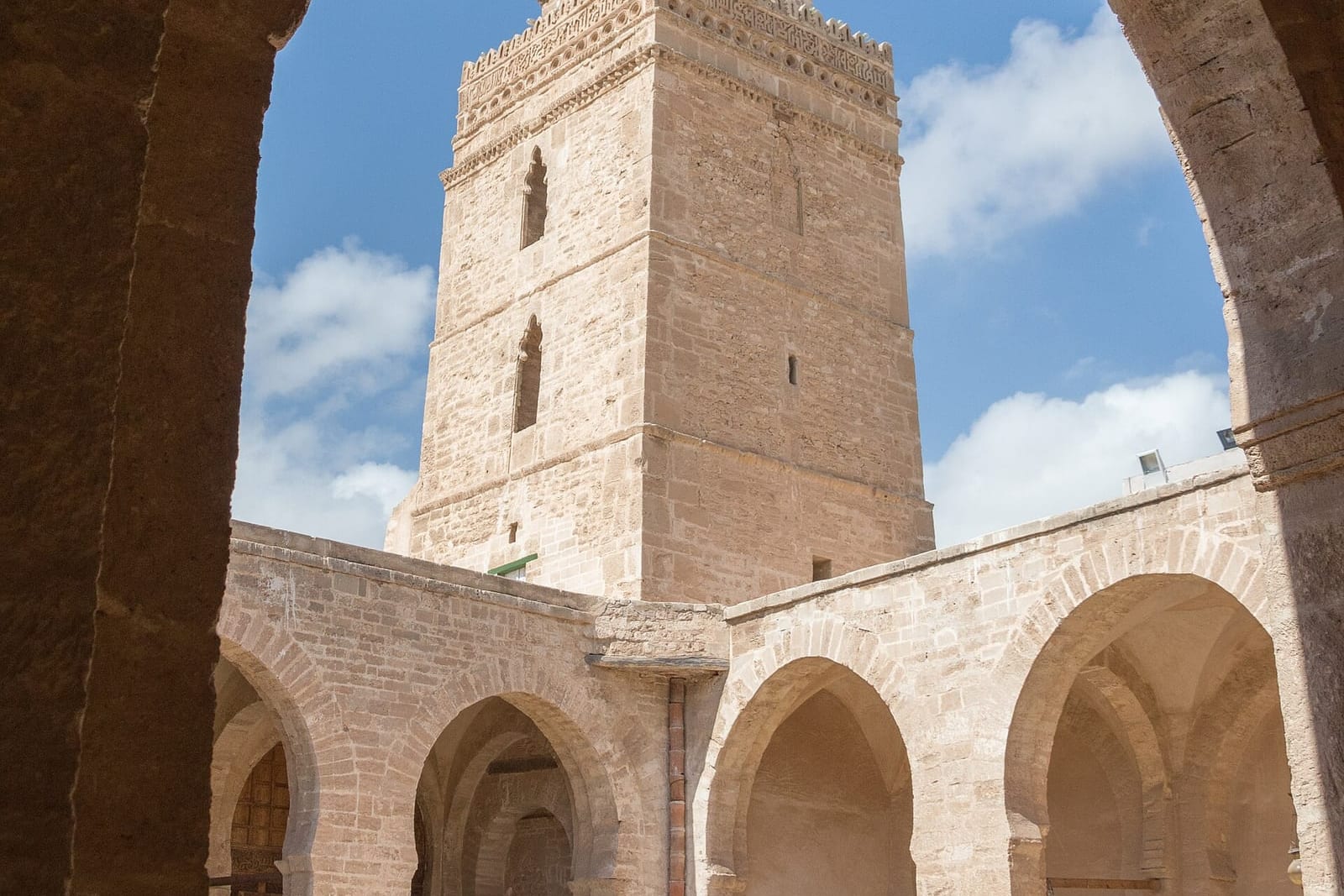
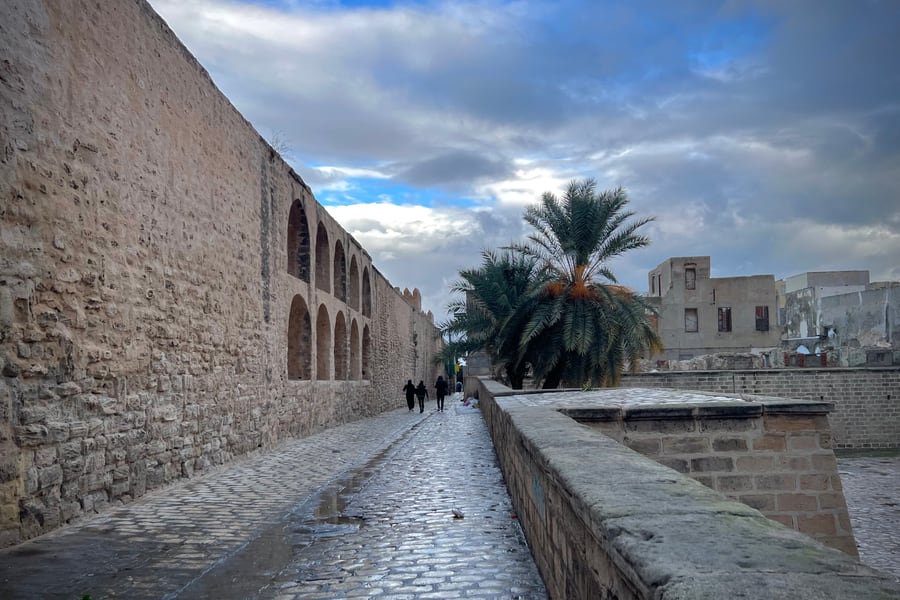
At 09:56 it reaches Sousse, and stands for a quarter of an hour. Sousse is a proper city: a walled medina with a ribat — a fortified monastery from the ninth century — at its heart, a big beach resort strip further along the bay, and the junction for the Métro du Sahel, the local line that has run down to Monastir and Mahdia since 1984.
El Jem
Then the run that makes this journey.
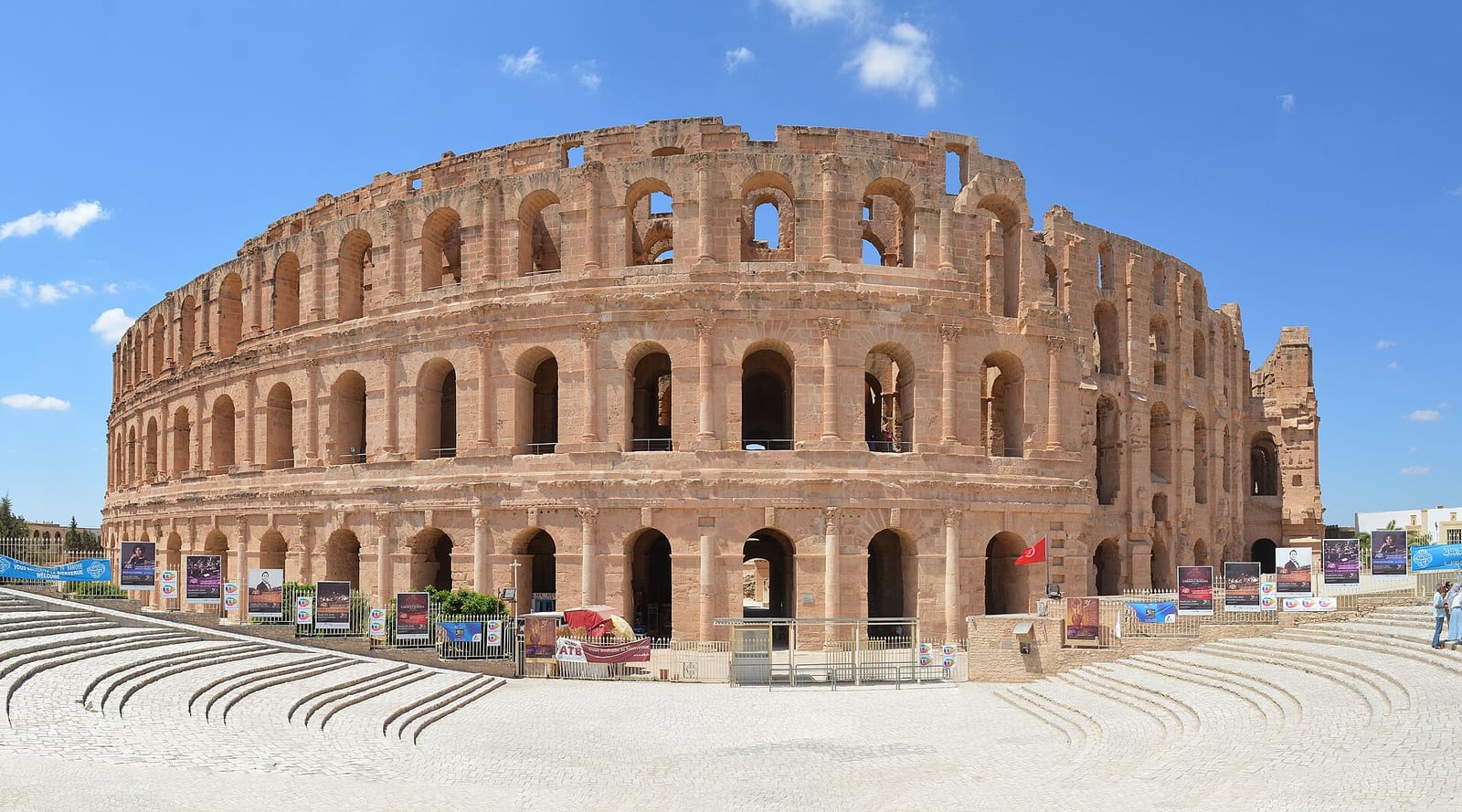
Just after eleven the train crosses a flat, unremarkable plain of olive trees, and something appears on the skyline that has no business being there: a Roman amphitheatre, standing nearly forty metres high, alone above a small modern town. The train stops at El Jem at 11:22.
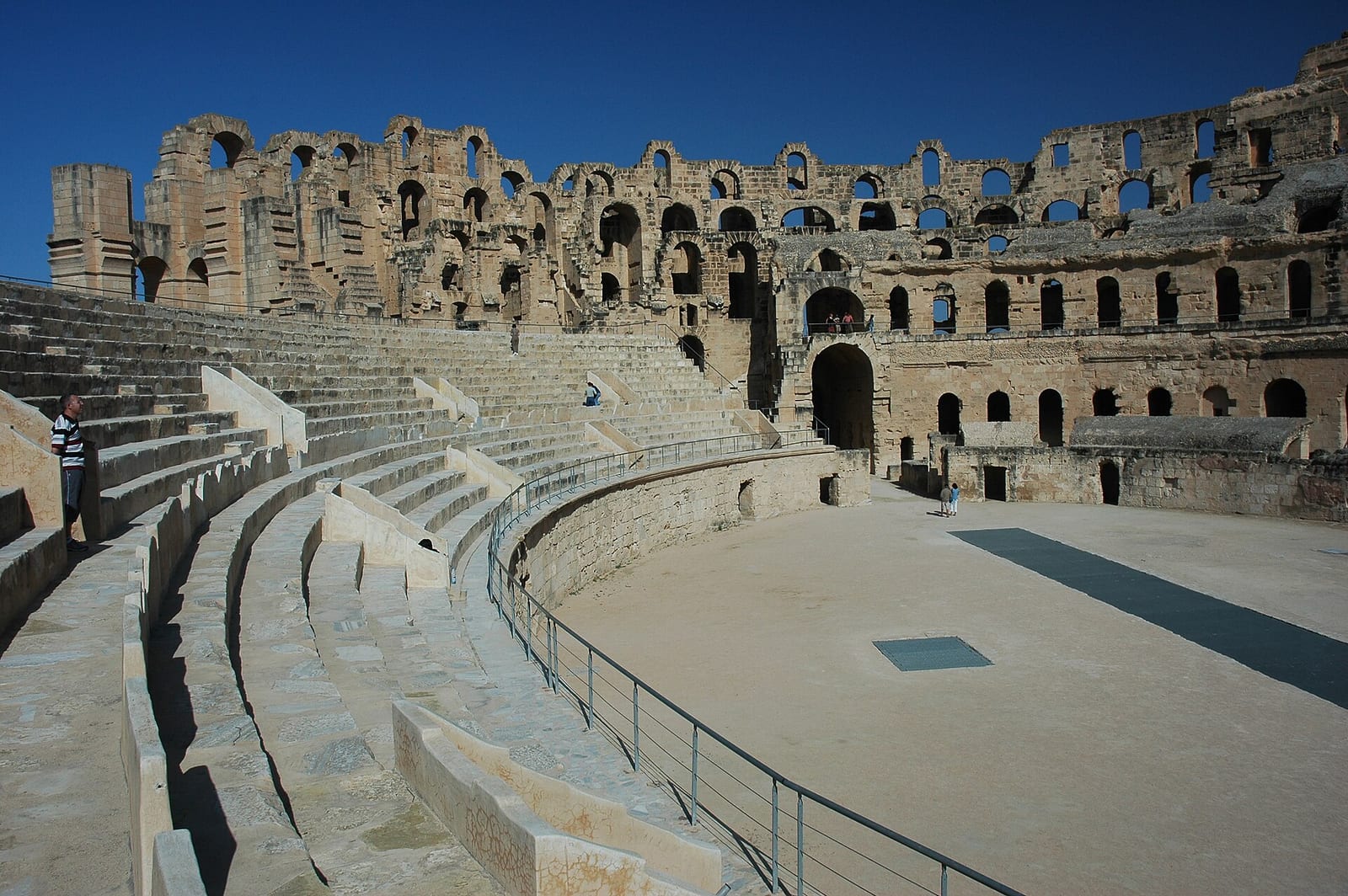
The amphitheatre of El Jem is the third largest in the world and the most impressive Roman building in Africa. It held perhaps 35,000 spectators — in a town that now has a few thousand people — and it survives in extraordinary condition, arcades stacked three storeys high, with the underground chambers beneath the arena still walkable. It is a UNESCO World Heritage Site, it stands a few minutes from the platform, and it is almost never crowded.
If you have any flexibility at all, get off here. There are later trains north and south along the coast, and an afternoon inside that building is worth more than four extra hours of steppe.
Sfax, and the turn inland
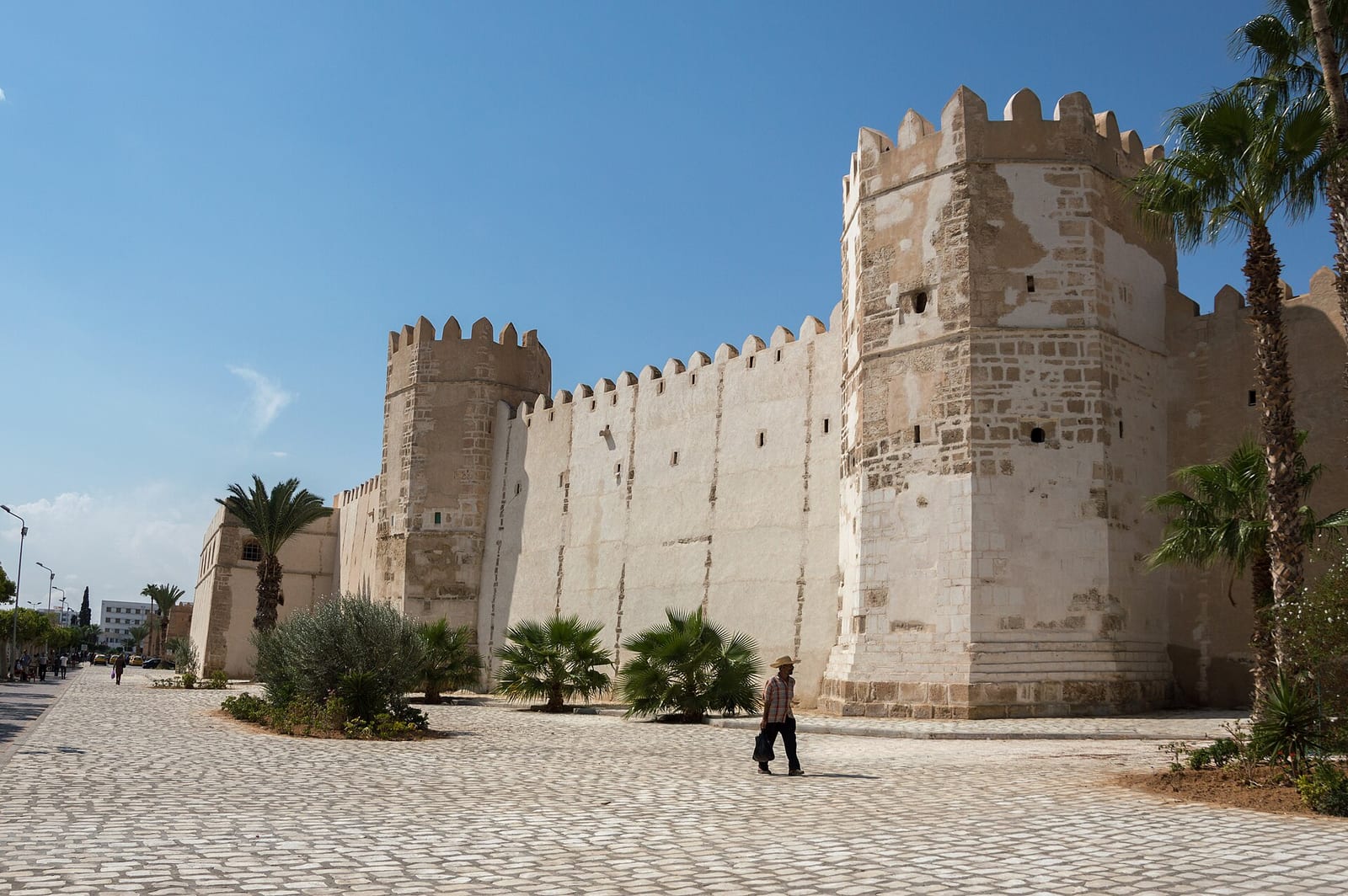
Sfax at 12:31, and a booked stop of nearly half an hour — the longest of the day. Tunisia's second city is a working port and an industrial centre, with a walled medina that is entirely un-prettified and sees a fraction of the visitors that Sousse gets. The walls are about fifteen minutes' walk from the station, which is cutting it fine; the platform end and a coffee are more realistic.
Sfax is also the reason the southern railway exists. This is the port the phosphate company was obliged to reach.
The train pulls out at 13:00 and turns west, and the character of the journey changes completely.
The steppe
Olives give way to scrub. The stations get smaller and the gaps between them longer: Maharès, Ghraiba, then a long empty run to Maknassy at 14:59 and Sened at 15:35. This is the Tunisian interior — dry, thinly populated, high summer temperatures, dust in the air — and it is the part of the country that tourism does not reach. Flocks of sheep, a shepherd, a road running parallel for a while and then peeling away. Very little happens for two hours, and that is rather the point.
Phosphate country
Gafsa at 16:30. The regional capital, an old Roman town — the Capsa that gave its name to the Capsian culture — with hot springs still running in the middle of it and Roman pools that local boys still swim in.
From here to the end, the railway is entirely about rock. Métlaoui at 17:35 is a mining town of low buildings, washing plants and ore sidings, and the junction for the branch up to Redeyef through the Selja Gorge — the line the Lézard Rouge runs on. Loaded phosphate trains stand in the loops. If you are going to the gorge, this is where you get off.
Into the Djerid
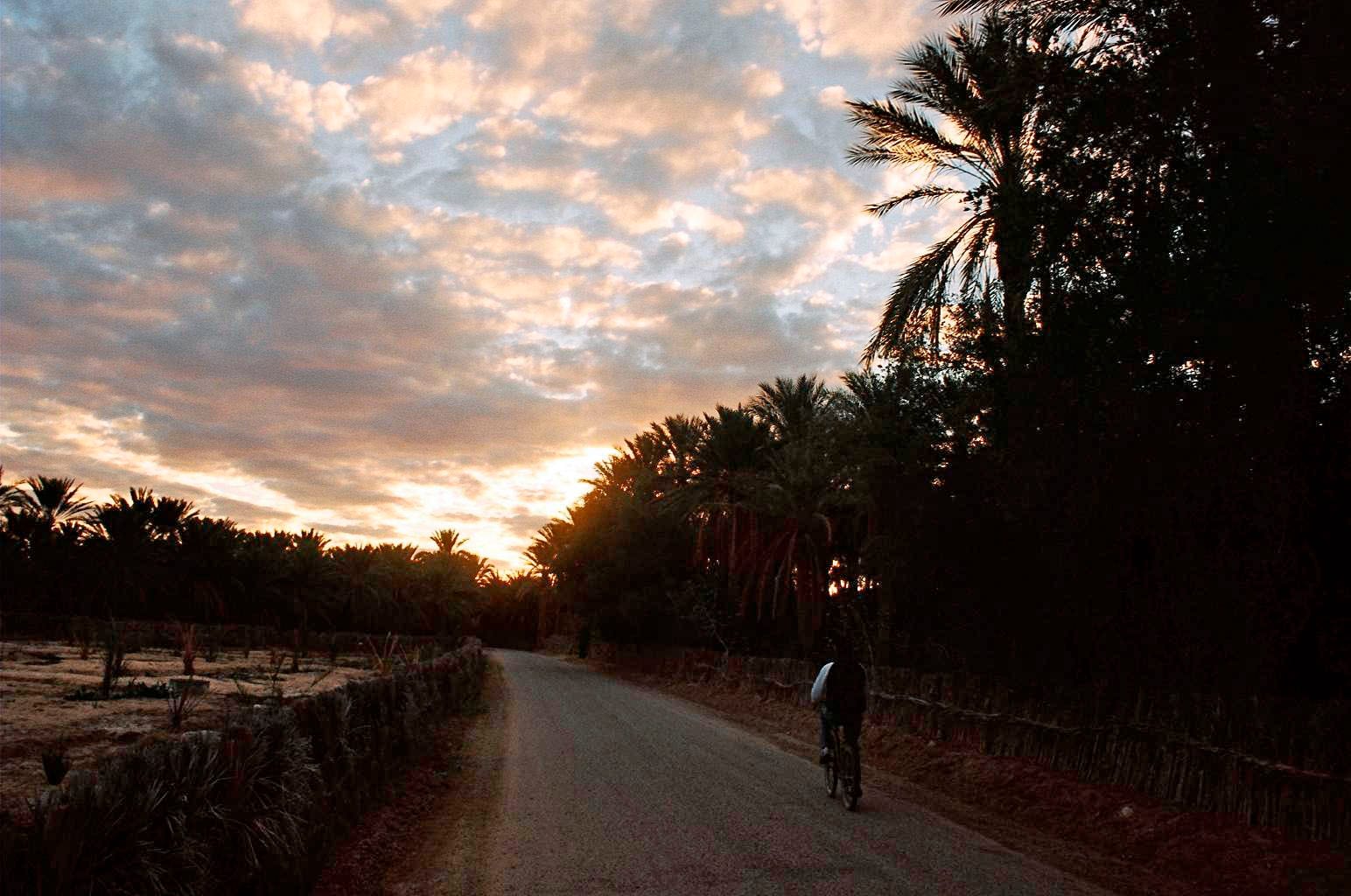
The last hour is the reward. Past El Ouediene, the land flattens and pales, and then, quite suddenly, there are palm trees — thousands of them, in a solid green mass in the middle of nothing.
Tozeur, 18:30.
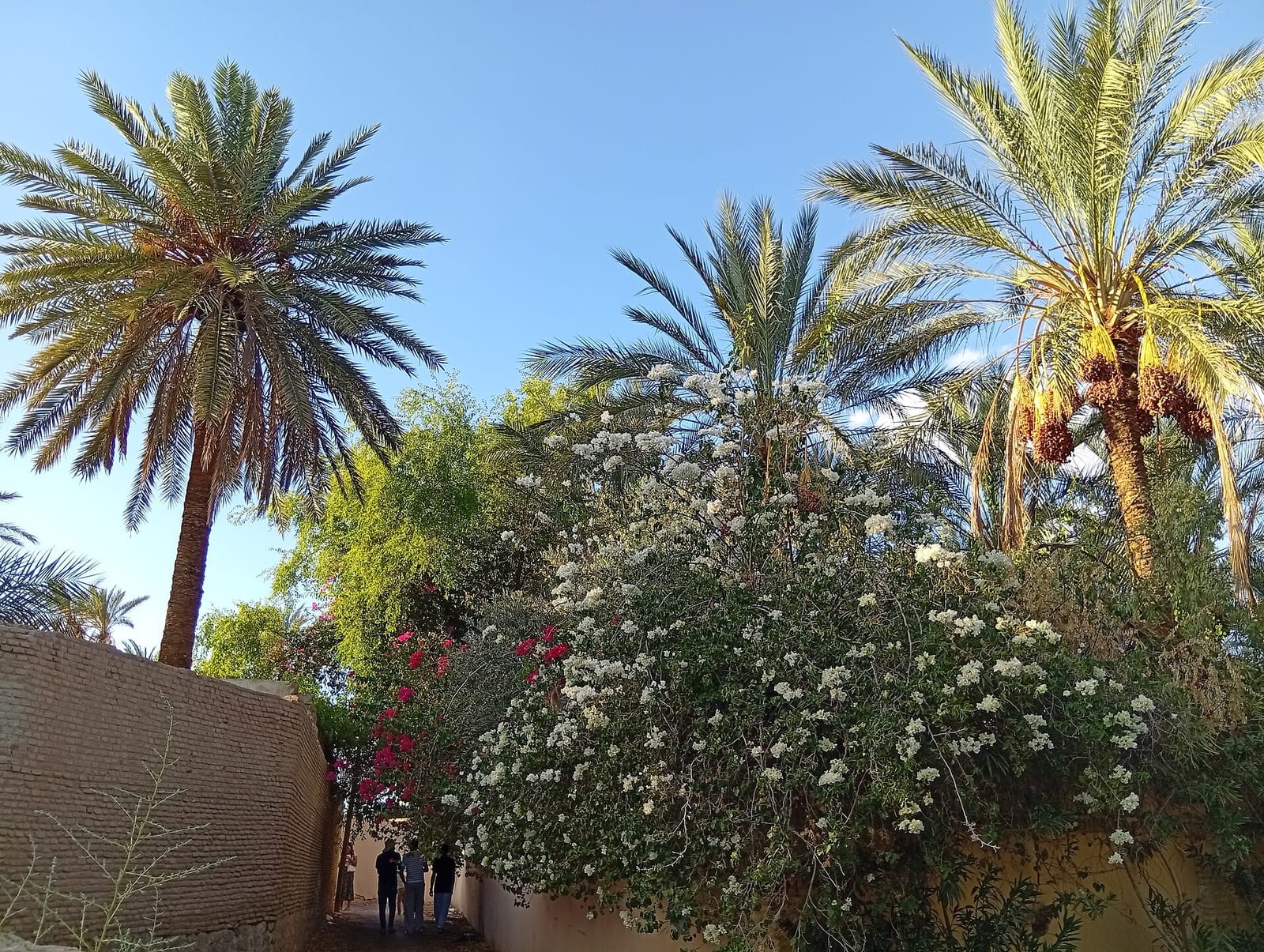
The largest of the Djerid oases sits at the northern edge of the great salt pan of Chott el Djerid, watered by springs and by a network of irrigation channels that has been in continuous use since the fourteenth century. The old quarter, Ouled el Hadef, is built of pale yellow brick laid in raised geometric patterns that catch the low sun. The chott itself is a short drive south; the railway does not cross it.
In winter you will step off after dark into air that is still warm and smells of dust and dates. It is about as complete a change of world as one day on a train can deliver.
Practical notes for the ride
- Sit on the right going south for the better light through the afternoon, and for the phosphate country.
- There is no restaurant car. Bring food and, above all, water — far more than you think you need if you are travelling between May and September.
- First class is worth the small difference on a journey of this length, mainly for the space.
- The northbound train leaves Tozeur at 06:00, which means a pre-dawn start and a morning through the desert; it reaches Tunis at 16:31.
Along the route
Dennis G. Jarvis / Wikimedia Commons · CC BY-SA 2.0A country in two gauges
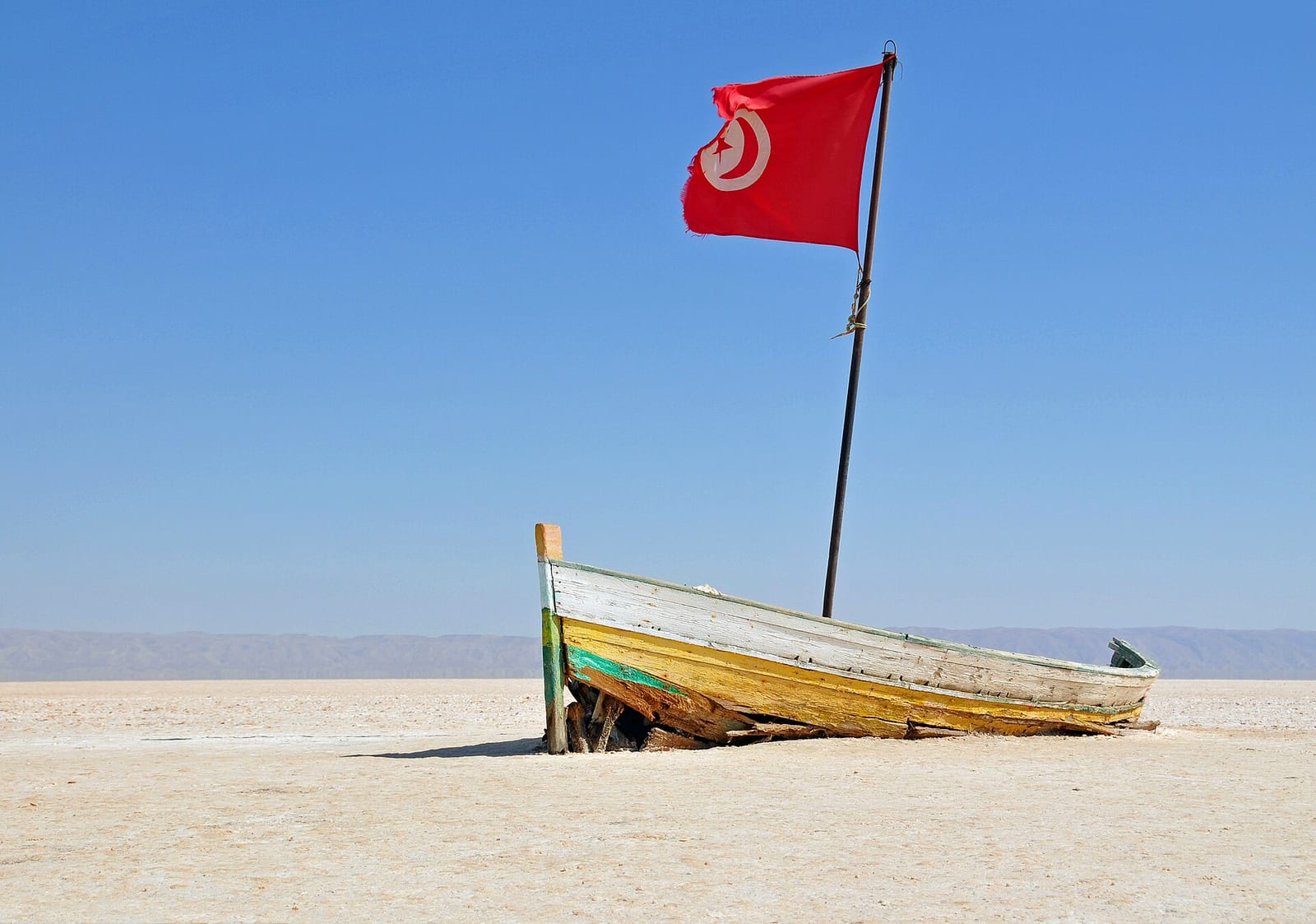
Tunisia's railway is really two railways: 471 kilometres of standard gauge in the north, and 1,688 of metre gauge south of it, built narrow and cheap to get minerals to the coast. About three quarters of the freight SNCFT moves each year is phosphate rock.Mrabet.amir / Wikimedia Commons · CC BY-SA 4.0The amphitheatre at the station
Five hours short of the desert the train stops at El Jem, and a few minutes from the platform is the third largest Roman amphitheatre in the world. It seated some 35,000 people in a town that today has a few thousand.Wikimedia Commons · Public domainThe line the phosphate built
The company granted the phosphate beds near Métlaoui in 1897 got them on condition it built a railway to Sfax. Mines followed across the south and the network took the shape it still has. The company ran its own railways until the concession expired in 1967.A bit of history
Culture & experiences along the way
GIRAUD Patrick / Wikimedia Commons · CC BY-SA 2.5Break the journey at El Jem
Eleven hours is a long time, and the single best way to split it is to get off at El Jem in the late morning, spend the afternoon in the amphitheatre and the mosaic museum, and pick up a later train. The colosseum is genuinely astonishing and almost never crowded — you can walk the arena floor and go down into the underground chambers where the animals and the condemned were held.Hamed Gamaoun / Wikimedia Commons · CC BY-SA 4.0Half an hour at Sfax
The southbound train stands at Sfax from 12:31 to 13:00 — the longest booked stop of the day and enough to stretch your legs properly. Tunisia's second city is a working port with a walled medina that sees a fraction of the visitors Sousse or Tunis get, and the walls begin about fifteen minutes' walk from the station. Don't push it; the train will not wait.Houss 2020 / Wikimedia Commons · CC0Arrive in the palm groves
The southbound train reaches Tozeur at 18:30. In winter that is after dark, and the walk out of the station into warm air smelling of dust and dates is a good way to arrive anywhere. Tozeur is the largest of the Djerid oases: kilometres of palm grove watered by a channel system running since the fourteenth century, and an old quarter built of yellow brick laid in raised geometric patterns found almost nowhere else.Timetables
The times below are taken directly from SNCFT's published "Horaires des trains grandes lignes — Été 2026", valid 1 July to 31 August 2026. There is one through train each way per day over the full route.
Southbound — Tunis to Tozeur (train 5-13/57)
| Station | |
|---|---|
| Tunis Ville | 07:25 |
| Hammam Lif | 07:55 |
| Grombalia | 08:19 |
| Bir Bou Regba | 08:38 |
| Bouficha | 08:53 |
| Enfidha | 09:08 |
| Kalaâ Kébira | 09:35 |
| Sousse | arr 09:56 · dep 10:11 |
| Messadine | 10:30 |
| El Jem | 11:22 |
| Sfax | arr 12:31 · dep 13:00 |
| Maharès | 13:39 |
| Ghraiba | 14:00 |
| Maknassy | 14:59 |
| Sened | 15:35 |
| Gafsa | 16:30 |
| Métlaoui | 17:35 |
| El Ouediene | 18:18 |
| Tozeur | 18:30 |
11 hours 5 minutes end to end.
Northbound — Tozeur to Tunis (train 13-5/72)
| Station | |
|---|---|
| Tozeur | 06:00 |
| El Ouediene | 06:12 |
| Métlaoui | 07:20 |
| Gafsa | 08:00 |
| Sened | 08:47 |
| Maknassy | 09:20 |
| Ghraiba | 10:12 |
| Maharès | 10:32 |
| Sfax | arr 11:05 · dep 11:30 |
| Sakiet Ezzit | 11:55 |
| El Jem | 12:35 |
| Kerker | 12:57 |
| Messaddine | 13:25 |
| Sousse | arr 13:45 · dep 14:00 |
| Kalaâ Kébira | 14:22 |
| Enfidha | 14:50 |
| Bir Bou Regba | 15:18 |
| Grombalia | 15:38 |
| Hammam Lif | 16:03 |
| Tunis Ville | 16:31 |
10 hours 31 minutes end to end.
Other trains on the same corridor
Useful if you want to break the journey, or only travel part of it. All are southbound from Tunis Ville (summer 2026):
| Train | Departs Tunis | Runs to |
|---|---|---|
| 5-13/57 | 07:25 | Tozeur (18:30) — the through train |
| 5/73 | 13:05 | Gabès (19:36), via El Jem 16:12 and Sfax 17:17 |
| 5-22/77 | 14:45 | Mahdia (19:21), via Sousse 17:08 and Monastir 18:15 |
| 5-12/79 | 15:15 | Sousse (17:54) — daily except Saturdays and the eves of public holidays |
| 5/87 | 17:20 | Sfax (22:18), via El Jem 21:13 |
| 5/97 | 21:15 | Gabès (04:25) overnight, via Sousse 23:36 and Sfax 01:57 |
Northbound there are corresponding workings from Gabès, Mahdia, Sfax and Sousse arriving in Tunis between 07:22 and 18:20.
Connections at Métlaoui for the Selja Gorge
If you are heading for the Lézard Rouge and the gorge, note that SNCFT times the branch trains to meet these services:
- Train 15/77, Métlaoui 17:10 → Redeyef 19:27, connects with the southbound 5-13/57 toward Tozeur.
- Train 16/60, Redeyef 04:30 → Métlaoui 06:46, connects with the northbound 13-5/72 toward Tunis.
The southbound through train does not reach Métlaoui until 17:35, so a same-day connection onto the morning tourist train is impossible — plan an overnight in Métlaoui, Gafsa or Tozeur.
Practical
- Book ahead in summer and around public holidays. One train a day means it fills.
- No restaurant car. Take food and a great deal of water.
- First and second class are both available; the supplement is small and worth it over eleven hours.
- Winter timetables differ. SNCFT reissues the poster seasonally — check the current one before you travel.
Operator: SNCFT — timetables at sncft.com.tn (opens in a new tab), with live train tracking on the same site. Times above as of July 2026.
Tickets
Tickets are sold by SNCFT at station windows. Fares are low by any international standard — eleven hours across the whole country costs a fraction of the European equivalent — but SNCFT publishes no fare table online, so ask at the window. First class buys more space and reserved seating on the long-distance workings, and on a journey of this length it is worth the small extra. Book at least a day ahead in summer or around a public holiday: there is one through train each way and it fills.
The Tunisian dinar is a closed currency, so change money on arrival and carry cash including small notes; at rural stations card acceptance is non-existent. If you miss the train, the alternative is a louage, the shared long-distance taxi — a little dearer, considerably faster and considerably less comfortable.
Book your tickets
Tunis to Tozeur · the through train
The full eleven hours, once a day
Train 5-13/57 leaves Tunis Ville at 07:25 and reaches Tozeur at 18:30; train 13-5/72 returns from Tozeur at 06:00 and arrives in Tunis at 16:31. First and second class. This is the only working that covers the whole route, so if you miss it the alternative is a long-distance louage taxi.
Book Tickets (opens in a new tab, on SNCFT)via SNCFTPart of the way · Sousse, El Jem, Sfax
The busy northern half
Several trains a day cover the coastal section as far as Sousse, Mahdia, Sfax and Gabès, which makes El Jem and Sfax easy day trips or stopovers. Useful for breaking the ride to the desert into two comfortable days rather than one very long one.
Book Tickets (opens in a new tab, on SNCFT)via SNCFTRail Passes
No rail pass covers this journey. Interrail and Eurail are European schemes, and Tunisia is not among the 33 countries in Interrail's list of covered railway companies (opens in a new tab). SNCFT sells tickets at station windows, and the fares are low.
Checked October 2026 against Interrail's list of covered railway companies (opens in a new tab).
Places to Visit
The great advantage of this route is that almost everything worth seeing in Tunisia outside the capital is on it, or a short step off it. Six places are worth a stop below; Sfax itself, where the southbound train stands for nearly half an hour, is covered above — a working port with a walled medina that sees a fraction of the visitors Sousse or Tunis get.
The whole run is eleven hours in one sitting, and there is no medal for doing it that way. Break it once at El Jem and once at Métlaoui and you have a week in the country rather than a very long day on a train.
 Sharon Hahn Darlin / Wikimedia Commons · CC BY 2.0 · cropped
Sousse
A UNESCO-listed medina behind ninth-century walls, with a ribat — a fortified monastery-barracks from the first years of Arab rule — and the Great Mosque beside it. The archaeological museum in the kasbah holds a mosaic collection second only to the Bardo's. Sousse is also the junction for the Métro du Sahel, the coastal railway that has run to Monastir and Mahdia since 1984.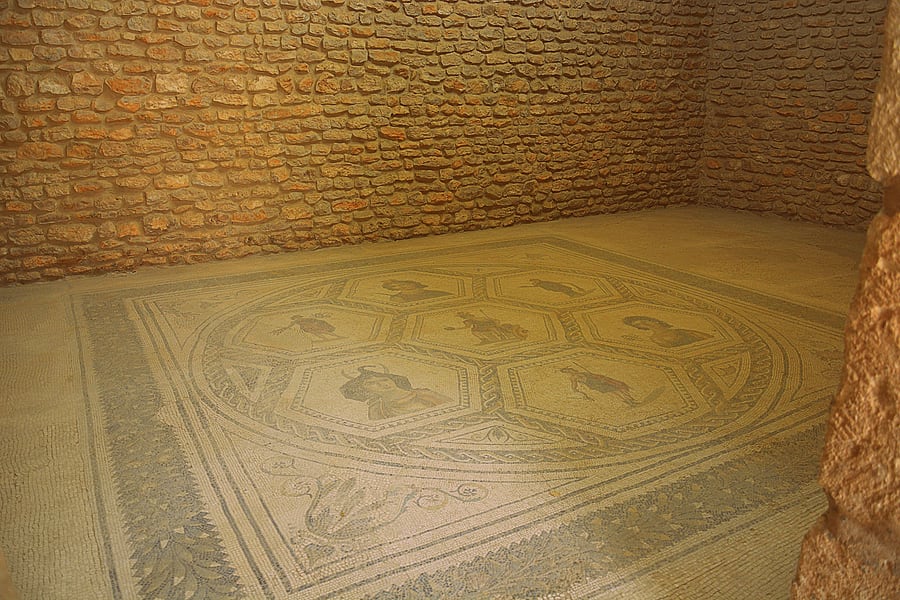 IssamBarhoumi / Wikimedia Commons · CC BY-SA 4.0 · cropped
The El Jem mosaic museum
Everyone comes for the amphitheatre, and almost nobody walks the few minutes further to the mosaic museum on the edge of town — which is built around an excavated Roman villa and shows its floors more or less where they were laid. It is the best possible preparation for the arena itself, and on a hot afternoon it is also shaded and nearly empty. The southbound train calls at El Jem around 11:20.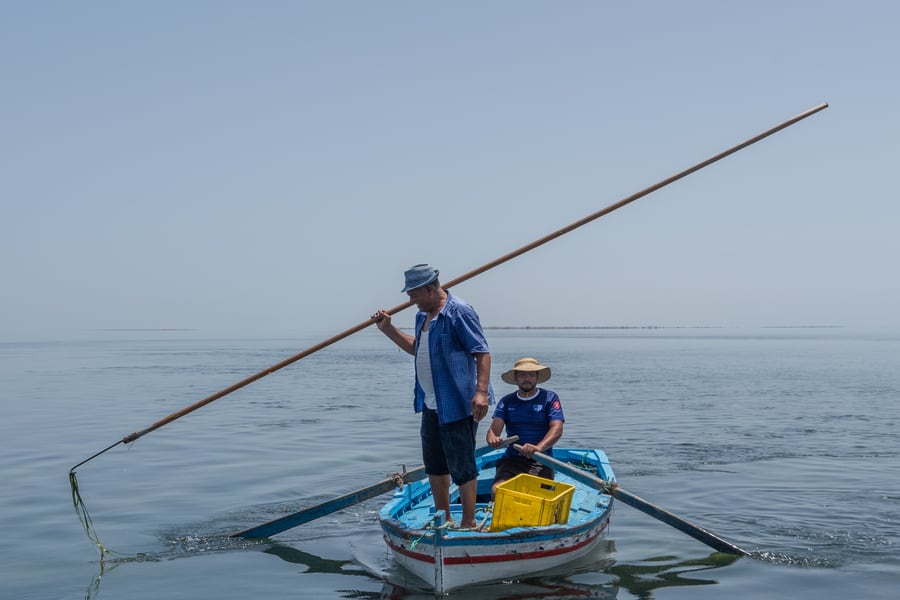 Atef Ouni / Wikimedia Commons · CC BY-SA 4.0 · cropped
The Kerkennah Islands
A ferry from Sfax reaches a low archipelago of 160 square kilometres that rises nowhere above 13 metres. What makes it worth the crossing is the charfia — a fixed fishery of palm fronds driven into the seabed in a great V that funnels fish into traps on the ebb tide. It is worked only between the autumn equinox and June, so the sea gets a rest, and UNESCO put it on the intangible heritage list in 2020.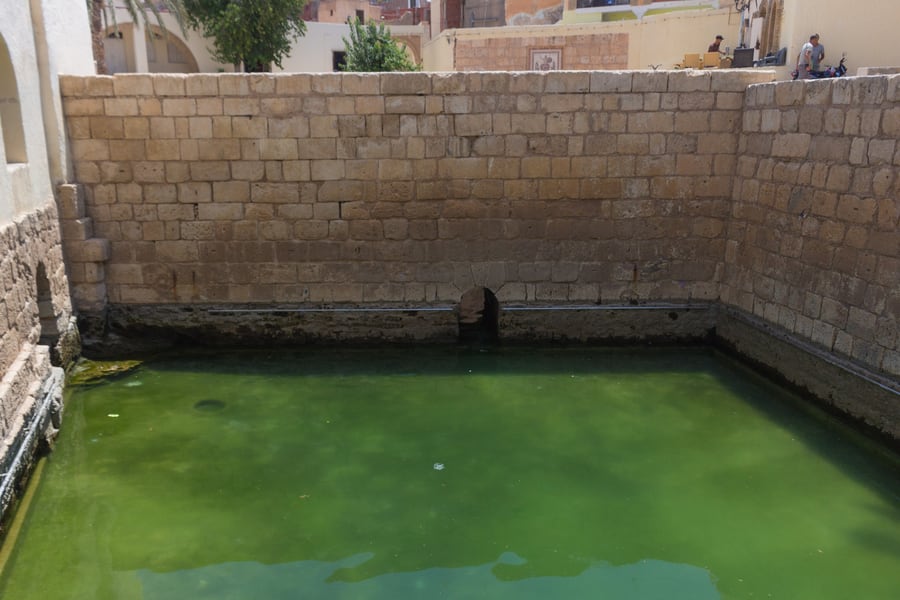 Brahim Guedich / Wikimedia Commons · CC BY-SA 4.0 · cropped
The Roman pools at Gafsa
In the middle of the mining capital, open to the sky, are the basins the Romans built at Capsa — walls of reused ashlar around springs that rise from the floor of the pools themselves, about five metres deep, the water coming out at roughly 30°C. A Latin dedication to Neptune and the Nymphs is still legible on one wall. Local boys have swum in them for as long as anyone can remember, and still do.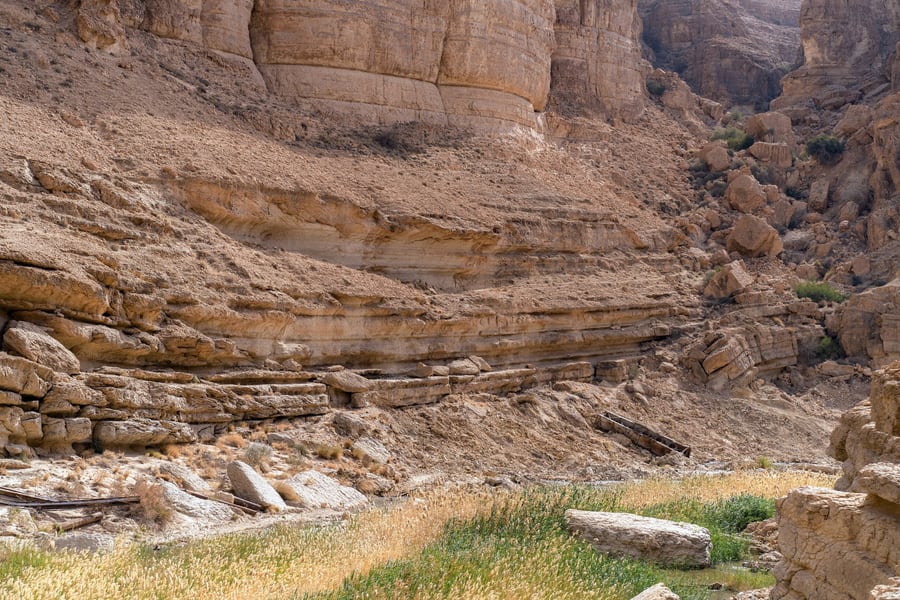 Skander zarrad / Wikimedia Commons · CC BY-SA 4.0 · cropped
Métlaoui and the Selja Gorge
The last real stop before the oases, and the one worth a night. West of the town the railway threads the Selja Gorge on ledges and through short tunnels, with the seasonal Oued Selja on the floor of it and no road at all — a nature reserve since 2009 and a Ramsar wetland since 2012. This is where you get off for the Lézard Rouge.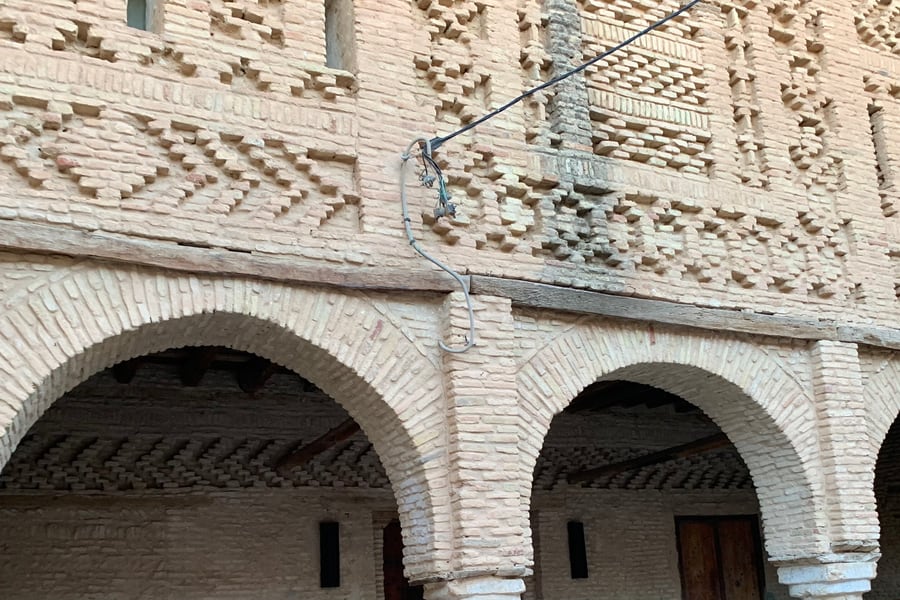 Rawen Abbassi / Wikimedia Commons · CC BY-SA 4.0 · cropped
Tozeur and the Djerid
The train arrives at 18:30, which in winter is after dark. Ouled el Hadef, the fourteenth-century quarter, is built of yellow brick laid in raised geometric relief that throws shadows across the walls as the sun moves — a building style essentially unique to this corner of Tunisia. Beyond it the palm groves run for kilometres, and beyond them lie the salt pan, the mountain oases and the Algerian border.Where to Sleep
Eleven hours is a lot in one go, and the sensible way to do this route is in two or three days with a night at each end and one in the middle.
Tunis
Start here. Hotels along the Avenue Habib Bourguiba cover everything from grand colonial-era buildings to plain business places, all within walking distance of Tunis Ville station. In the medina, restored dar guesthouses — courtyard houses with a few rooms each — are far more atmospheric and not much more expensive. If you want the coast instead, stay out at Sidi Bou Saïd or La Marsa on the TGM line and come in by train.
Sousse or Monastir
The obvious first-night stop if you are breaking the journey early. Sousse has the widest range in the country outside Tunis: guesthouses in the medina, and a long strip of resort hotels along the bay at Port El Kantaoui. Monastir, twenty minutes down the Sahel metro, is quieter and has its own ribat and marina.
El Jem
Very limited — a few small hotels and guesthouses, and that is it. Staying here is only worth doing if you specifically want the amphitheatre at dawn or after dark, which is admittedly a good reason. Most people visit on a day trip from Sousse or Sfax.
Sfax
A working city, so hotels are business-oriented and unromantic, but there are plenty of them and they are cheap. Useful as a mid-route night: it puts the second half of the run to Tozeur into a single manageable day.
Gafsa
Modest, practical accommodation aimed at people doing business with the phosphate company rather than at visitors. Fine for a night, and it is the closest railhead of any size to the Selja Gorge if you are timing a morning at the canyon.
Tozeur
The best end to the journey, and the widest choice in the south. Larger hotels line the zone touristique on the edge of town, most built low in the local patterned brick with pools and gardens that matter enormously in this climate. In the old town and along the palm grove there are smaller guesthouses and converted courtyard houses, quieter and within walking distance of Ouled el Hadef.
Book ahead for spring and autumn, the high seasons here. Midsummer is very hot and much emptier; winter nights on the edge of the desert are genuinely cold, so check that the room has heating.
Nefta
Half an hour west of Tozeur and much less developed, with its own large oasis in a natural bowl called the Corbeille. A handful of hotels. Choose it if you want the palm groves without the coaches.
Questions or corrections
Planning this trip and stuck on something, or spotted a time, fare or detail that has changed? Send us a message about Tunis to Tozeur. We read every one, and we update this page when something has changed.